Leo Marks head of SOE Codes and Cyphers

marks

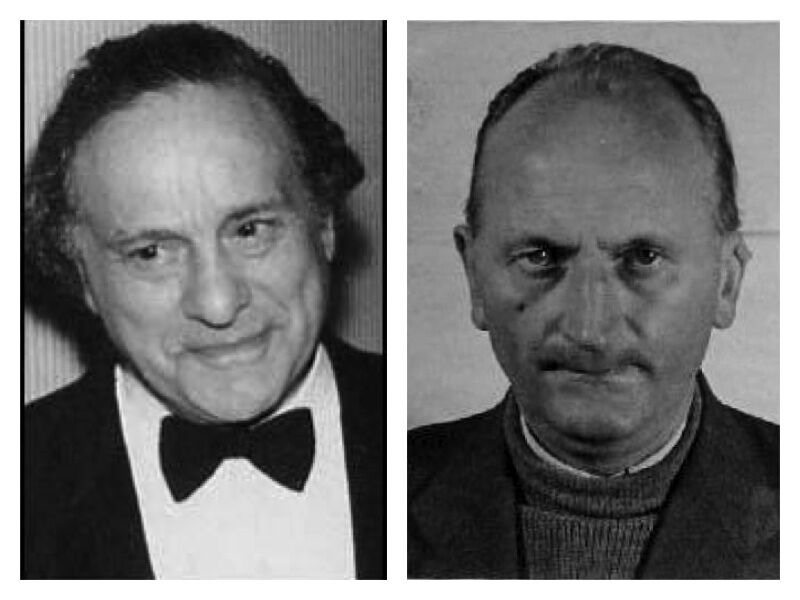
Left: Leo Marks (24 September 1920 to 15 January 2001) the head of SOE’s codes and cyphers based at Michael House Baker Street, London. Right: his adversary in the Netherlands Abwehr (German Military Intelligence) Lieutenant Colonel Herman Giskes who was responsible for the wireless deception resulting in many SOE agents from the Dutch Section and members of the resistance being captured and executed. People who knew Marks said his brain was wired differently and could workout complex problems and it was Marks who discovered the Abwehr wireless deception alternatively called the ‘wireless game’ and ‘Englandspiel’ (England Game). (Photos IWM)

Further reading    Dutch Resistance 1941-43: SOE’s Greatest Disaster in occupied Europe – Alan Malcher

Alan Malcher military historian

Sergeant Hugo Bleicher of the Abwehr: responsible for crushing resistance in France.

Hugo Bleicher. Alan Malcher SOE

Hugo Bleicher was a sergeant with the Abwehr stationed in France. Despite his rank Bleicher was responsible for crushing resistance throughout France and due to his ruthless approach and high success rate was supported by senior officers in the Abwehr. SOE agents and members of the resistance who were tracked down and arrested by Bleicher were handed to the Gestapo and were tortured for information, eventually executed or sent to concentration camps.

Bleicher used the cover names Colonel Henri, Jean Verbeck and Jean Castel. After the war Bleicher insisted he was not aware the prisoners he handed to the Gestapo would be tortured and executed but Colonel Maurice Buckmaster who was the Commanding Officer of SOE’s French Section rejected this claim and accused him of being an arrogant upstart and a war criminal. Hugo Bleicher also gave evidence against former members of the Abwehr and until his death in 1982 Bleicher ran a tobacconist in Tettnang, Germany.  (Photo IWM)

Alan Malcher military historian

Mary Lindell MI9 during WW2 describes her escape from the SD (Gestapo) after being sentenced to death.

The Sicherheitsdienst (SD), Sicherheitsdienst des Reichsführers-SS Security Service of the Reichsführer-SS was closely connected with the Gestapo and documents of the period often refer to both as the Gestapo.

Special Operations Executive (SOE) agent Odette Churchill (nee Sansom)

sansom2

SOE agent Odette Sansom (she married Peter Churchill after the war) was a single mother with three young children in England when she was arrested by the Abwehr and eventually handed to the Gestapo. During their attempt to force her  to talk Sansom was repeatedly burnt on the back with a red-hot poker and each time she fainted from the pain was revived with buckets of cold water being thrown over her so the torture could continue. When burning failed to break her all her toenails were pulled out but Sansom still refused to give the Gestapo information about her wireless operator who was in hiding and after the war Sansom reluctantly admitted to a journalist she was willing to die rather than answer their questions. Sansom then survived the ill-treatment and horrors of Ravensbrûck Concentration camp and after the war was awarded the GC which she always insisted was not awarded to her personally but represented all those alive and dead, known and unknown who fought for the liberation of France.

Odette

See my YouTube Channel at https://www.youtube.com/@AlanMalcher-MA

Violette Szabo: Special Operations Executive (SOE) in France

During her second mission to France Violette Szabo was captured after a fire fight with troops from 2nd SS Panzer Division Das Reich after being stopped at a roadblock outside Salon-la-Tour during which she expended eight magazines from her Sten submachine gun. Due to confusion the story of her firefight has been revised several times. According to the citation for the GC she was surrounded in a house and fired from windows during which she killed and injured several German soldiers.

After her capture she was interrogated at Gestapo (SD) headquarters at Avenue Foch in Paris and later transported to Ravensbrûck concentration camp. On 5 February 1945, at the age of 23, Violette Szabo, who had been sentenced to death, was shot through the back of the neck.

In 1946 her daughter Tanya was taken to Buckingham Palace by her grandparents to receive her mother’s posthumous GC (George Cross) from the King.

Violette and Tanya Szabo

Medals

Citation for the GC

St. James Palace, SW1. 17 December 1946
The King has graciously pleased to award the George Cross to:-
Violette, Madame SZABO (deceased), Women’s Transport Service (First Aid Nursing Yeomanry)

Madame Szabo volunteered to undertake a particularly dangerous mission in France. She was parachuted into France in April 1944 and undertook the task with enthusiasm. In her execution of the delicate researches entailed she showed great presence of mind and astuteness. She was twice arrested by the German security authorities, but each time managed to get away.

Eventually, however, with other members of her group, she was surrounded by the Gestapo in a house in the south-west of France.

Resistance appeared hopeless but Madame Szabo, seizing a Sten-gun and as much ammunition she could carry, barricaded herself in part of the house and, exchanging shot for shot with the enemy, killed or wounded several of them. By constant movement, she avoided being cornered and fought until she dropped exhausted. She was arrested and had to undergo solitary confinement. She was then continuously and atrociously tortured but never by word or deed gave away any of her acquaintances or told the enemy anything of any value. She was ultimately executed. Madame Szabo gave a magnificent example of courage and steadfastness.
Operation Cadillac 14 July 1944: SOE and the French Resistance

On 10 June 1944 the Special Operations Executive (SOE) and other Resistance Networks were told to find suitable large and remote fields for mass daylight parachute drops of weapons and other stores.

Parachutage armement résistance

The first daylight drop of weapons and stores was called Operation Zebra on 25 June 1944 when 180 B-17 bombers of the USAAF with fighter escorts dropped 2,160 containers to SOE and members of the Resistance at Ain, Jura, Haute Vienna and Vercose and due to its success a larger drop by Allied aircraft called Operation cadillac took place on 14 July 1944.

Cadillan

Operation Cadillac consisted of 349 bombers (mostly B17’s) with 534 Allied fighter escorts during which 3,791 containers loaded with 417 tons of weapons were dropped at seven locations. (Photos Musee de la Résistance)

SOE Polish Section (EU/P) Wladslaw Wazny in France

Apart from Krystyna Skarbek, GM (aka Christine Granville) who served with SOE’s French Section several Polish men and women also served with SOE EU/P in France, but this section is less well documented, consequently, there is much we don’t know about Wladyslaw Wazny and several claims about his war service are not supported by primary sources.

It is believed Wladyslaw Wanzy also known as Wladyslaw Rozmus was born on 3 February 1908 in the village of Ruda Rozaniecka to a peasant family and trained as a teacher and in 1934 was a Second Lieutenant in the Polish Army Reserve. At the start of the Second World War he was a platoon commander with the 39th Lwów Rifles Infantry Brigade and after the occupation of Poland he escaped to France and reached England via Spain and Gibraltar where he was later recruited by SOE.

It has been claimed but not confirmed, he infiltrated France in March 1944 and sent London the location of 59 V1 and V2 rocket launch sites which were later destroyed by Allied bombers. Although it is known Wazny was killed shortly before France was liberated there is still confusion regarding events leading to his capture and death.

Wladyslav Wazy SOE

Wladslaw Wanzy after his arrest

Various theories about his capture and death

Some claim he was shot whilst attempting to escape, others say he was shot several times after shooting several Gestapo officers but was still alive. It has also been claimed that in July 1944 the Abwehr discovered members of his network and located their wireless operators with direction-finders and this led to his capture.

A further claim states that on 19 August 1944 the Abwehr and Milice raided the last of his safe houses which was a Tailor shop in the town of Montigny-en-Ostrevent and there are also various accounts of what happened next. Some say Wazny was involved in a shoot-out with German soldiers and the Milice after being surrounded and was hit by several rounds from a submachine gun, another version states he was shot in the leg as he climbed over a garden wall to escape. Whatever the story, as can be seen by the photograph of him in police custody he was captured alive and was later killed and buried in the cemetery of Montigny-en-Ostrevent, France.

800px Montigny en Ostrevent Cimetière de l église Saint Nicolas 03 tombe de Władysław Ważny

Krystana Skarbek SOE Agent

Krystyna Skarbek (aka Christine Granville) OBE,GM was a Polish agent who worked for D Section SIS (MI6) before serving with the Special Operations Executive. During the war she became known for her daring exploits in German occupied Poland and France which was recognised by being awarded the George Medal.

Granville christine c1950 Alan Malcher

On 15 June 1952 she was stabbed to death inside a hotel in Earls Court London by a jilted lover who was stalking her. (Photos IWM)

Granville newspaper

Phyllis Latour SOE Wireless Operator in France

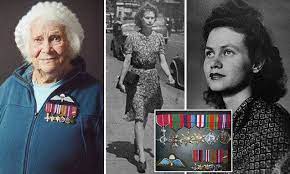
Phyllis ‘Pippa’ Latour MBE, Legion of Honour (France), 1939-45 Star, French and German Star, Croix de Guerre (France).

South African born Latour moved to England to join the Women’s Auxiliary Air Force (WAAF) but due to be able to speak fluent French and having spent time in the country she later came to the attention of the French Section of the Special Operations Executive (SOE).

After volunteering for hazardous missions and passing selection she completed the technically challenging training at the Wireless and Security School at Fawley Court, Buckinghamshire.

On the night of 1 May 1944 she parachuted into Normandy to join the Scientist circuit as their wireless operator and was constantly on the move to avoid being tracked down by German wireless direction-finders during which she sent over 135 messages to London to support the French Resistance whilst posing as a teenager whose family had moved away from the industrial areas to avoid Allied air raids.

Pippa1

After the war she married an Engineer with the surname Doyle and she never discussed her war service with her family until her children found an article about her on the internet in 2000. She now lives in Auckland, New Zealand and at the time of writing (November 2021) she has just turned 100 years old and is thought to be the last surviving member of SOE’s French Section. Since writing this Phyllis ‘Pippa’ Latour died on 7 October 2023 at the age of 102. 

Muriel Byck: SOE Wireless Operator

Muriel Byck was born to Jewish French parents on 4 June 1918 in Ealing, London. From the few records available it is known that from 1923 to 1924 she lived with her parents in Wiesbaden Germany and the family moved to France in 1926 before returning to London in 1930 where she continued her education at a French school in Kensington, London.
From 1936 to 1938 she worked as a secretary and then became an assistant stage manager at the Gate Theatre. At the outbreak of war she undertook voluntary work with the Red Cross and also the WVS (Women’s Voluntary Service) and in 1941 she moved to Torquay and worked as an Air Raid Precaution Warden.

In December 1942 she joined the WAAF (Women’s Auxiliary Air Force) as a general duties clerk and was recruited by the Special Operations Executive (SOE) in September 1943.

After passing the Student Assessment Board at Winterfold House in Cranleigh Surrey, it was claimed she attended the unconventional warfare course in Scotland, but this is unlikely because agent trained wireless operators were specialists with a high degree of technical competence who were difficult to replace and were forbidden from engaging in aggressive operations. Documents also show she completed her wireless and security training at Thame Park in Oxfordshire and then passed the compulsory and academically challenging trade craft course at Beaulieu.

Wt iwm

On the night of 8-9 April 1944 Muriel Byck along with three other agents infiltrated France by parachute and after going their separate ways Byck joined the Ventriloquist circuit organised by SOE agent Philippe de Vomécourt to work as his wireless operator.
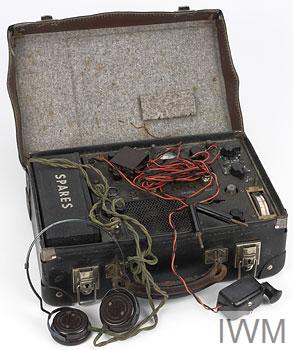
Using the cover name of Violette Michéle and pretending to be the niece of Philippe de Vomécourt, who used several cover names but was generally known as Antoine, she chose several safe houses to use her wireless to receive orders and make arrangements for weapons, explosives and other equipment to be dropped by parachute; she was always on the move to avoid being located by German wireless direction finders and ensured her wireless traffic was sent in under twenty minutes to lower the chances of her location being discovered.
One of her safe houses was in the town of Salaries in central France which was owned by a member of the resistance called Antoine Vincent and she used her wireless from a shed behind a garage in Limoges until she noticed it was under surveillance and immediately changed her location, name and cover story.

She then moved into the home of a blacksmith and transmitted from several properties. Sometime in May 1944 (dates vary according to sources) Philippe de Vomécourt arrived at the blacksmith’s house to find Muriel Byck collapsed on the floor unconscious and called a doctor who worked for the resistance who diagnosed an advance stage of meningitis requiring immediate hospital treatment. The doctor warned de Vomécourt he had no contacts at the hospital he could trust and the Germans were always notified of new admissions and both were concerned her false identity papers would not pass close examination but an hospital was her only chance of survival.

After placing her on the rear seat of a car de Vomécourt drove her to the nearest hospital and after obtaining assistance from a nurse he disappeared before questions could be asked.
On 23 May 1944, at the age of 25, Muriel Byck died in hospital from Meningitis. She was buried in Romorantin, a commune and town in the Loir-et-Cher department and for many years her grave was tended by local people who also commemorated the anniversary of her death as a heroine of the resistance and her body was later moved to the Pornic War Cemetery.
After the war it was alleged, but never substantiated, that her mother insisted her daughter’s medals be destroyed.