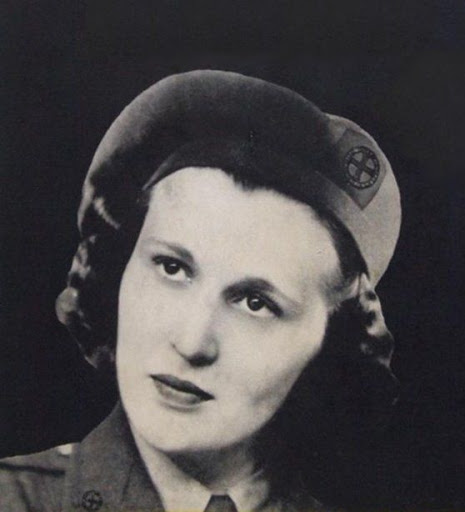
The SOE Agent in France and her husband working for the Gestapo.

Suzanne Warenghem (Warren) who served with SOE DF Section in France

Due to conspiracy theories and published accounts which vary considerably the story of Suzanne Warenghem and her treacherous husband Harold Cole is complex and beyond the scope of this short article. Consequently, the following is an overview of events leading to the deaths of an unknown number of agents and French citizens of which Suzanne Warenghem, who later changed her surname to Warren, was unaware until her husband was exposed by other agents.    

In an article written by Jacques Ghémard he describes Suzanne Warenghem as a 19-year-old British agent serving with the Special Operation Executive (SOE) who worked with the PAT escape line. If Warenghem, as Ghémard states, was serving with SOE she was likely to be a member of DF Section which was an independent subsection within SOE responsible for escape and evasion which worked closely with similar organisations including MI9, and this would account for her connection with the escape line.

After being arrested, which is discussed later, Warenghem was sent to Castres prison in southern France where she met Blanche Charlet an agent serving with SOE’s F Section who had been captured along with her wireless operator Brian Stonehouse.  The two women quickly became friends and later escaped together during an audacious mass escape consisting of around 37 prisoners. Several decades after the war Blanch Charlet became relatively well known by historians but Suzanne Warenghem along with her war service and achievements as an agent was overshadowed by the story of her treacherous English husband Harold Cole.

After the war Airey Neave (MI9) said “Cole was among the most selfish and callous traitors who ever served the enemy in time of war”

James Langley who also served with MI9 said, “Cole was a con man, thief and utter shit who betrayed his country to the highest bidder for money”.   

The PAT Escape Line

Susanne Wareneghem and her husband Harold Cole worked for the Pat O’Leary Line which was also referred to as the PAT Line, O’Leary Line, PAO and PAT, and this underground network was financed by MI9 in London to facilitate escape and evasion of allied soldiers and airmen and is credited for assisting over 5,000 military personnel,  mainly consisting of downed aircrews, to escape occupied Belgium and the Netherland and it is thought PAT rescued over 600 allied soldiers and airmen from France.

Although PAT was the largest escape line it worked jointly with MI9, DF Section SOE, the Comet Line, Shelburne Escape Line, Overcloud and several others which were established and run by French citizens after Operation Dynamo which was the emergency evacuation of Dunkirk in 1940. It has also been estimated around 12,000 people, nearly all civilians and around half of which were women worked on the escape line and a conservative estimate of the number of those captured and subsequently executed is around 500 to 575.

All these escape lines were busy throughout the war and according to author Douglas Reanne one former member said:  “It was raining aviators at the height of WW2… On 14 October 1943, 82 bombers with 800 crew members of the US Eighth Air Force were shot down or crashed landed in occupied Europe. Most were killed or captured but some were rescued by the escape lines and made it safely back to England”.

There are also many accounts of RAF aircrews, which at the time was very cosmopolitan, being rescued by civilians who were aware if they were caught by the Germans they would be executed, and their families were also in mortal danger from being used as deterrents.   
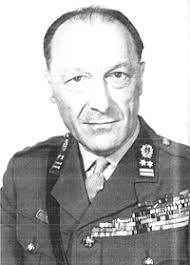
Albert Guérisse, head of the Pat O’Leary Line which operated in France, Belgium and the Netherlands

The Abwehr (German Military Intelligence), Gestapo and Milice were always competing for the recruitment of double agents and collaborators from the small number of morally bankrupt members of society who were willing to sell people to the Germans and were not concerned those they informed on were likely to be executed or deported to concentration camps.     

This was not unique to France, in most countries under occupation could be found the morally disengaged who were willing to sell members of their communities to the highest bidder and this was often the Gestapo whose reputation for brutality was well known throughout occupied Europe. 
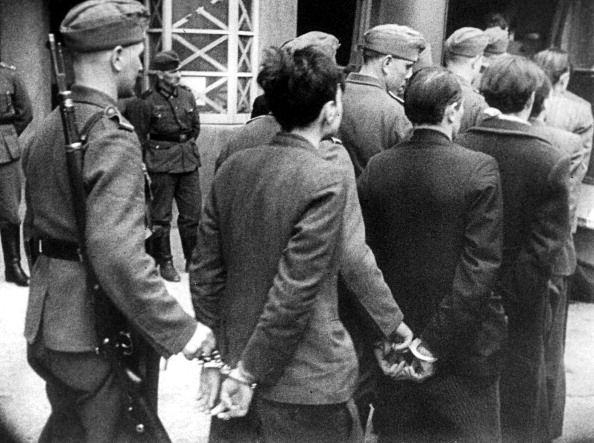
From Federal German Archives.

An important part of the German and Milice counter-resistance operations was the infiltration of escape lines and blocking known routes to neutral Spain and Switzerland.
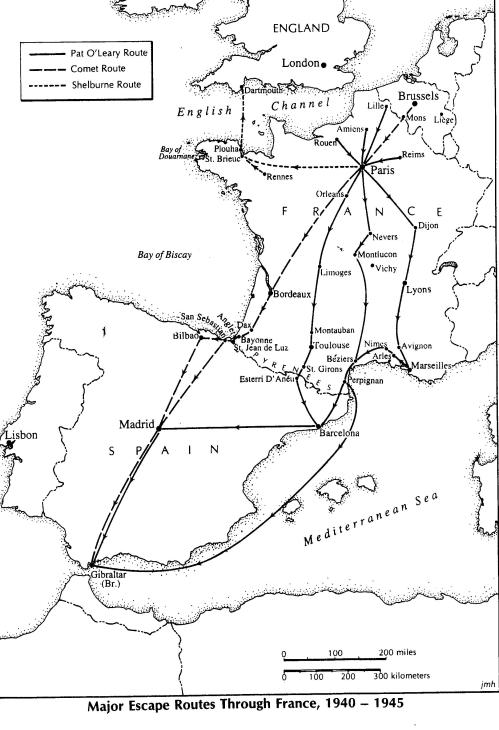
The Germans were aware the escape network consisted of a large number of civilians scattered throughout France with each member being responsible for their own section of the line (route) who delivered escapers further along the escape line where other members took over and this process continued until they reached neutral Spain; occasionally small groups of escapers were taken to an isolated prearranged location in France to wait for an emergency extraction by air or sea.
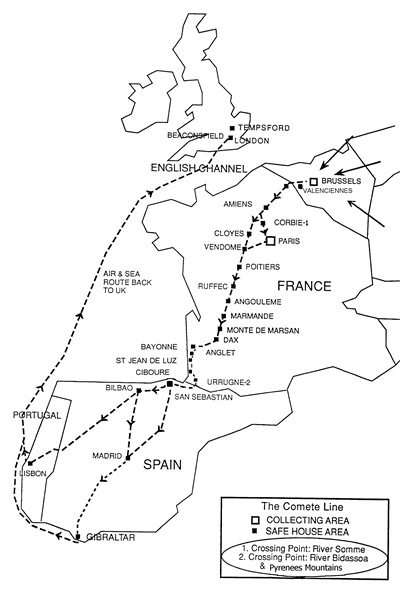
Senior Abwehr and Gestapo officers also discovered the structure of the escape network presented a number of security issues they could exploit. It’s vast size, for instance, occasionally made communications and intelligence sharing difficult and due to the network being responsible for transporting people they did not know and whose identities could be difficult to verify, German agents attempted to infiltrate networks by claiming they were airmen in need of help after being shot down or crash landing in France or Belgium and some were shot after their cover stories failed to pass scrutiny.  

There is also an unsubstantiated account of the body of a German agent being placed in a packing case and posted to the Gestapo with a note saying, ‘complements of British Intelligence’.  

Apart from the security issues associated with assisting ‘strangers’ whose identities could be difficult to verify the Germans were aware a double agent or a well-placed informer could cause considerable damage to the entire network and Harold Cole began using his position in the PAT line to make a lucrative income by selling men and women who trusted him to the Germans. 
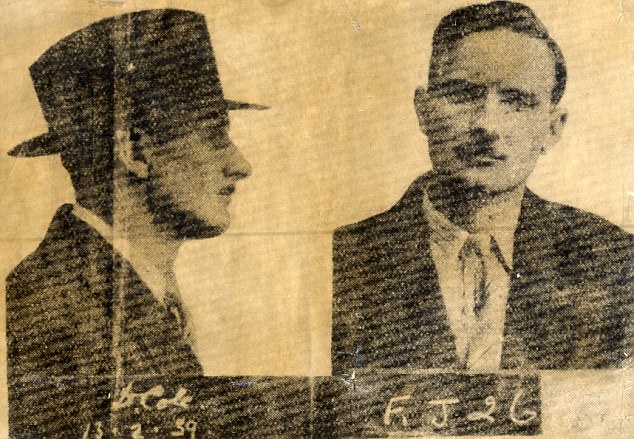
   British police photograph of Harold Cole dated 13 February 1939. Five months before the BEF was sent to France.

Harold Cole was born in the east end of London on 24 January 1906 and after leaving school at the age of 14 he quickly became known to the police as a petty criminal, embezzler and con man and was sent to prison several times. During his criminal career he used several identities, during one scam he convinced people he was a former British Army officer who had served in Hong Kong and for another he claimed to be Wing Commander Wain of the Royal Air Force.

 In 1939 he enlisted into the Royal Engineers and shortly after arriving in France as part of the British Expeditionary Force Cole was arrested after it was discovered he had stolen all the money from the officers and Sergeants mess before leaving England.  During the confusion of Operation Dynamo, the emergency evacuation of Dunkirk, his guards were naturally more concerned in surviving the German onslaught than guarding a petty thief and Cole soon found an opportunity to escape, but after being stranded in occupied France instead of attempting to escape to England Cole felt confident he could use the occupation to his advantage and began developing a new scam.   

According to Brendon Murphy who wrote ‘Turncoat’, Cole convinced a wealthy businessman named François Duprez he was Captain Delobel of British Intelligence and then persuaded him to finance an underground organisation to rescue British, French and Belgium soldiers and help them reach England. Escape lines required a string of expensive safehouses, helpers had to be paid and transport needed to be obtained and these along with other expenses finance by Duprez were considerable.  Though Cole is known to have rescued a number of servicemen and helped them reach England he is also known to have kept most of the money he obtained from Duprez.  

Eventually the mysterious Captain Delobel came to the attention of MI9 in London and they asked MI5 to conduct background checks. After discovering his real name and informing MI9 of Cole’s string of convictions which included burglary, fraud, theft and various swindles MI9 decided to disregard his long criminal background because he was helping British and allied military personnel to escape and there was no indication this was simply a continuation of his criminal career rather than patriotism.

After Cole was arrested by the Abwehr he willingly provided names and addresses of people in his network and was later accused of hiding in the back of a car whilst pointing out members in the street whose names he did not know. After a large number of arrests Cole agreed to work for the Abwehr but was offered more money by the Gestapo and as James Langley said he betrayed his country (and his friends) to the highest bidder and began working for the Gestapo.      

Cole was arrested several times by the Germans but according to witnesses he was never roughly treated and was quickly released, and because his arrest sometimes coincided with the arrest of those he identified to the Gestapo, led to speculation these were orchestrated in an attempt to prevent raising suspicion among members of his network.  Apart from Harold Cole being responsible for mass arrests in Lillie which resulted in that section of the line collapsing his close working relationship with Kurt Lischka, the Gestapo chief in Paris who after the Normandy landings helped Cole escape is testament to his importance as a double agent and his influence within the Gestapo.   

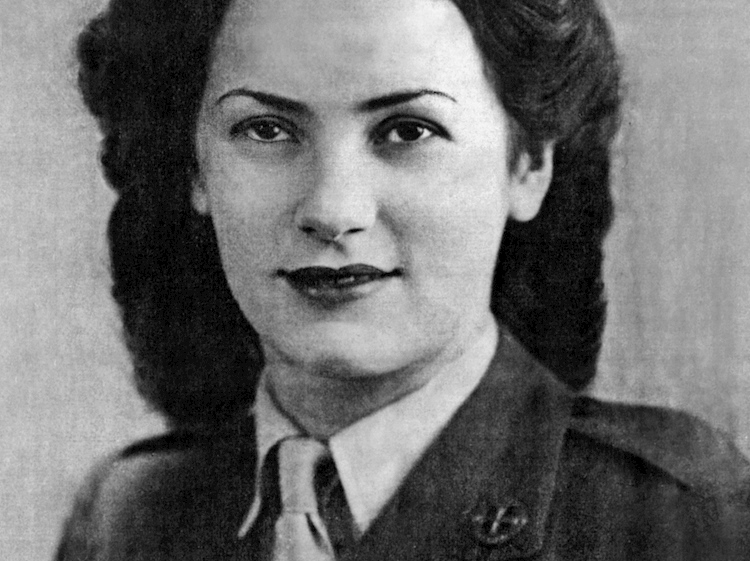
Suzanne Warenghem
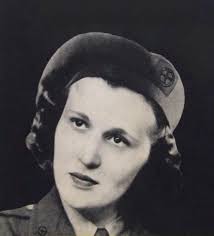
Suzanne Warenghem

    According to several writers Suzanne Warenghem was 19-years-old when she started working on the PAT line with Harold Cole and if correct she was one of the youngest SOE agents in France.    

Warenghem has been described as intelligent, resourceful and brave but naive when it came to relationships and Cole was highly regarded for his politeness, charm, friendliness, his kindly disposition and concern for others which created a false sense of security. Those who trusted Cole, including Suzanne Warenghem who he married in Paris on 10 April 1942, were shocked after discovering he was working for the Gestapo and was aware members of the resistance he was informing on were being executed or sent to concentration camps.

After being identified as a Gestapo agent Cole is thought to have made his way to Paris to continue his work with the Gestapo and It is known he was at their headquarters in Paris when the allies landed in Normandy.

Suzanne Warenghem who was now pregnant and feared her husband, travelled to Marseille to join an escape line where some writers say her child was still born, and sometime in March 1943 she was arrested and sent to Castres prison where she met SOE agent Blanche Charlet.    
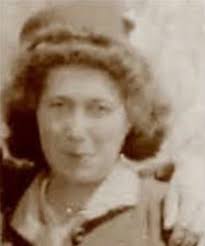
Blanche Charlet who served with F Section SOE

 On 16 September 1943 Warenghem and Charlet escaped from prison and made for open countryside and because they had no money and were unable to contact London they decided to approach the first farmhouse they came to and ask for help whilst hoping they were patriots and to their great relief they were in luck. After explaining they worked for the resistance and had just escaped from prison they were told to climb onto the back of an open horse drawn cart, the Farmer and his family then hid them under straw before taking them to a Benedictine monastery where the monks fed and sheltered them for two months. After the search for them had been called off and it was considered safe to move through the countryside the monks delivered Warenghem and Charlet to members of the resistance who were known to be operating in the area.    

After contacting SOE in London via a wireless link they were involved in a very long and dangerous trek across France which required putting into practice all the escape and evasion skills they had been taught whilst knowing they were on the wanted list and their prison photographs were being circulated.  

 Suzanne Warenghem and Blanche Charlet were told to make for a rendezvous point where they would meet a guide who would take them across the Pyrenees into neutral Spain but by the time they arrived the weather had deteriorated, and the snow was too deep to cross the mountains. They were then told to make their way to Paris and await orders from London and several days later they received instructions to meet a contact in Lyon but by the time they arrived this contact had been arrested. They then received orders to go to the Jura Mountains were arrangements were being made for them to cross the border into Switzerland but shortly after making the long and difficult trip they were informed the escape line contact had been arrested several days previous. They were then given the location of a rendezvous point in Brittany around 919.8 km (over 571 miles) away where an extraction by sea had been arranged. By the time they reached Brittany and were being taken by rowing boat at night to a felucca waiting a safe distance from the shore they were suffering from extreme exhaustion and had not eaten for several days. After arriving in Gibraltar, the British Consulate arranged food, clothing and accommodation where they stayed for two weeks in order to recover from their ordeal and then boarded a ship which was part of a convoy with Royal Navy escorts bound for England.

After the war there was sufficient evidence to convict Harold Cole for treason and on 8 January 1946 he was shot dead by French police whilst attempting to evade capture. 

Received from reader: “Suzanne Warenghem was my mother in law and her son Patrick lived for three months before dying of malnutrition because the nanny looking after him spent the money given to her for his care, according to Suzanne.”
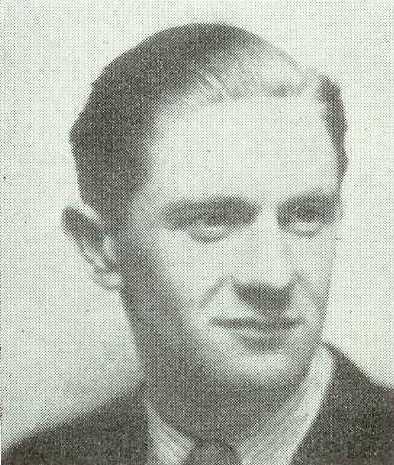
Elaine Madden Special Operations Executive T Section (Belgium)

Elaine Madden

This section became operational in December 1940 as an independent offshoot of the French Section and was commanded by Grenadier Guards officer Claude Knight and later by Hardy Amies. When it comes to agent fatalities as a result of wireless deception by the Abwehr (German military intelligence) the methods used in Belgium have many similarities to those experienced by SOE’s N section (Netherland).

Belgium under occupation and the Special Operations Executive

Emile Tromme, thought to be the first T Section agent to arrive in Belgium.

Emile Tromme is widely said to be the first agent to arrive by parachute: some writers claim in May 1941 he landed inside a prisoner of war camp and it took him four months to escape and after escaping he continued his resistance work; It has also been claimed on 13 May 1941 he arrived safely by parachute north of Vielsalm and formed a group of saboteurs around Verviers. The only reliable record confirms he was executed by the Germans sometime in February 1942.

According to former T Section agent Jacques Doneux who arrived in Belgium by parachute in 1943, in October 1942 his headquarters in London were unaware out of the 45 agents and 18 wireless operators sent to Belgium only 13 had not been captured, most of their wirelesses and codes were in German hands and being ‘played back’ to London. This deception is sometimes referred to as the ‘wireless war’ which was also being successfully employed in the Netherlands and both sections found themselves dropping agents and weapons to the Germans, but for various reasons this ploy was less successful in France.   

  Due to the politics of the period not least the political rivalries between various groups of Belgium resisters, apart from published war memoirs of a non-political nature written by former T Section agents such as ‘They Arrived by Moonlight’, by Captain Jacques Doneux, and Elaine Madden’s ‘I heard my country Calling’, reliable information and official accounts on SOE operations in Belgium are difficult to find.

Elaine Madden

Elaine Madden was only 16 (some claim she was 17) when Belgium, France and the Netherland was invaded by Germany and Elaine and her aunt Simone Duponselle were making their way to the coast in the hope of avoiding the German advance and were later found by British troops hiding in a barn, another source said the soldiers passed them in a car and offered them a lift, Irrespective of which version is correct, the soldiers said they would attempt to get them on a boat leaving Dunkirk for England.    

When they arrived in Dunkirk British troops gave Elaine and her aunt greatcoats, helmets and gas masks to disguise them as soldiers and whilst climbing a rope ladder onto a trawler the captain noticed the two women but decided to turn a blind eye to his two stowaways.  After reaching England they were questioned by MI5 before being allowed to stay with an aunt living in Streatham London.    

On 7 May 1944 Elaine was twenty and apart from being of recruitment age MI5 had already marked her file as a potential agent and this information had been passed to SOE.   Elaine was discretely approach by an SOE recruiter and asked whether she was willing to volunteer for hazardous missions in Belgium and after being warned of the great risks she would face Elaine volunteered.

  Madden successfully passed the Students’ Assessment Board (SAB) in Cranleigh, Surrey before passing the comprehensive course on subversive warfare in Scotland and the mandatory trade craft at the Beaulieu finishing school on the edge of the New Forrest in Hampshire. She was then formally a member of SOE and given the cover name Elaine Meeus and provided with forged identity papers. She also had to remember back stories to support her fictitious life.

Sometime in 1944 she arrived in Belgium by parachute with instructions to act as a courier for circuit leader André Wendelen who was running a group of saboteurs and their wireless operator Jacques Van de Spiegel. As a courier Elaine Madden was responsible for the difficult and dangerous task of liaising and passing orders to scattered members of the resistance to ensure their activities supported the allied strategy: some targets such as bridges, railways and communications had to be destroyed whilst others were only disrupted and could easily be repaired and used by the allies.   

During her resistance work Madden was given a lift in a vehicle by a German officer whilst carrying a wireless transmitter in her suitcase and on several occasions was forced to use various counter-surveillance drills to lose members of the Abwehr and Gestapo she noticed following her.  

After the war Madden worked for an organisation responsible for tracing missing T Section agents and political prisoners during which she conducted investigations at Buchenwald, Dachau, Bergen-Belsen and Flossenberg Concentration Camps and after a long investigation she only found two survivors the remainder had been executed.

Although Madden was almost captured several times she always said, “I wasn’t a heroine… Just young and excited…  but I can still look in the mirror and feel proud.”


George Begue: SOE’s first Agent/Wireless operator in France

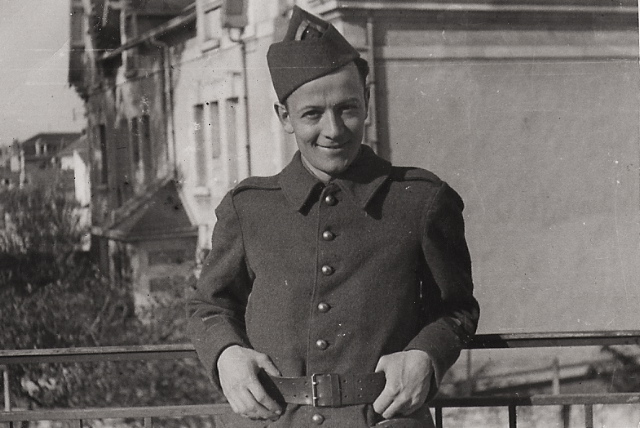
George Bague whilst serving in the French Army prior to Dunkirk and joining SOE

On the night of 5/6 May 1941 George Begue (aka George Noble) was listed as the first SOE agent and wireless operator to arrive in wartime France after parachuting ‘blind’, that is, with no friendly contacts on the ground and several days later he transmitted the first wireless messages to SOE in London.

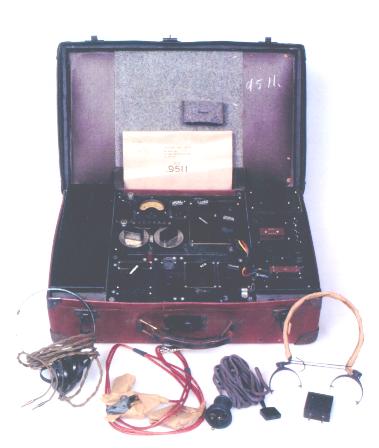
 Suitcase Morse transceiver of the type popularly used by SOE in France.

As increasing numbers of non-wireless trained agents arrived in France his wireless traffic also increased, and he used several safe-houses scattered over a wide area to avoid his signal being detected and his position located. He was aware the full resources of the German wireless detection section were attempting to find him but due to a backlog of messages waiting to be sent to London he decided to regularly transmit longer than the recommended twenty-minutes and was aware this made it easier for the Germans to track him down.  

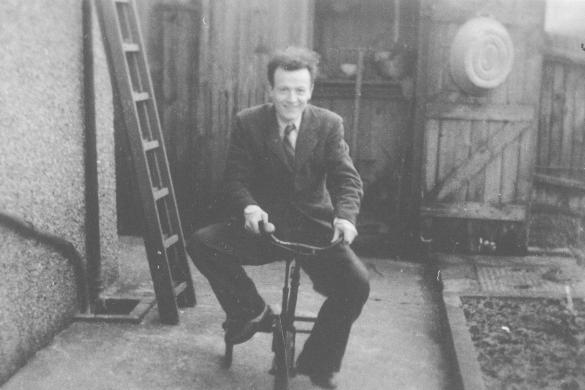
George Begue. Thought to have been taking whilst convalescing with his wife and children in England after Dunkirk.

It was George Beque who arranged the first weapons, explosives and finance to be dropped to the resistance by parachute, he also arranged the first agent pickup by Lysander Aircraft from No. 161 Special Duties Squadron RAF which landed on remote farmland, and to maintain regular contact with London Begue frequently took calculated risks.  It was also George Beque who developed wireless security procedures through a dangerous process of trial and error.

Although wireless detection teams failed to find him, on the 3 October 1941 Begue was arrested at a safe house in Marseilles by the Milice; it is believed the property had been blown and was under surveillance and this is supported by the fact several agents and local French resisters were also arrested after visiting the same property.   

On the night of 16 July 1942 George Begue along with other agents and members of the resistance escaped from a prison camp in Mauzac. For several days they lived off the land deep inside a forest before travelling separately to meet guides working for an escape line and all eventually crossed the Pyrenees into neutral Spain. 

After returning to London Beque became the Signals Officer for the French Section based at their headquarters at Norgeby House in Baker Street London where he was widely known as George Noble and he held this position until the end of the war.  The majority of agents who escaped Mauzac later returned to France but most did not survive.  

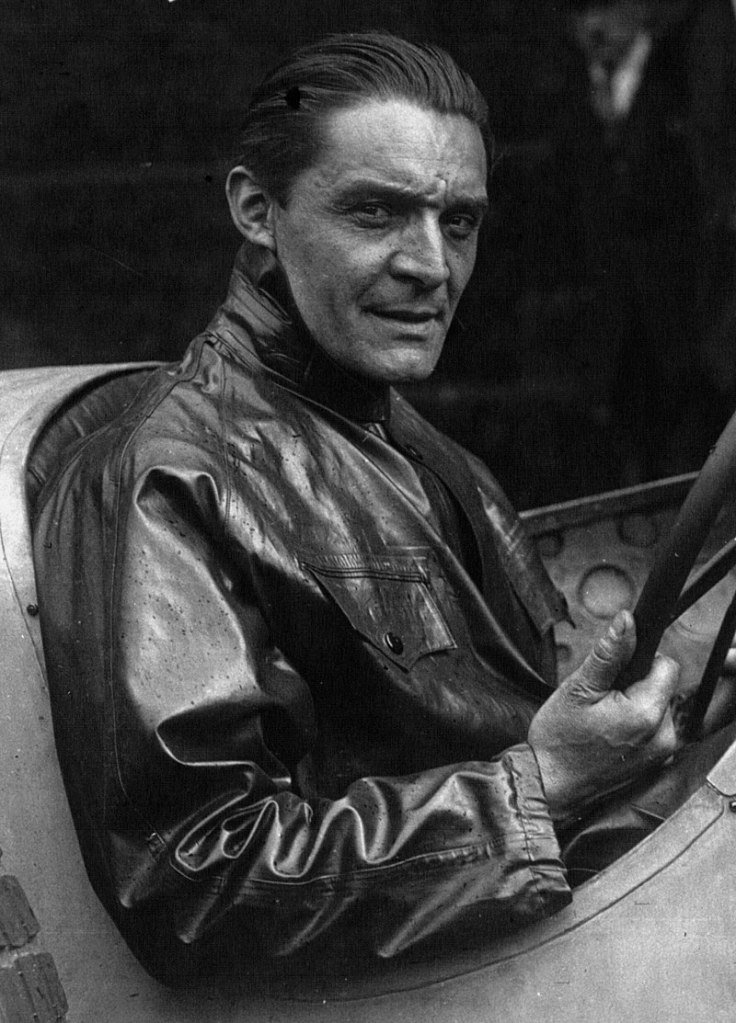
Robert Benoist, SOE (Special Operations Executive)


Robert Benoist was a French Grand Prix racing driver who escaped to England when France was occupied in 1940. Whilst in England he successfully passed selection and training for the Special Operations Executive (SOE) and returned to France to establish clandestine networks. He was also responsible for the reception of arms and explosives dropped by parachute and setup arms dumps in the Rambouillet Forest. Sometime in June 1943 he was arrested by the Gestapo and whilst being driven to Gestapo Headquarters he threw himself from the moving vehicle and escaped and was eventually extracted and returned to England. Several months later he returned to France to continue his resistance work and was later recalled to England for a briefing and additional training. In February 1944 he undertook his third mission to France and arrived with orders to prepare clandestine circuits in the Nantes region and ensure they were ready to support the Allies during D-Day by attacking prearranged targets to slowdown the German advance to Normandy.   

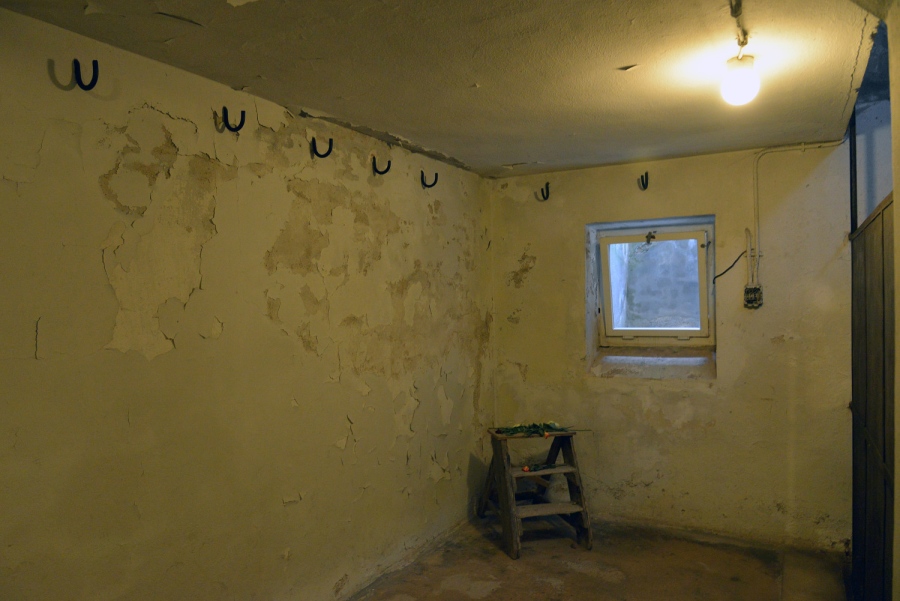
On 18 June 1944 Robert Benoist was again captured by the Gestapo and sent to Buchenwald Concentration camp where, along with fifteen other SOE prisoners was executed by slow strangulation after being hung with piano wire from hooks on the wall in the crematorium. Captain Robert Benoist is recorded on the Brookwood Memorial in Surrey and also on the SOE memorial in Valençay.   

Execution hooks on the wall of the crematorium at Buchenwald

Auxiliary Units: Britain’s Resistance Network during WW2.

Documentary 2008

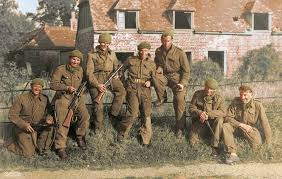
I found the interviews of former members of the Auxiliary informative but have mixed feelings about the dramatic reconstructions although these were based on events in occupied Europe and would have occurred in the UK if Germany had successfully invaded.

The Night Pilot Who Helped the French Resistance.

No. 161 Special Duties Squadron

Hugh Verity was a night fighter pilot until 1942 when he volunteered for RAF special duties and became involved in one of the most extraordinary and effective operations of the secret war – flying from England’s Sussex coast in a single-engine Lysander aircraft and landing in German occupied France delivering and collecting SOE, SIS agents and members of the French Resistance. This Timeline production examines these moonlight missions between 1941 to 1944.

i

Dutch Resistance 1941-43: SOE’s Greatest Disaster in occupied Europe

Englandspiel Monument (the fall of Icarus) in the Hague Netherlands

In 1941 the Dutch (D) Section of the Special Operations Executive (SOE) under Major Bingham started sending trained agents to the Netherlands by parachute and like other country sections their role was to recruit resisters from the civilian population before providing training, arms and directing their resistance activities to support the Allied strategy.  

Among the first agents to arrive was saboteur Thijs Taconnis and a wireless operator named Hurbert Lauwers, but as they climbed into the converted Halifax bomber at RAF Tempsford D Section was unaware the underground network they were sent to join had been infiltrated by a double agent and both were quickly captured along with Lauwers’s wireless and personal codes.   

Lauwers was forced to contact London under German supervision but included within the body of the message prearranged codes indicating he had been captured and his wireless was under German control. To his great surprise and frustration his warning codes were either overlooked or ignored and London ask for the coordinates of a DZ (drop zone) for the arrival of a new agent. This was the start of the ‘Englandspiel’ (England Game) under Abwehr Lieutenant Colonel Hermann Joseph Giskes.

Lieutenant Colonel Hermann Joseph Giskes.

For around 18 months the Dutch Section was happy with the news coming from the Netherlands: they had 62 underground networks consisting of around 420 Dutch civilians who were being trained to fight the occupying forces and at the request of these ‘networks’ the RAF dropped a large quantity of weapons, sabotage stores and money to finance their operations.

D Section was oblivious to the fact most of the resistance was in hiding: The Gestapo and Abwehr were attempting to track them down, there were mass arrests and German security forces knew everything about their network.

Leo Marks, Head of SOE Codes and Ciphers

The first person in London to suspect there were serious problems in the Netherlands was SOE’s head of codes and ciphers, 22-year-old Leo Marks, who suddenly realised what had been worrying him for some time about the Dutch radio traffic, Marks later explained:

“What I discovered was we had never received an indecipherable message from Holland due to mistakes in coding…”

Wireless operators were always under immense pressure: they had to send their message as quickly as possible to avoid wireless detection teams finding their location and under these stressful conditions it was considered inevitable an operator would make several mistakes in their coding; but his concerns were rejected by the Dutch Section which continued to send agents, weapons and sabotage stores by parachute.  

After bringing his concerns to the attention of Brigadier Nicholls, the head of the signals section, Marks was asked to provide proof of his suspicions because the Dutch Section claimed they had ways of checking on their agents and were adamant there were no issues. Marks then sent an indecipherable message to Holland- one which could only be broken by a trained code breaker; a genuine agent would ask for the message to be repeated but this did not happen, Marks explained:

 “The fact that they didn’t say repeat that message immediately which they would do if they ever got an indecipherable message from London, which was very rare, told me beyond doubt the Dutch agents had been captured. There was no other conceivable explanation…”

The wireless operators in England were also concerned about the sending style of the agents under their charge and suspected they were receiving wireless traffic from German operators, but the Dutch Section rejected their concerns.

German agents always signed off with the letters HH (Heil Hitler) so Marks sent a false message to the Netherlands and signed off with HH and back came the instantaneous response HH. Marks then knew there was a German operator at the other end.

Fourteen of the known agents delivered to the Gestapo by parachute.

Although the wireless channel was eventually closed whilst the damage was being assessed it was not until SOE agents Peter Diepenbroek and Johan Ubbink escaped from a prison camp in August 1943 that the full damage due to the ‘English Game’ started to be realised. Over a period of 18-months German operators had used 18 captured wireless sets and codes to create a ‘mousetrap’ in which 56 agents were parachuted to waiting members of the Gestapo, 11 RAF aircraft were shot down whilst delivering weapons and supplies to a resistance network controlled by the Germans but there are no figures regarding the fate of a conservative estimate of 420 civilians engaged in resistance.  

After the war Freyer, head of the German wireless section for western Europe, said:

“The transmitter of a group of agents is always a mailbox where everything goes in and out. And connected to the mailbox there is always the leadership of the organisation, and so, if we had the transmitter, then either the boss to operate it or via his right-hand man and via him we got further and further into the organisation. This explains why we invested so much effort into radio direction finding.”  He also went on to say, “some wireless operators were totally overwhelmed when they were discovered. The arrested men reacted in very different ways. Some were sort of composed, some knew their future and came to terms with it, and in one case we once arrested a man, and there was a big bang, he had soiled himself, we could smell it.”  

There was no mention of the wireless operators, men and women, tortured by the Gestapo for their codes and their subsequent executions.   

RAF Tempsford: Britain’s secret airfield during WW2.

DRAFT COPY

Gibraltar Farm near Sandy Bedfordshire was considered unsuitable for any form of flying because of frequent fog and most of the land being waterlogged but later considered ideal as a clandestine airfield because German air reconnaissance would likely reach the same conclusion. To add to the deception lines were painted across the runway which looked like hedgerows from the air, hangers etc looked like rundown farm buildings and after the allies gained air superiority over Europe many of these precautions were relaxed. The farm became RAF Tempsford and the home of 138 Special Duties squadron that was responsible for parachute operations supporting SOE, SIS and MI9, BCRA and resistance groups in occupied Europe and due to the land being unsuitable for aircraft crashes were frequent.

Halifax of 138 Squadron crashed on landing after tyre burst. (IWM)

161 Special Duties Squadron flew single engine Lysander Aircraft and later Hudson’s to transport agents and were responsible for air landings on remote farmland. During the moon period (SD Squadrons needed moonlight to navigate) 161 along with its ground crews were relocated to the fighter station at RAF Tangmere on the south coast. Because this station was almost 200 miles closer to France than Tempsford their aircraft which were also fitted with an extra fuel tank bolted between the undercarriage could fly deeper into France with sufficient fuel to return to Tangmere or divert to another field during an emergency.