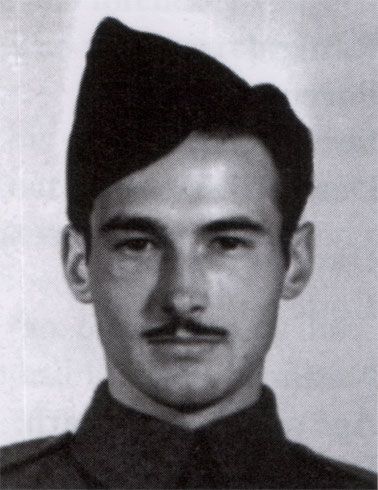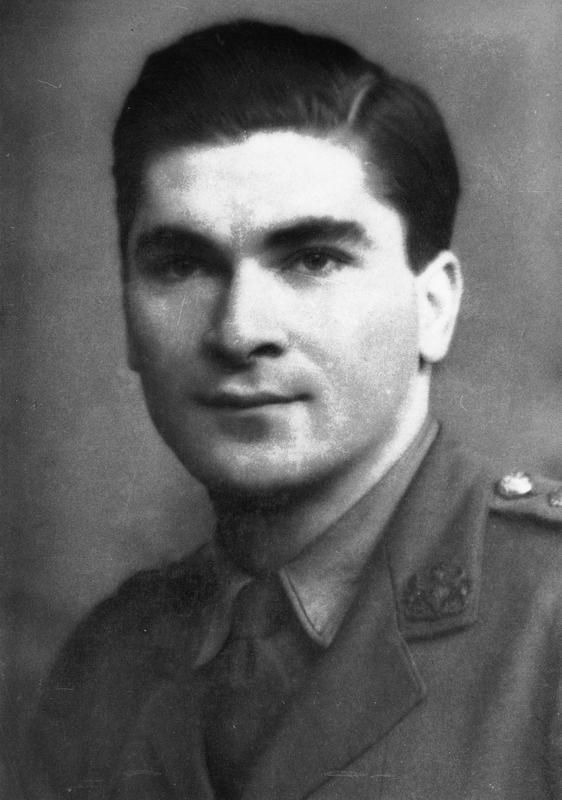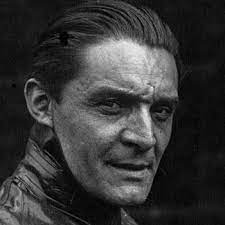
Filip Johansen: SOE Denmark Section (Code name Artichoke)

On the morning of 9 April 1940 Germany attacked Denmark and after sporadic fighting    during which cities and towns were bombed by the Luftwaffe the Danish government decided the German military was too powerful and after surrendering began cooperating with their occupying forces.
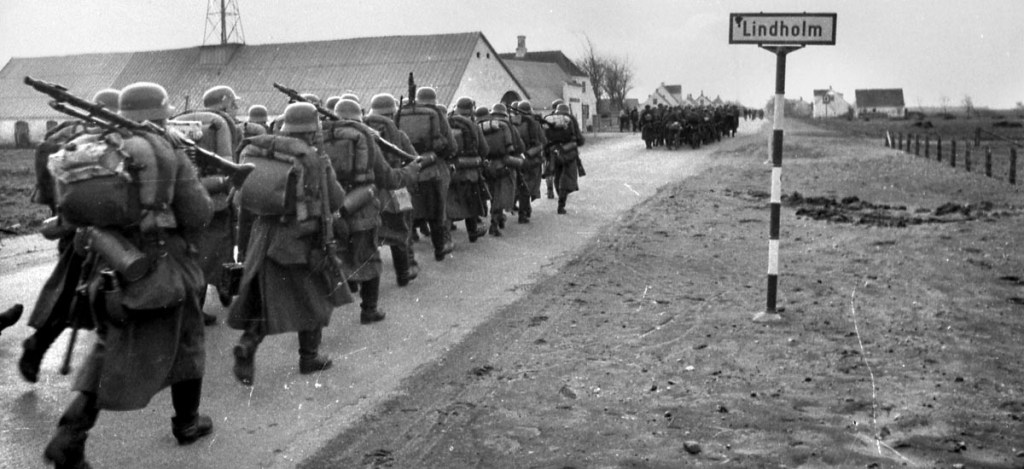
According to the Nationalmuseet the Danish government decided to cooperate with the German occupiers to preserve as much self-determination as possible for Denmark whilst still accommodating the wishes of the Germans and also sought to protect Danish society from the harsh measures which might be introduced by the Germans and the Danish Nazis (National Socialist Workers’ Party of Denmark).
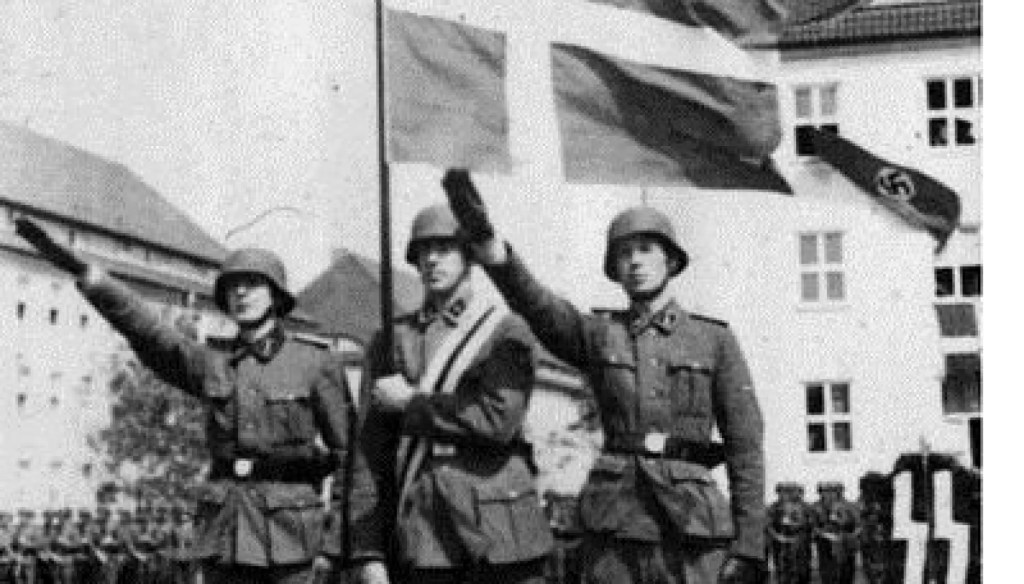
Danish volunteers – National Socialist Workers’ Party of Denmark.

Most Danes supported the strategy of their political leaders and according to SOE historians there was little effective resistance until SOE began sending agents to recruit volunteers before proving training, supplying weapons and organising resistance forces and among the 51 agents sent from London was Filip Johansen.

Prior to joining SOE Danish Section 23-year-old Johansen had served six months with the 8th Battalion the ‘Buff’s’ (East Kent Regiment). Johansen is thought to have completed agent training and selection on or shortly before 12 May 1943 because he was commissioned into SOE as a lieutenant on this date.

 The precise date Filip Johansen arrived in Denmark by parachute as a sabotage expert continues to be debated but is known he arrived when SOE was still building circuits and had no effective resistance in Denmark and Johansen later trained a number of saboteurs who later successfully attacked several strategic targets. Throughout 1943 resistance movements in Denmark were mainly supplied with sabotage stores by air and sea but as resistance increased throughout 1944 thousands of weapons were sent to hundreds of resisters and by late 1944 there is said to have been around 50,000 men and women engaged in all forms of resistance and this equated to 1% of the population. London regarded Denmark as being important for D-day because coordinated resistance would help tie-down German forces that otherwise might be deployed to northern France. Apart from recruiting, training, support and guidance Filip Johansen and the 56 other agents sent from Britain needed to bring together various political groups with conflicting post-war political agendas.

How Johansen’s cover was eventually blown was never discovered and several accounts failed to pass close scrutiny. It is believed that on 25 July 1944 his safehouse which was an apartment in Copenhagen was surround by German troops under the command of the local Gestapo. There was no means of escape and to avoid capture and inevitable torture for information he swallowed his SOE issued ‘L’ pill (lethal) containing cyanide and died in less than thirty-seconds.  
Sir Anthony Palmer SOE Cairo (MEO)

The fate of Anthony Palmer and the twenty-three Jewish volunteers from Palestine under his command is not known and many rumours resulted in conflicting documents. It was later claimed SOE HQ in London did not do a full investigation in case the Germans learned of their interest as this might have placed them in greater danger!

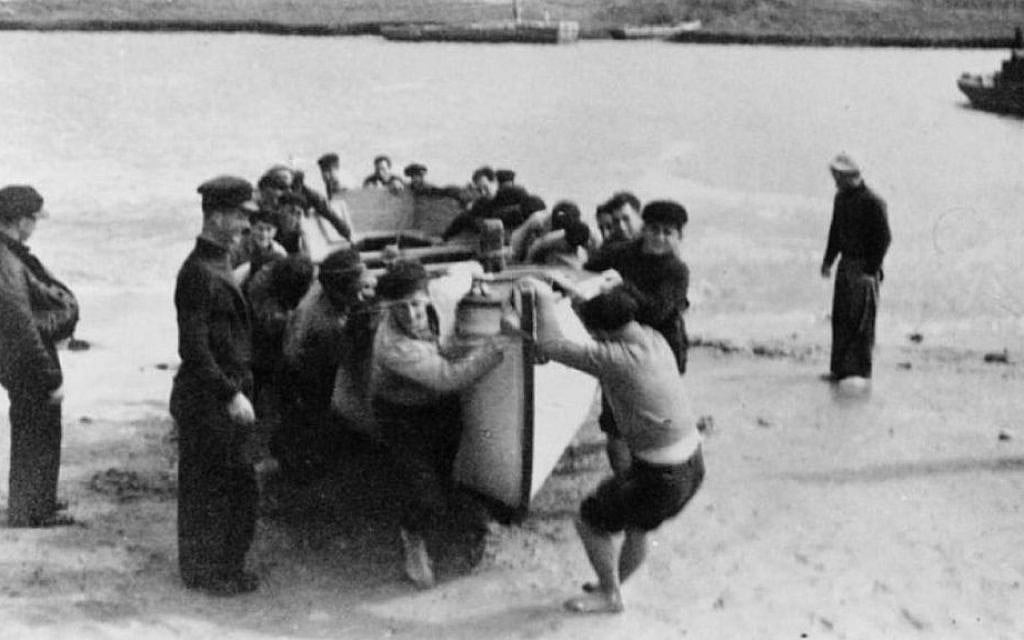
Jewish volunteer’s preparing for Operation (Jewish Times)

Operation Boatswain was a ‘coup-de-main’ operation (a single mission to attack a particular target). On Friday 18 May 1941 Palmer and twenty-three Jewish volunteers’ left the port of Haifa aboard Sea Lion (Ari Hayam) to destroy oil refineries near Tripoli but after leaving Haifa nothing was heard from them even though Sea Lion and the team had a wireless link to SOE Massingham in Algeria.

It was rumoured that Sea Lion was hit or was attacked by a British submarine but there is no evidence to support this claim. It was then said a Jewish agent in Lebanon reported that a number of bodies had been washed ashore, one appeared to be Palmer and the bodies were dressed in the same clothing worn by the raiding party.

On 6 June British wireless intelligence intercepted a German signal stating a British officer and a number of men in a motor boat had been picked up off the coast of Bardia, Libya. This was followed by rumours of a raiding party being executed; another rumour claimed Palmer and some men were alive and being held in a prison off the coast of Syria. There was then a report of Palmer and his men being taken to either Alexandretta or Antioch before being transported to Germany. There was also another report stating they were in a French prison.

Major Anthony Palmer and the men under his command are officially listed as “Place of death uncertain. Possibly lost in Aegean Sea.” The above is typical of the difficulties facing SOE historians when attempting to research operations, the fate of many agents and ‘coup-de-main’ operatives.  

Alan Malcher

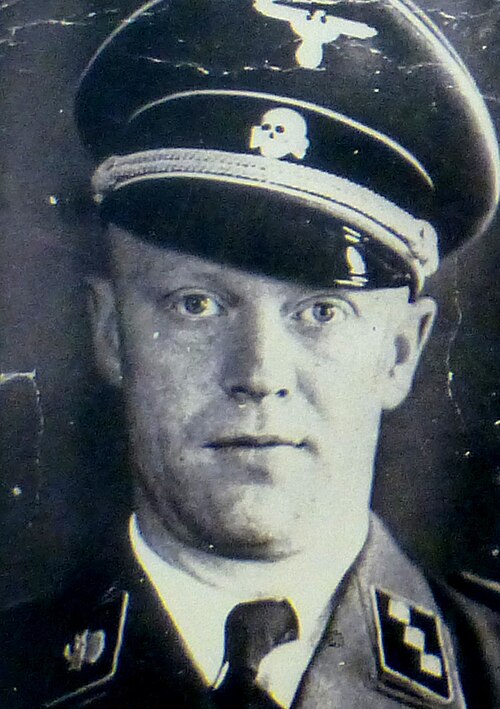
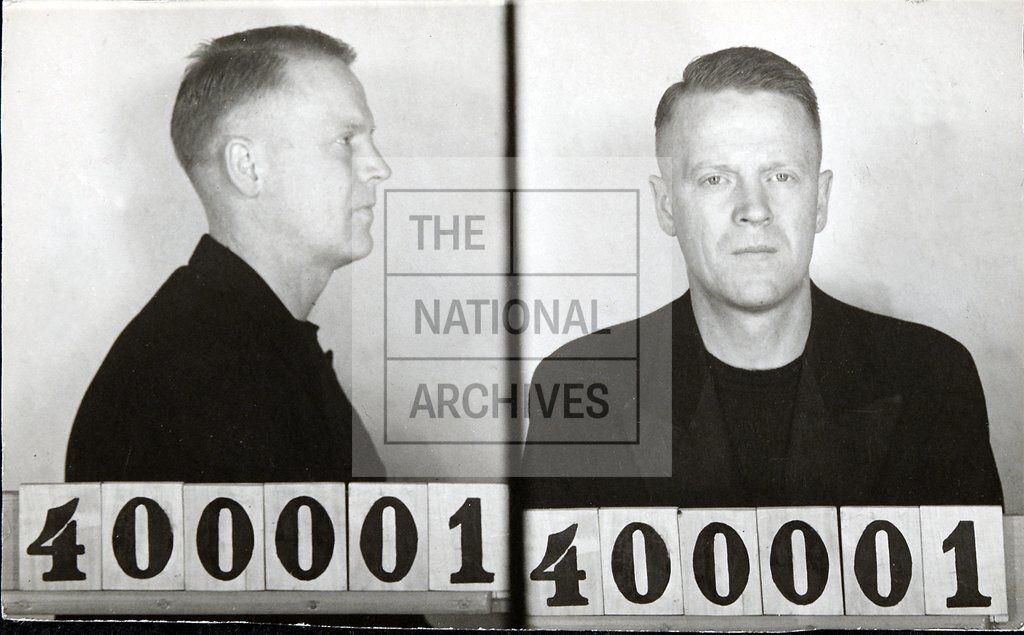
SS-Sturmbannfuhrer Fritz Suhren Commandant of Ravensbrûck concentration camp July 1942 to April 1945.

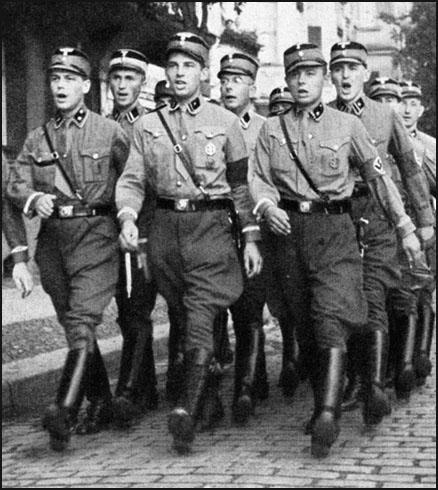
During 1928 Fritz Suhren joined the Nationalists Socialist German Workers Party (NSDAP) commonly referred to as the NAZI party and was also a member of the Sturmabteilung (SA) noted for its extreme violence against German Jews, communists and anyone opposed to the rise of Hitler.

Sturmabteilung (SA) (Image public domain)

Whilst serving as the Deputy Commandant at Sachsenhausen concentration camp he ordered a prisoner named Harry Naujok who was a German Communist and anti-fascist to hang another prisoner, but Naujok refused.  The gallows were fitted with a winch to ensure death was long and painful; surprisingly Naujok was not shot and was ordered to stand on the gallows next to the condemned prisoner and watch the man’s agonising death before another prisoner was forced to operate the winch.

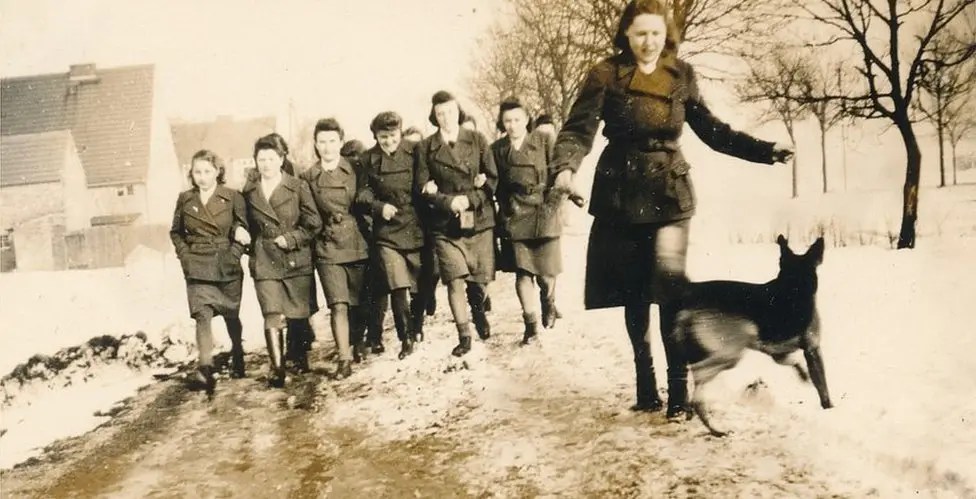
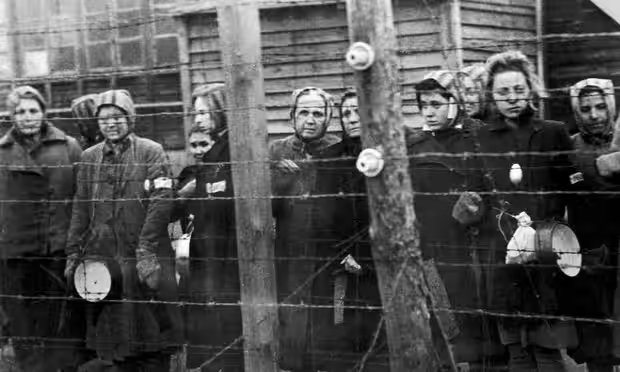
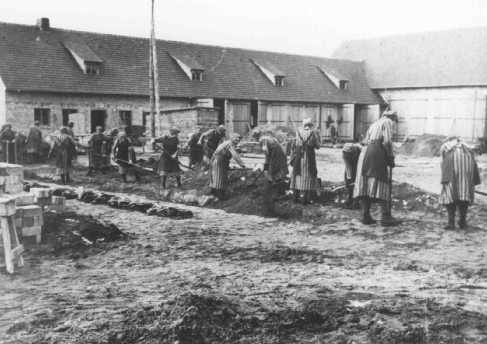
From July 1942 to April 1945 Suhren was the Commandant of Ravensbrûck concentration camp which was the largest camp for female political prisoners. The camp had over 150 female SS guards known as Aufseherin (overseer) who carried whips and used dogs to enforce discipline and were just as brutal as the male guards. Ravensbrûck was also a training camp for over   4,000 Aufseherin’s before they were assigned to other camps

c1940 Aufseherin’s

Photograph taken during the Liberation of Ravensbrûck (public domain)

Hard labour at Ravensbrûck

Elsie Maréchal worked for the Belgium end of the COMET escape line rescuing allied airmen and others before being arrested and transported to Ravensbrûck; during a war crimes tribunal she said “We were to die of misery, hunger and exhaustion… The first thing I saw when I arrived was a cart with all dead bodies piled on it… Their arms and legs hanging out and mouths and eyes wide open. We did not feel like we had the value of cattle. You worked or you died.”

SOE agent Odette Sansom mentioned a young girl 18 or 19 years old being shot through the head by an SS guard, “She was Fresh. Still warm when the women attacked her body. They were crazy, demented and needed to consume whatever they could to survive.”

Under Suhren’s command SS doctors, without anaesthetic or pain relief, carried out medical experiments on prisoners. Among the recorded experiments during which prisoners were awake include bone transplants, infecting bones and muscles with bacteria and experiments on female reproductive system. The camp also supplied women for brothels at several camps and most died from sexual violence and the rampant spread of sexually transmitted disease.

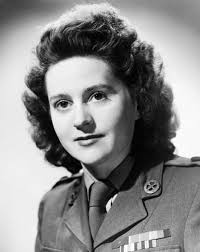
When SOE agent Odette Sansom had been arrested and tortured over several days and spent over a month in solitary confinement in a cell with no light or heating she convinced the Gestapo she was married to Peter Churchill, the agent who had been arrested with her and he was a close relative to British Prime minister Winston Churchill and the news of her powerful family connection through marriage rapidly spread and by the time she arrived at  Ravensbrûck Suhren and Berlin were not sure how to treat her.

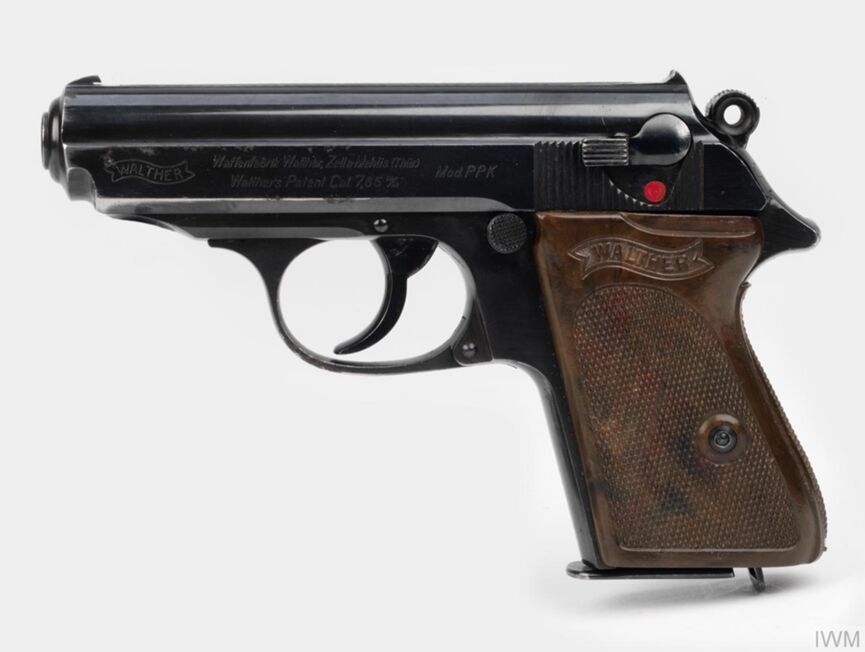
The Walther PPK belonging to Fritz Suhren now part of the Imperial War Museum collection.

Odette Sansom GC.

After the defeat of Germany was seen as inevitable and the Soviet Army would liberate the camp Suhren was fearful of being captured by the Russians. Suhren had been taken in by the lie of Odette’s family connection and believed Winston Churchill would be lenient for saving the life of a member of his family and would not be convicted of war crimes despite the overwhelming evidence against him. Fritz Suhren gave Odette Sansom his Walther PPK pistol, now on display at the Imperial War Museum in London, before they drove to the American lines and Sansom gave her notorious prisoner to a group of surprised American soldiers.

    Fritz Suhren later escaped and during the Hamburg Ravensbrûck trial Suhren was found guilty of war crimes, crimes against humanity and sentence to death in absentia.  Suhren had fled to Bavaria where he was caught by American forces in 1949 and sent to the French Occupied Zone and was executed by firing squad on 12 June 1950 along with SS guard Hans Pflaum.  

Fritz Suhren after his arrest and traken to the French Zone.

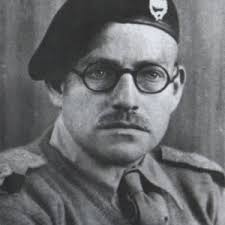
Major John Sehmer: SOE Serbia and Hungary.

Major John Sehmer whose home unit was the Royal Tank Regiment had already completed an SOE mission in Serbia when he volunteered for a second mission to Hungary accompanied by Private Willis and Wilson as part of Operation Windproof in Slovakia and Hungary to encourage and support a Slovak uprising by partisans; establish communications with London and assist the Hungarian Government to negotiate an armistice with the allies.  

Sehmer and his team worked at the maximum range of the RAF Special Duties Halifax bombers based in Bari Italy, which meant they had a limited time over drop zones before having to return to base.  Frequent bad weather also made navigation difficult and supply drops were sometimes cancelled. Added to the problems with air operations were political arguments between the Foreign Office in London, Moscow and several governments in exile.

Shortly after Sehmer and his men parachuted into Slovakia on 18 September 1944 he sent a report saying they had been dropped around fifteen miles from the drop zone and almost on top of German troops and ran the risk of being shot by Slovak sentries.

After arriving the ‘Sehmer Team’ joined forces with an American OSS team informally called ‘Dawes Mission’ located in the Hron Valley in the Lower Tatras where they stayed in a farmhouse in a village called Polomka in the Brenzo district located in the Banska region of Central Slovakia.

The date is unknown when the farmhouse was surrounded by 250 men, and some were locals led by the Germans. It was later said a partisan sentry had fallen asleep and axis forces were able to circle the farmhouse undetected before they came under heavy machine gun fire.  The partisans with the support of SOE (Sehmer, Wilson and Wills) along with an unknown number of OSS agents held out for three-hours and after being bombarded by German artillery were forced to escape but all were captured.

Sehmer, Willis and Wilson were imprisoned at Banska Bystrica in central Slovakia and on 6 January 1945 were transported to Mauthausen concentration camp and interrogated the same day.

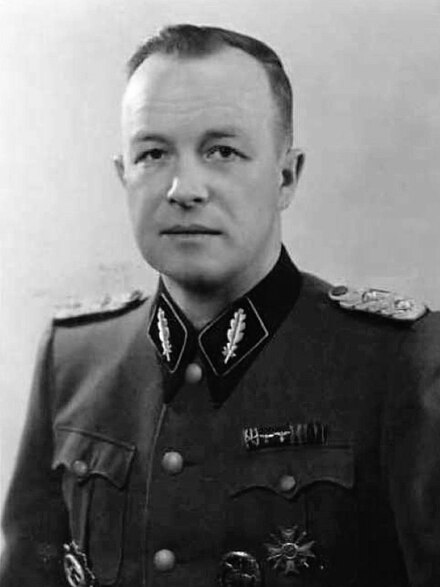
SS-Standartenfuhrer Franz Zieries

On 7 January Sehmer was badly beaten by SS-Standartenfuhrer Franz Zieries who was the Mauthausen camp commander. It is known Sehmer was suspended by his arms from the ceiling of the interrogation room and tortured for four days.

On or around 23 January 1945 Major Sehmer was shot through the head by camp commander Zieries. It is not known what happened to his body but was most likely thrown into a mass grave along with several American OSS operatives who had also been killed; among the victims was Lieutenant James Holt Green serving with OSS who had arrived by parachute a day before Sehmer and his men.  In total, eleven Americans were also shot or beheaded by the Germans. On 24 January 1945 the German overseas news agency made the following radio announcement, ‘Eighteen members of the Anglo-American group of agents headed by an American named Green and an Englishman named Sehmer who posed as a major were caught on Slovakia soil in the hinterland of the German fighting sector. Investigations revealed they had the task to carry out acts of sabotage in Anglo-American interests. The agents who wore mufti when arrested were sentenced to death by court martial.

In January 2004 the commander of the unit that captured the SOE and OSS teams along with partisans was arrested at his home in Munich. The German authorities stated that eighty-six-year-old Ludislav Niznansky was being investigated for the murder of civilians; there was no mention of the men serving with SOE and OSS and Niznansky was acquitted when the case came to trial.

According to the Commonwealth War Graves Commission Major John Sehmer was awarded an MBE!

Alan Malcher  

On His Majesty’s Secret Service. A film by Cécile Coolen.

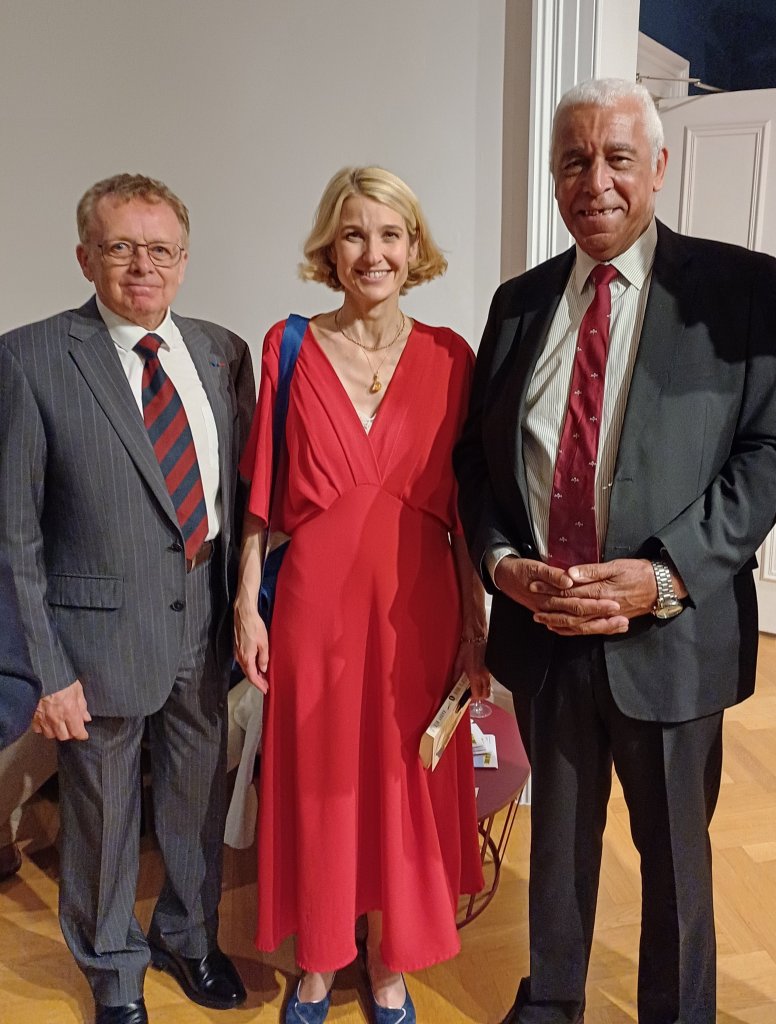
Ian Reed MBE Lég d’Hon, Cécile Coolen, Alan Malcher. At Institut français du Royaume-Uni. 31 May 2024.

I was honoured to receive an invitation from Héléne Duchéne Ambassador of France to the United Kingdom via Ian Reed MBE Lég d’Hon to a special viewing of On His Majesty’s Secret Service a film about SOE in occupied Europe by Cécile Coolen.  It was also a pleasure meeting Cécile Coolen and others during the reception.

Cécile Coolen is a French film director and chief editor of over 100 films recognised at the Hollywood Film Festival, Emmy Awards, Prix Europa, New York Festival, and she specialises in archive documentaries particularly connected with wartime intelligence services.

“Cécile Coolen has a clear understanding of the subject and the ability to present the story of our collaborative intelligence activities, an issue which is still inadequately understood” (Sir John Scarlett KCMG OBE, former Chief of SIS/MI6)

“Her wealth of professional experience, combined with knowledge of the intelligence world shines through in this film, giving this story the dimension and impact it deserves.” (Alain Juillet, former Chief of DGSE – French Intelligence Service)

Leo Marks MBE: Head of SOE European Country Sections Codes and Cyphers.

Leo Marks (24 September 1920- 15 January 2021) was born to a devout Jewish family in London. His father was joint owner of Marks and Co and was an antiquarian bookseller in Charring Cross Road, London. Marks joined the army in January 1942 and was sent to Bletchley Park as a codebreaker where he was regarded a misfit. However, SOE saw him has as one of a few unique people who could see patterns and codes that most people would miss. A modern description being ‘he could see so far out of the box most people even with a powerful telescope would miss it’.

As head of SOE’s European Country Sections codes and cyphers he was based at Mitchel House Baker Street, London with a staff of over 400 and was responsible for proving wireless trained agents operating in countries under occupation with cyphers which included various identity and security checks when sending signals to London.

He also provided every agent with a poem code to transpose text into coded messages and the most famous of his poem is ‘The life that I have’ used by Violette Szabo GC who refused to reveal it to the Gestapo after her capture.

Like many films and books about SOE ‘Carve Her Name With Pride’ was promoted as the true story of Violette Szabo but was heavily dramatized and had many historical inaccuracies including the claim her poem code was written by her husband who had recently died, this was among many books and films heavily criticised by former SOE agents and staff officers and these inaccuracies continue to be duplicated by authors and film makers.

Pauline Trahan: SOE Agent.

I have recently been informed that on 4 February 2024 one of the last surviving members of the Special Operations Executive (SOE) French Section died at the age of 97. If her age is correct and was 17 when she parachuted into France, Nicola Pauline Marie Trahan was one of the youngest agents serving with F (French ) Section. RIP

Roger Sabourin: Wireless Operator SOE French Section.

24-year old Roger Sabourin

Roger Sabourin was born in Montréal, Canada on 1 January 1923 and was serving with the Canadian Intelligence Corps before joining SOE on 2 January 1944 and trained as a wireless operator.

On the night of 2/3 March 1944 Roger Sabourin on his first mission to France to start a new circuit called BARGEE and Adolphe ‘Alex’ Rabinovitch on his second mission, the first of which he was lucky not to be captured by the Gestapo before escaping to England, parachuted to a drop zone adjacent to woodland.

Adolphe ‘Alex’ Rabinovitch

It was originally believed the reception committee, members of the resistance at the drop zone to assist them, were from ARCHDEACON circuit that had been infiltrated but later research discovered they had been dropped to SORCERER circuit that had been infiltrated and was being run by the Abwehr (German Military Intelligence) as part of their deception to capture incoming agents.

When Sabourin and Rabinovitch were taking off their parachutes, through the moonlight they saw a German soldier and immediately ran into the woods and during a brief firefight two German soldiers were killed but Sabourin and Rabinovitch were wounded and unable to continue their escape.

After lengthy interrogation by the Gestapo Rabinovitch was transported to Cross-Rosen concentration camp in Poland where he was executed on 2 March 1944. Sabourin was executed at Buchenwald camp on 14 September 1944. Thirty-seven allied officer were also killed that day along with Canadian SOE officers Frank Pickersgill, Ken Macalister and French SOE agent Robert Benoit.

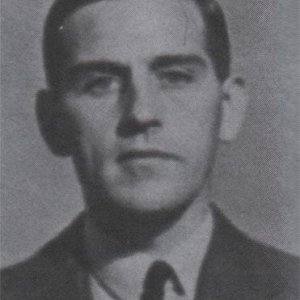
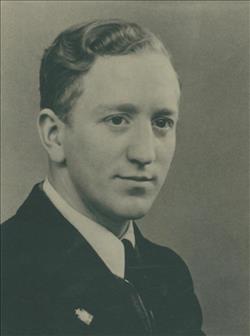
Pickersgill and Macalister

Robert Benoit

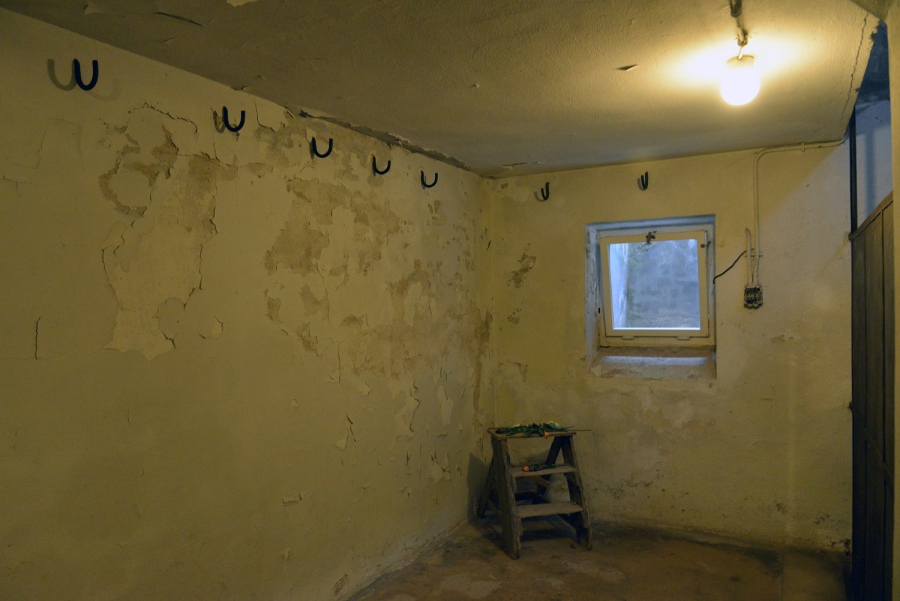
During an investigation into missing agents after the war it was discovered that Sabourin, Macalister, Pickersgill and Benoit had been executed by slow and painful strangulation by piano wire after being suspended from hooks on the walls of the Buchenwald camp crematorium.

Buchenwald camp crematorium with hooks on the walls for strangulation.

John Young: SOE Wireless Operator F (French Section)

John Young.

John Cuthbert Young was born to British parents in Newcastle, England on 25 September 1907, he was married to a French woman and employed as a fire insurance surveyor before enlisting into the British army. Young was recruited by SOE on 27 April 1942 and is said to have struggled with the physical part of the training and his suitability as an agent was called into question after SOE was informed he told a naval officer and his wife about his potential clandestine service and his wife applied to join FANY because she wanted to be  trained as a wireless operator so she could be near her husband on missions.

After being reprimanded for his serious indiscretion the investigating officer said Young now understood the importance of security whilst working for a branch of the British military that did not officially exist.

Using the code name Gabriel, Young arrived in France by parachute on 19 May 1943 to join the ACROBAT circuit near Saint-Étienne in eastern France. Around five weeks after joining the circuit John Starr, the circuit organiser was arrested by the Germans and ACROBAT, which had around 3,500 armed resisters, was in disarray and the circuit close to collapse. Young took over the circuit, stayed connected with London through his wireless link and organised several sabotage operations that supported the wider allied strategy being planned in London.

Several weeks later Young was warned the Gestapo had his description and he was on their wanted list, German wireless intelligence had detected his transmissions but in keeping with his wireless training Young did not transmit from the same location and this hampered direction finders. After receiving more intelligence London advised Young to leave France but he decided to remain with ACROBAT until London sent his replacement.

Sometime in November André Maugenet arrived in France to takeover ACROBAT and there are two accounts of the chain of events which followed. The Germans were aware Maugenet and two other agents would be arriving by Hudson aircraft because a treble agent named Henri Déricourt,  SOE’s airlanding officer for northern France, tipped off the Gestapo and the three agents were followed from the landing ground and were still under surveillance when they were travelling by train to Paris and were arrested shortly after arriving. This version of events also claims that when Maugenet was searched the Germans found a letter to John Young written by his wife that Maugenet promised to deliver. A Gestapo informer then dressed in Maugenet’s clothes and was carrying his suitcase when he arrived at the safehouse Young was using and after recognising his wife’s handwriting believed the informer was the agent London had told him to expect. However, this version fails to explain how the Germans knew where Young was staying, and it is clear they only became aware after Maugenet arrived in France.

André Maugenet

During his briefing before leaving for France Maugenet was told how to contact Young and some historians believe he was a double agent working for the Germans and it was Maugenet who arrived at the sawmill where young was staying and gave him the letter from his wife and left after a brief conversation. That evening eighteen German soldiers with SD officers arrived at the sawmill, smashed down the door and dragged-out John Young and another agent named Diana Rowden.

Diana Rowden

When Young was arrested, he was handed to the SD and taken to several locations including a prison in Lyon for interrogation, then to Cherche Midi prison in Paris and a witness said they saw him at 3 bis Place des Étas Unis. After France was liberated, it was said allied forces examined 84 Avenue Foch in Paris that was used by the SD as their Paris Headquarters and found “Lt J.C. Young arrived 20.11.43.” scrawled on a cell wall. Young spent time at several prisons before being transported to Mauthausen concentration camp in Austria where he was executed but the date of his death is unknown. It was also discovered that Diana Rowden, the other agent arrested with Young at the sawmill was executed at Natzweiler-Struthof concentration camp in Germany on 6 July 1944.

Several years after the war it was alleged André Maugenet took part in the raid at the sawmill and was armed and according to some historians it is beyond question that he provided information about ACROBAT that led to the arrest of John Young and Diana Rowden. It has also been claimed that in 1954 the French authorities said Maugenet was protected by the Germans and during investigations discovered he was living in Canada but before he could be extradited to stand trial for treason, he escaped to South Africa and the French authorities lost him.

Due to there being no evidence to support the allegations against André Maugenet he was given the benefit of doubt, and his name appears on the Brookwood memorial.

Further information can be obtained from his file (TNA HS9/1008/2) at the National Archives and additional primary sources might be found at the Archives at the Service Historique de la Défence that is part of the Ministére Des Armées.

Adolphe Deniset: Weapons instructor SOE F (French Section)

Adolphe François was a French Canadian whose parent unit was the Royal Canadian Artillery who began his SOE selection and training in October 1943.

His training assessment describes him as very intelligent, mature minded, serious and of good motivation and stated he could do good work in the field. A later report added, whilst he has certain powers of leadership and has a pleasant and unaggressive manner his personality lacked the forcefulness to be fully effective and would be best used as an instructor or a subordinate organiser.

Though his French was excellent it was said his accent could sometimes be identified as French-Canadian, he also had no knowledge of France and was even surprised to learn the French drunk coffee out of a glass in cafés and was therefore decided he did not have the knowledge to run a circuit but would make a good lieutenant. Consequently, Deniset was sent to join the PHONO circuit in the Chârtres area as its second in command and arms instructor.

During his operational briefing Deniset was given a list of targets to sabotage which included locomotive sheds, railways and roads and was told to pass the list onto Emile Garry the leader of PHONO. On the night of 28 February 1944 (but like many SOE documents, dates vary according to sources at several archives) he boarded a Halifax bomber of 161 Special Duty Squadron RAF at Tempford with three other agents sent to establish a circuit in Brittany. It had been arranged for the agents to be dropped to a reception committee from PHONO circuit, but London was not aware the circuit had been destroyed and was under German control. The area where they were going to be dropped had been cordoned off by SS troops under the command of SS Sturmbannfurther Joseff Kiefer, head of the Paris SD and the three agents were arrested as soon as they landed.

It is known Deniset was interned at Frésnes prison and according to some accounts was taken to an underground solitary confinement cell with no lighting, no bed and no water and the only person he saw was a guard once a day who brought him weak soup.

On 2 June 1944 Deniset was seen by other captured agents at 3 bis Place des États Unis, a street located in the Chaillot district of Paris.

A post-war investigation found it extremely difficult to discover what happened to Deniset after leaving Frésnes Prison. Some witnesses said he was transported to Ravitsch concentration camp in northern Germany around 56 miles from Berlin but was later recorded by the Commonwealth War Graves Commission that Deniset was executed at Gross-Rousen concentration camp but there is no accurate date of his execution.

Alan Malcher