Nazi ‘so called’ Euthanasia Programme

Much continues to be written about war crimes by the SS and Gestapo during the Second world War and this short piece is intended to bring attention to the mass murder of German civilians including children who through illness were regarded ‘worthless idiots’ and an unnecessary burden on German society.

In current parlance the term euthanasia refers to the practice of so-called ‘mercy killing’ commonly described as the painless ending of life of a person who is terminally ill and only at their request. Although the Nazis used the term euthanasia they described it as the “Destruction of worthless life”.

The following British translations of Nazi documents discovered by the allies are among the many I studied at university.

In the 1920s Professor Karl Binding a former president of the Reichsgericht, the highest criminal court, and Professor Alfred Hoch, Professor of Psychiatry at Freiburg University wrote a book called “Permission for the Destruction of Worthless Life, its Extent and Form.” 

Binding and Hoch believed “because of the war {WW1} and the alleged expansion in the numbers of ‘mental defectiveness’ as a result of exaggerated humanitarianism, Germany had become intolerably lumbered with living burden who were absorbing a disproportionate amount of resources which ought to be devoted to a national revival.”

They also said the state should be allowed to kill “the incurable lunatics, irrespective of whether they were born as such or whether they are paralytics in the final stage of their condition… Their life is completely worthless… they represent a terrible heavy burden for their relatives as well as society.
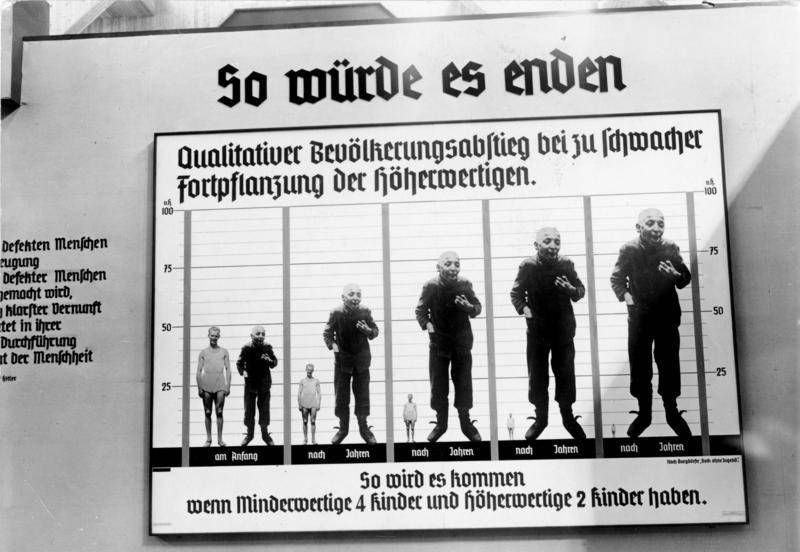
This Nazi eugenics poster from 1935 illustrates what they believed to be the dangers of allowing so-called genetic undesirables to live, reproduce, and account for a larger percentage of the gene pool than those with desired traits. (Federal German Archives)

Hoch also said:

I can find no reason, either from a legal or from a social or from a moral, or from a religious standpoint for not giving permission for the killing of these people.

Both also stressed the enormous financial cost involved in maintaining what they called “Idiots” and went on to say … “There was a time which we regarded as barbaric, in which the elimination of those who were born or became unviable was regarded natural. Then came the phase we are in now, in which finally the maintenance of any, even the most worthless existence is considered the highest moral duty: a new period will come which on the basis of a higher morality, will cease continually implementing the demands of an exaggerated concept of humanity and an exaggerated view of the value of human life”.    

After the Nazi Party took power in 1933, these views were officially endorsed in its most extreme form as national socialism established itself on the belief of biological materialism governed by social Darwinism and the belief that human life was a struggle for the survival of the fittest which meant ‘performance’ had to be essential for all citizens.

During the Nuremburg Party Rally on 5 August 1929 Hitler said:

“If Germany was to get a million children a year and was to remove 700 to 800,000 of the weakest people, then the final result might even be an increase in strength…The most dangerous thing is for us to cut off the natural process of selection and thereby gradually rob ourselves of the possibility of acquiring able people…”  

The Children’s Euthanasia Program
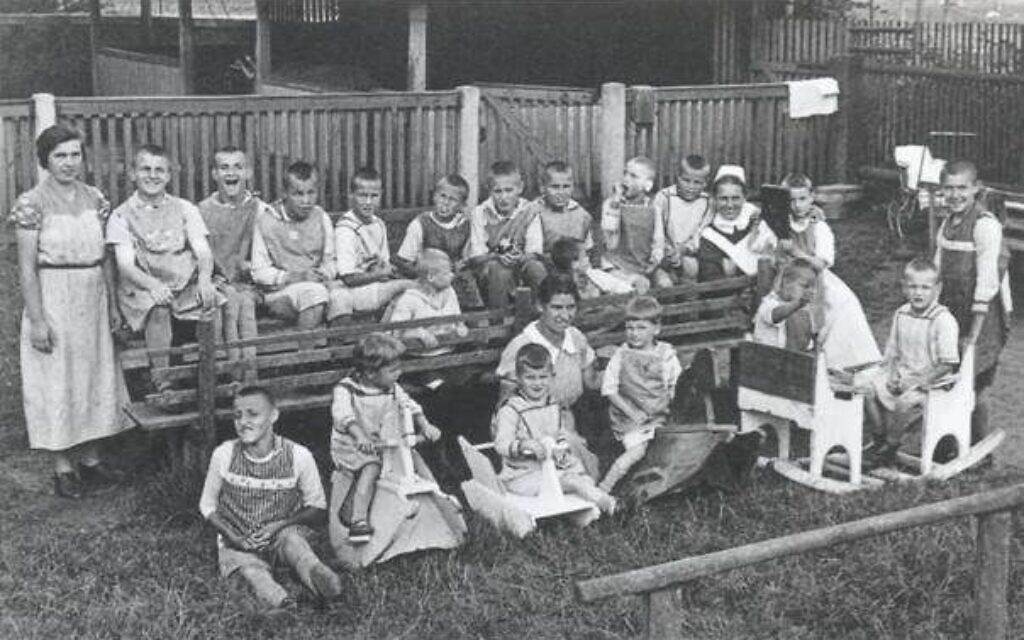
(Federal German Archives)

The following passage describes a ‘children’s asylum’ near Munich during a visit by members of the Nazi Party and SS officers on 16 February 1940, when a senior doctor was describing his facilities.

“We have children here aged from one to five. All these creatures represent… a burden for our nation… With these words he pulled a child out of its cot. While this fat, gross man displayed the whimpering skeletal little person like a hare which he had caught he coolly remarked: ‘Naturally we don’t stop their food straight away. That would cause too much fuss. We gradually reduce their portions. Nature then takes care of the rest… This one won’t last more than two or three days.”

On 15 October 1942 a doctor wrote to a colleague: “We have found a lot of nice idiots in the Hirt Asylum in Strasbourg, request for transfer will follow.”
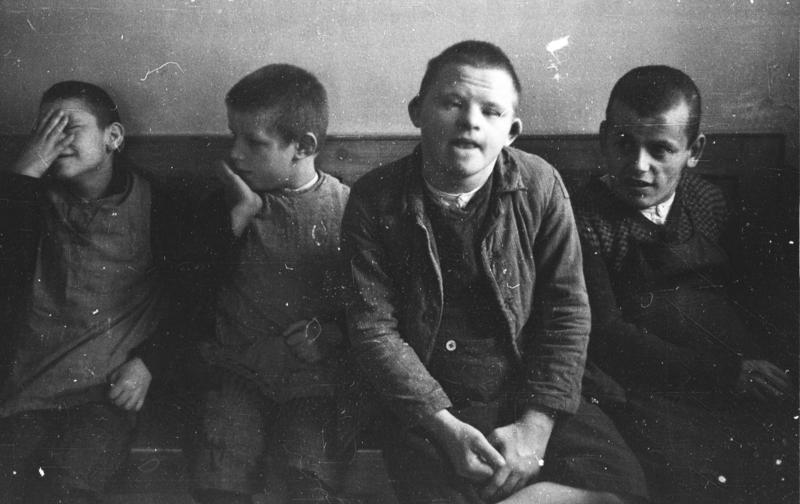
(Federal German Archives)

The Adult (and young people) Euthanasia Programme

The exact date is unknown but is thought to have been in June or July 1939 when Hitler ordered the programme to be extended to adults. There are a large number of documents relating to this part of the project, but the following short overview is intended to provide an insight into the mindset of the doctors, nurses and others involved in the Nazi Euthanasia Programme.
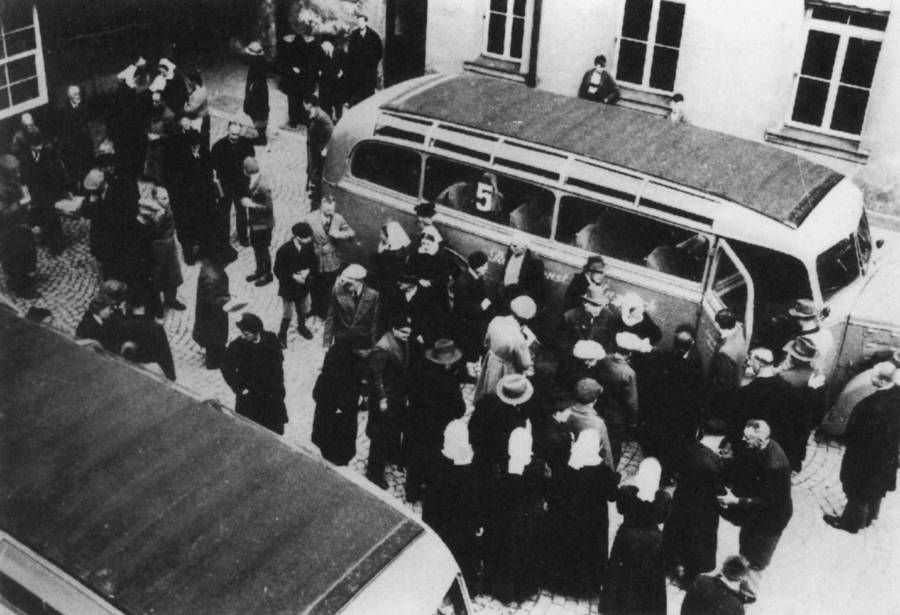
Disabled people being transported to camps for extermination (German Federal Archives)

There are many documented accounts of ‘ambulances’ arriving at homes to take disabled children and adults to clinics for treatment and relatives being unaware the exhaust pipes were pumping a lethal cocktail of fumes into the rear of the vehicle where the ‘patients’ were sitting.

 The killing of those considered unworthy to live was later stopped after several doctors complained about ambulances driving round for several miles but not killing all the ‘idiots,’ and several others complained it was too time consuming to kill them in the required numbers and more efficient methods had to be developed.  Some historians believe the Euthanasia Program was regarded as a learning process for later mass murder on an industrial scale at dedicated concentration camps.  
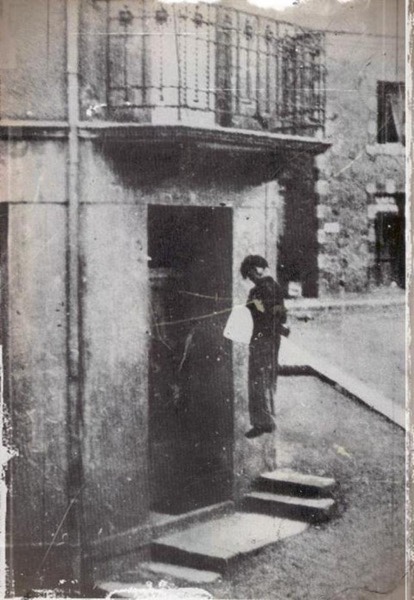
SS Panzer Division Das Reich and Der Fûhrer: War Crimes in France after the Normandy Landings

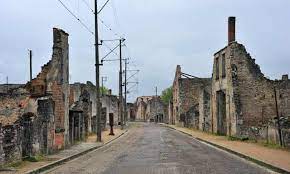
As with most countries under German occupation during the Second World War there were many war crimes against civilians and in the case of France, two of the best documented are the massacre of civilians at Tulle (9 June 1944) and the village of Oradour-sur-Glane (10 June 1944) which are around 72 miles apart.

Tulle

Tulle 1944

The 2nd SS Panzer Division Das Reich arrived at Tulle on 8 June, three days after the allies landed at Normandy, and started rounding up men between the ages of sixteen and sixty and some were accused of being members of the Maquis (French Resistance) because they had not shaven or polished their shoes. After the SS made their selection 99 men were hung to death from lamp posts and balconies and 149 were transported to Dachau concentration camp where 101 were executed before the camp was liberated.

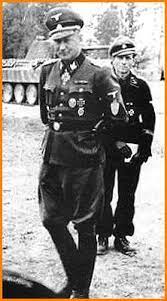
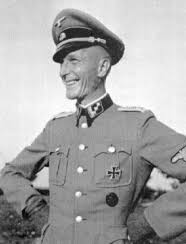
The commander who ordered the war crimes at Tulle and Oradour-sur-Glane was SS Gruppenfûhrer Heinz Lammerding.

Heinz Lammerding

SS Gruppenfûhrer Heinz Lammerding

After the war Lammerding was condemned to death in his absence by a French court but West Germany refused his extradition and was free to live his life without fear of prosecution despite the overwhelming evidence against him and after his death in 1971 his funeral became a reunion for over 200 former members of the SS.

Oradour-sur-Glane 9 June 1944

Diekman

The senior officer present during the massacre at Oradour-sur-Glane was SS Sturmbannfûhrer Otto Diekmann, whose name is sometimes misspelt on some documents as Otto Dickmann, who commanded the SS 1 Battalion, 4th Panzer Grenadier Regiment Der Fûhrer.

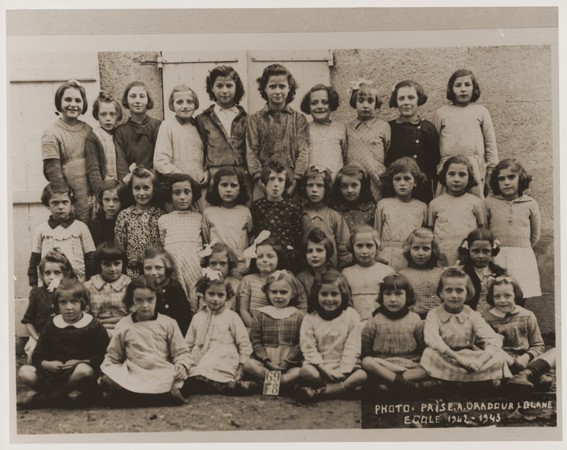
Diekmann ordered his men to roundup the entire civilian population and take them to the market square where they were separated into age and gender. After being separated 197 men were taken away and locked in a barn and the remainder of the villagers consisting of 204 women and 205 children were forced into the village church. The barn was then set on fire and anyone attempting to escape the flames were killed with machine guns. After the men were burnt alive hand grenades were thrown into the church and anyone who survived was shot.

Oradour sur Glane

Oradour-sur-Glane 3

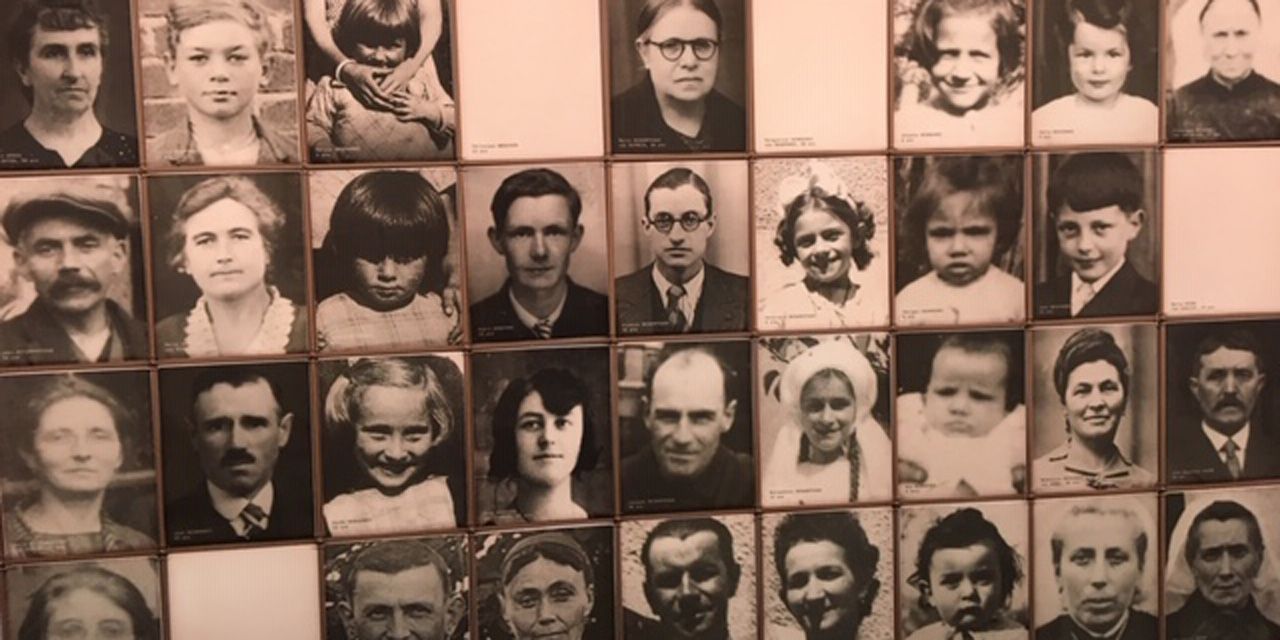
Among those masssacred at Oradour-sur-Glane

Download

After almost the entiire population of 642 civilans were killed, only six are thought to have siurvived, the SS looted their homes and began biurning the remainder of the village and one survivor described Diekmann, who was later killed in action in Normandy, as being blood thirsty.

Although there is a discrepancy in the following figures because six are said to have survived which would mean the village had a population of 648, according to some accounts, in the church 245 women and 207 childfren were killed and 190 men were burnt to death in the barn.

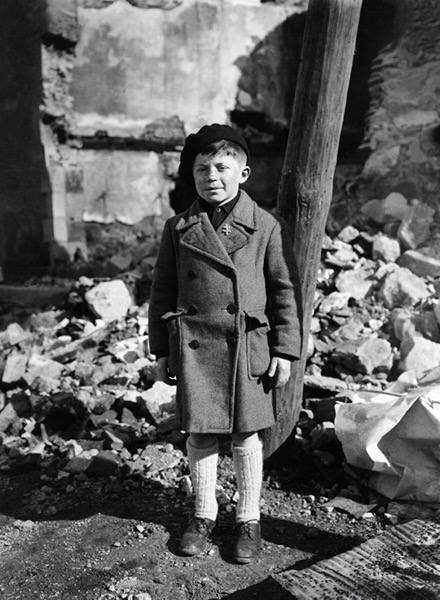
Roger Godfrin only surviving child of the Oradour sur Glane

Photograph of Roger Godfrin taken in 1945 who was the only child to survive the killings at Oradour-sur-Glane

Heinrich Mathy: Commander of German Zeppelin L31 during air raids on London and the Home Counties during WW1.

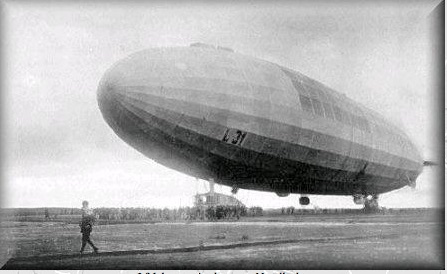
Heinrich Mathy was born on 4 April 1883 in Mannheim, Germany and became a household name in Britain during the Great War as the commander of Zeppelin L31.

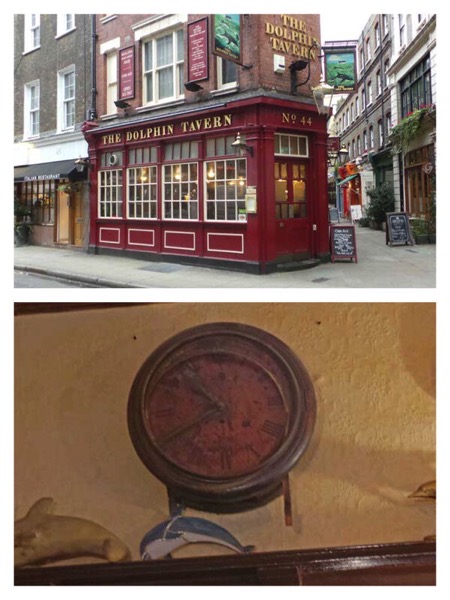
Today, if you go to the Dolphin Tavern on Red Lion Street in London you will see a battered old clock on the wall. The clock does not work and for over 100 years the hands have been stuck at 10:40

L31

At 10:40 pm on 8 September 1915 German Zeppelin L31 commanded by Heinch Mathy was flying at 8,500 feet above London when Mathy gave the order to drop its load of high explosive bombs during which the Dolphin Tavern received a direct hit and three men were killed.

Dolphin

In the rubble was found the pub’s clock which had been battered beyond repair with its hands stuck at the exact time of the explosion (10:40). After the Dolphin Tavern was rebuilt after the war it was decided to put the clock back on the wall with its hands frozen in time.

The fate of Heinrich and the crew of L13.

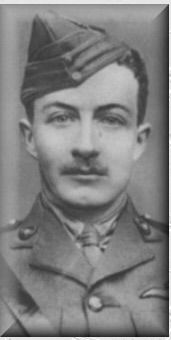
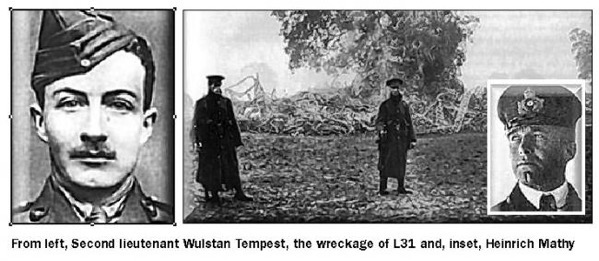
On the night of 1 October 1916 Heinrich Mathy and the eighteen-men crew of L31 reached the outskirts of London where the Super Zeppelin was intercepted by British pilot Wulstan Tempest DSO, MC flying a B.E.SC.

L321 Zeppelin killer Wulstan Tempest

Wulstan Tempest

Tempest’s personal account of his engagement with L31

“At about 11:45pm I found myself over south-west London at the altitude of 14,000 feet. I was gazing towards the north-east of London where the fog was also heavy when I noticed all the searchlights in that quarter concentrated in an enormous pyramid.

Following them to the apex, I saw a small cigar-shaped object which I realised was a Zeppelin. It was about 15 miles away and heading straight for London.

I was having an unpleasant time, as to get to the Zeppelin I had to pass through a very heavy inferno of bursting shells from the AA {Anti-aircraft} guns below.

All at once it appeared the Zeppelin must have sighted me, for she dropped all her bombs in one volley, swung round, tilted up her nose and proceeded to race away, rapidly rising northwards.

I made after her at all speed at about 15,000 feet altitude. The AA fire was intense and I being about 5 miles behind the Zeppelin had an extremely uncomfortable time.

After firing three flares to alert the gunners below of my presence I closed in for the kill.

I dived straight at her, sending a burst straight into her as I came. I let her have another burst as I passed under her and then, banking my machine over, sat under her tail, and flying underneath her pumped lead into her for all I was worth. I could tracer bullets flying from her in all directions but I was too close under her for her to concentrate fire upon me.

As I was firing I noticed it began to go red inside like a Chinese lantern. The flame shot out of the front part of her and I realised she was on fire.

Then she shot up about 200 feet, paused, and came roaring straight down on me before I could get out of the way.

Tempest

I nose dived for all I was worth with the Zeppelin tearing after me and expected every minute to be engulfed in the flames.

I put my machine into a spin and just managed to corkscrew out of the way as she shot past me like a roaring furnace. I righten my machine and watched her hit the ground with a shower of sparks… I then started to feel very sick and giddy and exhausted, and had considerable difficulty in finding the way to the ground through the fog and landing. In doing so I crashed and cut my head after hitting my machine gun”

Later reports describe thousands of people cheering and jeering during the three minutes it took the blazing Zeppelin to hit the ground at Potters bar.

Aboard L31 Mathy and the 13 crew members had the choice of burning to death in the inferno or jumping to their deaths and it was said Heinrich Mathy wrapped a thick woollen scarf around his neck which was a present from his wife before he jumped.

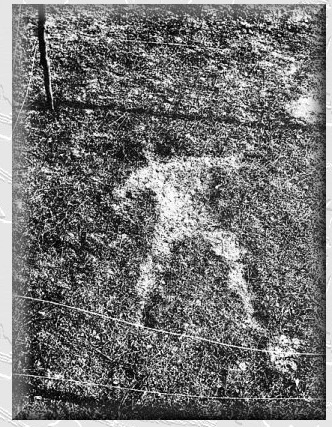
He impression in the earth left by Heinrich Mathy s falling body

Above image  claimed  to show  the indentation on the grass made by Heinrich Mathy’s body after hitting the ground at around 120 mph/200kms (terminal velocity)

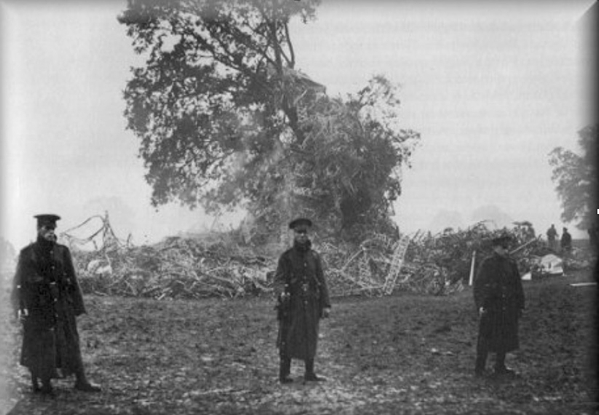
Newspapers the following day reported, “The framework of the Zeppelin lay in the field in two enormous heaps, separated from each other by about a hundred yards. Most of the forepart hung suspended from a tree.”

Mthy

Crash site in Potters Bar.

A journalist named MacDonagh persuaded the police to allow him to view the bodies which had been taken to a barn and recalled, “The sergeant removed the covering from one of the bodies which lay apart from the others. The only disfigurement was a slight distortion of the face. It was that of a young man, clean shaven. He was heavily clad in a dark uniform and overcoat, with a thick muffler around his neck.

I knew who he was. At the office we knew who commanded Z31… It was the body was Heinrich Mathy”

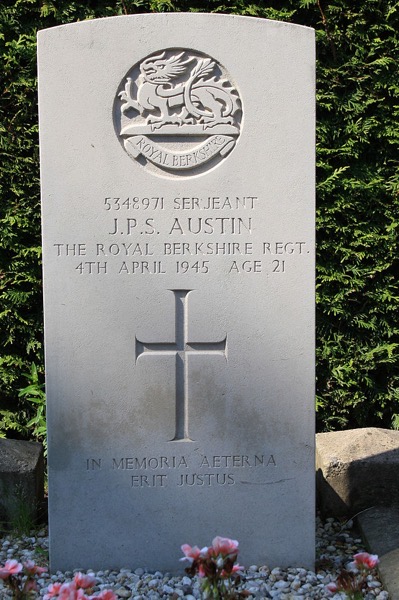
Sergeant John Austin, wireless operator with Jedburgh team DUDLEY: Netherlands 1944

Whilst serving with the Royal Berkshire Regiment John Austin volunteered to join the Jedburgh Teams (Jed’s) which were formed to operate in various occupied countries to assist local resistance supporting the allied strategy for D-day and after completing training was promoted to sergeant.

On the night of 11 September 1944 John Austin with Major Brinkgreve of the Dutch Army and Major Olmsted of the US army, referred to as Team DUDLEY, parachuted from a Short Sterling bomber into a remote region of the Netherlands and after leaving the aircraft two containers of weapons were dropped by parachute which they buried not far from where they landed.

Apart from arming members of the Dutch Resistance operating in Overijessal, a province in the eastern part of the Netherlands, they were also ordered to encourage the Resistance to defend bridges which the allies needed during their advance into Germany.

The Jedburgh Dudley Team from left to right Henk Brink Greve John Austin and John Olmsted

Jedburgh Team Dudley. From left to right: Henk Bringreve (Netherlands), John Austin (British), John Olmsted (USA)

Jedburgh teams were not undercover agents and wore uniforms and though this was appropriate for Jed’s working in France and other occupied countries it was impractical in a small country like the Netherlands where they had to move around the country, so they quickly acquired civilian clothes and after meeting members of the Resistance the following message Austin sent to London was far from encouraging:

“The local self-appointed Resistance leader had a very imperfect group under his command. They had no knowledge about German troops in the area or any German supplies or depots in the area.”

During Operation Market Garden on 17 September 1944 when allied paratroopers attempted to seize bridges over the Rhine, intense fighting in the city of Arnhem and the surrounding area resulted in large numbers of German troops looking for members of the Resistance and people assisting allied paratroopers.

Whilst the three Jed’s and a members of the Resistance were travelling by car they came across a checkpoint manned by the Wafer SS, because they had no documents and were armed they decided to crash through the road block whilst firing at the soldiers with their Sten guns and during the brief but intensive engagement five members of the SS were killed or wounded. Later that day a car of the same make and model approached the same checkpoint and the SS immediately opened fire with machine guns and threw two grenades at the approaching vehicle, and whilst examining the wrecked car discovered they had killed an SS officer, a Gestapo (SD) officer and their driver.

Over the next few days Team Dudley with members of the Resistance were involved in several sabotage operations and ambushing German troops and by 1 October the team had organised all the resistance groups in the area which numbered around 3500 men and women. Austin also informed London they had a further 12 to 15,000 who could be mobilised to support the allied advance.

It is thought to have been late November when Austin, Brinkgreve, Olmsted along with around 116 other escapers including members of the British 1st Airborne Division which was trapped behind enemy lines attempted to cross the Rhine but only seven succeeded and the remainder were either killed or captured and one of those captured was John Austin.

John Austin was sent to Zwolle Prison in north-eastern Netherlands and on 4 April Austin and five Dutch prisoners were taken from their cells and shot in retaliation following an attack on a senior German officer. At the time of his death Austin was 21 and his name is on the Memorial at Hattem, Netherlands.

Austin 1945 Hattem

The Battle of Mirbat, Oman, 19 July 1972: 22nd Special Air Service Regiment.

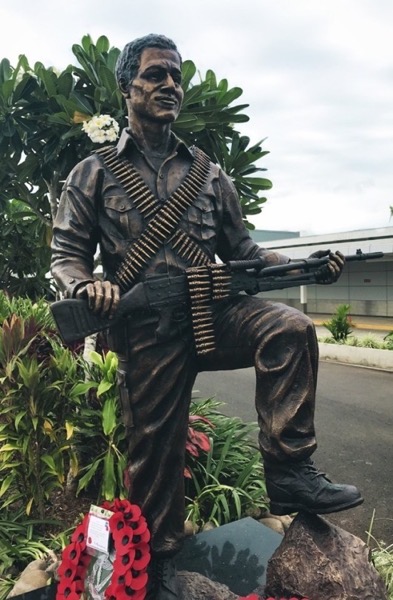
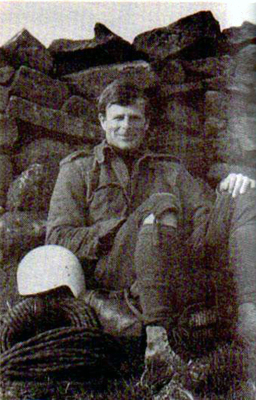
Talaiasai Labalaba (known as Laba) who some soldiers said should have been awarded the VC.

Memorial laba

Memorial to Laba of B Squadron 22 SAS who was KIA during the battle.

Laba was born in Nawaka, Fiji on 13 July 1942 and was a sergeant serving with the Royal Irish Rangwers before joining the Special Air Service Regiment (SAS) during which he saw active service in Aden and Oman.

During the 1970s Communist guerrillas were attacking the pro-western Sultan of Oman and elements from the SAS were deployed to support the Sultan’s army.

Mirbat14


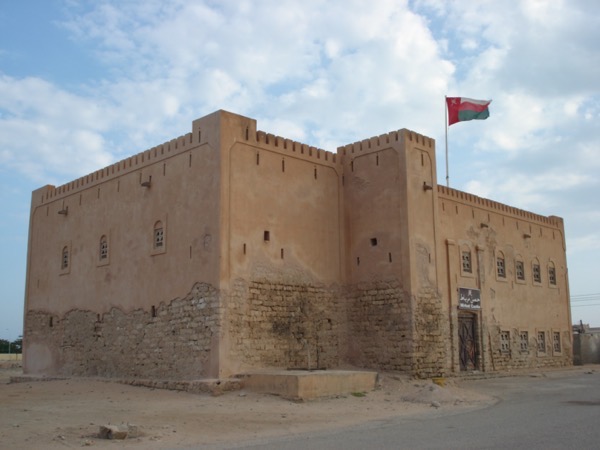
The Fort at Mirbat

In July 1972 four-hundred heavily armed Communist guerrillas attacked the coastal town of Mirbat which was occupied by a small number of Arab soldiers and nine members of the SAS under the command of 23-year-old Captain Mike Kealy and due to being greatly outnumbered the Communists were certain of a quick victory.

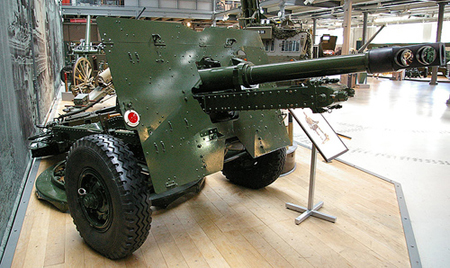
The SAS soldiers were only armed with their personal weapons, one mortar, a Browning machine gun and a Second World War 25-pounder gun.

After the Duke and Duchess of Sussex unveiled a memorial to British-Fijian SAS soldier the story of how Lab held off 250 Communist guerrillas as they attempted to overrun their position was reported by a small number of newspapers who used the words of two SAS soldiers who fought during the battle: Trooper Sekonaia Takavesi, a Britsh-Fijian known as ‘Sek’ and Corporal Peter Warne known as ‘Snapper’.

Snapper:

“A mortar salvo blew away part of the perimeter wire and a round exploded on the edge of the town. Shrapnel flew over our heads. Then I turned to see Mike Kealy clambering over a wall. He was telling me to go down to the radio and contact base… As I returned to my position and eased off the safety catch of my Browning, a massive explosion took a great chunk out of the tower.

1200px Mirbat8

In the flash I could see Laba, a Fijian SAS soldier, kneeling behind the shield of a 20-pounder. An hour-and-a-half or two hours later, I saw the first assault troops of about 50 advancing towards us… The battle was on. As the adrenaline kicked in the emotional shutters came down and all feelings of humanity were locked out. It’s a kind of exhilarating insanity, its kill or be killed. So we set about taking them out. The group in front were hit, the line faltered then wave upon wave of them were advancing, grabbing at the barbed perimeter wire with bare hands while Laba was blasting them into oblivion.”

Mirbat Gun sml

20-pounder used by Laba

Sek:

“When Laba and I were firing we were under heavy attack. They were almost on top of us, shooting from all directions. We were firing at point blank range, we had no time to aim… We were pretty short of ammunition and the battle was getting fiercer. They were still advancing, and we were almost surrounded. Then Laba told me there was a 66 mm mortar {? might be 66mm LAW)  inside the gate.

We were joking in Fijian and I said, ‘Laba, keep your head down’ as he crawled away towards the mortar. I was covering him then I heard a crack, I turned, all I could see was blood. A bullet had hit Laba’s neck and blood was spouting out. He died within seconds.

I had to think how to survive. I could hear the radio going, but it was too far away to call for help. Then I saw Captain Kealy and another soldier Tommy Tobin coming towards me. Tommy was the first to reach the command post and as he climbed over the wall he got shot in the jaw. I heard a machine gun fire and all I could see was his face totally torn apart. He fell and Mike Kealy dragged him to a safe area.

Tommy Tobin

Tommy Tobin (from the book credited at the end of this article)

Then Mike got himself into an ammunition pit and started throwing loaded magazines to me.

Mike Kealy sml

Captain Mike Kealy (see book credit)

We could see two or three people {rebels} on the corner of the fort throwing grenades from only about four or five metres away. We managed to kill a few. All I could hear was Mike on the radio trying to get support.

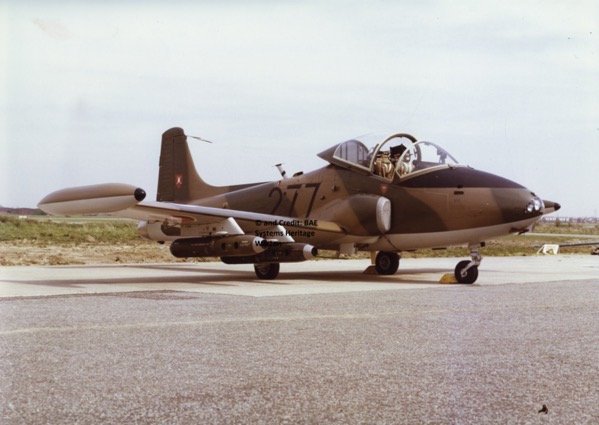
Strikemaster

As the battle raged two Strikemaster jets roared over.”

Snapper:

“The rebels turned their attention to the jets as the first strafing runs were made. They came back with bullets, rockets and a 500 kg bomb into the wadi {oasis} to the east of the fort. One jet was hit in the tail section and limped away. The other made one final run but our jubilation was short lived because the enemy had regrouped and were counter-attacking.

An SAS soldier we called ‘Fuzz’ couldn’t get the right angle with the mortar, so he lifted the barrel to his chest, hugged it like a dancing partner and slid a bomb down. Then he sent bomb after bomb right where Mike wanted them.

Two Strikemasters arrived on strafing runs and then helicopters ferried out the troops. The final toll was two SAS soldiers killed, six Arab soldiers and an Omani gunner dead and one Arab wounded. The guerrillas left behind 30 bodies and 10 wounded, although it was later indicated that half the force was killed or wounded.

Sek:

“The enemy were totally destroyed, but it was very sad to see Laba and Tobin die. I think all the people involved should have been given medals…”

Snapper:

“Laba was a bear of a man. When he was fully tooled up he was the original Rambo. They wanted to give him a VC but because the war was secret in 1972 they said it would be headlines in every newspaper in the UK.”

(Source Fiji Times 26 October 2018)

The Battle of Mirbat marked the end of the Communist rebellion and by the time the war ended in 1976 the SAS lost 12 men.

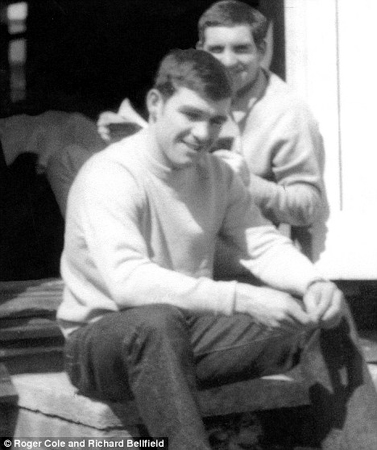
Further reading: ‘SAS Operation Storm: Nine Men Against Four Hundred’ by Roger Cole and Richard Belfield (Hodder & Stoughton)

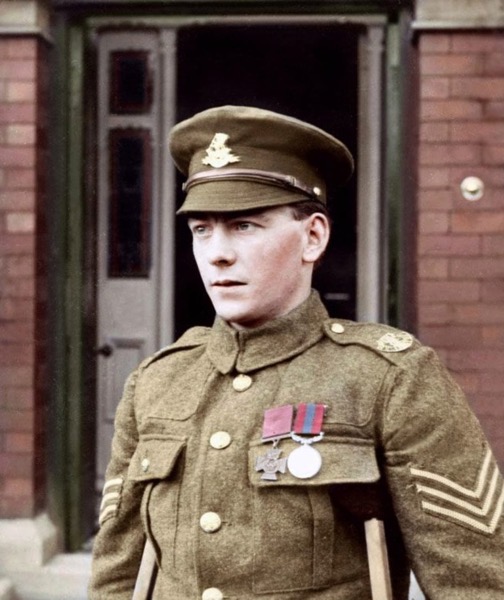
Sergeant Arnold Loosemore DCM, VC. Duke of Wellington’s (West Riding) Regiment 1917

Arnold Loosemore enlisted into the army on 2 January 1915 at the age of 18 and after completing training was posted as a private soldier to the York and Lancaster Regiment and served during the Gallipoli Campaign.

After returning to England he underwent training as a Lewis Machine Gunner and in July 1916 was posted to the 8th Battalion Duke of Wellington’s (West Riding) Regiment and at the age of 21 his battalion was posted to the Somme in France.

Arnold Loosemore VC

On 11 August 1917 his platoon came under intense rifle and machine gun fire from German trenches and were pinned down when Private Loosemore decided to attack the enemy trench alone. After crawling towards enemy barbed wire under fire he found a section which was partly cut and after crawling through with his Lewis gun he continued crawling to higher ground before engaging a German trench and killing around twenty enemy soldiers.

After his Lewis Gun jammed three German soldiers rushed his position which he killed at close range with his revolver before clearing his jammed gun and continuing his lone firefight. Later that day he also killed several German snipers and carried an injured British soldier to safety. For his bravery he was promoted to Corporal then to Sergeant and was awarded the VC.

At Zillebeke in Belgium, on 19 June 1918 his officer was seriously wounded, and his platoon became widely scattered during an enemy bombardment. Whilst disregarding his own safety under machine gun fire Sergeant Loosemore organised his platoon and brought them back along with the wounded to the British lines. It was later recognised it was his leadership which resulted in his platoon later capturing the enemy position and was awarded the DCM (Distinguihed Conduct Medal).

On 13 October 1918 Sergeant Arnold Loosemore DCM, VC was shot in the leg by machine gun fire near Villiers-en-Cauchies, France and his leg had to be amputated above the knee after which he returned to England and was discharged from the army. Due to various health problems associated with his war injury he was unable to find work and died from tuberculosis on 10 April 1924.

His wife Mary who had a young son also called Arnold was refused a War Pension from the government because her husband died after the war and found herself destitute. With no money to pay for a funeral Mary was forced to bury her husband in an existing grave with three other bodies whose families could not pay the funeral costs at All Saints Churchyard, Ecclesall, Sheffield.

The worldly possessions of Private Edward Ambrose who was killed during the Great War

At the age of 19 Private Edward ‘Ted’ Ambrose from Wallington Hertfordshire, died from shrapnel wounds during the Battle of the Somme in July 1916 whilst serving with the Bedford Regiment and is buried in Etaples Military Cemetery in France.

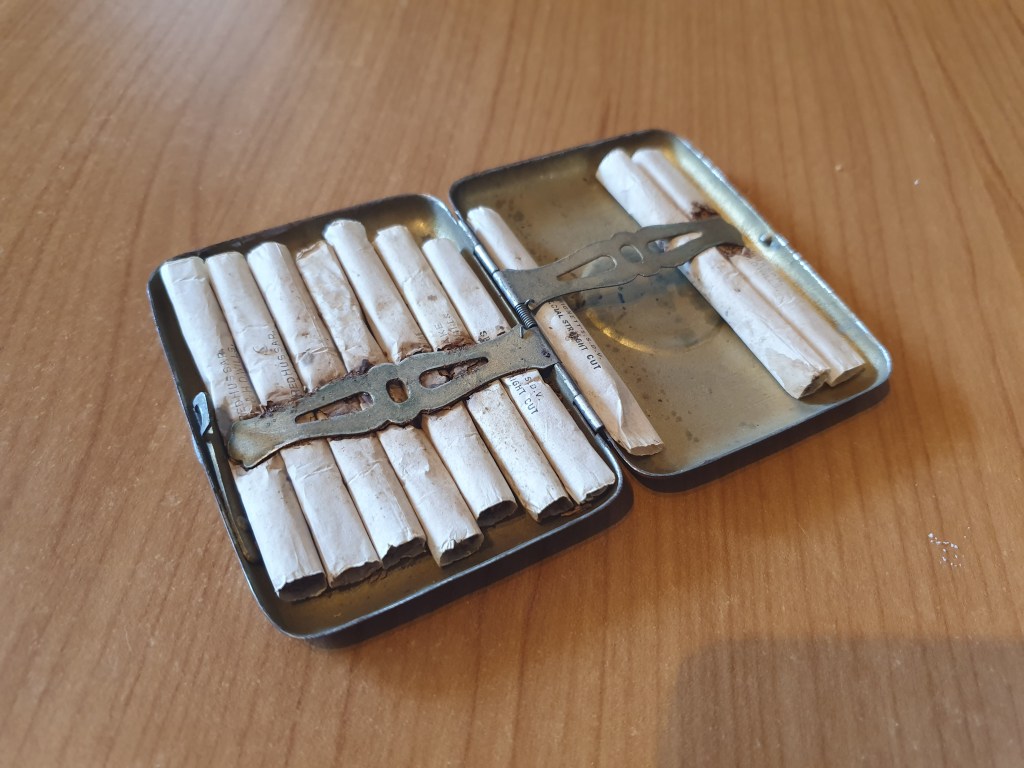
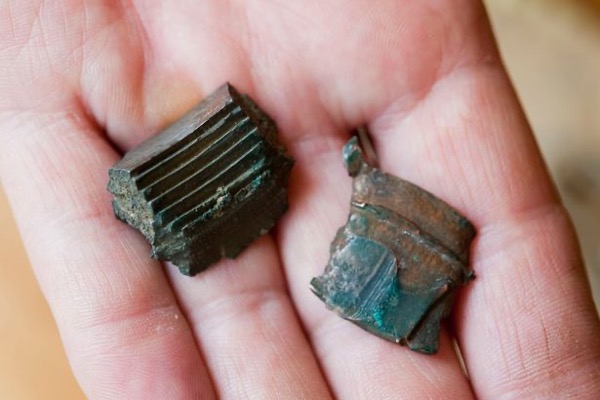
He possessions were returned to his mother in a parcel which contained his cigarette case with three roll-ups, his pipe which still contained tobacco, a photograph of his girl friend and letters from his parents. His mother found the contents of the parcel too painful to look at and it was placed in the loft. 98 years later Edward Ambrose’s nephew opened the parcel and discovered the army had also sent his grieving mother the shrapnel that killed her son!

Ambrose shranel

Shrapnel which killed 19 year old Private Edward Ambrose which was sent to his grieving mother.

John ‘Barney’ Hines also known as the ‘Souvenir King’ during WW1

Photograph of John Hines surrounded by some of his stolen and liberated souvenirs whilst serving on the Western Front.

John Hines was a British-born Australian soldier who served on the Western Front during the Great War who became known for looting whatever he could get his hands on but was also noted for being an aggressive soldier. In June 1917 he captured 60 German soldiers during the Battle of Messines after throwing hand grenades into their pillbox.

Although he was brave in battle his behaviour was erratic and when away from the front line he was court martialled on nine occasions for drunkenness, impeding military police, forging entries in his pay book and being absent without leave. It is also thought he was caught robbing the safe at a bank in Amiens and because of these convictions he lost several promotions he gained for acts of bravery.

In mid-1918 he was discharged from the Australian Army for being unfit due to haemorrhoid problems and arrived back in Australia on 19 October 1918. For the next 40 years he lived near Mount Druitt in a small shelter made of old clothes which was surrounded by a fence on which he hung German helmets and the local people were afraid of him. Despite being a recluse and pennyless he travelled to Concord Repatriation Hospital each week to donate a suitcase of vegetables from his garden to veterans being treated there.

At the start of the Second World War he attempted to enlist but was rejected, at that time he was 60 years old. After being rejected it was widely claimed he attempted to stow away on a troop ship but was caught before the ship sailed.

John ‘Barney’ Hines died at Concord Repatriation HospitaL on 28 January 1958 and buried in a grave which was unmarked until 1971, when a charity paid for a headstone. The council renamed the street on which he lived to John Hines Avenue and a monument commemorating him was built at Mount Druitt Waterholes Remembrance Gardens in 2020.

Historian Peter Stanley said Hines was a man whose skills in fighting were needed and whose knack of souveniring was admired, but he had few gifts that a peaceful society valued.

Walter Chibnal who fought with the Australian Army during WW1 and his son William who fought during WW2

Walter Chibnall was a miner living in Beaufort, Victoria, Australia before enlisting into the Australian Army on 15 March 1916 to fight during the Great War. This photograph of Walter and his son William is thought to have been taken during the last time they saw each other before his father was posted to Europe to fight on the Western Front. Walter was promoted to Corporal on 14 September and posted to the 1st Reinforcement Regiment, 39th Battalion Mortar Battery.

On 12 October 1917 his father, Walter, was killed during the Battle of Passchendaele, Ypres: during an artillery bombardment Walter was taking cover in a shell crater when it took a direct hit from an artillery shell and has no known grave. At the time of his death he was 32-years-old.

During the Second World War his son, William, enlisted into the Australian Army and died in a Japanese prisoner of war camp at Amon on 20 February 1942. He is thought to have been executed and like his father has no known grave and died at the age of 30, 2 years younger than his father when he was killed. (Photos, The AIF Project UNSW Canberra Australia)

Walter chibnal

William Chibnal taken during WW2