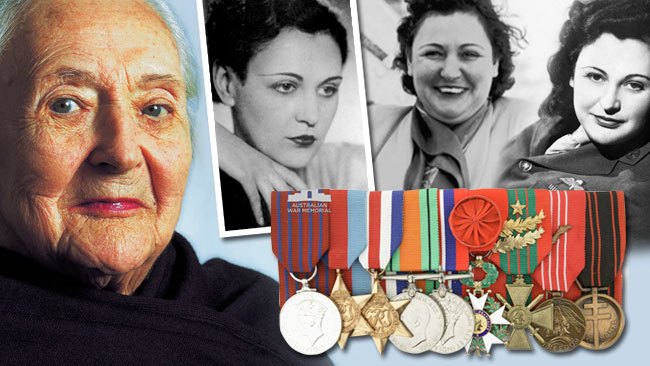
Nancy Wake GM, Officer of the Legion of Honour (France), Medal of Resistance (France), Medal of Freedom (USA). SOE agent aka Helena Andree and called the White Mouse by the Gestapo in France who failed to catch her)
Alan Malcher
Nancy Wake GM, Officer of the Legion of Honour (France), Medal of Resistance (France), Medal of Freedom (USA). SOE agent aka Helena Andree and called the White Mouse by the Gestapo in France who failed to catch her)
Alan Malcher
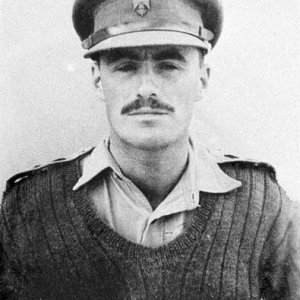
Neil Selby
SOE operations in Yugoslavia supported Tito’s Communist Partisans at the expense of the royalist Chetniks. On 5 February 1943 a team of four SOE operatives (Operation Disclaimer) were handed to the Germans by local people shortly after they landed and the next team which arrived several days later were denounced and it was difficult to discover who could be trusted or their political loyalties.
Selby had served with 11 Commando before joining SOE and arrived in Yugoslavia with another SOE agent, twenty-six-year-old John Rochester who was of Yugoslav extraction whose family name was Yovanovic.
Dressed as peasants they attempted to contact the partisans but were captured by pro-German forces and handed to the German authorities. There is much contradictory evidence surrounding the fate of Selby and Rochester. It cannot be confirmed Selby was shot whilst attempting to escape and there is no reliable information concerning the fate of Rochester and both were originally listed missing presumed dead.
Alan Malcher.
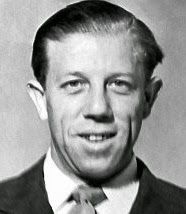
Edward Coppin
28-year-old Edward Coppin who was known as ‘Ted’, served with the DONKEYMAN circuit and was responsible for organising resistance in the port of Marseille and over time built up a successful sabotage team consisting of railway workers. Apart from derailing trains, in 1942 he was responsible for diverting trains destined for Germany by switching the points and sending them to the Spanish border.
Coppin was arrested at his safehouse on 23 April 1943 but because he used several cover names there continues to be much confusion regarding his fate and a post-war investigation into missing agents failed to identify what happened to Coppin after his arrest.
It is believed Coppin was tortured for information but refused to talk which is evident by the fact no members of his group were arrested but there is scant evidence to support the claim he was executed at Ravensbrûck concentration camp in September 1943, consequently, the fate of ‘Ted’ Coppin is unknown, and Coppin has no known grave.
Alan Malcher

22-year-old Canadian fighter pilot Flying Officer William ‘Willie’ McKnight DFC &Bar fought during the Battle of France and the Battle of Britain and served as the wingman for Douglas Bader. On 12 January 1941 he was shot down over the English Channel whilst serving with No.242 Squadron and has no known grave. (Colour from original IWM B&W image by Dan Steel)
Alan Malcher

Adolphe Rabinovitch was a Russian-Egyptian Jew who served with the French Foreign Legion during the Battle of France. After being captured he escaped and made his way to England where he was recruited by SOE. On his second mission to France he was captured, interrogated and sent to Gross-Rosa concentration camp where he was executed sometime in 1944 at the age of 25.
Alan Malcher

Radic was born to a Bosnian Serb family on 29 December 1925. In February 1943 she was captured during a firefight against the 7th SS Volunteer Mountain Division Prince Eugen and was tortured for several days but refused to provide the names of other partisans and was sentence to death by hanging.
After the noose was placed around her neck a German officer said he would spare her life for the names of members of her group and Radic loudly replied “I am not a traitor to my people. Those whom you are asking about will reveal themselves when they have succeeded in wiping out all the evildoers to the last man.” Lepa Radic was 17 years old when she was publicly executed on 11 February 1943.

Alan Malcher
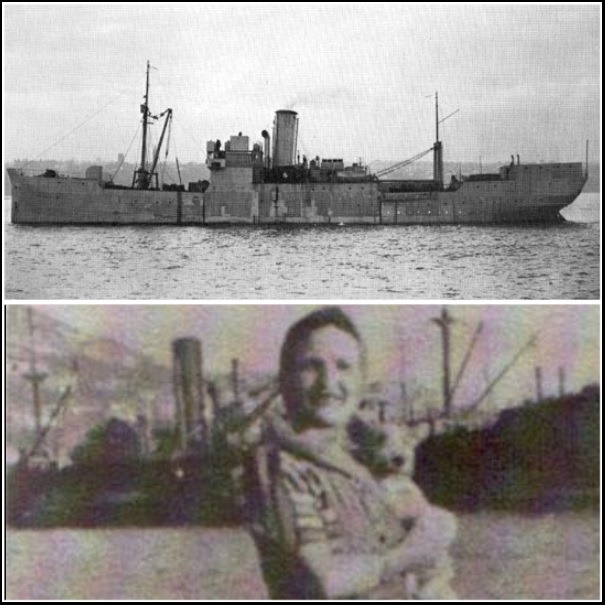
HMS Fidelity (D57) was formerly the French merchant ship La Rhin. In 1941 Fidelity was used by SOE (Special Operations Executive) to transport agents and equipment to southern France and during these clandestine missions flew the flags of neutral Spain and Portugal.
Madeline Baynard was the ship’s first officer but to protect her identity she served with the WRNS under the name of Madeline Barclay.
In late 1941 HMS Fidelity was refitted to serve as a commando carrier and on 30 December 1942 was sunk by a German U-boat. Although most survived the attack the U-boat captain followed the Loconia order which forbid allied survivors being rescued and 369 died in the water: 273 members of her crew (including Baynard), 52 Marines serving with T Coy 40 Commando and 44 seamen who had been rescued after their ship had been sunk during a previous engagement.
Alan Malcher.
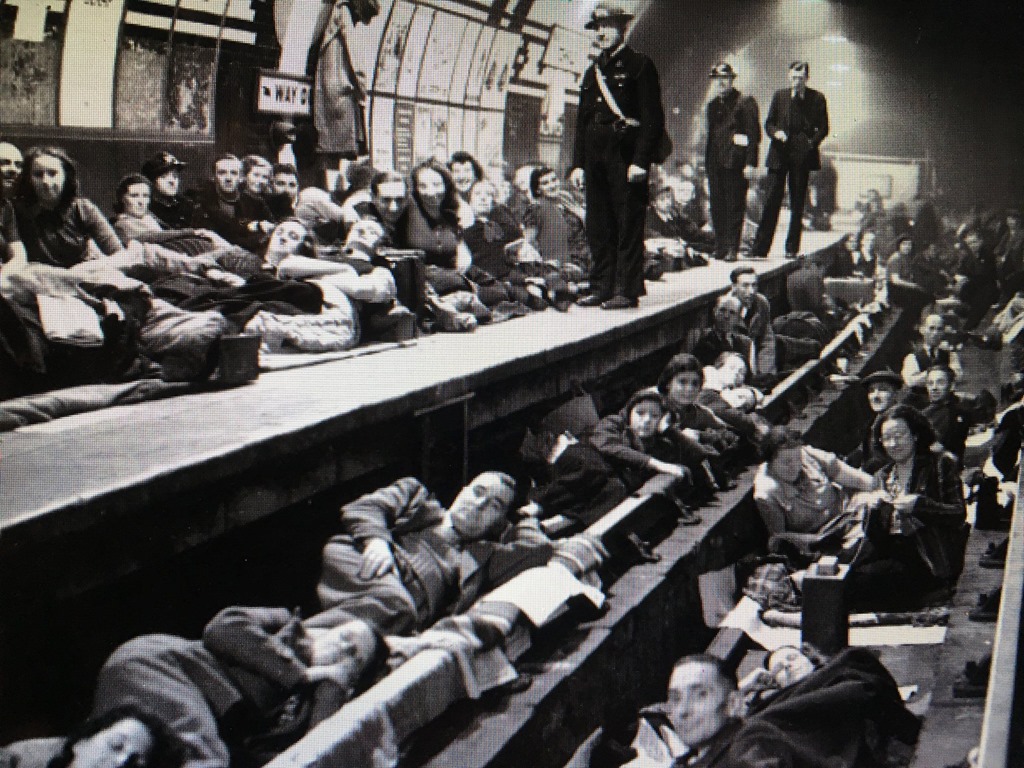
London Underground Station during the Blitz
It has been estimated around 177,000 people used London Underground stations as air raid shelters during the German aerial bombardment of London, but the London Underground did not always provide the protection many once thought.

At 8.02 pm on 14 October 1940 a 1400kg bomb hit Balham High Road opposite the United Dairies and created a large bomb crater which a double decker bus fell into, fortunately the bus was empty, and the driver was only concussed. At the time of the air raid around 500 people were using Balham Underground Station as an air raid shelter and were trapped after the explosion destroyed the roof above the northbound platform and tunnel. To protect public morale, it was originally reported that 66 people were killed and all fatalities were recorded as death by drowning after the main water mains and sewage pipes were ruptured and flooded the station. It is Widely believed the death toll far exceeded the official figure and it took several months to recover the last of the bodies.
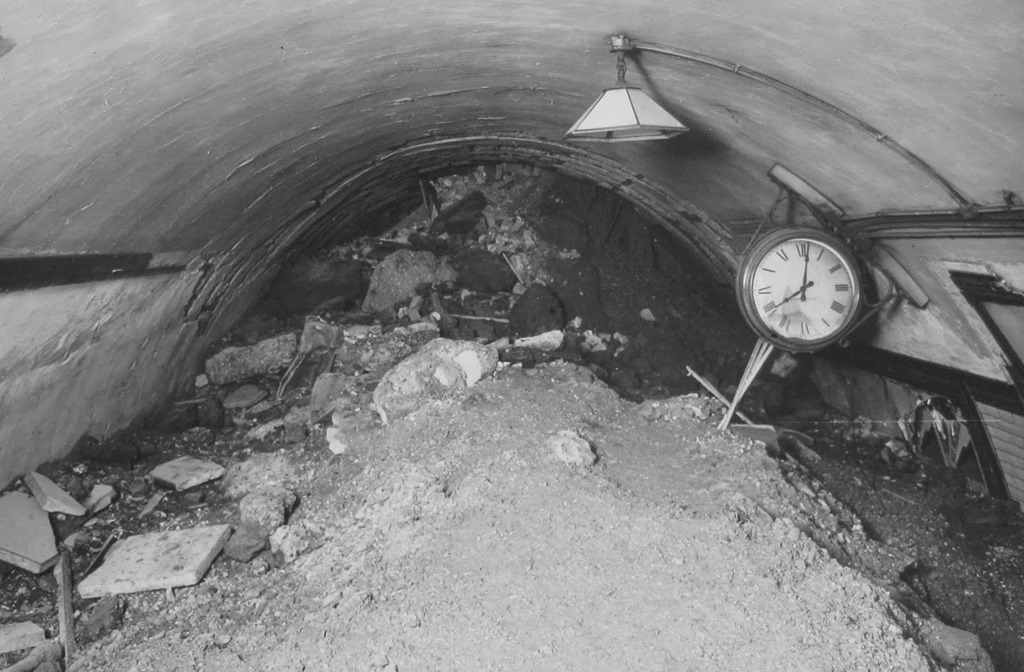

Balham Underground Stations after bodies recovered.
On 11 January 1941 the central ticket hall at Bank Underground Station received a direct hit from a German bomb: the blast travelled down the escalator onto the platform and parts of the road collapsed onto the concourse killing 56 people.
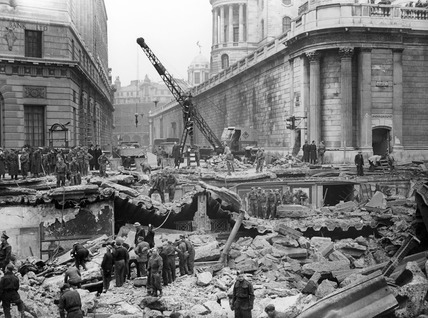

Bank Underground Station
The greatest loss of life on the underground was on 3 March 1943 at 8.45 pm.
According to eyewitness accounts, after the air raid sirens were heard several hundred people made for the safety of Bethnal Green Underground Station. A young woman clutching a baby fell at the bottom of the staircase and pulled down an elderly man and bodies quickly piled up at the base of the staircase while those at the top were unaware of what was happening and continued forcing their way down the stairs. Witnesses also describe a seething mass of mainly women and children all wearing thick clothes and gasping for air quickly develop… 173 people, overwhelmingly women and children were asphyxiated. There were also allegations that the Civil Defence previously warned of the dangers a requested an anti-crush barrier be installed on the single staircase leading to the platform, but their concerns were rejected and only after the tragedy were their concerns taken seriously and a crash barrier erected after the bodies had been recovered.

Repairs to the staircase after the bodies had been recovered.
Alan Malcher

(Image IWM)
On 2 March 1944 Denise Bloch infiltrated central France by parachute and worked as the wireless operator for both Clergyman and Detective circuits which were part of SOE’s clandestine network and began arranging for weapons, sabotage stores, finance and other agents to be sent from London and worked with several reception committees receiving incoming air drops.
It was around 8.20 am on 18 June when her wireless transmissions were located by German direction finders and her Safehouse raided by the Sicherheitsdienst des Reichsführers-SS (Security Service of the Reichsführers-SS), or SD, and Bloch along with another agent were captured.
It is known Bloch was tortured for information, but her wireless was not used by the Germans, and it appears Bloch refused to give the SD her personal wireless codes used to confirm her identity to London. It is also known she was transported to prisons in Germany during which she suffered from exposure due to the cold and malnutrition and was eventually transported to Ravensbrûck Concentration camp where she was executed on 5 February 1945 at the age of 29 and like many agents has no known grave after her body was cremated along with many others.
Alan Malcher
Corporal Ripley was the first man to climb an enemy barricade before leading his section under fire through enemy barbed wire (entanglements) and held the position until all his men were either dead or wounded during which he was badly wounded in the head and at the age of 47 is listed as the oldest recipient of the VC during the Great War. After being classified unfit for active service Ripley became a recruiting sergeant in Edinburgh. He was discharged in 1919 and returned to his trade as a slater. In 1933 he was fixing slates when he fell from a ladder and injured his spine and later died in hospital.
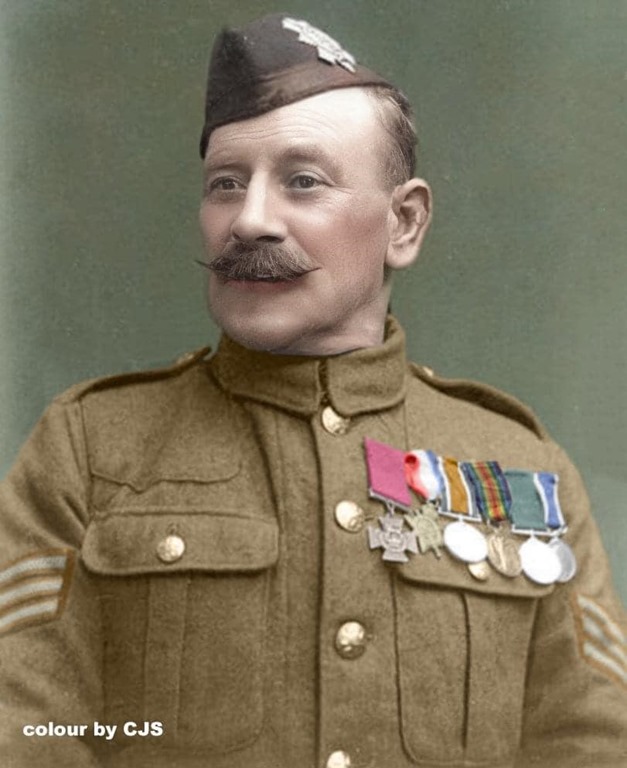
Alan Malcher
 Alan Malcher