Dutch historian explains: Why was there no euphoria when WWII started? What was the German perspective on the outbreak of the Second World War that started with the German invasion of Poland. The Polish Campaign (1939) resulted in a declaration of war from the British and the French to the Germans. How did the ordinary German react to this? Why was there no enthusiasm when WW2 started? Learn more about the German perspective of World War II. History Hustle presents: How Did Germans React to the Outbreak of World War II? (1939).
Category: History
161 Special Duties Squadron RAF: Supporting Resistance in France During WW2
Contributors, Group Captain Hugh Verity (OC A Flight)
Squadron Leader Frank ‘Bunny’ Rymills
Air Chief Marshall Bob Hodges (OC B Flight and later CO No.161 Squadron)
Barbara Bertram (SOE safehouse hostess near RAF Tangmere)
Looking back at the French Resistance during WW2 (Produced by France24)

France24 provides a brief glimpse of General De Gaulle’s role in encouraging French citizens to resist during WW2.
Operation Banner (Northern Ireland)Mortar Pl 2 RGJ Clogher 1989.
Film documentary
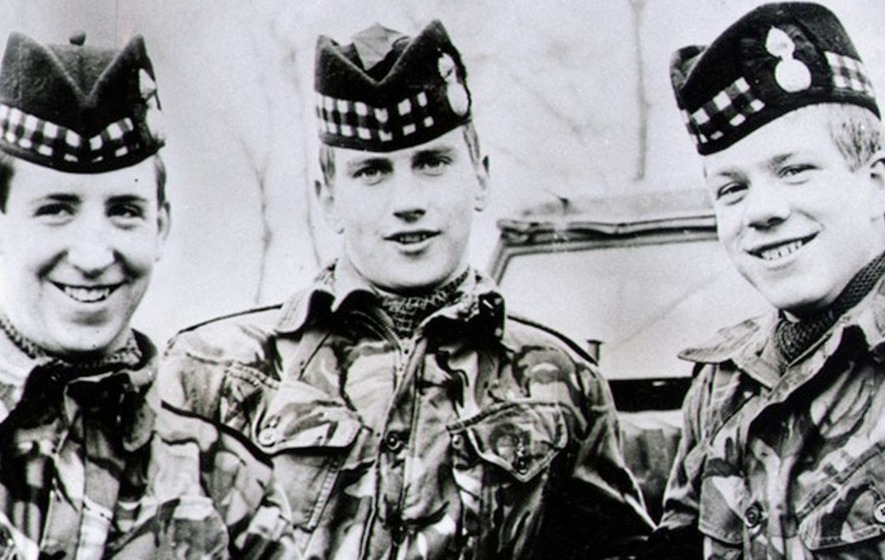
Operation Banner (Northern Ireland) The Scottish Soldiers
Investigative documentary – who murdered the the three soldiers?
Flight Lieutenant Richard ‘Dickie’ Lee DSO, DFC (RAF)
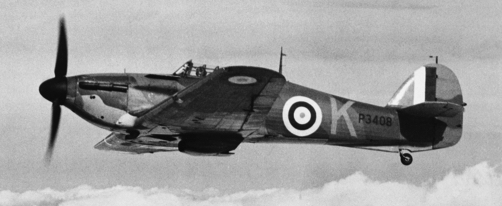
Hurricane Pilot during Dunkirk and the Battle of Britain.
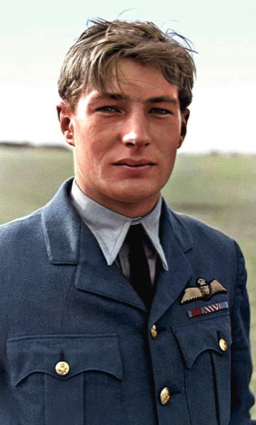
‘Dickie Lee’ (source unknown)
Whilst serving with 85 Squadron RAF during Dunkirk, on 21 November he destroyed a Heinkel III over Boulogne and after being shot down he evaded capture and return to his squadron. On 10 May 1940 Lee destroyed a HS 126 and shared in the destruction of a Junker 86 and during the same action was credited for damaging a Junker 88. The following day, after shooting down two enemy aircraft he was shot down over the sea by flak and was rescued after being in the sea for over an hour.
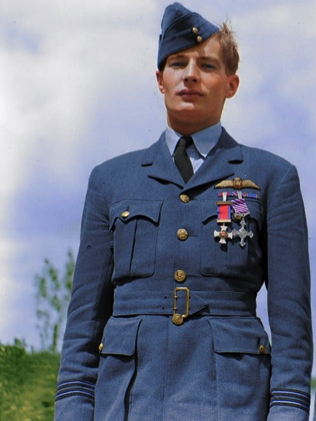
On 18 August 1940 during the Battle of Britain, Squadron Leader Townsend and Flying Officer Arthur Newman were flying ten-miles north-east of Foulness and were short on fuel when they saw ‘Dickie’ chasing a Messerschmitt bf 109 out to sea. Townsend shouted over his radio several times “Dickie come back!” but he continued to chase the Messerschmitt across the channel. Later that day Richard ‘Dickie’ Lee was reported missing presumed dead and neither his body or the wreckage of his Hurricane has been discovered.
At the time of his death ‘Dickie’ Lee was 23-years-old and is believed to have destroyed nine enemy aircraft.
Sergeant Ellis, Battle of Britain Pilot killed in action on 1 September 1940, body found and buried with military honours in 1993
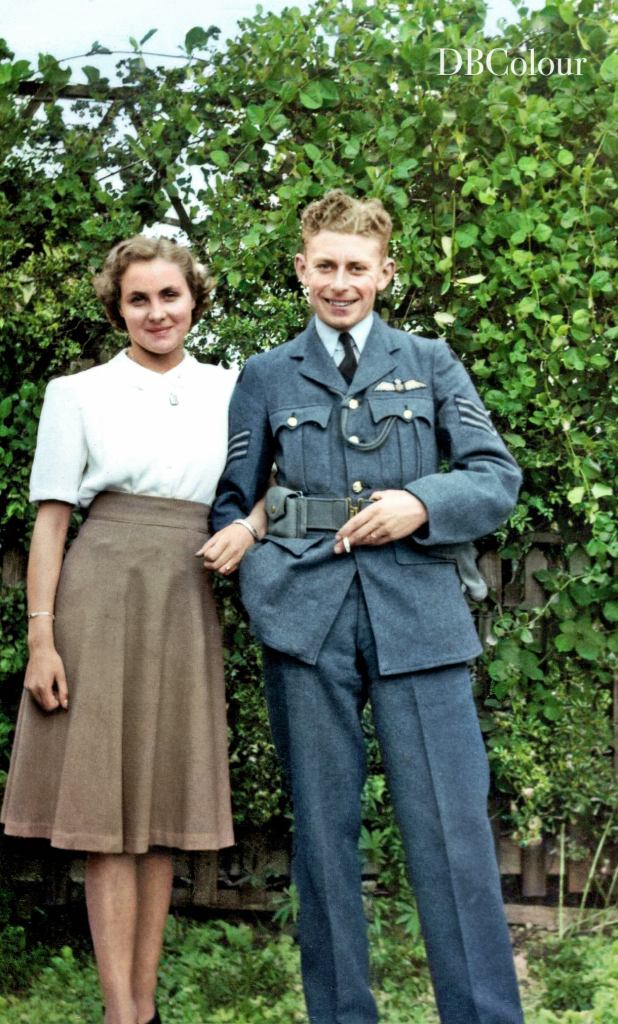
Sergeant John ‘Hugh’ Ellis with Peggy Owen (Colour by DB original source unknown)
Sergeant John Hugh Ellis (known in his squadron as Hugh or the cockney sparrow) was a 21-year-old Hurricane pilot with No. 85 Squadron during the Battle of Britain. On 29 August Ellis was engaged in aerial combat over the channel during which his Hurricane was hit by enemy fire and flames were seen coming from the engine compartment. Ellis managed to fly his crippled aircraft over land before bailing out and his aircraft crashed on farmland in Ashburnham in Sussex with his lucky mascot, a small boomerang his aunt had sent him from Australia.
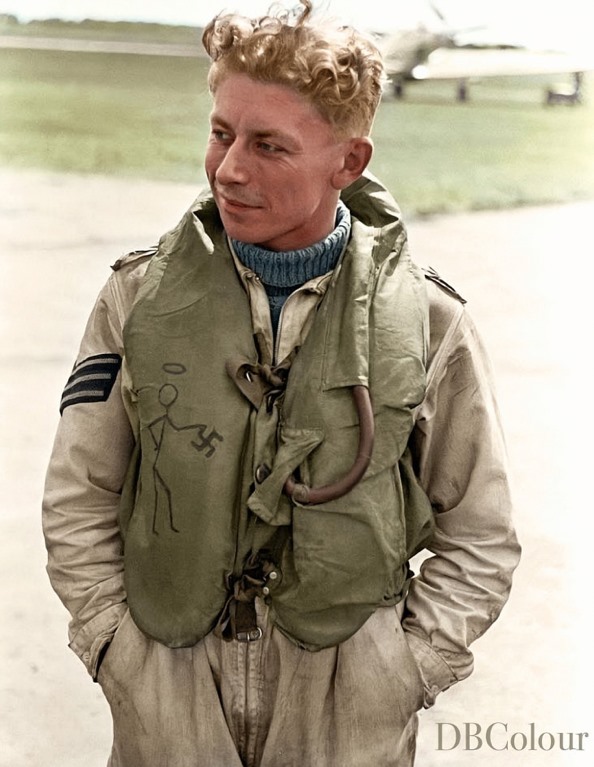
On 1 September 1940 his parents and fiancé were informed John Ellis was missing presumed dead but due to the confusion during the Battle of Britain it was thought he was shot down over the English Channel.
After lengthy research conducted by historian Andy Sanders; Martin Gibb, a Coroner’s Officer with the Metropolitan Police and Peter Mortimer the cousin of John Hugh Ellis, in 1992 they discovered the crash site and also pieced together the chain of events.
Based on eye witness accounts a group of Hurricanes were engaging enemy aircraft over Court Road, Orpington when a Hurricane suddenly started diving towards the ground at high speed with its pilot slumped over his controls before crashing in a field located in Chesterfield south of Orpington in Kent.
A few days later a foot inside a flying boot was found and was buried in a grave marked as an ‘Unknown Airman’ at Star Road Cemetery, St Mary’s Cray. Several weeks later people looking for scrap metal found small body parts which they handed to the police and were later buried in another grave marked as an “Unknown Airman”. Consequently, for over 50-years ‘Hugh’ Ellis had two different unknown graves in the same cemetery.
During an archaeological dig in 1992 the cowling of a Hurricane was found, and larger pieces of human remains were discovered inside the aircraft which were later identified as John Hugh Ellis. Among the personal effects which survived the crash and being buried for 52-years were two photographs: his fiancé Peggy Owen and his aunt who sent him the boomerang.
Sergeant John Hugh Ellis was later buried with full military honours at Brookwood Military Cemetery.
Additional reading https://sussexhistoryforum.co.uk/index.php?topic=16417.0
French Resistance during the Battle of Vercors
A good video documentary on the Battle of Vercors from an American presenter. My only criticism is there was no mention of SOE who had been operating in the area for sometime and the OSS units he mentioned were not always required by the Maquis.
Sonia May Malkine who served with the French Resistance during WW2
Sonia Malkine talks about her war service with the French Resistance.
Geoffrey Wellum. The youngest Battle of Britain Pilot
Interviewed in in 2014
Geoffrey Wellum, RAF Battle of Britain pilot. His last interview before his death at the age of 96.
 Alan Malcher