Alan Malcher

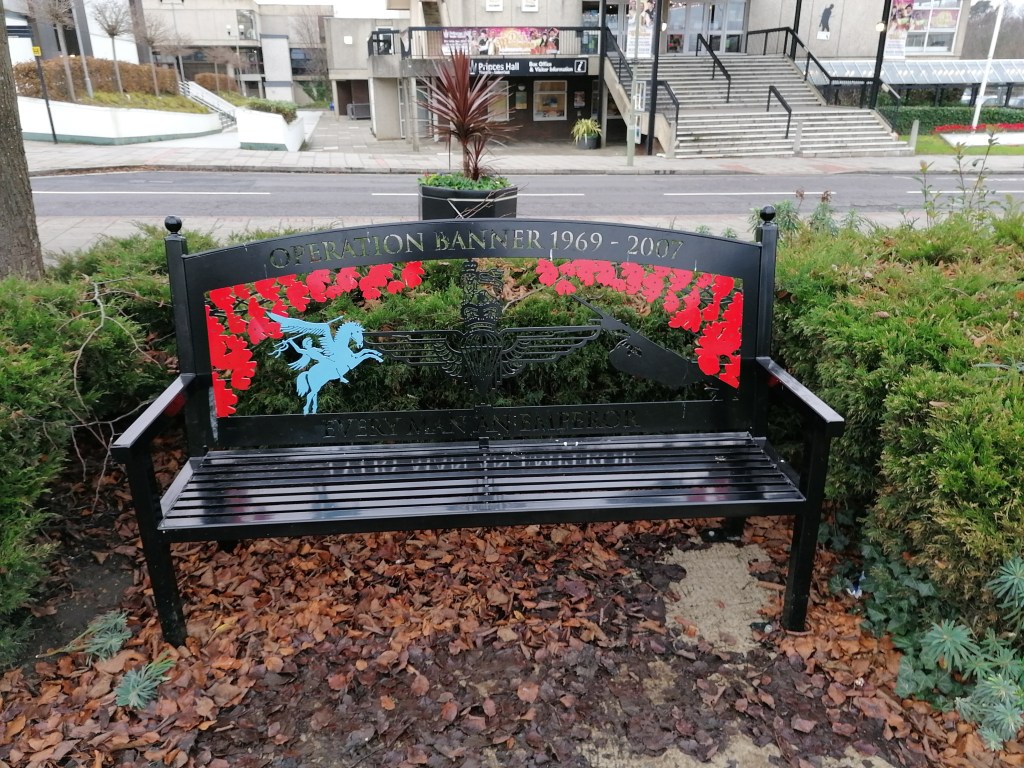
Operation Banner Memorial Bench


Alan Malcher

Operation Banner Memorial Bench

Whilst serving with the Royal Berkshire Regiment John Austin volunteered to join the Jedburgh Teams (Jed’s) which were formed to operate in various occupied countries to assist local resistance supporting the allied strategy for D-day and after completing training was promoted to sergeant.
On the night of 11 September 1944 John Austin with Major Brinkgreve of the Dutch Army and Major Olmsted of the US army, referred to as Team DUDLEY, parachuted from a Short Sterling bomber into a remote region of the Netherlands and after leaving the aircraft two containers of weapons were dropped by parachute which they buried not far from where they landed.
Apart from arming members of the Dutch Resistance operating in Overijessal, a province in the eastern part of the Netherlands, they were also ordered to encourage the Resistance to defend bridges which the allies needed during their advance into Germany.

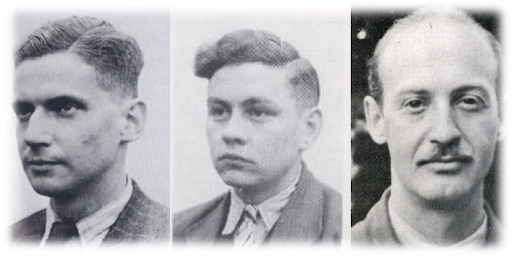
Jedburgh Team Dudley. From left to right: Henk Bringreve (Netherlands), John Austin (British), John Olmsted (USA)
Jedburgh teams were not undercover agents and wore uniforms and though this was appropriate for Jed’s working in France and other occupied countries it was impractical in a small country like the Netherlands where they had to move around the country, so they quickly acquired civilian clothes and after meeting members of the Resistance the following message Austin sent to London was far from encouraging:
“The local self-appointed Resistance leader had a very imperfect group under his command. They had no knowledge about German troops in the area or any German supplies or depots in the area.”
During Operation Market Garden on 17 September 1944 when allied paratroopers attempted to seize bridges over the Rhine, intense fighting in the city of Arnhem and the surrounding area resulted in large numbers of German troops looking for members of the Resistance and people assisting allied paratroopers.
Whilst the three Jed’s and a members of the Resistance were travelling by car they came across a checkpoint manned by the Wafer SS, because they had no documents and were armed they decided to crash through the road block whilst firing at the soldiers with their Sten guns and during the brief but intensive engagement five members of the SS were killed or wounded. Later that day a car of the same make and model approached the same checkpoint and the SS immediately opened fire with machine guns and threw two grenades at the approaching vehicle, and whilst examining the wrecked car discovered they had killed an SS officer, a Gestapo (SD) officer and their driver.
Over the next few days Team Dudley with members of the Resistance were involved in several sabotage operations and ambushing German troops and by 1 October the team had organised all the resistance groups in the area which numbered around 3500 men and women. Austin also informed London they had a further 12 to 15,000 who could be mobilised to support the allied advance.
It is thought to have been late November when Austin, Brinkgreve, Olmsted along with around 116 other escapers including members of the British 1st Airborne Division which was trapped behind enemy lines attempted to cross the Rhine but only seven succeeded and the remainder were either killed or captured and one of those captured was John Austin.
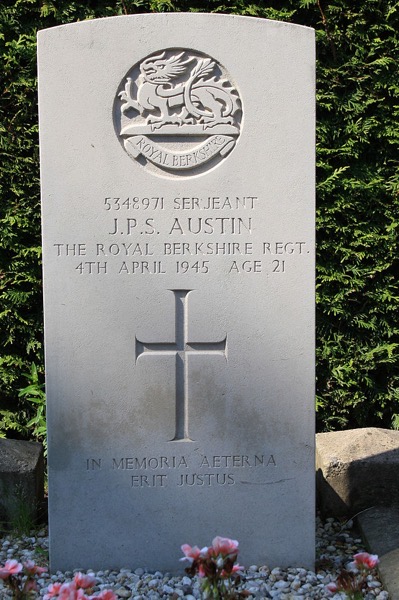
John Austin was sent to Zwolle Prison in north-eastern Netherlands and on 4 April Austin and five Dutch prisoners were taken from their cells and shot in retaliation following an attack on a senior German officer. At the time of his death Austin was 21 and his name is on the Memorial at Hattem, Netherlands.

Talaiasai Labalaba (known as Laba) who some soldiers said should have been awarded the VC.
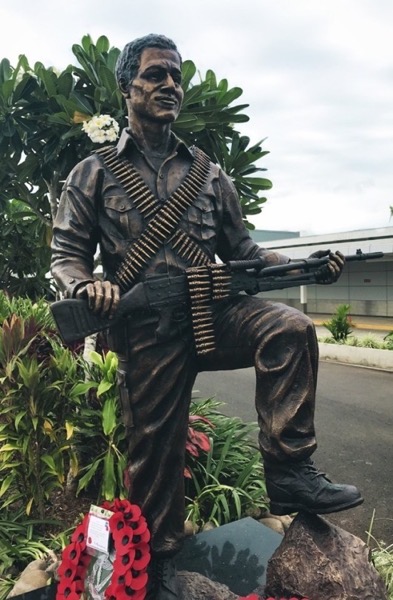
Memorial to Laba of B Squadron 22 SAS who was KIA during the battle.
Laba was born in Nawaka, Fiji on 13 July 1942 and was a sergeant serving with the Royal Irish Rangwers before joining the Special Air Service Regiment (SAS) during which he saw active service in Aden and Oman.
During the 1970s Communist guerrillas were attacking the pro-western Sultan of Oman and elements from the SAS were deployed to support the Sultan’s army.
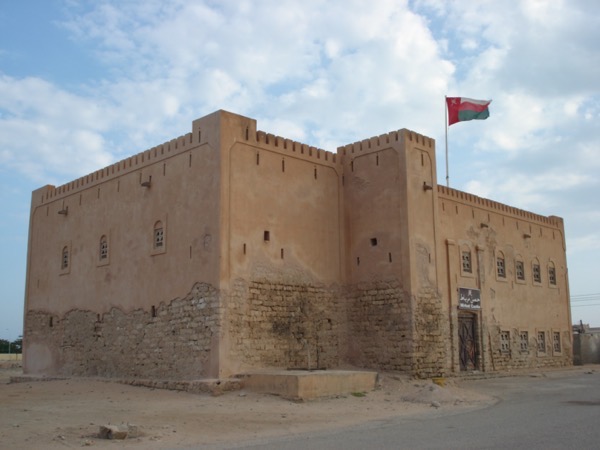
The Fort at Mirbat
In July 1972 four-hundred heavily armed Communist guerrillas attacked the coastal town of Mirbat which was occupied by a small number of Arab soldiers and nine members of the SAS under the command of 23-year-old Captain Mike Kealy and due to being greatly outnumbered the Communists were certain of a quick victory.
The SAS soldiers were only armed with their personal weapons, one mortar, a Browning machine gun and a Second World War 25-pounder gun.
After the Duke and Duchess of Sussex unveiled a memorial to British-Fijian SAS soldier the story of how Lab held off 250 Communist guerrillas as they attempted to overrun their position was reported by a small number of newspapers who used the words of two SAS soldiers who fought during the battle: Trooper Sekonaia Takavesi, a Britsh-Fijian known as ‘Sek’ and Corporal Peter Warne known as ‘Snapper’.
Snapper:
“A mortar salvo blew away part of the perimeter wire and a round exploded on the edge of the town. Shrapnel flew over our heads. Then I turned to see Mike Kealy clambering over a wall. He was telling me to go down to the radio and contact base… As I returned to my position and eased off the safety catch of my Browning, a massive explosion took a great chunk out of the tower.
In the flash I could see Laba, a Fijian SAS soldier, kneeling behind the shield of a 20-pounder. An hour-and-a-half or two hours later, I saw the first assault troops of about 50 advancing towards us… The battle was on. As the adrenaline kicked in the emotional shutters came down and all feelings of humanity were locked out. It’s a kind of exhilarating insanity, its kill or be killed. So we set about taking them out. The group in front were hit, the line faltered then wave upon wave of them were advancing, grabbing at the barbed perimeter wire with bare hands while Laba was blasting them into oblivion.”
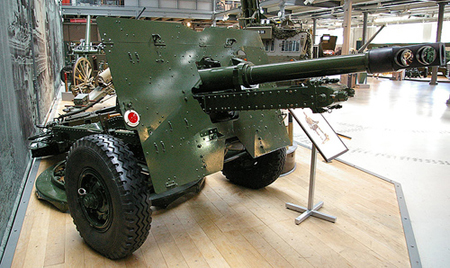
20-pounder used by Laba
Sek:
“When Laba and I were firing we were under heavy attack. They were almost on top of us, shooting from all directions. We were firing at point blank range, we had no time to aim… We were pretty short of ammunition and the battle was getting fiercer. They were still advancing, and we were almost surrounded. Then Laba told me there was a 66 mm mortar {? might be 66mm LAW) inside the gate.
We were joking in Fijian and I said, ‘Laba, keep your head down’ as he crawled away towards the mortar. I was covering him then I heard a crack, I turned, all I could see was blood. A bullet had hit Laba’s neck and blood was spouting out. He died within seconds.
I had to think how to survive. I could hear the radio going, but it was too far away to call for help. Then I saw Captain Kealy and another soldier Tommy Tobin coming towards me. Tommy was the first to reach the command post and as he climbed over the wall he got shot in the jaw. I heard a machine gun fire and all I could see was his face totally torn apart. He fell and Mike Kealy dragged him to a safe area.
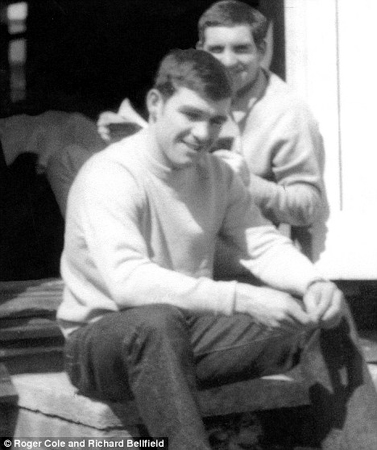
Tommy Tobin (from the book credited at the end of this article)
Then Mike got himself into an ammunition pit and started throwing loaded magazines to me.
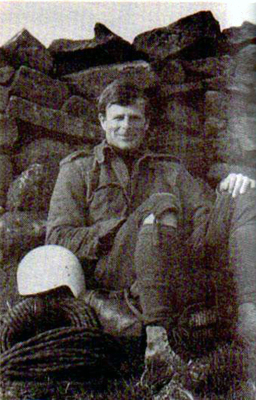
Captain Mike Kealy (see book credit)
We could see two or three people {rebels} on the corner of the fort throwing grenades from only about four or five metres away. We managed to kill a few. All I could hear was Mike on the radio trying to get support.
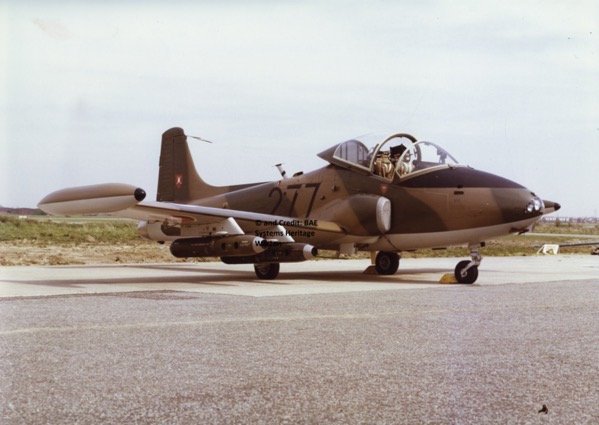
As the battle raged two Strikemaster jets roared over.”
Snapper:
“The rebels turned their attention to the jets as the first strafing runs were made. They came back with bullets, rockets and a 500 kg bomb into the wadi {oasis} to the east of the fort. One jet was hit in the tail section and limped away. The other made one final run but our jubilation was short lived because the enemy had regrouped and were counter-attacking.
An SAS soldier we called ‘Fuzz’ couldn’t get the right angle with the mortar, so he lifted the barrel to his chest, hugged it like a dancing partner and slid a bomb down. Then he sent bomb after bomb right where Mike wanted them.
Two Strikemasters arrived on strafing runs and then helicopters ferried out the troops. The final toll was two SAS soldiers killed, six Arab soldiers and an Omani gunner dead and one Arab wounded. The guerrillas left behind 30 bodies and 10 wounded, although it was later indicated that half the force was killed or wounded.
Sek:
“The enemy were totally destroyed, but it was very sad to see Laba and Tobin die. I think all the people involved should have been given medals…”
Snapper:
“Laba was a bear of a man. When he was fully tooled up he was the original Rambo. They wanted to give him a VC but because the war was secret in 1972 they said it would be headlines in every newspaper in the UK.”
(Source Fiji Times 26 October 2018)
The Battle of Mirbat marked the end of the Communist rebellion and by the time the war ended in 1976 the SAS lost 12 men.
Further reading: ‘SAS Operation Storm: Nine Men Against Four Hundred’ by Roger Cole and Richard Belfield (Hodder & Stoughton)
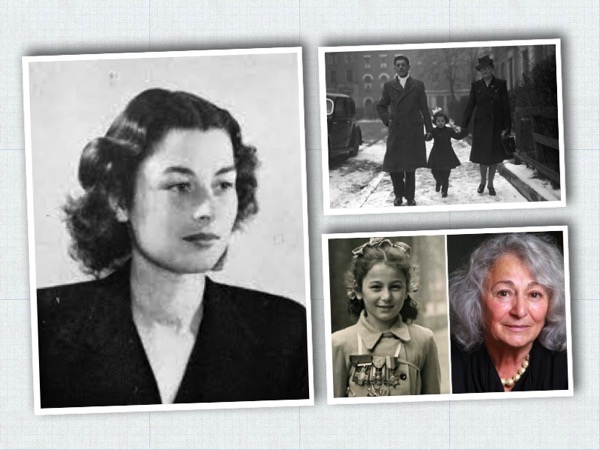
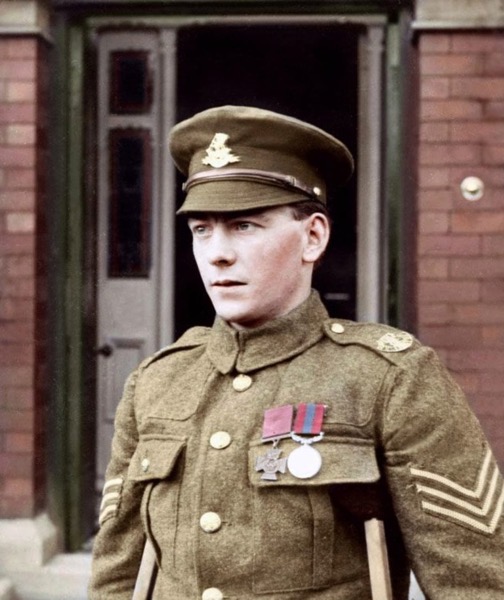
Arnold Loosemore enlisted into the army on 2 January 1915 at the age of 18 and after completing training was posted as a private soldier to the York and Lancaster Regiment and served during the Gallipoli Campaign.
After returning to England he underwent training as a Lewis Machine Gunner and in July 1916 was posted to the 8th Battalion Duke of Wellington’s (West Riding) Regiment and at the age of 21 his battalion was posted to the Somme in France.

On 11 August 1917 his platoon came under intense rifle and machine gun fire from German trenches and were pinned down when Private Loosemore decided to attack the enemy trench alone. After crawling towards enemy barbed wire under fire he found a section which was partly cut and after crawling through with his Lewis gun he continued crawling to higher ground before engaging a German trench and killing around twenty enemy soldiers.
After his Lewis Gun jammed three German soldiers rushed his position which he killed at close range with his revolver before clearing his jammed gun and continuing his lone firefight. Later that day he also killed several German snipers and carried an injured British soldier to safety. For his bravery he was promoted to Corporal then to Sergeant and was awarded the VC.
At Zillebeke in Belgium, on 19 June 1918 his officer was seriously wounded, and his platoon became widely scattered during an enemy bombardment. Whilst disregarding his own safety under machine gun fire Sergeant Loosemore organised his platoon and brought them back along with the wounded to the British lines. It was later recognised it was his leadership which resulted in his platoon later capturing the enemy position and was awarded the DCM (Distinguihed Conduct Medal).
On 13 October 1918 Sergeant Arnold Loosemore DCM, VC was shot in the leg by machine gun fire near Villiers-en-Cauchies, France and his leg had to be amputated above the knee after which he returned to England and was discharged from the army. Due to various health problems associated with his war injury he was unable to find work and died from tuberculosis on 10 April 1924.
His wife Mary who had a young son also called Arnold was refused a War Pension from the government because her husband died after the war and found herself destitute. With no money to pay for a funeral Mary was forced to bury her husband in an existing grave with three other bodies whose families could not pay the funeral costs at All Saints Churchyard, Ecclesall, Sheffield.
One of the transformers destroyed during the attack (German Federal Archives)
In late May 1941 the Special Operations Executive (SOE) received a request to sabotage the power station in Passaic near Bordeaux but due to other operations they had no agents available and asked the Polish Section (EU/P) which came under the jurisdiction of the Polish Government in Exile in London whether they would be take the mission and after agreeing six Polish volunteers boarded an RAF aircraft of 138 Special Duty Squadron at RAF Tempsford to parachute into France.
Shortly after entering French air space the aircraft suffered an electrical fault which caused their container loaded with weapons and explosives to be jettisoned over the Loir and were forced to abandon the mission and return to England. Unbeknown to the aircrew the electrical fault was serious and caused the aircraft to crash land at Tempsford and catch fire: all the crew were either killed or injured and the six Polish agents suffered serious burns.
SOE HQ then asked RF Section (the Free French equivalent to SOE under General de Gaulle) whether they were willing to attack the power station and after de Gaulle agreed, on the night of 11-12 May 1941 three agents from RF Section, J Forman, Raymond Cobard and André Vernier (aka Jacques Leblanc) successfully infiltrated France by parachute.
After hiding their weapons and explosives the team reconnoitred the power station: there was a high-tension cable very close to the top of a 9-foot wall they needed to climb over and it appeared there was a large number of German and Italian soldiers protecting the power station. They also failed to obtain the bicycles which they intended to use for the getaway so decided to postpone the attack.
Before leaving England Forman was given the Paris address of an RF agent named Joêl Letac who remained in France after a failed mission called Operation Savanna and after meeting Forman Letac rallied that team and encouraged them to continue the mission and the following day travelled with them to the power station. After the old lorry they obtained broke down they continued the remainder of the journey on stolen bicycles and recovered the equipment they had buried around 100 yards from the power station.
On the night of 7-8 June 1941 during pitched darkness due to the blackout Forman climbed the perimeter wall and crawled under the high-tension cable which was dangerously close. After ensuring he could not be seen by the guards Forman entered the compound and opened a side door, the rest of the team entered the grounds of the power station and then sprinted across open ground to the main building.
In less than thirty minutes the team placed magnetic incendiary devices on eight large electricity transformers and then made their getaway on the stolen bicycles. It has been said the explosions were so violent flames rose high into the air and illuminated the entire area as searchlights started probing the sky for bombers.
Six of the transformers were destroyed and this seriously disrupted the the Bordeaux submarine base, numerous factories used to supply the German army were forced to stop production for several weeks.The electricity grid from another region was diverted but the overload caused more damage and all electric trains in south wester France had to be replaced with steam locomotives, and all the transformer oil in France had to be used during the repairs.
Some writers claim the team was picked up by an RAF Lysander of 161 Special Duty Squadron, but this was not the case. The team arrived in France with one million francs (said to be about £1,400 in 1941 and roughly £71,000 in 2021) and the money was unaccountable! Instead of requesting an extraction they remained in France for a further two months and according to historian MRD Foot “They left behind them broken glass and broken hearts” before making for neutral Spain and arriving back in England. Before crossing the frontier Cabard was captured but later escaped and returned to England.
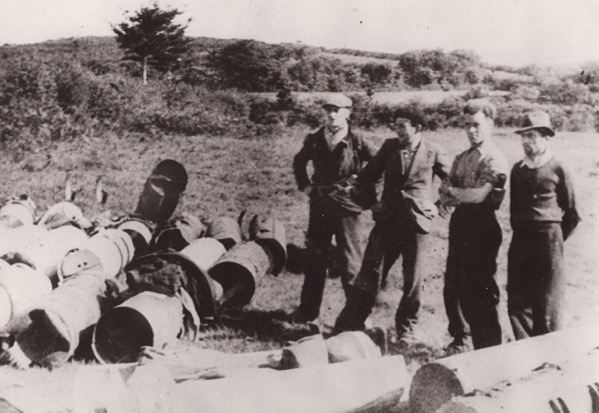
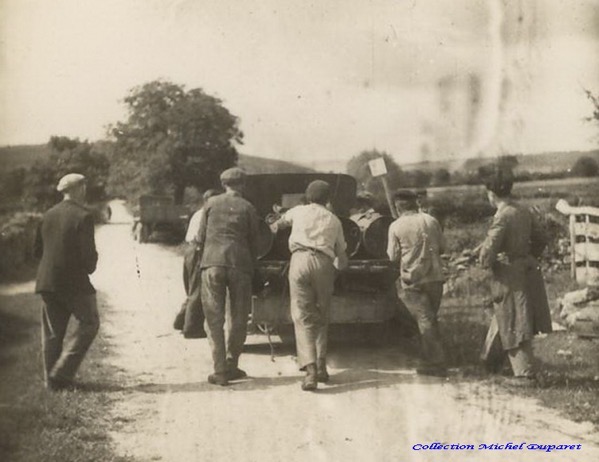
On 10 June 1944 the Special Operations Executive (SOE) and other Resistance Networks were told to find suitable large and remote fields for mass daylight parachute drops of weapons and other stores.

The first daylight drop of weapons and stores was called Operation Zebra on 25 June 1944 when 180 B-17 bombers of the USAAF with fighter escorts dropped 2,160 containers to SOE and members of the Resistance at Ain, Jura, Haute Vienna and Vercose and due to its success a larger drop by Allied aircraft called Operation cadillac took place on 14 July 1944.

Operation Cadillac consisted of 349 bombers (mostly B17’s) with 534 Allied fighter escorts during which 3,791 containers loaded with 417 tons of weapons were dropped at seven locations. (Photos Musee de la Résistance)
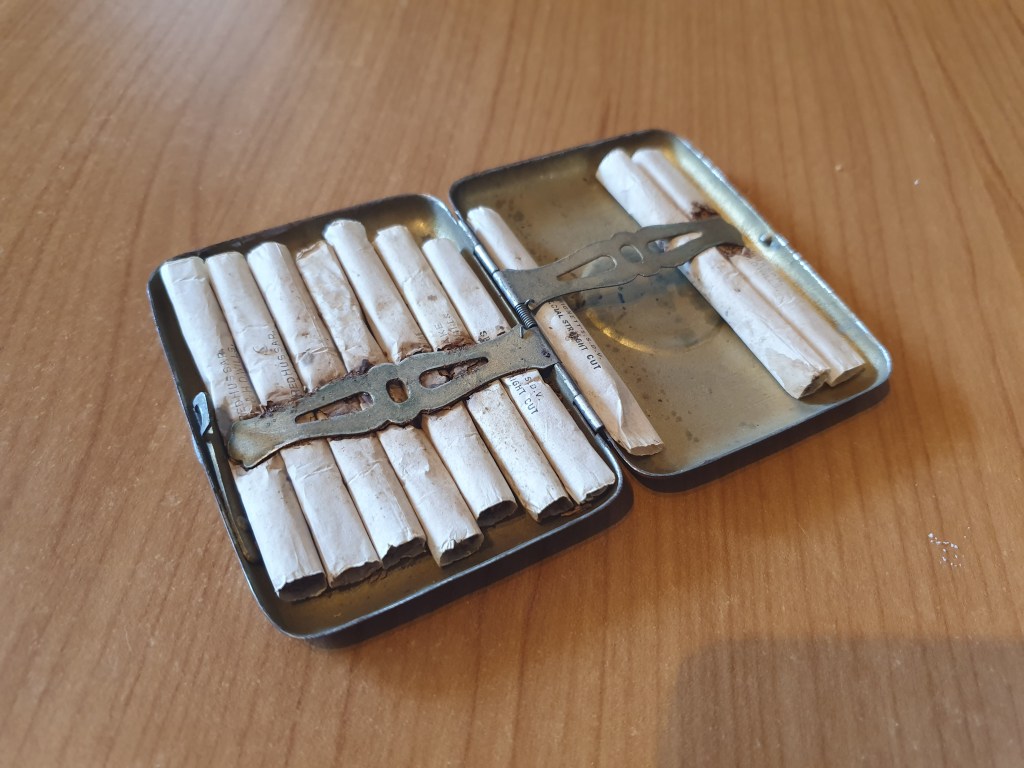
At the age of 19 Private Edward ‘Ted’ Ambrose from Wallington Hertfordshire, died from shrapnel wounds during the Battle of the Somme in July 1916 whilst serving with the Bedford Regiment and is buried in Etaples Military Cemetery in France.
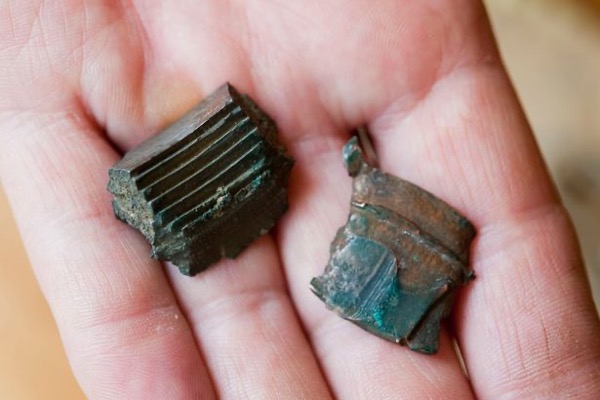
He possessions were returned to his mother in a parcel which contained his cigarette case with three roll-ups, his pipe which still contained tobacco, a photograph of his girl friend and letters from his parents. His mother found the contents of the parcel too painful to look at and it was placed in the loft. 98 years later Edward Ambrose’s nephew opened the parcel and discovered the army had also sent his grieving mother the shrapnel that killed her son!


Shrapnel which killed 19 year old Private Edward Ambrose which was sent to his grieving mother.
Photograph of John Hines surrounded by some of his stolen and liberated souvenirs whilst serving on the Western Front.
John Hines was a British-born Australian soldier who served on the Western Front during the Great War who became known for looting whatever he could get his hands on but was also noted for being an aggressive soldier. In June 1917 he captured 60 German soldiers during the Battle of Messines after throwing hand grenades into their pillbox.
Although he was brave in battle his behaviour was erratic and when away from the front line he was court martialled on nine occasions for drunkenness, impeding military police, forging entries in his pay book and being absent without leave. It is also thought he was caught robbing the safe at a bank in Amiens and because of these convictions he lost several promotions he gained for acts of bravery.
In mid-1918 he was discharged from the Australian Army for being unfit due to haemorrhoid problems and arrived back in Australia on 19 October 1918. For the next 40 years he lived near Mount Druitt in a small shelter made of old clothes which was surrounded by a fence on which he hung German helmets and the local people were afraid of him. Despite being a recluse and pennyless he travelled to Concord Repatriation Hospital each week to donate a suitcase of vegetables from his garden to veterans being treated there.
At the start of the Second World War he attempted to enlist but was rejected, at that time he was 60 years old. After being rejected it was widely claimed he attempted to stow away on a troop ship but was caught before the ship sailed.
John ‘Barney’ Hines died at Concord Repatriation HospitaL on 28 January 1958 and buried in a grave which was unmarked until 1971, when a charity paid for a headstone. The council renamed the street on which he lived to John Hines Avenue and a monument commemorating him was built at Mount Druitt Waterholes Remembrance Gardens in 2020.
Historian Peter Stanley said Hines was a man whose skills in fighting were needed and whose knack of souveniring was admired, but he had few gifts that a peaceful society valued.
Walter Chibnall was a miner living in Beaufort, Victoria, Australia before enlisting into the Australian Army on 15 March 1916 to fight during the Great War. This photograph of Walter and his son William is thought to have been taken during the last time they saw each other before his father was posted to Europe to fight on the Western Front. Walter was promoted to Corporal on 14 September and posted to the 1st Reinforcement Regiment, 39th Battalion Mortar Battery.
On 12 October 1917 his father, Walter, was killed during the Battle of Passchendaele, Ypres: during an artillery bombardment Walter was taking cover in a shell crater when it took a direct hit from an artillery shell and has no known grave. At the time of his death he was 32-years-old.
During the Second World War his son, William, enlisted into the Australian Army and died in a Japanese prisoner of war camp at Amon on 20 February 1942. He is thought to have been executed and like his father has no known grave and died at the age of 30, 2 years younger than his father when he was killed. (Photos, The AIF Project UNSW Canberra Australia)

William Chibnal taken during WW2
‘Teddy’ Sheean was a farm labourer before he joined the Royal Australian Navy Reserve on 21 April 1941 as an Ordinary Seaman and four of his brothers were already serving in the Australian Army and another was in the navy.
After completing training, he was eventually posted as an anti-aircraft gun loader on HMAS Armidale which was on escort duties on the eastern coast of Australia and New Guinea before returning to the safety of Darwin in October.

On 29 November HMAS Armidale along with HMAS Castlemain sailed to the Japanese-occupied Island of Timor to extract Australian soldiers of 2/2nd Commando Independent Company and land fresh troops to continue operations. Both ships then rendezvoused with HMS Kuru which had already taken the troops off the island and were then transferred to Castlemain.
At 12:28hrs on 1 December Armidale and Kuru came under heavy and repeated attacks from Japanese aircraft and the two ships became separated. By 14:00hrs Armidale was being attacked by at least thirteen aircraft and just over an hour later a torpedo hit the port side of the Corvette, another hit the engineering section and was quickly followed by a bomb striking the aft section.
As Armidale listed heavily to port and was close to sinking the order was given to abandon ship and as the survivors jumped into the sea the defenceless men were machine-gunned by Japanese aircraft. Instead of boarding a life boat 18-year-old Sheean ran to his gun as the ship was sinking and though already wounded in the chest and back he shot down one Japanese bomber, continued firing at other aircraft to keep them away from the men in the water and was seen still engaging the enemy as the ship disappeared under the sea.

Painting at AWM
Only 49 of the 149 members of HMAS Armidale survived and Sheean was mentioned in dispatches. In 1999 a Collins Class Submarine (HMAS Sheean) was named after him and is the only ship in the Australian navy to be named after an Ordinary Seaman.

HMAS Sheean
In 2020 following a public campaign a panel of experts examined eye witness accounts of his action and recommended the Australian Government posthumously award Ordinary Seaman Edward ‘Teddy’ Sheean the VC, and on 1 December 2020 members of his family received his Victoria Cross during a ceremony in Canberra.