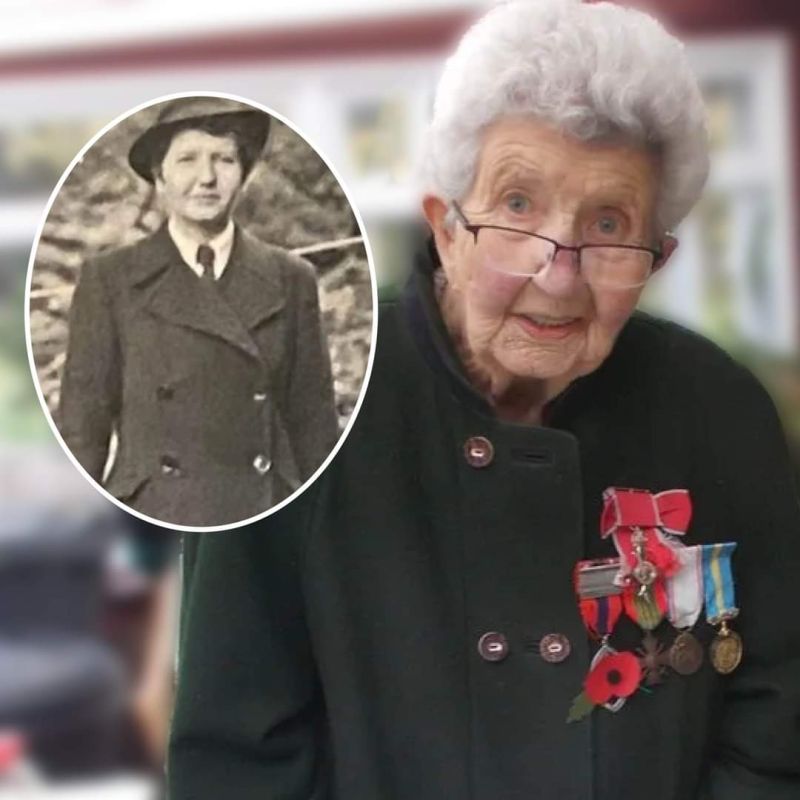
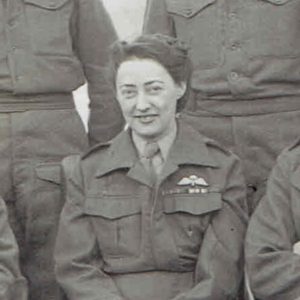
I have recently been informed that on 4 February 2024 one of the last surviving members of the Special Operations Executive (SOE) French Section died at the age of 97. If her age is correct and was 17 when she parachuted into France, Nicola Pauline Marie Trahan was one of the youngest agents serving with F (French ) Section. RIP
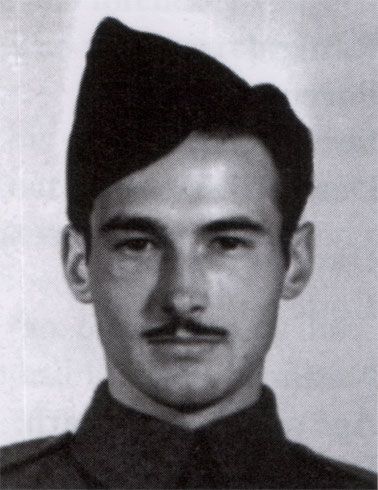
Roger Sabourin was born in Montréal, Canada on 1 January 1923 and was serving with the Canadian Intelligence Corps before joining SOE on 2 January 1944 and trained as a wireless operator.
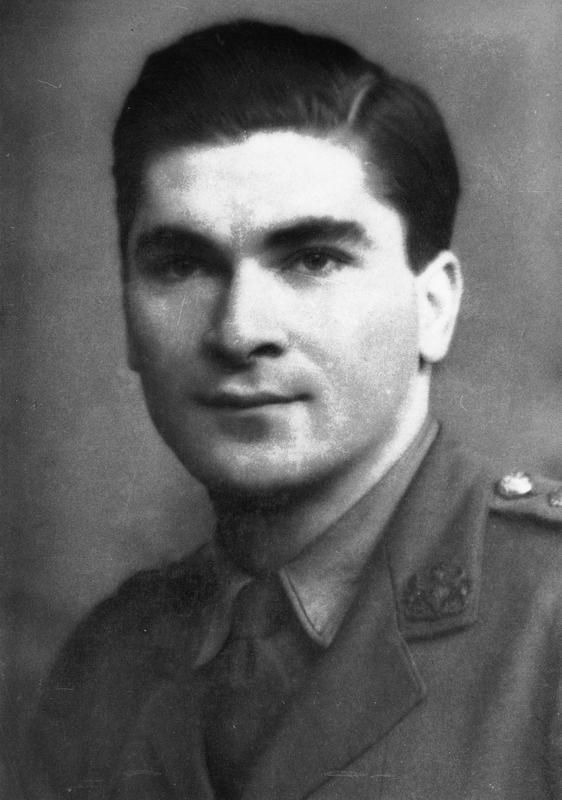
On the night of 2/3 March 1944 Roger Sabourin on his first mission to France to start a new circuit called BARGEE and Adolphe ‘Alex’ Rabinovitch on his second mission, the first of which he was lucky not to be captured by the Gestapo before escaping to England, parachuted to a drop zone adjacent to woodland.
Adolphe ‘Alex’ Rabinovitch
It was originally believed the reception committee, members of the resistance at the drop zone to assist them, were from ARCHDEACON circuit that had been infiltrated but later research discovered they had been dropped to SORCERER circuit that had been infiltrated and was being run by the Abwehr (German Military Intelligence) as part of their deception to capture incoming agents.
When Sabourin and Rabinovitch were taking off their parachutes, through the moonlight they saw a German soldier and immediately ran into the woods and during a brief firefight two German soldiers were killed but Sabourin and Rabinovitch were wounded and unable to continue their escape.
After lengthy interrogation by the Gestapo Rabinovitch was transported to Cross-Rosen concentration camp in Poland where he was executed on 2 March 1944. Sabourin was executed at Buchenwald camp on 14 September 1944. Thirty-seven allied officer were also killed that day along with Canadian SOE officers Frank Pickersgill, Ken Macalister and French SOE agent Robert Benoit.
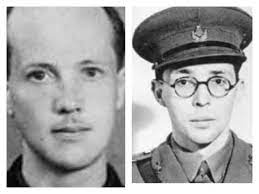
Pickersgill and Macalister
Robert Benoit
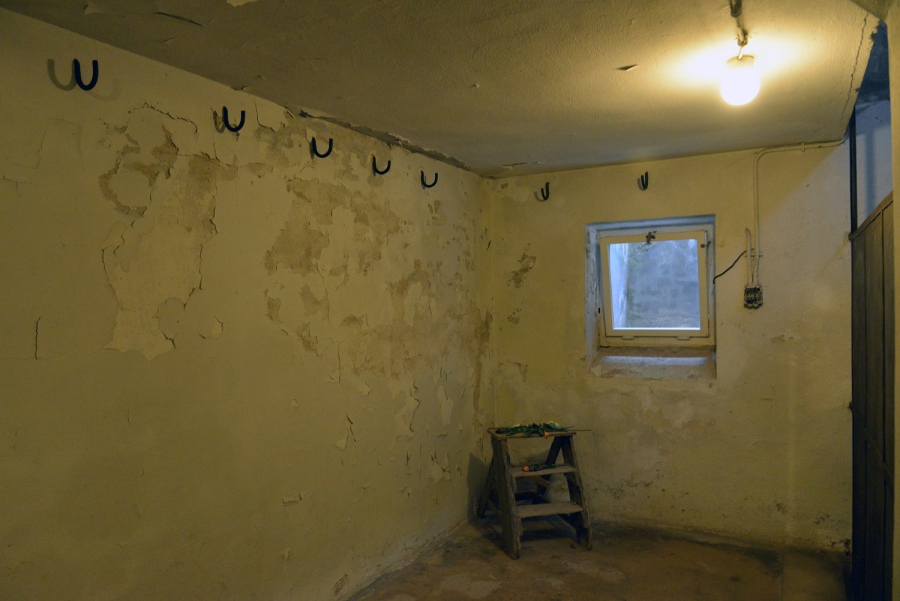
During an investigation into missing agents after the war it was discovered that Sabourin, Macalister, Pickersgill and Benoit had been executed by slow and painful strangulation by piano wire after being suspended from hooks on the walls of the Buchenwald camp crematorium.
Buchenwald camp crematorium with hooks on the walls for strangulation.
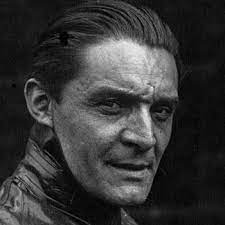
Much has been written about Hauptsturmfuhrer Klaus Barbie, the head of the Gestapo in Lyon who became known as the “Butcher of Lyon” after personally torturing men, women and children, but little as been written about Francis André.
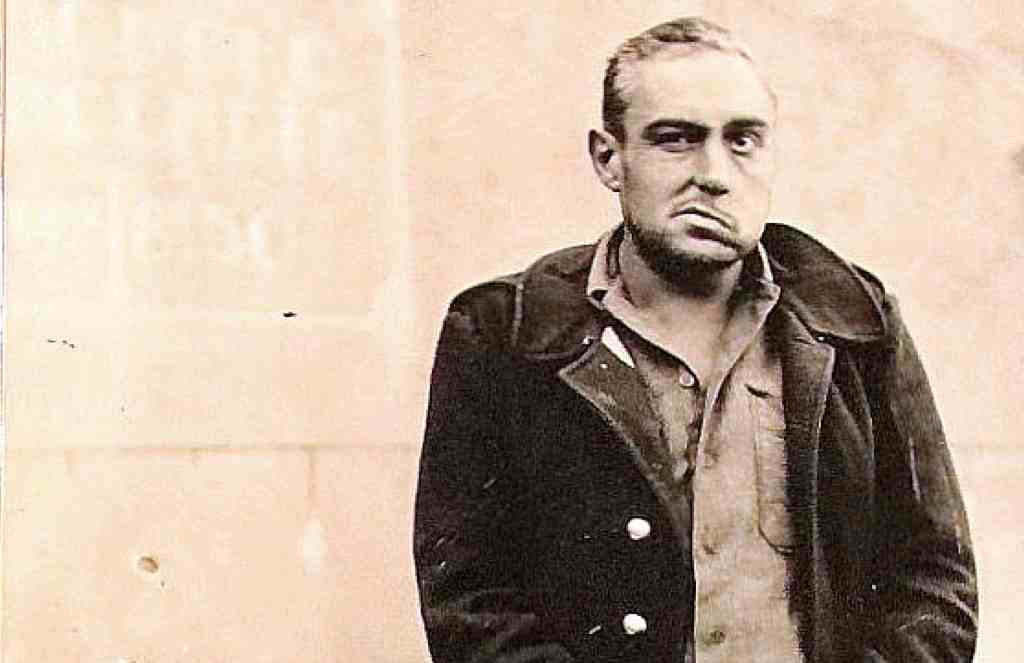
Francis André was born in Lyon on 25 February 1909. At school he gained a reputation for intimidating other children and his face was disfigured during a car accident when he was a teenager and after leaving school became a petty criminal with a long record for robbery, swindles and assaults.
Photograph taken after the war when he was arrested for war crimes.
During the Second World War he was exempt from military service because of deafness and left facial paralysis and continued his criminal career. In June 1943, three years after France was occupied, he was approached by a senior officer of the Sicherheitsdienst des Reichsführers-SS, the intelligence arm of the SSS and Nazi Party, to lead a small movement of collaborators in Lyon called the Anti-Terrorist Movement (MNAT) to work against the resistance, Jews, freemasons, Jehovah Witnesses, and people the SD believed were ‘ethnically’ inferior.
The MNAT engaged in a campaign of assassinations, intimidation and its members also looted homes and shops following arrests. ’Crooked Mouth’ is known to have killed 20 members of the resistance and placed signs on corpses saying, “Terror against terror. This man pays with his life. MNAT assassinations are justified by the law of retaliation responding with murder to murders committed by resistance fighters. Signed MNAT.”
A police report written after the war states, summary killings were the dominant activity of the MNAT. They believed all jews were rich in the pretext of their robberies, in addition many of them had taken refuge in Lyon with their transportable goods such as jewellery, cash, gold etc and used this statement to justify their persecution and arrest of jews.
Crooked Mouth left the MNAT and became Klaus Barbie’s trusted personal assistant and like Barbie enjoyed torturing men, women and children and during his trial after the war in January 1946 at the Court of Justice in Lyon Crooked Mouth admitted to killing 120 people whilst working with Barbie and was later estimate the figure was around 160.
A French journalist who attended the trial wrote, “His stranglers hands run over his mouth with every question he was asked. A gesture that seemed to wipe away the horrors of the answers… He was the abominable murderer, Barbie’s most loyal collaborator, a blood thirsty beast, the most sinister collaborator in the Lyon Gestapo”.
After being found guilty for treason, mass murder and other war crimes, on 9 March 1946 Crooked Mouth was executed by a French firing squad.
David Finlayson was born to English parents living in France where he was educated until the age of thirteen and after his family returned to England, he studied engineering at Wolverhampton Technical College.
Finlayson entered the SOE training schools on 25 July 1943 and after successfully completing the three compulsory courses his final assessment said he would be suitable as a member of a coup-de- main party (member of a clandestine circuit) but was only 19 years old and considered too young to be placed in charge of a circuit but was ideal as a wireless operator and after volunteering for wireless training attended the Wireless and Security School at Thame Park, Oxfordshire.
David Finlayson, Maurice Lapage (aka Colin) and an agent named as Lesout arrived in France on the night of 2/3 March 1944 to organise a circuit called LIONTAMER but after parachuting into France nothing was heard from them. London received several messages sent from Finlayson’s wireless, but his personal code was not used, and no security checks were sent. London suspected a German operator was attempting to ‘play back’ his wireless but the channel remained open in case Finlayson, whilst working under pressure, had forgot to use the codes. The channel was eventually closed after London received word that MUSICIAN circuit whose members were tasked with receiving the agents had been destroyed and was under German control. Consequently, the three agents were dropped to German soldiers.
Until late January 1946 there was no information about the fate of the three agents and is now thought David Finlayson was executed at Gross-Rosen camp in Poland.
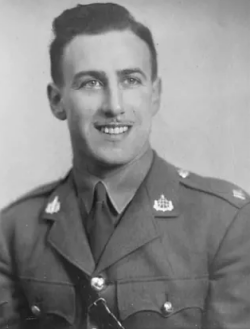
Paul Tessier was born in Clichy-sous-Bois, France on 15 October 1916 to French parents but was a British national at the time of his service with the British army and was married with two young children.
In 1940 he enlisted into the Royal Fusiliers and sometime in 1942 transferred to the Royal Armoured Corps where he served in a reconnaissance unit. During his SOE training and selection he was described as ‘tough and enthusiastic. Anxious to finish training so he could get down to the real thing.
His first mission to France was in August 1943 as part of the Dressmaker sabotage team that arrived north of Escoussens by parachute to attack a tannery said to be used by the Germans, but the intelligence was wrong and they found the target deserted. The team then became ill after drinking contaminated water and returned to England.
In January 1944 Tessier returned to France to become the second in command of a circuit called Musician commanded by Gustave Biéler, but after being dropped over the pinpoint (drop zone) nothing was heard from him. Shortly after his disappearance London was warned the circuit that arranged the reception committee (helpers on the ground) had been infiltrated by the Abwehr (German Military Intelligence) and Tessier had been dropped to waiting Germans.
On 27 June 1944 SOE HQ in London received a message from a wireless operator working for the Spiritualist circuit informing them Tessier was now working for their circuit. It is now known that after being dropped to German soldiers he escaped from custody after breaking through an outside wall with an iron bar and tied bedding together to make a rope to climb out of the building and did this shortly after German interrogators broke his hand. The Germans and Gestapo now had his photograph and he should have left France through an escape line or air extraction by No.161 Special Duty Squadron RAF that specialised in air landings but he decided to remain in France.
It is known he sheltered with an English born woman whilst working for Spiritualist during which he helped arrange twelve air drops of weapons and involved in sabotage attacks against the railway running from Paris to Strasbourg and Metz. Dates vary according to several sources when Tessier was with three members of Spiritualist circuit attempting to cross the German lines at Clichy-sous-Bois to recover weapons and explosives when the lorry they were traveling in was engaged by Germany soldiers. During a brief firefight Tessier was wounded, capture, then shot and allowed to die in the road.
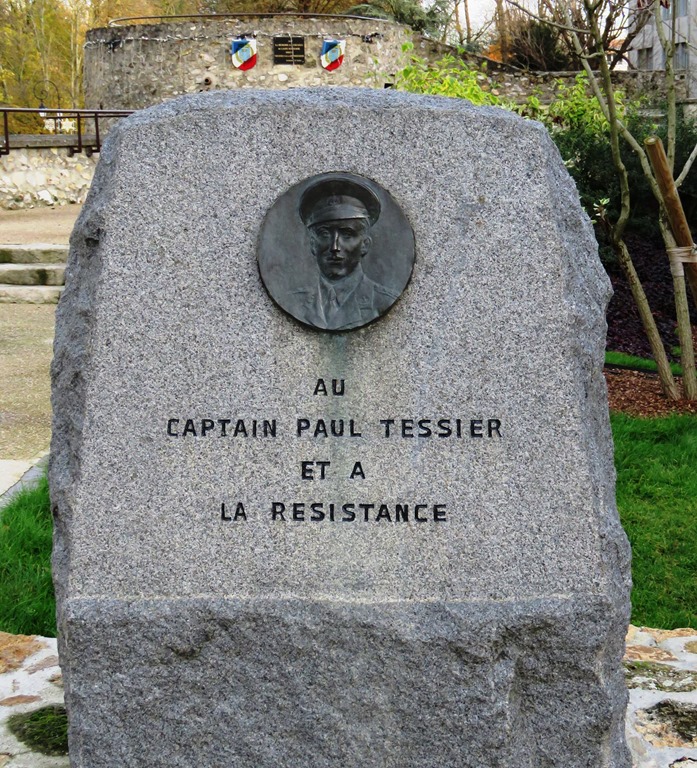
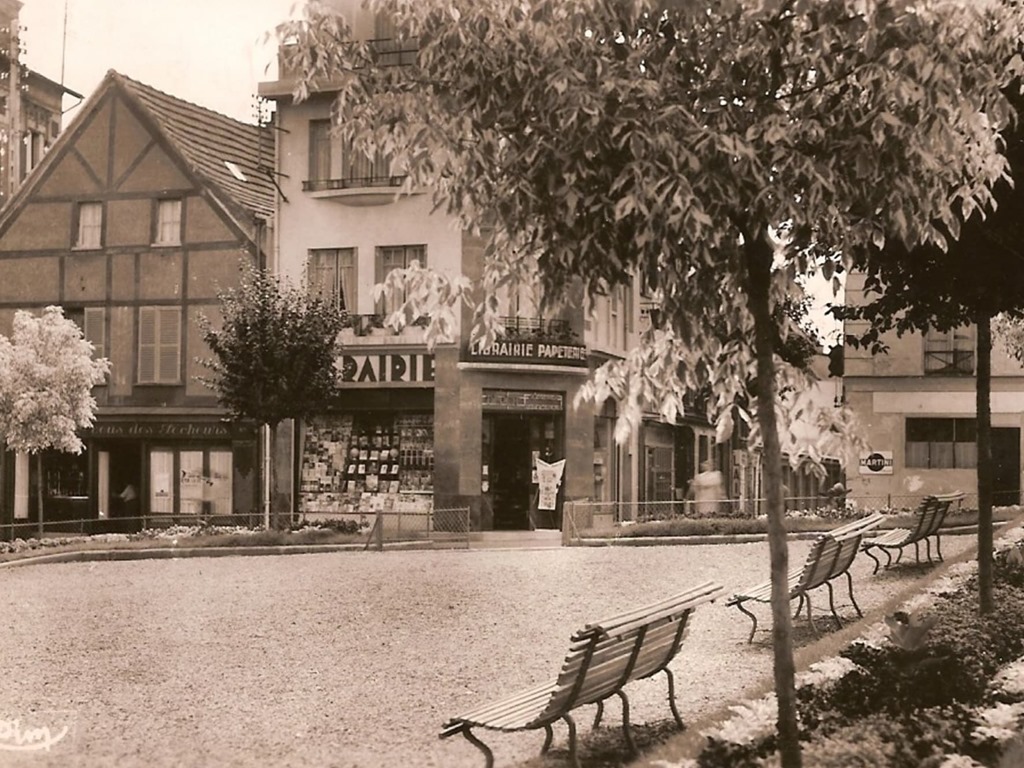
Paul Tessier was buried at Langny-sur-Marne around 18 miles east of Paris and a town square was later dedicated to his memory.
Hanna `Anna’ Szenes was born to a Jewish family in Budapest, Hungary and during the war was living in a Kibbutz in British Mandate of Palestine when she decided to join the British military and is listed as serving as an Aircraft Woman 2nd Class with the Women’s Auxiliary Air Force (WAAF’s) and her service number was 2992382. The date she completed SOE training at STS 102, Mount Carmel, Haifa is not documented.
On 19 March 1944 Hanna Szenes, Yoel Palgi and Peretz Goldstein parachuted into Yugoslavia to undertake operations in Hungary, but their arrival coincided with the German invasion of Hungary and after hearing the news Palgi and Goldstein decided it was too dangerous and aborted their mission and Hanna continued without them. She stayed briefly with partisans in the Balkans and used her wireless link to SOE Massingham in Algeria to arrange weapons to be dropped by parachute before making her way to Hungary to start her mission.
Hanna was captured with her wireless after crossing the border and because wireless operators where considered a rich source of intelligence was taken to the Hungarian Intelligence Headquarters in Budapest where she was stripped naked, tied to a chair, whipped, clubbed, and beaten by her interrogators. She was tortured over several months but refused to talk and according to a male prisoner her treatment was appalling even judged by the standards usually accorded to spies, but she managed to always keep absolutely silent. The source also said she had been shot, he had seen her body lying in the courtyard of Margit Korut, a road not far from the river Danube in the centre of Budapest and believed she had been executed because she refused to talk.
In 1971, her mother said that after being taken to see her daughter at the Hungarian Intelligence HQ in Budapest the door opened and she went rigid: four men led my Hannah, her face was bruised and swollen, her hair was in a filthy tangle, eyes blackened. I was shattered, all my hope for her collapsed like a house of cards. The Nazis watched us like hawks, Hannah tore herself away from them and threw herself into my arms sobbing. She asked me to forgive her. What for? One of the Nazis ordered me to talk to her, to persuade her to tell everything otherwise this would be the last time I saw her, but Hanna remained silent.
On 28 October 1944 Hanna Szenes was tried for treason and twice the trial was delayed, and whilst in prison she wrote in her diary “I played the number game. The dice I have rolled twice. I have lost” and before the Hungarian judges reached a verdict Hanna was taken from her cell and executed by a German firing squad.
Although the date of her death is listed by the Commonwealth War graves Commission as being sometime in May 1944 her execution took place on 7 November 1944 and after being placed in front of a firing squad witnesses said 23-year-old Hanna refused to wear a blindfold because she wanted to look her killers in their eyes.
Georges Blind was a fireman from Belfort, France who was arrested for being a member of the resistance. After the Gestapo failed to make him talk he was placed in front of a mock firing squad and told if he refused to provide information he would be shot – his response was to smile at his executioners.
After this failed he was deported to a concentration camp and is thought to have been executed in late November 1944.
Yvonne Cormeau (nee Biesterfield). In 1937 She married Charles Cormeau who joined the Rifle Brigade at the outbreak of war and in 1940 was wounded in France and returned to England. Shortly after his return Charles was killed when their family house was destroyed during a German air raid on London and Yvonne escaped serious injury after a bath fell on top of her and protected her head but their unborn child was killed. After recovering she joined the WAAF’s and was later recruited by SOE and sent her 3-year-old daughter to live in the countryside to avoid the bombings.
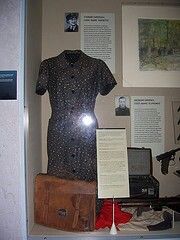
On the night of 22-23 August 1943 Cormeau arrived by parachute at Saint-Antoine-du-Queyret to join Wheelwright circuit as their wireless operator in the Gascony area. She frequently cycled 30 miles a day to avoid direction finders and passed over 400 messages to London. In June 1944 she was shot in the leg during a firefight but managed to escape with her wireless and the dress she was wearing and her blood-stained briefcase is on display at the Imperial War Museum.
IWM
Yvonne Cormeau died on 25 December 1997, aged 88 in Fleet Hampshire.
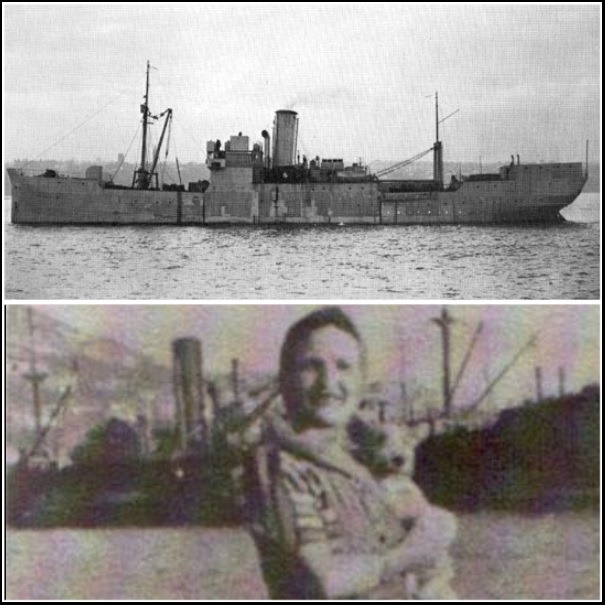
HMS Fidelity (D57) was formerly the French merchant ship La Rhin. In 1941 Fidelity was used by SOE (Special Operations Executive) to transport agents and equipment to southern France and during these clandestine missions flew the flags of neutral Spain and Portugal.
Madeline Baynard was the ship’s first officer but to protect her identity she served with the WRNS under the name of Madeline Barclay.
In late 1941 HMS Fidelity was refitted to serve as a commando carrier and on 30 December 1942 was sunk by a German U-boat. Although most survived the attack the U-boat captain followed the Loconia order which forbid allied survivors being rescued and 369 died in the water: 273 members of her crew (including Baynard), 52 Marines serving with T Coy 40 Commando and 44 seamen who had been rescued after their ship had been sunk during a previous engagement.
On 2 March 1944 Denise Bloch infiltrated central France by parachute and worked as the wireless operator for both Clergyman and Detective circuits which were part of SOE’s clandestine network and began arranging for weapons, sabotage stores, finance and other agents to be sent from London and worked with several reception committees receiving incoming air drops.
It was around 8.20 am on 18 June when her wireless transmissions were located by German direction finders and her Safehouse raided by the Sicherheitsdienst des Reichsführers-SS (Security Service of the Reichsführers-SS), or SD, and Bloch along with another agent were captured.
It is known Bloch was tortured for information, but her wireless was not used by the Germans, and it appears Bloch refused to give the SD her personal wireless codes used to confirm her identity to London. It is also known she was transported to prisons in Germany during which she suffered from exposure due to the cold and malnutrition and was eventually transported to Ravensbrûck Concentration camp where she was executed on 5 February 1945 at the age of 29 and like many agents has no known grave after her body was cremated along with many others.



 Alan Malcher