I have recently been informed that on 4 February 2024 one of the last surviving members of the Special Operations Executive (SOE) French Section died at the age of 97. If her age is correct and was 17 when she parachuted into France, Nicola Pauline Marie Trahan was one of the youngest agents serving with F (French ) Section. RIP
Brian Stonehouse was 24-years old when he parachuted into France on the night of 1 July 1942. This interview briefly examines his war service in France but leaves out many of the difficulties he faced and overcome as a clandestine and his experiences after being incarcerated in five concentration camps. Brian Stonehouse died in London on 2 December 1998 at the age of 80.
For eighty years thousands of women who were members of the resistance during the Second World War were rarely mentioned in history books. According to history professor Laurent Douzou only 6 women were recognised for their work with the resistance by being awarded the Companion of Liberation compared with 1,038 men.
Though civilian resistance was mainly the work of women they were not counted and according to Vladmir Troupin, the curator at Paris Musee de la Resistance, “Misogyny also explains why there was little attention to the role played by women and in those days women were not supposed to steal the limelight”.
From 1940 to the liberation of France in 1944, 6,700 women were transported to concentration camps, most failed to return and the vast majority were members of the resistance. According to France 24 News, eighty years later French historians are attempting to record the war service of women who served with the resistance.
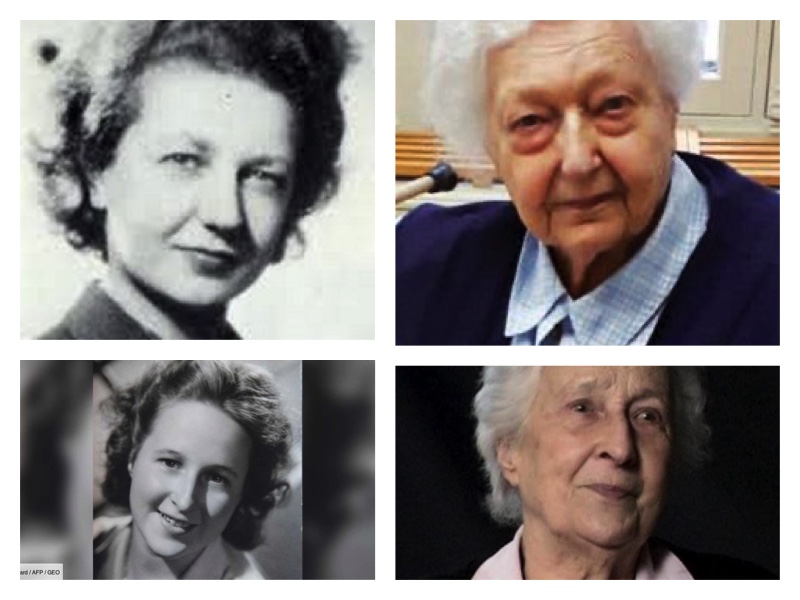
Odette Nilés (top) died on 27 May 2023 at the age of 100. She was arrested in September 1941 , spent three years in an internment camp and her fiancé who was also a member of the resistance was shot.
Michéle Moet-Agniel (bottom) was arrested for assisting allied aircrews shot down over Belgium and France to escape to neutral Spain and Agniel along with her mother were transported to Ravensbrück concentration camp . Her father was sent to another camp and was not seen again.
Marie-Madeleine Fourcade was the leader of a resistance network called ALLIANCE. After becoming know to the German authorities she spent several months on the run and during this time gave birth to her third child, a son, who was looked after at a safehouse and in 1943 she was smuggled to Spain in a mailbag and was reunited with her children after the liberation.
Madeline Riffund was a sniper who was almost killed during the liberation of Paris and is thought to have been on the last transport train to a concentration camp in Germany.
Eighty years later most who served in the resistance are dead and it may not be possible to provide a full account of the women who played an essential role in the liberation of France.
Tour de France cyclist Eugéne Gréau was married with four children and shortly following the occupation of France joined the resistance. After being arrested for sabotage at the Niort railway yard where he worked he was transported to Sonnenburg concentration camp under the Nacht und Nebel decree (Night and Fog). This decree targeted political activists and members of the resistance and symbolised prisoners disappearing in the night and fog and never being seen again by their families and their faint never being known.
In this respect the decree also punished families because they were regarded as being guilty by association. Eugéne Gréau is thought to have died at Sonnenburg camp in German occupied Poland on 20 December 1943 and like most of the people arrested under this decree has no known grave.
I would like to thank Dr Christine Quintlé for the following information.
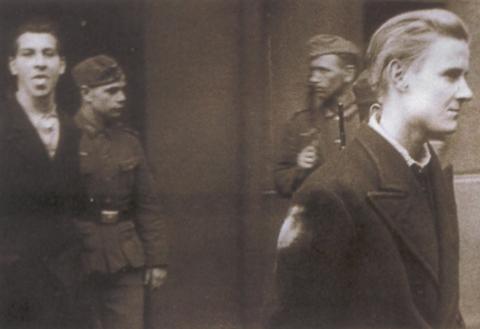
Twenty seven members of the French Resistance being taken away for execution after a trial before a German military tribunal in Paris on 14 April 1942.
The trial has been called “Procès de la Maison de la Chimie” (trial of the House of Chemistry) as it took place there. Twenty-three of the accused were executed on 17 April at Mont Valérien. André Kirschen, the son of a Romanian Jews was only fifteen at the time of the trial and could not be sentenced to death under German military law. Simone Schloss, who was Jewish, was beheaded in Cologne on 2 July 1942. The image is as still from a German propaganda film.
The young man sticking his out tongue out in defiance after the trial is Jean Quarré who had been with the students and school teenagers who demonstrated against Germany at the Quartier Latin, Paris on 14 July 1940 and on the on the Grands Boulevards, Paris on 13 August 1940. He joined the Résistance in 1941. The other man is Karl (Carlo) Schoenhaar.
From the Museum of Resistance in Caen. A miniature coffin sent by a member of the French Resistance to a collaborator warning them of an impending visit!
Translation of the French text by Dr Christine Quintlé: First line: Mort à l’informateur (death to the informant). In the middle the senders: Cross of Lorraine and FFI. In the last line, which continues the first one: de la Milice et des Boches (for the Militia and the “Boches”. Boches was a pejorative nickname meaning Germans).
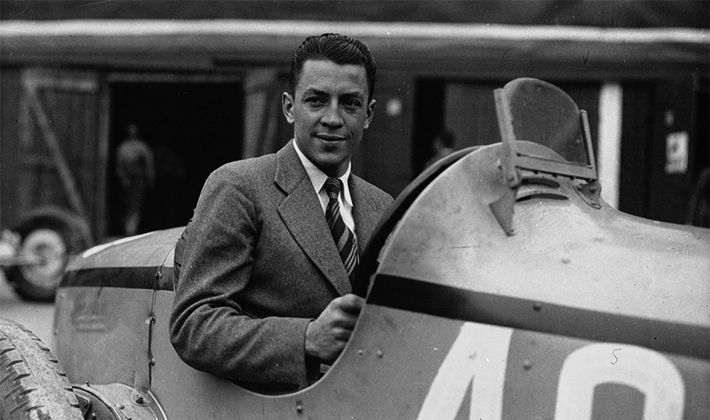
William Grover-Williams was born in Montrough Hauts-de-Seine, France on 16 January 1903 to an English father and French mother and spoke fluent French and English. By the age of 29 he was a well-known racing car driver who had won several Grand Prix’s for Bugatti including the 1929 Monaco Grand Prix and during the same year married Yvonne Aupicg who later worked for the resistance. Following the occupation he escaped to England and joined the Royal Army Service Corps and was recruited by SOE on 17 November 1941.
Shortly after completing training Grover-Williams returned to France and established the Chestnut circuit consisting of pre-war racing friends among them being SOE agents Jean-Pierre Wimille and Robert Benoist and both had previously raced for Bugatti. Chestnut was based on the Benoist family estate in Auffargis, a commune in the Yvelines department in north-central France, and throughout 1941 the Germans did not suspect them of being involved in resistance because they were regarded as respected sportsmen.
Jean-Pierre Wimille
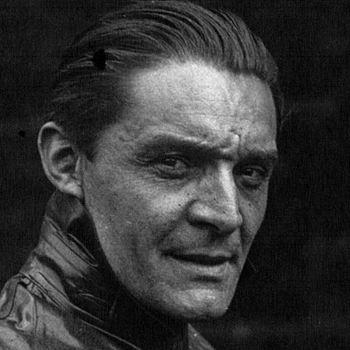
Robert Benoist
In March 1942 Chestnut received a wireless operatornamed Robert Dowlen who began transmitting from a farmhouse on the road to Pontoise situated north-east of Paris and in keeping with wireless security his location was unknown by other members of the circuit and his only contact was through a courier and the wives of Wimille and Benoit worked on reception committees. Chestnut received several arms drops but little sabotage was undertaken but useful intelligence from well-placed contacts was regularly passed to London through their wireless link until 31 July when Dowlen was found by direction finders and arrested whilst still in contact with London. On 2 August Benoit’s brother, Maurice, was arrested at his Paris flat and this was followed by German soldiers searching the Benoit estate during which they found fifty-one weapon containers hidden in an old well and a further forty-seven containers hidden behind a false wall in a stable. Benoit’s father, wife and several servants working for the circuit were arrested, Grover-Williams was later found hiding in the stables and beaten for information but refused to cooperate and was taken to 84 Avenue Foch, the Paris headquarters of the Sicherheitsdient (SD) the counter-intelligence branch of the SS.
The fourth floor (top) had a guard room and cells where Grover-Williams was held along with other political prisoners and an interrogation room containing instruments of torture. It is known Grover-Williams was tortured throughout the night by Ernest Vogt, a Swiss-German civilian translator and interrogator working for the SD at Avenue Foch from 1940 and because there were no further arrests it is assumed Grover-Williams refused to identify members of his circuit. It is known he was transported to the SS Reich Security headquarters at Prinz Albrecht Strasse in Berlin for ‘advanced’ interrogation which often included torture by electricity and later transferred to Sachsenhausen concentration camp and in March 1945 Berlin ordered he be shot. There is no evidence to support the claim Grover-Williams survived the war and worked for MI6 until he was killed in a road accident in 1986.
Three days after the arrest of his family Robert Benoit was arrested on a Paris street: four Gestapo officers with weapons drawn bundled him into the back of a large car and one officer sat either side of him but they neglected to handcuff him and secure the rear door. As the car sharply turned left Benoit pushed the officer out of the moving car whilst diving headfirst from the vehicle and during the confusion escaped down a narrow passageway. After receiving assistance from friends he later joined an escape line to England.
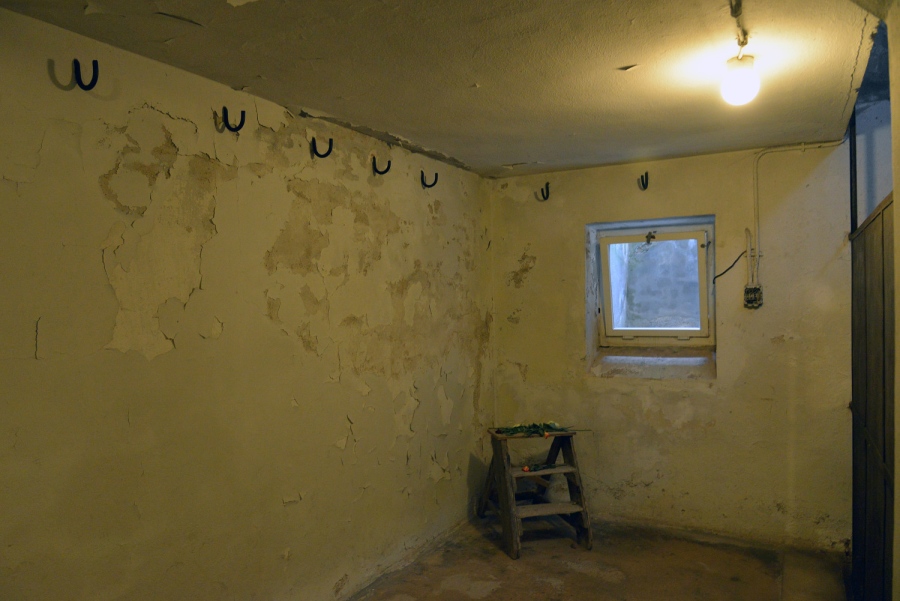
In October 1943 Benoit returned to France by parachute and later returned to England for a few weeks to attend advanced training before returning to raise resistance in the Nantes area and was arrested on 18 June 1944 and taken to Buchenwald concentration camp and on 14 September was executed by slow strangulation after being suspended from piano wire from a hook on the crematorium wall. This barbaric form of execution was intended to make death as slow and painful as possible for political prisoners. The other agent, Jean-Pierre Wimille, survived the war and died in 1949 after crashing his car during the Buenos Aires, Argentina Grand Prix.
Hooks on the crematorium wall used to strangle political prisoners.
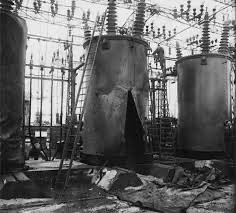
One of the transformers destroyed during the attack (German Federal Archives)
In May 1941 the Special Operations Executive (SOE) received a request to sabotage the power station in Passaic near Bordeaux but the French Section had no agents available: most had already been deployed to France on various operations and others were still being trained at the school for advanced industrial sabotage in Hertfordshire. SOE HQ then approached the Polish Section (EU/P) which came under the jurisdiction of the Polish Government in Exile in London, and after agreeing to undertake the mission six Polish volunteers boarded a converted Whitley bomber of No.138 Special Duty Squadron at RAF Tempsford to infiltrate France by parachute.
Shortly after entering French air space the aircraft suffered an electrical fault which caused their container loaded with weapons and explosives to be jettisoned over the Loir and were forced to abandon their mission and return to England. Unbeknown to the aircrew the electrical fault was far more serious than first thought and eventually caused the aircraft to crash land and catch fire at RAF Tempsford: all the crew were either killed or injured and the six Polish agents suffered serious burns.
SOE HQ then asked RF Section (the Free French equivalent to SOE under General de Gaulle) whether they were willing to attack the power station and after de Gaulle agreed, on the night of 11-12 May 1941 three agents from RF Section, J Forman, Raymond Cobard and André Vernier (aka Jacques Leblanc) successfully infiltrated France by parachute.
After hiding their weapons and explosives the team reconnoitred the power station: there was a high-tension cable very close to the top of a 9-foot wall they needed to climb over and it appeared there was a large number of German and Italian soldiers protecting the power station. They also failed to obtain the bicycles they intended using for the getaway so decided to postpone the attack.
Before leaving England Forman was given the Paris address of an RF agent called Joêl Letac who remained in France after a failed mission called Operation Savanna, the elimination of Luftwaffe Pathfinder crews whilst they travelled by coach to their airfield, and after meeting Forman Letac encouraged him to continue the mission and the following day Letac travelled with the sabotage team to the power station. After the old lorry they obtained broke down they continued the remainder of the journey on stolen bicycles and eventually recovered the equipment they had buried around 100 yards from the power station.
On the night of 7-8 June 1941 during pitched darkness due to the blackout Forman climbed the perimeter wall and crawled under the high-tension cable which was dangerously close. After ensuring he could not be seen by the guards Forman entered the compound and opened a side door, the rest of the team entered the grounds of the power station and then sprinted across open ground to the main building.
In less than thirty minutes the team placed magnetic incendiary devices on eight large electricity transformers and then made their getaway on the stolen bicycles. It has been said the explosions were so violent flames rose high into the air and illuminated the entire area and searchlights started probing the sky for bombers.
Seven of the transformers were destroyed and this seriously disrupted the Bordeaux submarine base, numerous factories used to supply the German military were forced to stop production for several weeks. The electricity grid from another region was diverted but the overload caused more damage and all electric trains in south western France had to be replaced with steam locomotives, and all the transformer oil in France was used during the repairs.
Some writers claim the team was picked up by a RAF Lysander of 161 Special Duty Squadron, but this was not the case. The team arrived in France with one million francs (said to be about £1,400 in 1941 and roughly £71,000 in 2021) and the money was unaccountable! Instead of requesting an extraction they remained in France for a further two months and according to historian MRD Foot “They left behind them broken glass and broken hearts” before escaping to England via neutral Spain. Before they crossed the frontier Cabard was captured but later escaped and returned to England.
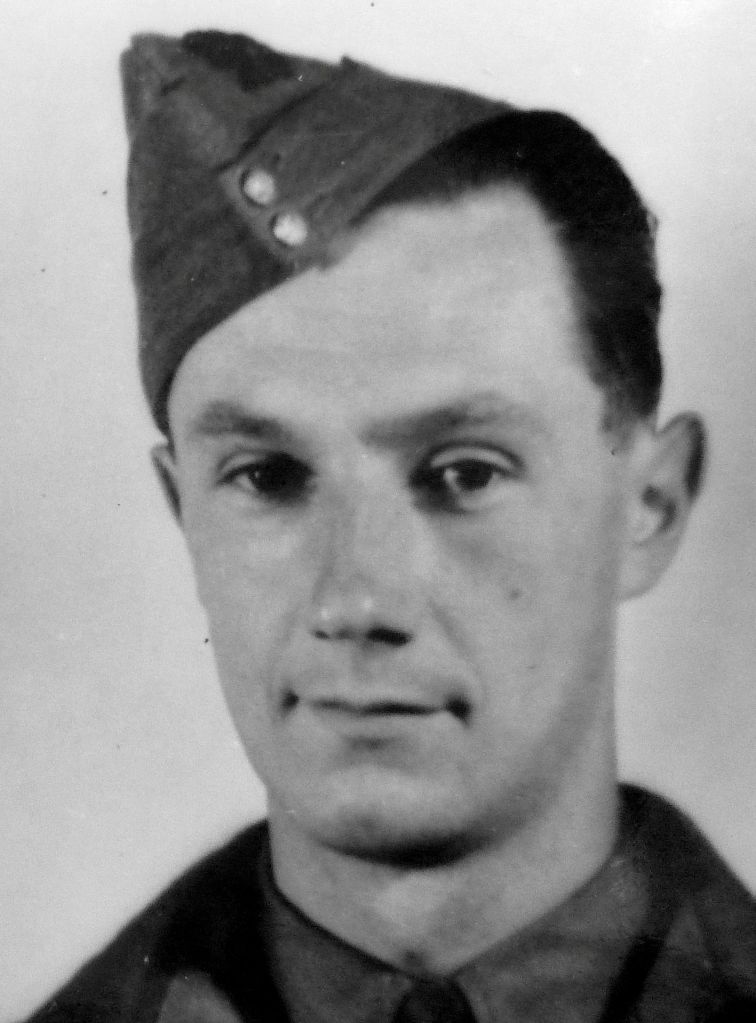
Alfred Wilkinson. Circuit organiser serving with the French Section SOE
Alfred Wilkinson had duel nationality British/French and was born in Paris and left his wife and young child in France to join the British Army.
Wilkinson parachuted into France on 5 April 1944 to organise the Historian circuit in the Orléans area where his wife and young child were still living, and SOE documents described it as “an area where German repressive measures had effectively checked all previous attempts to develop a resistance network. After receiving arms and other war materials by parachute Wilkinson and his Historian circuit prepared for large scale sabotage for D-day and by 6 June (D-day) the railway lines and telecommunication targets his circuit had been ordered to sabotage had been destroyed and added to the major disruption of the German military caused by other circuits.
It is known Wilkinson was captured towards the end of June at Olivet a commune in the Loiret department in north-central France and for the first fortnight was kept at the Eugéne Prison in Orléans. He was then taken to Frésnes Prison outside Paris where he was described by other SOE prisoners as looking well and Wilkinson was among a large batch of SOE agents and resistance fighters taken from Frésnes to Buchenwald concentration camp to be used as slave labour.
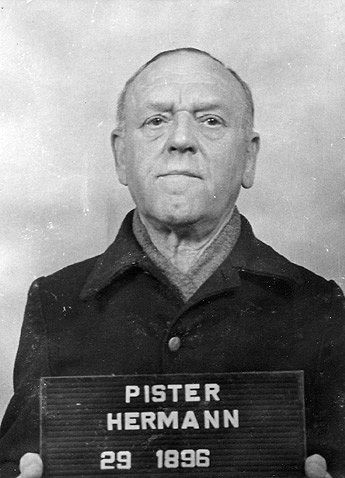
On 24 August Allied aircraft bombed the Gustloff armament factory outside the camp where many prisoners were forced to work. Several bombs hit the SS barracks killing 8 and injuring 300 SS soldiers and many prisoners. It was later said that in retaliation for the air raid the camp commandant Obersturmbannfuhrer Herman Pister ordered the execution of all British and French ‘terrorists.’
Seven prisoners were executed on 14 September and on 5 October more prisoners including Alfred Wilkinson were executed and according to a post-war investigation before being hung the men stood rigidly to attention whilst shouting ‘long live France. Long live England.’
Notorious Hermann Pister. Image taken after being arrested by American forces.
After the war Pister was convicted of war crimes and sentenced to death but died of a heart attack before being hung.
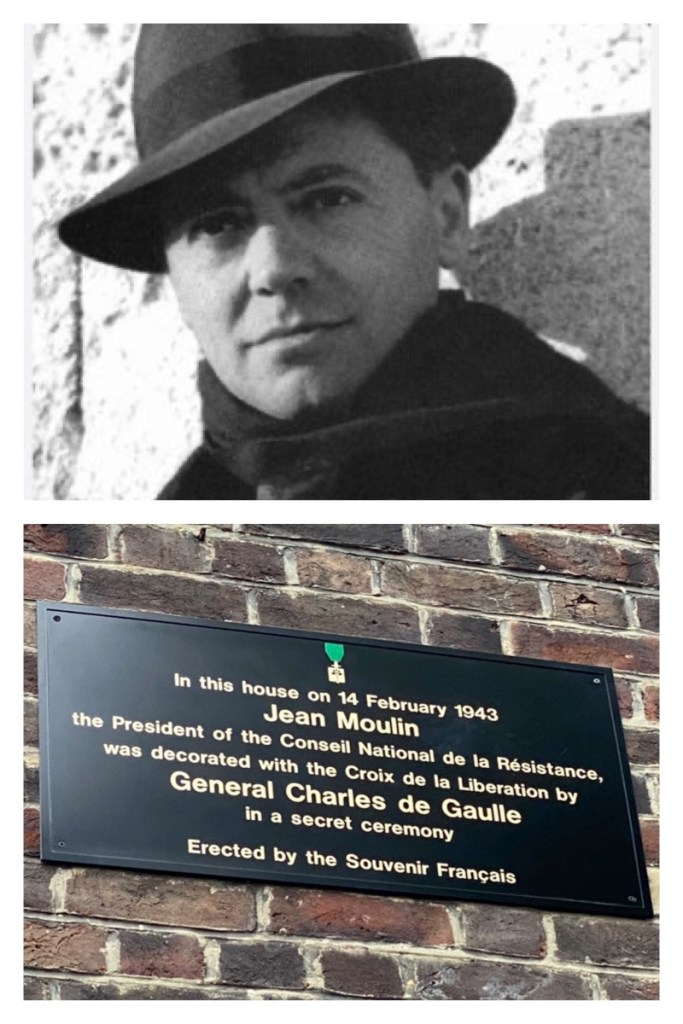
On 14 February 1943 General de Gaulle awarded Jean Moulin the Cross of Liberation during a private ceremony at De Gaulle’s home in Hampstead London.
Three months later, after returning to France by parachute, Jean Moulin was captured and tortured for three weeks by SD chief Klaus Barbie (Butcher of Lyon). Moulin attempted to commit suicide by cutting his throat but after being found collapsed in his cell was given medical treatment and survived. As a result of the injuries suffered during torture Jean Moulin died on 8 July 1943 whilst being transported by train to Germany.

 Alan Malcher