The Taxi Charity for Military Veterans was formed in Fulham, London in 1948 and the charity is reliant on public donation, businesses and trusts. An amazing group of London taxi drivers volunteer their time and vehicles to transport veterans to events free of charge. More information will be found at the bottom of this page.
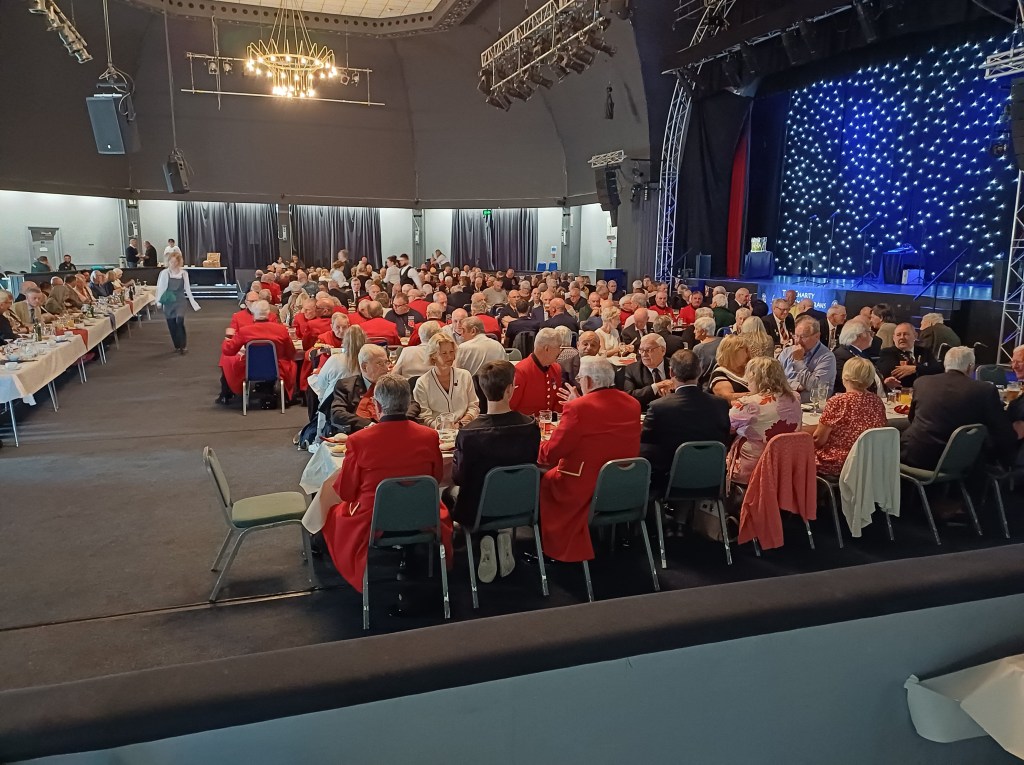
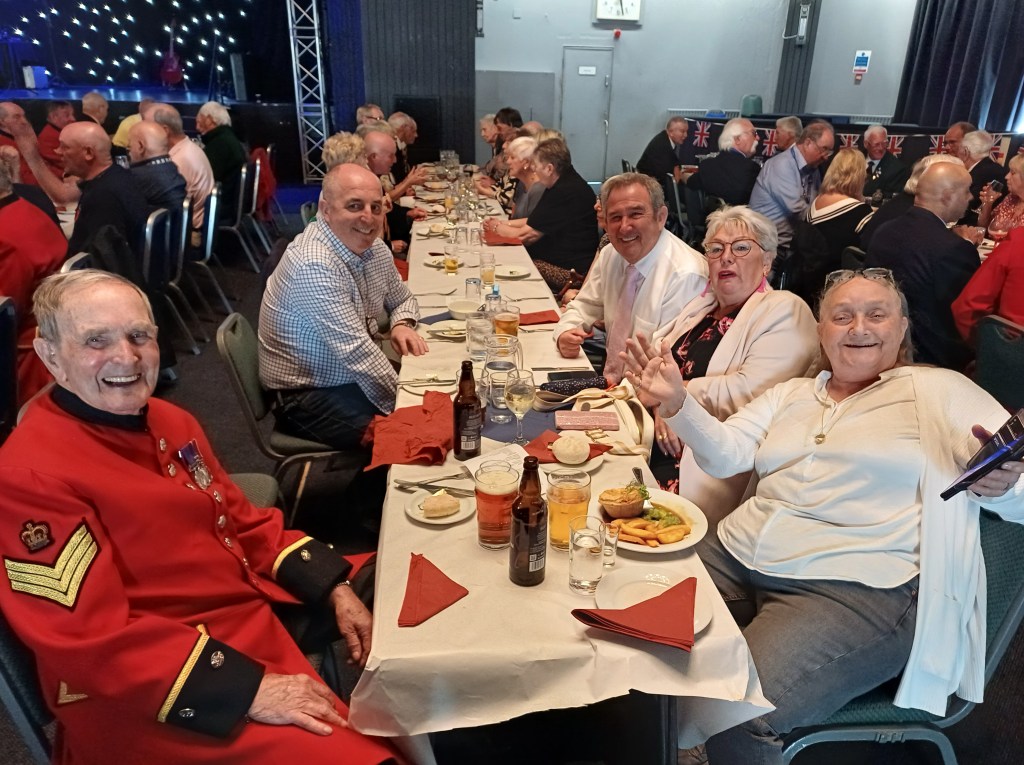
On 2 July 2024 it was a great privilege to be invited to the Taxi Charity annual fund raising dinner in Worthing, Sussex during which transport was provided by 100 London taxies. On the way to the venue in Worthing and on the way back the taxies stopped at the small village of South Holmwood near Dorking where villagers each year provide free refreshments and show their appreciation.
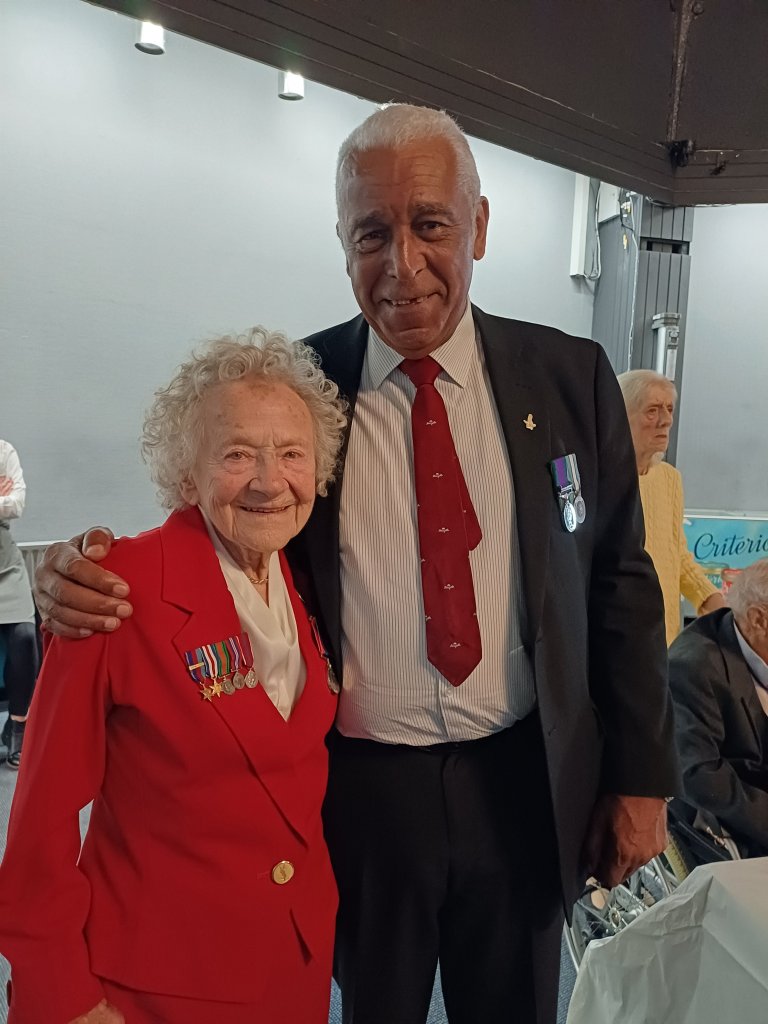
I spoke to may remarkable men and women including 99 year old Dorothy Barron who served with the WREN’s as a signaller during WW2.
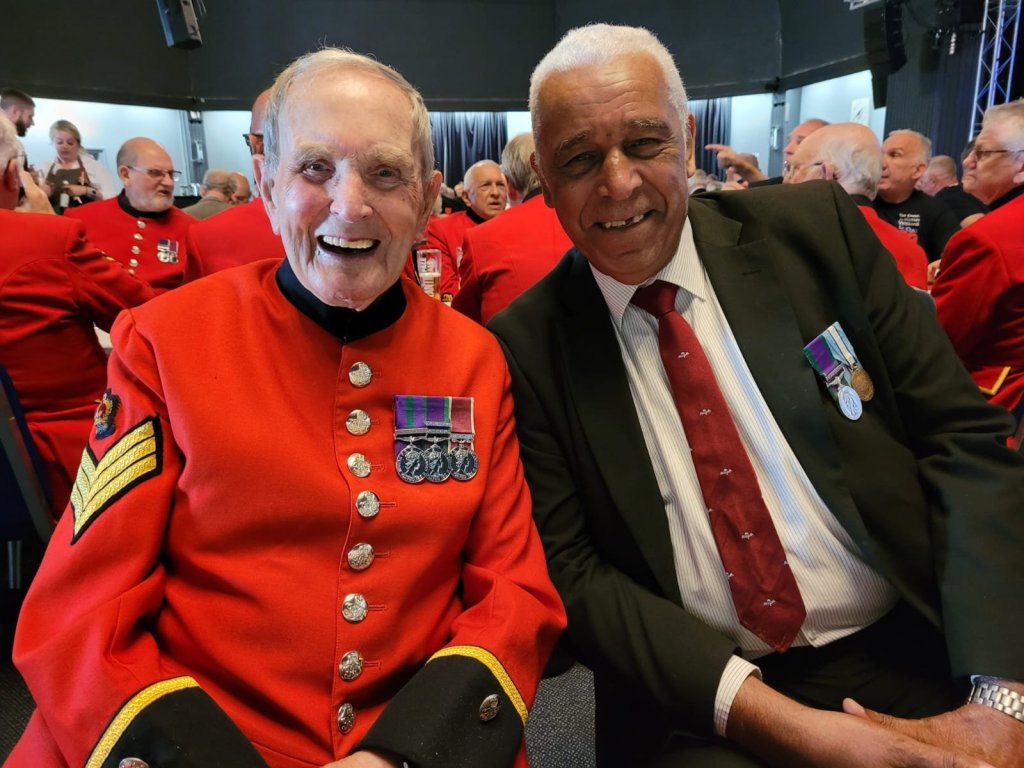
Walter from the Royal Hospital Chelsea (Chelsea Pensioner) who I spoke to over dinner and a few pints.
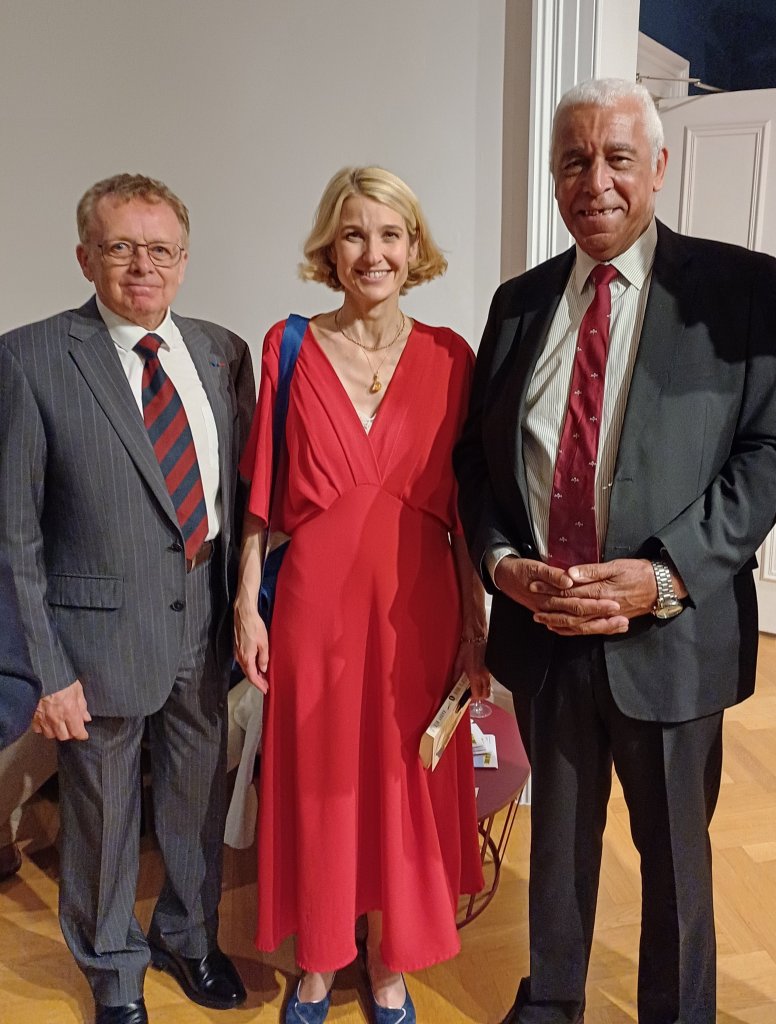
Ian Reed MBE Lég d’Hon, Cécile Coolen, Alan Malcher. At Institut français du Royaume-Uni. 31 May 2024.
I was honoured to receive an invitation from Héléne Duchéne Ambassador of France to the United Kingdom via Ian Reed MBE Lég d’Hon to a special viewing of On His Majesty’s Secret Service a film about SOE in occupied Europe by Cécile Coolen. It was also a pleasure meeting Cécile Coolen and others during the reception.
Cécile Coolen is a French film director and chief editor of over 100 films recognised at the Hollywood Film Festival, Emmy Awards, Prix Europa, New York Festival, and she specialises in archive documentaries particularly connected with wartime intelligence services.
“Cécile Coolen has a clear understanding of the subject and the ability to present the story of our collaborative intelligence activities, an issue which is still inadequately understood” (Sir John Scarlett KCMG OBE, former Chief of SIS/MI6)
“Her wealth of professional experience, combined with knowledge of the intelligence world shines through in this film, giving this story the dimension and impact it deserves.” (Alain Juillet, former Chief of DGSE – French Intelligence Service)
British born David Sibree returned to England on 5 December 1942 from North Africa where he was serving since 1937 with the French Foreign Legion and wanted to join a commando unit but because he spoke fluent French his details were sent to SOE.
A few days before the start of his agent training and selection (20 April 1943) Sibree was arrested by the police after a drunken fight in London which meant his temperament made him unsuitable to be an agent (long-term undercover missions) but considered useful for what SOE called coup-de-main missions. These were missions of short duration similar to commando raids after which they were extracted from the country.
Operation SCULLION ll arrived in France on the night of 16/17 August 1943 to sabotage the Les Telots oil refinery near Autun after a previous operation called SCULLION l had failed. Apart from David Sibree, the team consisted on eight other British operatives, four French, one American, one Canadian and an agent named George Demand had landed four days earlier to prepare the ground. The team damaged the refinery with explosives but there are differing views of how effective the operation was.
According to documents, after the raid only two members of the team, Captain Dormer and Sergeant Birch, escaped to England . The others were captured and known to have been in Frésnes Prison as late as November 1943 before being deported to Flossenburg Concentration Camp in Germany.
Sometime in 1944 all were executed over a period of time, it is believed two were shot and the others were hanged.
Hanna `Anna’ Szenes was born to a Jewish family in Budapest, Hungary and during the war was living in a Kibbutz in British Mandate of Palestine when she decided to join the British military and is listed as serving as an Aircraft Woman 2nd Class with the Women’s Auxiliary Air Force (WAAF’s) and her service number was 2992382. The date she completed SOE training at STS 102, Mount Carmel, Haifa is not documented.
On 19 March 1944 Hanna Szenes, Yoel Palgi and Peretz Goldstein parachuted into Yugoslavia to undertake operations in Hungary, but their arrival coincided with the German invasion of Hungary and after hearing the news Palgi and Goldstein decided it was too dangerous and aborted their mission and Hanna continued without them. She stayed briefly with partisans in the Balkans and used her wireless link to SOE Massingham in Algeria to arrange weapons to be dropped by parachute before making her way to Hungary to start her mission.
Hanna was captured with her wireless after crossing the border and because wireless operators where considered a rich source of intelligence was taken to the Hungarian Intelligence Headquarters in Budapest where she was stripped naked, tied to a chair, whipped, clubbed, and beaten by her interrogators. She was tortured over several months but refused to talk and according to a male prisoner her treatment was appalling even judged by the standards usually accorded to spies, but she managed to always keep absolutely silent. The source also said she had been shot, he had seen her body lying in the courtyard of Margit Korut, a road not far from the river Danube in the centre of Budapest and believed she had been executed because she refused to talk.
In 1971, her mother said that after being taken to see her daughter at the Hungarian Intelligence HQ in Budapest the door opened and she went rigid: four men led my Hannah, her face was bruised and swollen, her hair was in a filthy tangle, eyes blackened. I was shattered, all my hope for her collapsed like a house of cards. The Nazis watched us like hawks, Hannah tore herself away from them and threw herself into my arms sobbing. She asked me to forgive her. What for? One of the Nazis ordered me to talk to her, to persuade her to tell everything otherwise this would be the last time I saw her, but Hanna remained silent.
On 28 October 1944 Hanna Szenes was tried for treason and twice the trial was delayed, and whilst in prison she wrote in her diary “I played the number game. The dice I have rolled twice. I have lost” and before the Hungarian judges reached a verdict Hanna was taken from her cell and executed by a German firing squad.
Although the date of her death is listed by the Commonwealth War graves Commission as being sometime in May 1944 her execution took place on 7 November 1944 and after being placed in front of a firing squad witnesses said 23-year-old Hanna refused to wear a blindfold because she wanted to look her killers in their eyes.
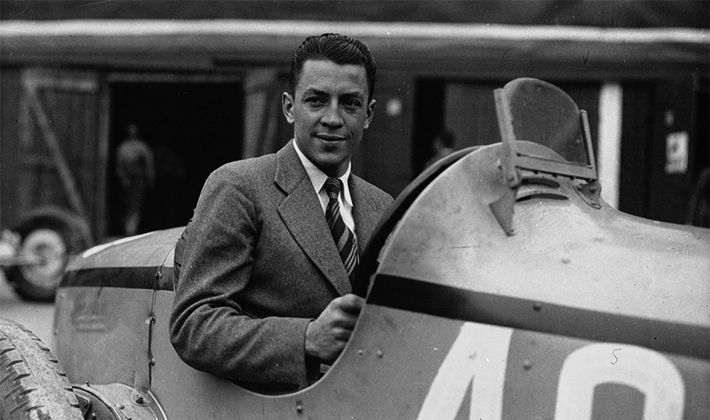
William Grover-Williams was born in Montrough Hauts-de-Seine, France on 16 January 1903 to an English father and French mother and spoke fluent French and English. By the age of 29 he was a well-known racing car driver who had won several Grand Prix’s for Bugatti including the 1929 Monaco Grand Prix and during the same year married Yvonne Aupicg who later worked for the resistance. Following the occupation he escaped to England and joined the Royal Army Service Corps and was recruited by SOE on 17 November 1941.
Shortly after completing training Grover-Williams returned to France and established the Chestnut circuit consisting of pre-war racing friends among them being SOE agents Jean-Pierre Wimille and Robert Benoist and both had previously raced for Bugatti. Chestnut was based on the Benoist family estate in Auffargis, a commune in the Yvelines department in north-central France, and throughout 1941 the Germans did not suspect them of being involved in resistance because they were regarded as respected sportsmen.
Jean-Pierre Wimille
Robert Benoist
In March 1942 Chestnut received a wireless operatornamed Robert Dowlen who began transmitting from a farmhouse on the road to Pontoise situated north-east of Paris and in keeping with wireless security his location was unknown by other members of the circuit and his only contact was through a courier and the wives of Wimille and Benoit worked on reception committees. Chestnut received several arms drops but little sabotage was undertaken but useful intelligence from well-placed contacts was regularly passed to London through their wireless link until 31 July when Dowlen was found by direction finders and arrested whilst still in contact with London. On 2 August Benoit’s brother, Maurice, was arrested at his Paris flat and this was followed by German soldiers searching the Benoit estate during which they found fifty-one weapon containers hidden in an old well and a further forty-seven containers hidden behind a false wall in a stable. Benoit’s father, wife and several servants working for the circuit were arrested, Grover-Williams was later found hiding in the stables and beaten for information but refused to cooperate and was taken to 84 Avenue Foch, the Paris headquarters of the Sicherheitsdient (SD) the counter-intelligence branch of the SS.
The fourth floor (top) had a guard room and cells where Grover-Williams was held along with other political prisoners and an interrogation room containing instruments of torture. It is known Grover-Williams was tortured throughout the night by Ernest Vogt, a Swiss-German civilian translator and interrogator working for the SD at Avenue Foch from 1940 and because there were no further arrests it is assumed Grover-Williams refused to identify members of his circuit. It is known he was transported to the SS Reich Security headquarters at Prinz Albrecht Strasse in Berlin for ‘advanced’ interrogation which often included torture by electricity and later transferred to Sachsenhausen concentration camp and in March 1945 Berlin ordered he be shot. There is no evidence to support the claim Grover-Williams survived the war and worked for MI6 until he was killed in a road accident in 1986.
Three days after the arrest of his family Robert Benoit was arrested on a Paris street: four Gestapo officers with weapons drawn bundled him into the back of a large car and one officer sat either side of him but they neglected to handcuff him and secure the rear door. As the car sharply turned left Benoit pushed the officer out of the moving car whilst diving headfirst from the vehicle and during the confusion escaped down a narrow passageway. After receiving assistance from friends he later joined an escape line to England.
In October 1943 Benoit returned to France by parachute and later returned to England for a few weeks to attend advanced training before returning to raise resistance in the Nantes area and was arrested on 18 June 1944 and taken to Buchenwald concentration camp and on 14 September was executed by slow strangulation after being suspended from piano wire from a hook on the crematorium wall. This barbaric form of execution was intended to make death as slow and painful as possible for political prisoners. The other agent, Jean-Pierre Wimille, survived the war and died in 1949 after crashing his car during the Buenos Aires, Argentina Grand Prix.
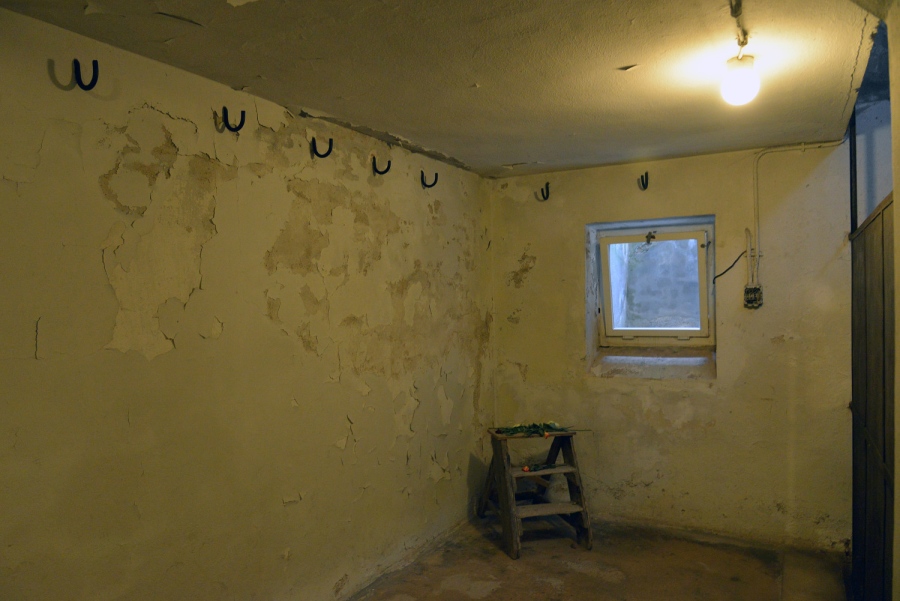
Hooks on the crematorium wall used to strangle political prisoners.
Staff at the SOE training school in Scotland called William Fairbairn and Eric (Bill) Sykes the ‘Angelic twins’ and some students called Fairbairn the ‘Shanghai Basher’ or ‘Dangerous Dan’. The fighting system they developed was sometimes referred to as gutter fighting because there were no rules or so-called gentlemanly conduct.
I recently found this brief documentary on the internet.
22-year-old Egon Berliner was born in Austria on 9 May 1923 to a Jewish family and in 1938 was involved in a fight with the Hitler Youth and was chased by the SS for two hours before managing to escape. In 1939 he arrived at his family flat, and the porter warned him two Gestapo officers were waiting for him, Berliner then escaped to England and was recruited by SOE in May 1943.
After passing selection and training Berliner was asked whether he was willing to volunteer for a mission to contact a communist group in Innsbruck, Austria and determine whether they could be developed into a resistance group, though SOE in London considered it unlikely they would risk opposing the Nazi authorities it was decided to send one exploratory agent and on the night of 28-29 July 1944 Berliner was dropped by parachute into southern Tyrol to make his way to Innsbruck. After contacting the communists SOE doubts were correct and Berliner made his way to the allied lines in southern Italy.
He later volunteered to return to Austria and discover whether a Social Democrat Group could be transformed into a resistance movement and after they refused he distance himself from everyone he had contacted and travelled to the Koralpe (Koralm) mountain range in southern Austria and after being denounced by a member of the group was arrested by the Gestapo whilst attempting to cross the River Drave to Yugoslavia in early April 1945.
Berliner was taken to the Gestapo prison in Gratz where he was tortured for two hours and suffered more brutal treatment for being a Jew before being thrown into a condemned cell with two other prisoners. At 20:30hrs on Tuesday 4 April 1945 Gestapo SS -Obersturmführer Herz of the Graz Gestapo entered the cell and read out the names of those to be executed, Berliner and other men were then put into the back of a lorry to be taken to the SS barracks in Wetzelsdorf.
After the war captured Gestapo officers claimed the lorry received a direct hit from an allied aircraft and all the prisoners were killed but a subsequent investigation discovered they were executed by the SS.
23-year-old Philip Amphlett was recruited from No.2 Commando, but his SOE training report said he was unsuitable as a clandestine agent and was better suited for direct action and parachuted into France on 16 August 1943 with a small team as part of Operation Scullion II after a similar operation (Scullion I) had failed. The team was sent to sabotage a distillation plant near Autun, France that was making synthetic oil but after reaching the target their demolition charges caused little damage.
Amphlett was last seen in Dijon on 23 August 1943 whilst making his way to an extraction point to escape from France and nothing more was heard from him. Over a year later it was discovered Amphlett had been captured and after being interrogated by the Gestapo was transported to Flossenburg Concentration Camp where he was executed,
In October 1945 Vera Atkins, SOE French Section intelligence officer who after the war went on a personal crusade to track down missing members of her section, wrote to his father saying ‘his son had shown exemplary courage and an uncompromising attitude towards his jailers’. Philip Amphlett has no known grave.
Yolande Unternahrer was born in Paris to a Swiss family in 1911 and moved to London as a child.
After the declaration of war in 1939 she enlisted into the Women’s Auxiliary Air Force (WAFFs) where she trained as a wireless operator. Due to her language skills, she spoke fluent English, French, German and Italian, Yolande came to the attention of the Special Operations Executive and whilst attending the wireless and security school to become a wireless trained agent that required skills not found in other branches of the military she met a trainee wireless operator named Jaap Beekman who was serving with the Dutch Section of SOE. Shortly after they married, on the night of 17/18 September 1943 Yolande Beekman parachuted into France to join the Musician circuit in Saint-Quentin in the department of Aisne as their wireless operator.
It is known Yolande Beekman was in regular contact with London and arranged the delivery of over 20 parachute drops of weapons, ammunition, and explosives before breaking wireless security procedures: it was later said Beekman transmitted from the same location, on the same frequency and on the same three days of the week and was eventually located by German direction finders. Beekman along with her circuit organiser Gustave Biéler were arrested at the Café Moulin, Saint-Quentin on 13 January 1944.
At Gestapo Headquarters in Saint-Quentin both were tortured but refused to provide useful information. Beekman was then taken to Gestapo Headquarters at Avenue Foch in Paris and was later sent to Frésnes Prison near Paris and shared a cell with a nurse called Hedwig Muller who had been arrested by the Gestapo and after the war said Beekman seldom left her cell because her legs were weak and her leg injuries are thought to have been caused through torture.
At Frésnes there were three other SOE agents: Madeleine Damerment, a courier with Bricklayer circuit; Elaine Plewman who worked as a courier with Monk circuit and Noor Inayat Khan a wireless operator assigned to the ill-fated Prosper/Physician circuit.
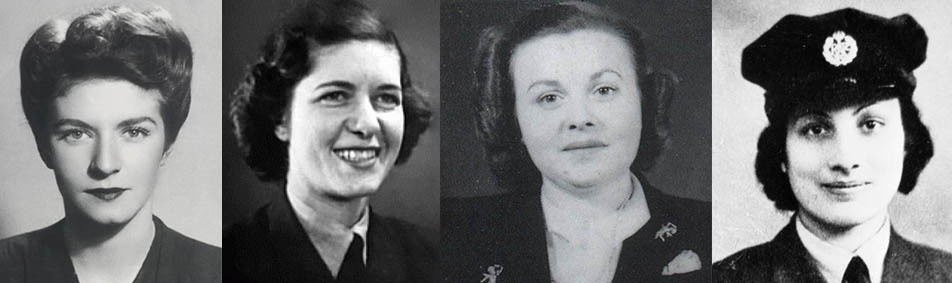
Elaine Plewman, Yolande Beekman, Madeleine Damerment, Noor Inayat Khan
At 01:30 hrs on the morning of 10 September 1944 the women were handcuffed and taken to a railway station and eventually arrived at Dachau Concentration Camp. On 13 September Obersturmbannfuhrer Fredrich Wilhelm Ruppert executed the three women and after the war a member of the Gestapo named Christian Ott gave the following statement to American investigators:
“The four prisoners had come from the barrack in the camp where they had spent the night, into the yard where the shooting was to be done… The death sentence was announced to them…. The German speaking English woman {Beekman} had told her companions of the death sentence. All four had grown very pale and wept… Beekman {he called her the major!} asked whether they could protest against the sentence. The Kommandant declared that no protest could be made against the sentence. The major (Beekman) had then asked to see a priest. The camp Kommandant refused on the grounds that there was no priest in the camp.
The four prisoners now had to kneel with their heads towards a small mound of earth and were killed by two SS, one after another shot through the back of the neck. During the shooting the two English women held hands and the two French women likewise. For three of the prisoners the first shot caused death, but the German speaking English woman (Beekman) a second shot had to be fired as she still showed signs of life after the first shot.
After the shooting of these prisoners the Lagerkommandant said to the SS men that he took a personal interest in the jewellery of the women and that this should be taken to his office.”
It was also later stated the four women had been badly beaten before their executions.
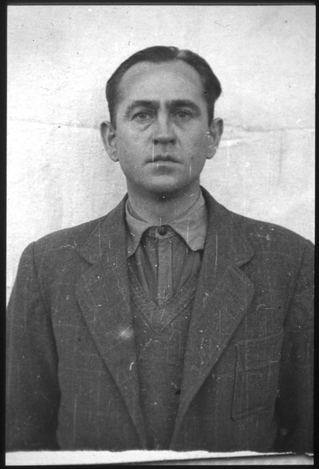
SS Officer Wilhelm Ruppert. Image taken after being arrested by American forces.
After the war SS Officer Wilhelm Ruppert who was in charge of executions at Dachau was convicted of war crimes and executed by hanging.
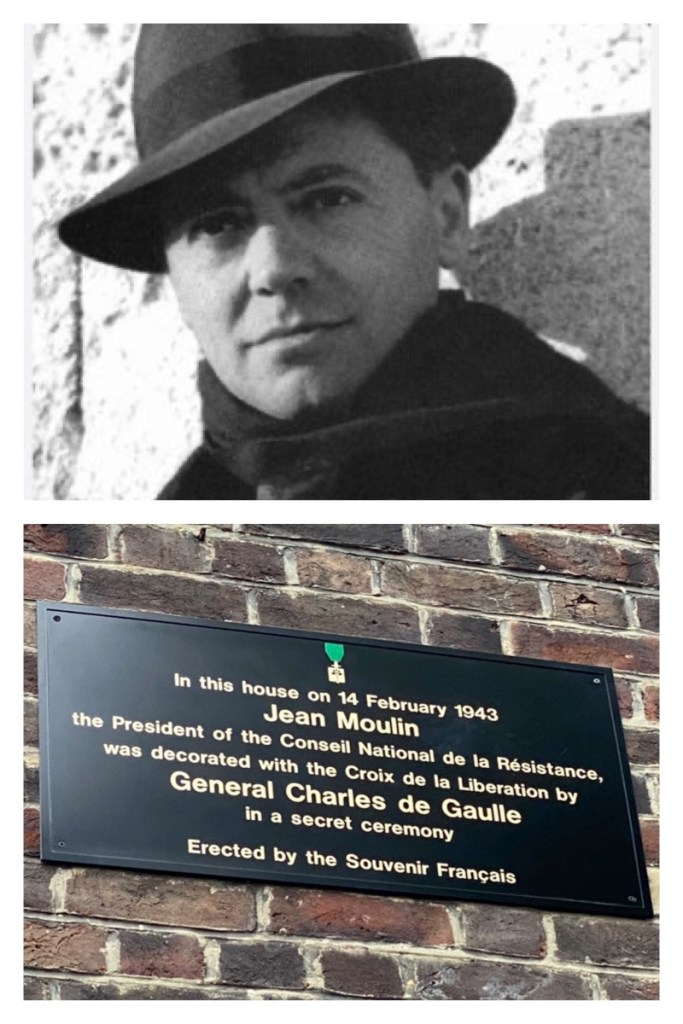
On 14 February 1943 General de Gaulle awarded Jean Moulin the Cross of Liberation during a private ceremony at De Gaulle’s home in Hampstead London.
Three months later, after returning to France by parachute, Jean Moulin was captured and tortured for three weeks by SD chief Klaus Barbie (Butcher of Lyon). Moulin attempted to commit suicide by cutting his throat but after being found collapsed in his cell was given medical treatment and survived. As a result of the injuries suffered during torture Jean Moulin died on 8 July 1943 whilst being transported by train to Germany.
 Alan Malcher