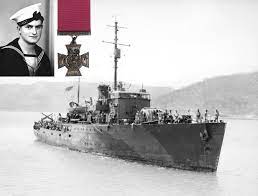
Ordinary Seaman Edward ‘Teddy’ Sheean VC (Royal Australian Navy) during WW2

‘Teddy’ Sheean was a farm labourer before he joined the Royal Australian Navy Reserve on 21 April 1941 as an Ordinary Seaman and four of his brothers were already serving in the Australian Army and another was in the navy.

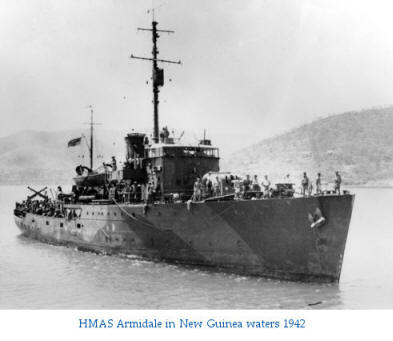
After completing training, he was eventually posted as an anti-aircraft gun loader on HMAS Armidale which was on escort duties on the eastern coast of Australia and New Guinea before returning to the safety of Darwin in October.

HMS re sheenan

On 29 November HMAS Armidale along with HMAS Castlemain sailed to the Japanese-occupied Island of Timor to extract Australian soldiers of 2/2nd Commando Independent Company and land fresh troops to continue operations. Both ships then rendezvoused with HMS Kuru which had already taken the troops off the island and were then transferred to Castlemain.

At 12:28hrs on 1 December Armidale and Kuru came under heavy and repeated attacks from Japanese aircraft and the two ships became separated. By 14:00hrs Armidale was being attacked by at least thirteen aircraft and just over an hour later a torpedo hit the port side of the Corvette, another hit the engineering section and was quickly followed by a bomb striking the aft section.

As Armidale listed heavily to port and was close to sinking the order was given to abandon ship and as the survivors jumped into the sea the defenceless men were machine-gunned by Japanese aircraft. Instead of boarding a life boat 18-year-old Sheean ran to his gun as the ship was sinking and though already wounded in the chest and back he shot down one Japanese bomber, continued firing at other aircraft to keep them away from the men in the water and was seen still engaging the enemy as the ship disappeared under the sea.

Sheenan ABC news

Painting at AWM

Only 49 of the 149 members of HMAS Armidale survived and Sheean was mentioned in dispatches. In 1999 a Collins Class Submarine (HMAS Sheean) was named after him and is the only ship in the Australian navy to be named after an Ordinary Seaman.

HMS Sheenam now

HMAS Sheean

In 2020 following a public campaign a panel of experts examined eye witness accounts of his action and recommended the Australian Government posthumously award Ordinary Seaman Edward ‘Teddy’ Sheean the VC, and on 1 December 2020 members of his family received his Victoria Cross during a ceremony in Canberra.

Sheena1

Adrian Carton de Wiart VC, whose war service sounds like fiction but is all true!

Adrian Carton de Wiart fought in the Boer War, World War One, World War Two and during his military service from 1899 to 1947 he survived being shot in the stomach, groin, head, ankle, hip and leg. He also survived two air crashes, five escape attempts from a prisoner of war camp and after a doctor refused to amputate his fingers he bit them off. He also lost an eye and in 1915 was awarded the VC.

Adrian Carton de Wiart was born in Belgium in 1880 to an Irish mother and a Belgium aristocrat but it was widely rumoured he was the illegitimate son of the King of Belgium, Leopold II.

In 1899 he was sent to England to study at Oxford University but quickly dropped out and enlisted into the British Army under a false name and was known as Trooper Carton and was sent to fight in South Africa during the Boer War. He was shot in the stomach and groin and sent back to England but after recovering he rejoined the army under his real name and after being commissioned returned to South Africa in 1901.

During the British campaign against the ‘Mad Mullah’ in Somaliland whilst attacking an enemy fort Carton de Wiart was shot twice in the face and lost his left eye.

For a short time he wore a glass eye but whilst travelling in a taxi he threw it out of the window and put on a black eye patch which he wore for the remainder of his life.

Whilst serving on the Western Front as an infantry commander during the Great War he was wounded seven more times and after a doctor refused to amputate his mangled fingers he bit them off.

During the Battle of the Somme he was shot through the skull and ankle, at the Battle of Passchendaele he was shot through the leg and whilst fighting at Arras he was shot through the ear.

His citation for his VC during the Battle of the Somme States:“For most conspicuous bravery, coolness and determination during service operations of a prolonged nature. It was owing in a great measure to his doubtless courage and inspiring example that a serious reverse was altered. He displayed the utmost energy and courage in forcing an attack home. After three other battalion commanders had become casualties, he controlled their commands, and ensured that the ground won was maintained at all costs. He frequently exposed himself in the organisation of positions and of supplies, passing unflinchingly through fire barrage of the most intense nature. His gallantry was inspiring to all.”

Carton Medals Rotated

Despite losing various body parts Carton de Wiart said, “Frankly, I enjoyed the war”

From 1919 to 1921 he saw further action in Poland during the Polish-Soviet War and whilst on a train being attacked by the Soviet Cavalry he fought them off with his revolver from the running board of the train and at one point he fell onto the track and quickly jumped back to continue the fight. He later survived an air crash and spent a brief time in captivity.

He retired from the British Army in 1923 with the rank of Major-General (said to be honorary) and spent the next 16 years hunting on a friend’s 500,000 acre estate in Poland a few miles from the Soviet border. At the outbreak of the Second World War in 1939 he was recalled as head of the British Military Mission in Poland and later escaped Poland with his staff whilst being chased by German and Russian soldier and despite being attacked by the Luftwaffe they made it to the Romanian border. Carton de Wiart then travelled back to England by aircraft after obtaining a false passport.

In 1940 he commanded Anglo-French forces in Norway with orders to take the city of Trondheim and with little support managed to move his troops over the mountains during which they were attacked from the air by the Luftwaffe, shelled by German navy destroyers and machine gunned by German troops and was eventually ordered to evacuate and board Royal Navy transports which were heavily attacked during their withdrawal.

On his 60th birthday he arrived at Scapa Flow in the Orkney Islands, Scotland and after returning to his London home it was bombed out during the blitz and all his medals were destroyed and he had to apply to the War Office for replacements.

In 1941 he was appointed head of the British-Yugoslavian Military Mission and whilst on an aircraft flying to Cairo both engines failed and crashed in the Mediterranean off the coast of Libya which was controlled by Italy. After being knocked out during the crash he was revived by the cold water and he along with the crew swum a mile to the shore where they were captured by the Italians and sent to a POW camp in Italy.

Carton de Wiart was involved in five escape attempts, including spending seven months tunnelling with other prisoners. After one escape he spent eight days disguised as an Italian peasant but was easily recognised because he had one eye, one arm and could not speak Italian.

In 1943 he was released from prison and acted as a negotiator for the Italian surrender after which he returned to England and became Churchill’s personal representative in China until 1947. Whilst returning to England he stayed at a guest house and whilst walking down the stairs he slipped on coconut matting and fell, knocked himself out and broke his back. After eventually arriving back at England it has been said a doctor successfully extracted an incredible amount of shrapnel from his old wounds.

During the draft of his autobiography he forgot to add he was awarded a VC and been married to a countess.

Lieutenant-General Sir Adrian Paul Chislain de Wart VC, KBE, CB, CMG,DSO eventually moved to County Cork, Ireland, where he died in 1963 at the age of 83.
After his death one commentator said: “With his black eyepatch and empty sleeve, Carton de Wiart looked like an elegant pirate and became a figure of legend”
Lance Corporal William Agnus VC, 8th Royal Scots during WW1

On 12 June 1915 at Givenchy-Lés-la Bassée, France, Lance Corporal Angus saw Lieutenant James Martin lying a few yards from German trenches after being injured by a landmine.

After leaving the safety of his trench Agnus run over 209 feet across no-man’s land under heavy rifle fire during which he was hit 40 times and lost an eye but continued towards the injured officer who he dragged back to the British trench whilst still under heavy fire.

After two months in hospital he was awarded the VC by King George V at Buckingham Palace on 30 August. When the king commented on his 40 injuries Agnus replied “Aye sir, but only 13 were serious.

Each year until his death in 1959 William Agnus received a telegram of thanks from the family of the officer he saved.
He is buried along with his wife Mary at Wilton Cemetery in Carluke, Scotland and his VC is displayed at the National Museum of Scotland in Edinburgh Castle.

SOE Polish Section (EU/P) Wladslaw Wazny in France

Apart from Krystyna Skarbek, GM (aka Christine Granville) who served with SOE’s French Section several Polish men and women also served with SOE EU/P in France, but this section is less well documented, consequently, there is much we don’t know about Wladyslaw Wazny and several claims about his war service are not supported by primary sources.

It is believed Wladyslaw Wanzy also known as Wladyslaw Rozmus was born on 3 February 1908 in the village of Ruda Rozaniecka to a peasant family and trained as a teacher and in 1934 was a Second Lieutenant in the Polish Army Reserve. At the start of the Second World War he was a platoon commander with the 39th Lwów Rifles Infantry Brigade and after the occupation of Poland he escaped to France and reached England via Spain and Gibraltar where he was later recruited by SOE.

It has been claimed but not confirmed, he infiltrated France in March 1944 and sent London the location of 59 V1 and V2 rocket launch sites which were later destroyed by Allied bombers. Although it is known Wazny was killed shortly before France was liberated there is still confusion regarding events leading to his capture and death.

Wladyslav Wazy SOE

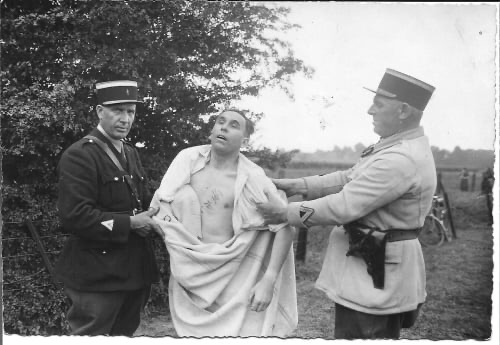
Wladslaw Wanzy after his arrest

Various theories about his capture and death

Some claim he was shot whilst attempting to escape, others say he was shot several times after shooting several Gestapo officers but was still alive. It has also been claimed that in July 1944 the Abwehr discovered members of his network and located their wireless operators with direction-finders and this led to his capture.

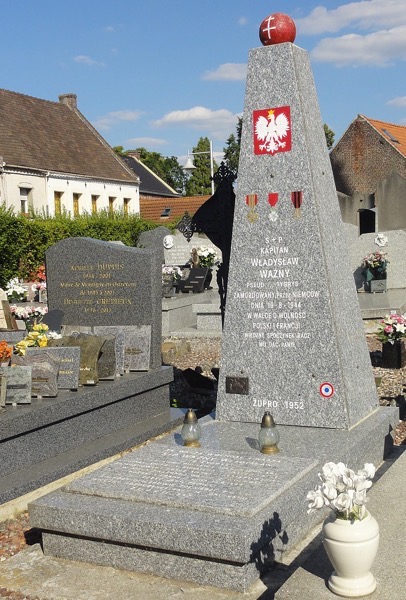
A further claim states that on 19 August 1944 the Abwehr and Milice raided the last of his safe houses which was a Tailor shop in the town of Montigny-en-Ostrevent and there are also various accounts of what happened next. Some say Wazny was involved in a shoot-out with German soldiers and the Milice after being surrounded and was hit by several rounds from a submachine gun, another version states he was shot in the leg as he climbed over a garden wall to escape. Whatever the story, as can be seen by the photograph of him in police custody he was captured alive and was later killed and buried in the cemetery of Montigny-en-Ostrevent, France.

800px Montigny en Ostrevent Cimetière de l église Saint Nicolas 03 tombe de Władysław Ważny

Krystana Skarbek SOE Agent

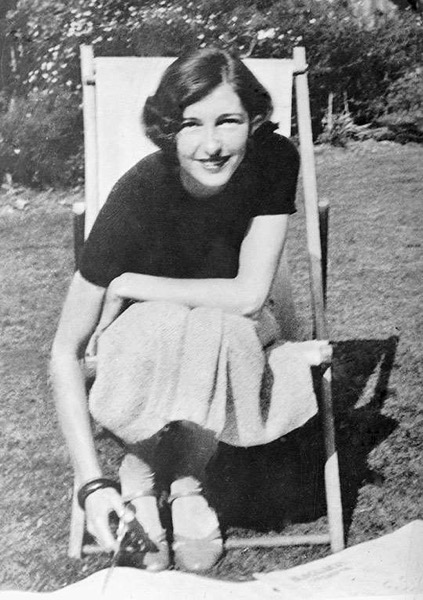
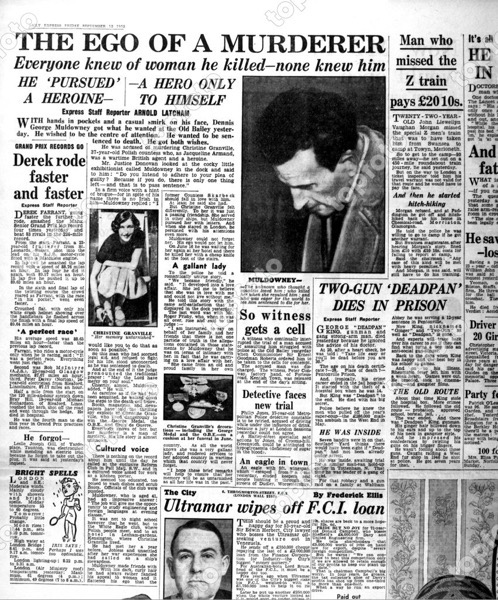
Krystyna Skarbek (aka Christine Granville) OBE,GM was a Polish agent who worked for D Section SIS (MI6) before serving with the Special Operations Executive. During the war she became known for her daring exploits in German occupied Poland and France which was recognised by being awarded the George Medal.

Granville christine c1950 Alan Malcher

On 15 June 1952 she was stabbed to death inside a hotel in Earls Court London by a jilted lover who was stalking her. (Photos IWM)

Granville newspaper

Phyllis Latour SOE Wireless Operator in France

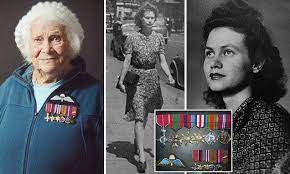
Phyllis ‘Pippa’ Latour MBE, Legion of Honour (France), 1939-45 Star, French and German Star, Croix de Guerre (France).

South African born Latour moved to England to join the Women’s Auxiliary Air Force (WAAF) but due to be able to speak fluent French and having spent time in the country she later came to the attention of the French Section of the Special Operations Executive (SOE).

After volunteering for hazardous missions and passing selection she completed the technically challenging training at the Wireless and Security School at Fawley Court, Buckinghamshire.

On the night of 1 May 1944 she parachuted into Normandy to join the Scientist circuit as their wireless operator and was constantly on the move to avoid being tracked down by German wireless direction-finders during which she sent over 135 messages to London to support the French Resistance whilst posing as a teenager whose family had moved away from the industrial areas to avoid Allied air raids.

Pippa1

After the war she married an Engineer with the surname Doyle and she never discussed her war service with her family until her children found an article about her on the internet in 2000. She now lives in Auckland, New Zealand and at the time of writing (November 2021) she has just turned 100 years old and is thought to be the last surviving member of SOE’s French Section. Since writing this Phyllis ‘Pippa’ Latour died on 7 October 2023 at the age of 102. 

The Dutch Resistance: Girl Assassins during WW2

Some historians claim most of the resistance in the Netherlands was nonviolent, but this was not the case. The British Special Operations Executive (SOE) had a Dutch Section which supported resistance and it was widely acknowledged gender was an important tool for both passive and aggressive resistance to German occupation.

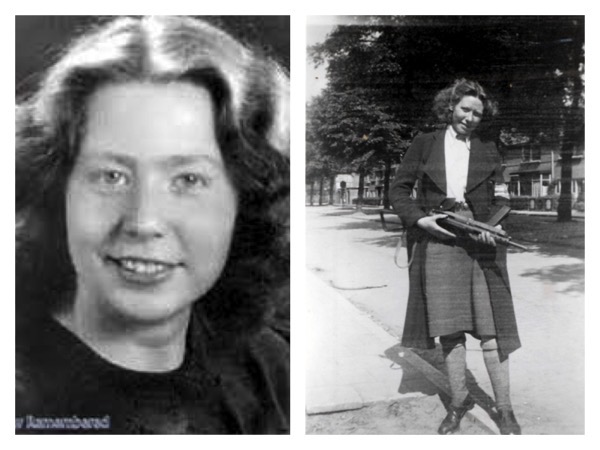
Hannie Schaft

Hannie Schaft with SOE supplied Sten Gun

It was often easier for women to talk their way through German checkpoints whilst transporting weapons, underground newspapers and carrying messages; there are accounts of young women walking hand-in-hand with Jewish children whilst escorting them to safe houses whilst appearing as an older sister walking with a sibling, and there are several accounts of female members of the resistance seducing German soldiers to obtain intelligence before luring them to remote areas and killing them.
After the war Truus Oversteegan said she compared the Nazi regime as “cancerous tumours in society that had to be cut out like a surgeon… For Hannie, Freddie and me there was no other solution than to resist, fighting fire with fire… That is the cruelty of war.

Teenage Assassins

It was in Haarlem, a city outside Amsterdam in northwest Netherlands, where the three teenagers: Truss Oversteegan, her sister Freddie and Jannetje Johanna ‘Hannie’ Schaft killed collaborators and German soldiers.
The Oversteegane sisters started their resistance activities by distributing anti-German flyers and newspapers before becoming skilled assassins. The three women shot dead Dutch collaborators who were giving the names of Jewish families to the German authorities and they were killed in the street during daylight to act as a deterrent. They also flirted with collaborators and German soldiers and took them to woods and shot them, and the thrree were also involved in street shootings from bicycles so they could get away quickly.

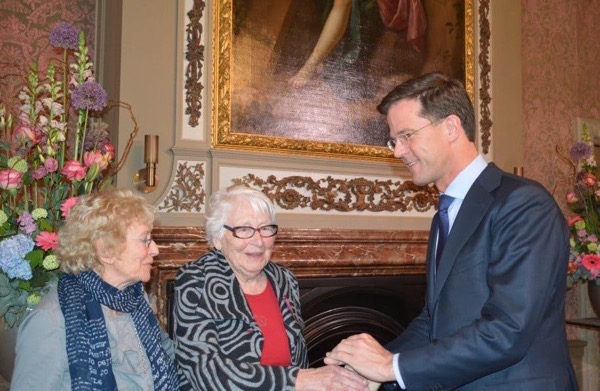
In 2014 Ms Oversteegen left and her sister Truus were awarded the Mobilization War Cross by Mark Rutte the Dutch prime minister Credit via National Hannie Schaft Foundatio

The Oversteegan sisters after the war

The Oversteegan sisters survived the war, married and had families but Hannie Schaft who had distinctive red hair was captured and executed on 7 April 1945. It is known at one point she dyed her hair black and assumed the name Johanna Elderkamp but by this time she was too well known by the Gestapo.

Muriel Byck: SOE Wireless Operator

Muriel Byck was born to Jewish French parents on 4 June 1918 in Ealing, London. From the few records available it is known that from 1923 to 1924 she lived with her parents in Wiesbaden Germany and the family moved to France in 1926 before returning to London in 1930 where she continued her education at a French school in Kensington, London.
From 1936 to 1938 she worked as a secretary and then became an assistant stage manager at the Gate Theatre. At the outbreak of war she undertook voluntary work with the Red Cross and also the WVS (Women’s Voluntary Service) and in 1941 she moved to Torquay and worked as an Air Raid Precaution Warden.

In December 1942 she joined the WAAF (Women’s Auxiliary Air Force) as a general duties clerk and was recruited by the Special Operations Executive (SOE) in September 1943.

After passing the Student Assessment Board at Winterfold House in Cranleigh Surrey, it was claimed she attended the unconventional warfare course in Scotland, but this is unlikely because agent trained wireless operators were specialists with a high degree of technical competence who were difficult to replace and were forbidden from engaging in aggressive operations. Documents also show she completed her wireless and security training at Thame Park in Oxfordshire and then passed the compulsory and academically challenging trade craft course at Beaulieu.

Wt iwm

On the night of 8-9 April 1944 Muriel Byck along with three other agents infiltrated France by parachute and after going their separate ways Byck joined the Ventriloquist circuit organised by SOE agent Philippe de Vomécourt to work as his wireless operator.
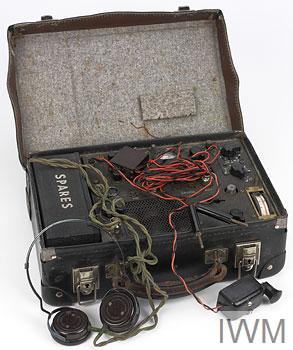
Using the cover name of Violette Michéle and pretending to be the niece of Philippe de Vomécourt, who used several cover names but was generally known as Antoine, she chose several safe houses to use her wireless to receive orders and make arrangements for weapons, explosives and other equipment to be dropped by parachute; she was always on the move to avoid being located by German wireless direction finders and ensured her wireless traffic was sent in under twenty minutes to lower the chances of her location being discovered.
One of her safe houses was in the town of Salaries in central France which was owned by a member of the resistance called Antoine Vincent and she used her wireless from a shed behind a garage in Limoges until she noticed it was under surveillance and immediately changed her location, name and cover story.

She then moved into the home of a blacksmith and transmitted from several properties. Sometime in May 1944 (dates vary according to sources) Philippe de Vomécourt arrived at the blacksmith’s house to find Muriel Byck collapsed on the floor unconscious and called a doctor who worked for the resistance who diagnosed an advance stage of meningitis requiring immediate hospital treatment. The doctor warned de Vomécourt he had no contacts at the hospital he could trust and the Germans were always notified of new admissions and both were concerned her false identity papers would not pass close examination but an hospital was her only chance of survival.

After placing her on the rear seat of a car de Vomécourt drove her to the nearest hospital and after obtaining assistance from a nurse he disappeared before questions could be asked.
On 23 May 1944, at the age of 25, Muriel Byck died in hospital from Meningitis. She was buried in Romorantin, a commune and town in the Loir-et-Cher department and for many years her grave was tended by local people who also commemorated the anniversary of her death as a heroine of the resistance and her body was later moved to the Pornic War Cemetery.
After the war it was alleged, but never substantiated, that her mother insisted her daughter’s medals be destroyed.

Jacques Desoubrie: Belgium double agent working for the Gestapo during WW2

Desoubrie was born in Luingne, Belgium on 22 October 1922 and grew up in Tourcoing on the French border where he trained as an electrician. He is said to have spoken perfect English and unlike other double agents and collaborators working for the Germans he was not motivated by money; he was a dedicated supporter of the Third Reich although he was also well paid for his treachery.

He began working for the Gestapo in 1941 and used various cover names including Jacque Leman, Jean Masson, Pierre Boulain and Captain Jacques.

Sometime in 1941 he infiltrated a resistance group called Vérite Française (French Truth) which printed and distributed an underground newspaper and helped people escape from France and after being responsible for the arrest of 100 people he then infiltrated the Le Gualés Network and 50 people were arrested.

In November 1942 Desoubrie infiltrated the Comet Escape Line which operated in Belgium and France rescuing allied aircrews who were shot down over both countries. Members of the line escorted aircrews, referred to as parcels or packages, to neutral Spain through a network of safe houses and other members at various locations until they reached safety and Desoubrie was responsible for many arrests. Apart from a large loss of life some parts of the network had to be rebuilt with new recruits and replacement safehouses.

Using the name Jean Mason, in January 1943 Desoubrie convinced members of the Comet line he was escorting six airmen from Belgium to Paris and requested they meet him at a Paris railway station to arrange their escape to Spain, the Comet leader agreed and after sending a few members to collect the `parcels’ they were arrested.

By this time Desoubrie had discovered the identity of several members of Comet and their safehouses and further arrests based on his information almost destroyed the network. He was not suspected as a double agent and the only members of the resistance who knew of his involvement were those who had disappeared and sentence to death by the Gestapo.

In January 1944 he was responsible for the arrest of a senior leader of the Comet Line called Jean -Jacques Northomb (code name Franco), a British agent thought to be a member of MI9 Named Jacques Legrelle (code name Jerome) and after these betrayals Desoubrie started using the name Pierre Boulain.

On 7 May 1944 a Belgium woman named Michelle Dumon (code name Lily and Michou) who worked for the Comet Line discovered Desoubrie was a double agent and informed MI9 agent Albert Ancia, and he asked the French Forces of the Interior (FFI) to assassinate him. Although MI9 was later informed Desoubrie had been eliminated he was later seen, and it was assumed the FFI assassinated the wrong person.

After Desoubrie became aware the resistance in Belgium and France and MI9 had identified him as a double agent he was undeterred and continued working for the Gestapo.

After three allied airmen: American Roy Allen, New Zealander Phil Lamason and Ken Chapman who was a navigator with the RAF were picked up by members of the French Resistance they were hidden in a safehouse until arrangements could be made for their journey to Spain. In August 1944, Lamason and Chapman were arrested by the Gestapo and Desoubrie was paid 10,000 francs for each man after providing the information which led to their arrests and both airmen were sent to Buchenwald concentration camp.

After the liberation of France, Desoubrie fled to Germany but was later captured by the allies and after being found guilty in a French court was executed by firing squad on 20 December 1949 at the fort of Montrouge near Paris, but some sources claim he was executed in 1945.

SOE Greek Section: The capture of General Heinrich Kreipe, Crete 1944.

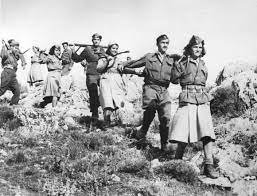
Members of the Cretan Resistance. Top photograph SOE agents Fermor and Moss dressed as German soldiers.

Leigh ‘Paddy’ Fermor served with the Irish Guards but due to his knowledge of modern Greek history he soon came to the attention of the Greek Section of the Special Operations Executive (SOE). He fought in Crete and mainland Greece during the German occupation and infiltrated Crete three times once by parachute to organise the Cretan Resistance whilst disguised as a shepherd and lived in the mountains for two years.

Fermor with SOE officer William Stanley ‘Bill’ Moss as his second in command and a small group of Cretan Resisters received orders to capture the German commander of Crete General Muller but before the start of the operation Muller was unexpectedly replaced by General Kreipe and after informing SOE they were instructed to capture Kreipe.

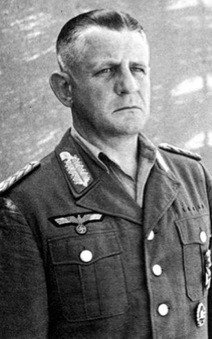
General Kreipe

General Kreipe was a career officer who served at the Battle of Verdun during the Great War and during the Second World War participated in the Battle of France, the Siege of Lenigrad and after a short period working in Germany he returned to the Eastern Front. On 1 March 1944 he was appointed Commander of 22nd Air Landing Infantry Division stationed in Crete and replaced General Muller as the senior officer on the Island.

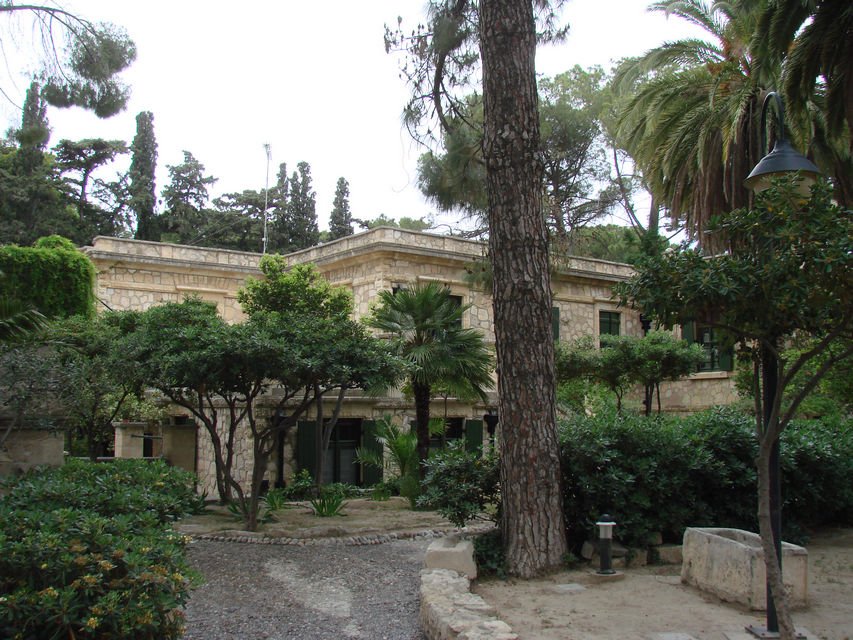
Villa Ariadni

On the night of 26 April 1944 General Kreipe was driven by staff car from his headquarters in Archanes without an escort to his well-guarded Villa ‘Ariadni’ approximatley 5 km from Heraklion. Fermor and Moss dressed as German Military Police Officers waited some distance from his residence for his car to arrive.

After being flagged down by the two SOE officers the car stopped at what appeared to be a routine security check. As Moss asked the driver for his identity papers Fermor opened Keipe’s door, jumped in and threatened him with his pistol. Moss then shot the driver, got into the driving seat and quicklt drove away.

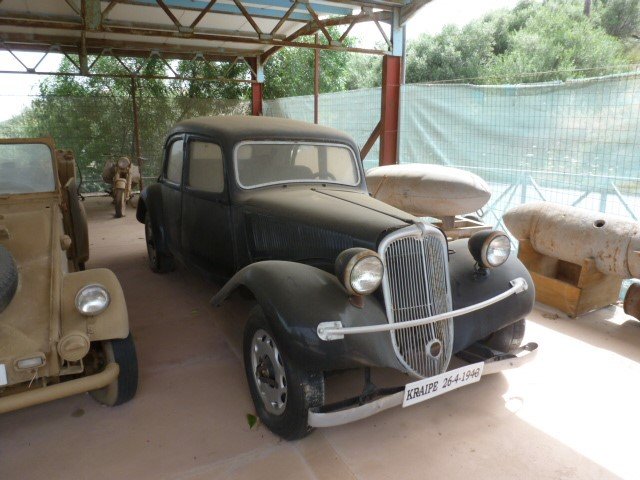
Staff car used by General Kreipe (source unknown)

They successfully drove through 23 German checkoints before abandoning the car and with assistance from members of the resistance disappeared into the mountains. It was not long before the alarm was sounded, and the small team was being pursued across Crete by large numbers of German troops supported by a spotter aircraft, but the Crete resistance was familiar with the mountains and various caves where they could hide and eventually guided them undetected to the pickup point on the south coast where they were taken by boat to Egypt.

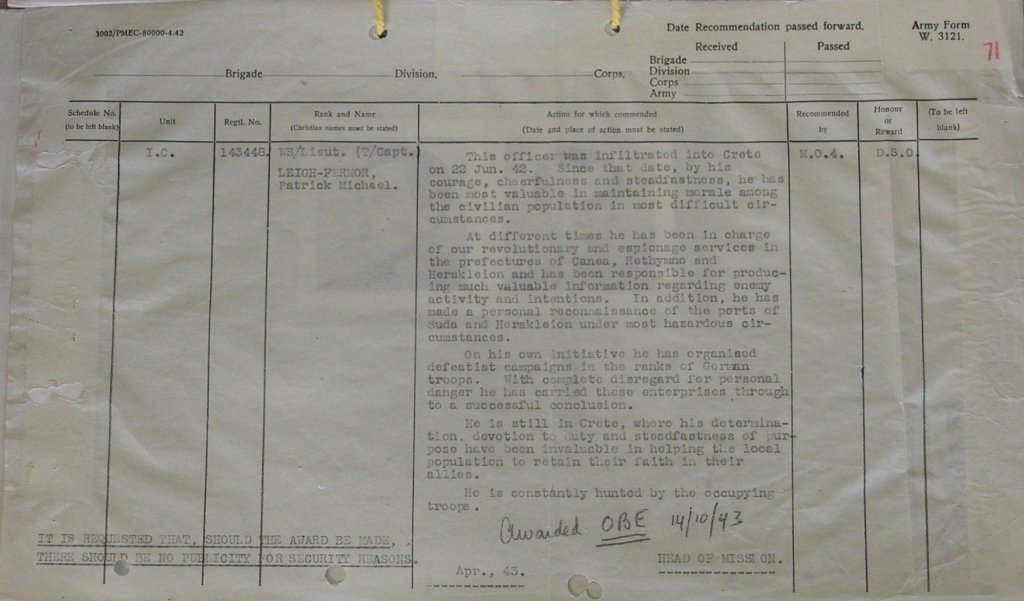
Offcial document for the award of an OBE.