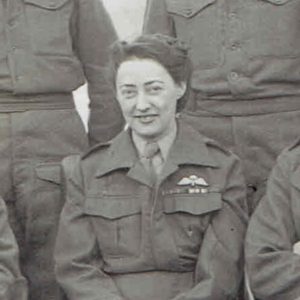
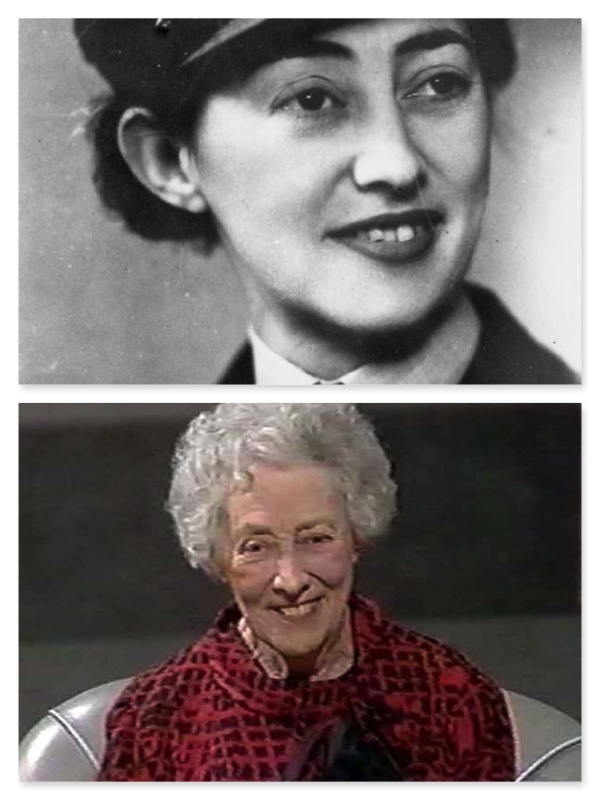
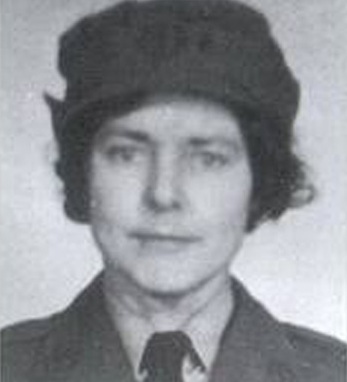
Yvonne Cormeau (nee Biesterfield). In 1937 She married Charles Cormeau who joined the Rifle Brigade at the outbreak of war and in 1940 was wounded in France and returned to England. Shortly after his return Charles was killed when their family house was destroyed during a German air raid on London and Yvonne escaped serious injury after a bath fell on top of her and protected her head but their unborn child was killed. After recovering she joined the WAAF’s and was later recruited by SOE and sent her 3-year-old daughter to live in the countryside to avoid the bombings.
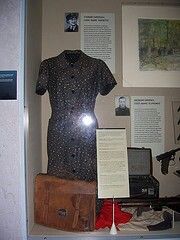
On the night of 22-23 August 1943 Cormeau arrived by parachute at Saint-Antoine-du-Queyret to join Wheelwright circuit as their wireless operator in the Gascony area. She frequently cycled 30 miles a day to avoid direction finders and passed over 400 messages to London. In June 1944 she was shot in the leg during a firefight but managed to escape with her wireless and the dress she was wearing and her blood-stained briefcase is on display at the Imperial War Museum.
IWM
Yvonne Cormeau died on 25 December 1997, aged 88 in Fleet Hampshire.
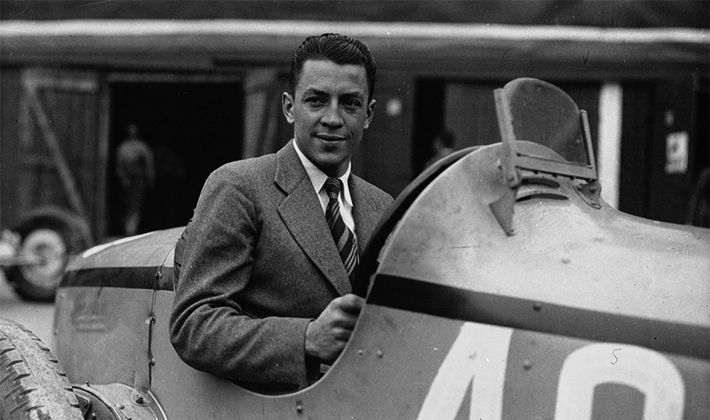
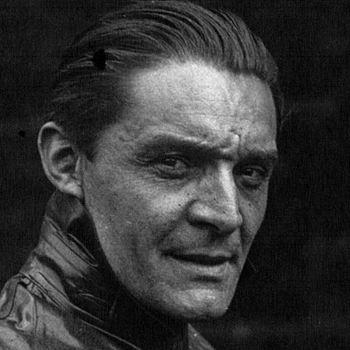
William Grover-Williams was born in Montrough Hauts-de-Seine, France on 16 January 1903 to an English father and French mother and spoke fluent French and English. By the age of 29 he was a well-known racing car driver who had won several Grand Prix’s for Bugatti including the 1929 Monaco Grand Prix and during the same year married Yvonne Aupicg who later worked for the resistance. Following the occupation he escaped to England and joined the Royal Army Service Corps and was recruited by SOE on 17 November 1941.
Shortly after completing training Grover-Williams returned to France and established the Chestnut circuit consisting of pre-war racing friends among them being SOE agents Jean-Pierre Wimille and Robert Benoist and both had previously raced for Bugatti. Chestnut was based on the Benoist family estate in Auffargis, a commune in the Yvelines department in north-central France, and throughout 1941 the Germans did not suspect them of being involved in resistance because they were regarded as respected sportsmen.
Jean-Pierre Wimille
Robert Benoist
In March 1942 Chestnut received a wireless operatornamed Robert Dowlen who began transmitting from a farmhouse on the road to Pontoise situated north-east of Paris and in keeping with wireless security his location was unknown by other members of the circuit and his only contact was through a courier and the wives of Wimille and Benoit worked on reception committees. Chestnut received several arms drops but little sabotage was undertaken but useful intelligence from well-placed contacts was regularly passed to London through their wireless link until 31 July when Dowlen was found by direction finders and arrested whilst still in contact with London. On 2 August Benoit’s brother, Maurice, was arrested at his Paris flat and this was followed by German soldiers searching the Benoit estate during which they found fifty-one weapon containers hidden in an old well and a further forty-seven containers hidden behind a false wall in a stable. Benoit’s father, wife and several servants working for the circuit were arrested, Grover-Williams was later found hiding in the stables and beaten for information but refused to cooperate and was taken to 84 Avenue Foch, the Paris headquarters of the Sicherheitsdient (SD) the counter-intelligence branch of the SS.
The fourth floor (top) had a guard room and cells where Grover-Williams was held along with other political prisoners and an interrogation room containing instruments of torture. It is known Grover-Williams was tortured throughout the night by Ernest Vogt, a Swiss-German civilian translator and interrogator working for the SD at Avenue Foch from 1940 and because there were no further arrests it is assumed Grover-Williams refused to identify members of his circuit. It is known he was transported to the SS Reich Security headquarters at Prinz Albrecht Strasse in Berlin for ‘advanced’ interrogation which often included torture by electricity and later transferred to Sachsenhausen concentration camp and in March 1945 Berlin ordered he be shot. There is no evidence to support the claim Grover-Williams survived the war and worked for MI6 until he was killed in a road accident in 1986.
Three days after the arrest of his family Robert Benoit was arrested on a Paris street: four Gestapo officers with weapons drawn bundled him into the back of a large car and one officer sat either side of him but they neglected to handcuff him and secure the rear door. As the car sharply turned left Benoit pushed the officer out of the moving car whilst diving headfirst from the vehicle and during the confusion escaped down a narrow passageway. After receiving assistance from friends he later joined an escape line to England.
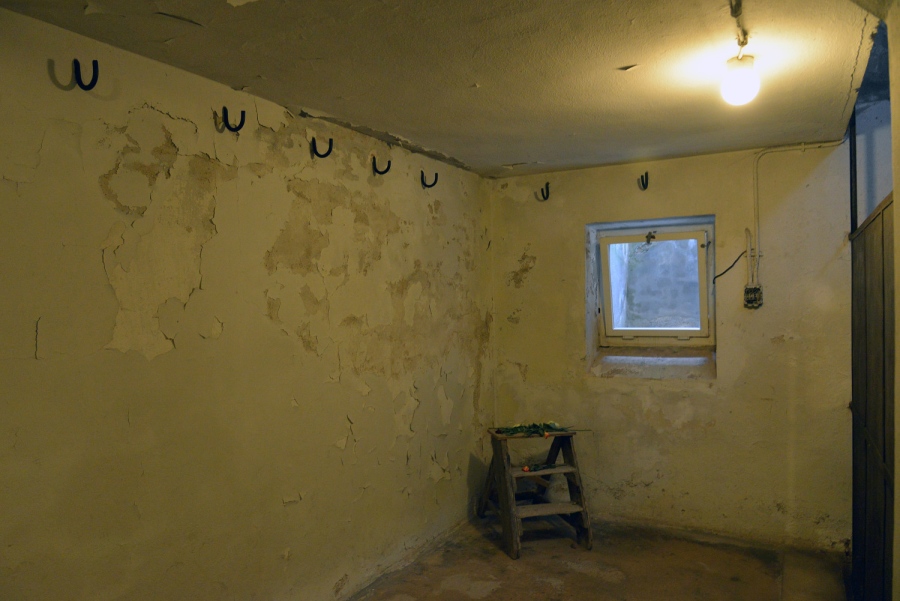
In October 1943 Benoit returned to France by parachute and later returned to England for a few weeks to attend advanced training before returning to raise resistance in the Nantes area and was arrested on 18 June 1944 and taken to Buchenwald concentration camp and on 14 September was executed by slow strangulation after being suspended from piano wire from a hook on the crematorium wall. This barbaric form of execution was intended to make death as slow and painful as possible for political prisoners. The other agent, Jean-Pierre Wimille, survived the war and died in 1949 after crashing his car during the Buenos Aires, Argentina Grand Prix.
Hooks on the crematorium wall used to strangle political prisoners.
Staff at the SOE training school in Scotland called William Fairbairn and Eric (Bill) Sykes the ‘Angelic twins’ and some students called Fairbairn the ‘Shanghai Basher’ or ‘Dangerous Dan’. The fighting system they developed was sometimes referred to as gutter fighting because there were no rules or so-called gentlemanly conduct.
I recently found this brief documentary on the internet.
Dr. Mark Felton is a well-known British historian, the author of 22 non-fiction books, including bestsellers ‘Zero Night’ and ‘Castle of the Eagles’, both currently being developed into movies in Hollywood. In addition to writing, Mark also appears regularly in television documentaries around the world, including on The History Channel, Netflix, National Geographic, Quest, American Heroes Channel and RMC Decouverte. His books have formed the background to several TV and radio documentaries.
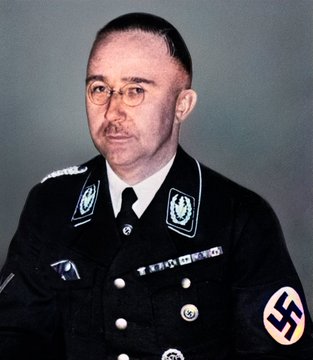
In this second episode, we follow Himmler as he goes on the run, heading south through the British occupation zone until his capture and identification by British forces.
Dr. Mark Felton is a well-known British historian, the author of 22 non-fiction books, including bestsellers ‘Zero Night’ and ‘Castle of the Eagles’, both currently being developed into movies in Hollywood. In addition to writing, Mark also appears regularly in television documentaries around the world, including on The History Channel, Netflix, National Geographic, Quest, American Heroes Channel and RMC Decouverte. His books have formed the background to several TV and radio documentaries.
Cicely Lefort passed through the SOE training schools towards the end of 1942 and was described by the training team as “Being very lady like and very English in spite of her French background.” Lefort was born in London and married a Frenchman in 1925, they lived in Brittany and escaped to England shortly before the occupation.
Using the field name ‘Alice’ Lefort arrived near Tours by RAF Lysander of 161 Special Duty Squadron on the night of 16 June 1943 to join the Jockey circuit operating in south-east France.
On 15 September 1943 Lefort was at a safehouse being used by Raymond Daujat, the leader of the local resistance operating in the Montélimar area along with Pierre Reynaud, a sabotage instructor working for the Jockey circuit, and the two men were in the garden when the Gestapo raided the property. Daujat and Raynaud manged to escape but after finding the safehouse surrounded by German troops Lefort hid in the cellar and was eventually caught.
It was later said the only incriminating evidence found on her was a piece of paper which she could not explain.
Lefort was taken to the Gestapo prison in Lyon before being sent to Frésnes Prison and was eventually transported to Ravensbrûck Concentration camp. According to Maurice Buckmaster, the commanding officer of F Section, “Although severely interrogated and ill-treated she gave no vital information away and requested she be awarded the military OBE.”
After almost a year of hard labour Lefort become very ill and eventually could not stand during the daily role call during which the women were often forced to stand for seven hours each day and many collapsed and died from exhaustion. It was later stated that more than 100 women a day died from illness, exhaustion or were executed.
After Lefort was unable to work she was selected for execution and it was later claimed before she was executed she received a letter from her husband requesting a divorce but this is unlikely because prisoners did not receive letters and nobody would have known she was at Ravensbrûck. However, if she did receive this letter it mostly likely arrived by Lysander before she was captured because there are several accounts of agents receiving letters from home after being censored by HQ.
The date of her death is not known and it is believed Cicely Lefort was among a group of women sent to the gas chambers.
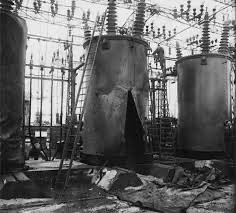
One of the transformers destroyed during the attack (German Federal Archives)
In May 1941 the Special Operations Executive (SOE) received a request to sabotage the power station in Passaic near Bordeaux but the French Section had no agents available: most had already been deployed to France on various operations and others were still being trained at the school for advanced industrial sabotage in Hertfordshire. SOE HQ then approached the Polish Section (EU/P) which came under the jurisdiction of the Polish Government in Exile in London, and after agreeing to undertake the mission six Polish volunteers boarded a converted Whitley bomber of No.138 Special Duty Squadron at RAF Tempsford to infiltrate France by parachute.
Shortly after entering French air space the aircraft suffered an electrical fault which caused their container loaded with weapons and explosives to be jettisoned over the Loir and were forced to abandon their mission and return to England. Unbeknown to the aircrew the electrical fault was far more serious than first thought and eventually caused the aircraft to crash land and catch fire at RAF Tempsford: all the crew were either killed or injured and the six Polish agents suffered serious burns.
SOE HQ then asked RF Section (the Free French equivalent to SOE under General de Gaulle) whether they were willing to attack the power station and after de Gaulle agreed, on the night of 11-12 May 1941 three agents from RF Section, J Forman, Raymond Cobard and André Vernier (aka Jacques Leblanc) successfully infiltrated France by parachute.
After hiding their weapons and explosives the team reconnoitred the power station: there was a high-tension cable very close to the top of a 9-foot wall they needed to climb over and it appeared there was a large number of German and Italian soldiers protecting the power station. They also failed to obtain the bicycles they intended using for the getaway so decided to postpone the attack.
Before leaving England Forman was given the Paris address of an RF agent called Joêl Letac who remained in France after a failed mission called Operation Savanna, the elimination of Luftwaffe Pathfinder crews whilst they travelled by coach to their airfield, and after meeting Forman Letac encouraged him to continue the mission and the following day Letac travelled with the sabotage team to the power station. After the old lorry they obtained broke down they continued the remainder of the journey on stolen bicycles and eventually recovered the equipment they had buried around 100 yards from the power station.
On the night of 7-8 June 1941 during pitched darkness due to the blackout Forman climbed the perimeter wall and crawled under the high-tension cable which was dangerously close. After ensuring he could not be seen by the guards Forman entered the compound and opened a side door, the rest of the team entered the grounds of the power station and then sprinted across open ground to the main building.
In less than thirty minutes the team placed magnetic incendiary devices on eight large electricity transformers and then made their getaway on the stolen bicycles. It has been said the explosions were so violent flames rose high into the air and illuminated the entire area and searchlights started probing the sky for bombers.
Seven of the transformers were destroyed and this seriously disrupted the Bordeaux submarine base, numerous factories used to supply the German military were forced to stop production for several weeks. The electricity grid from another region was diverted but the overload caused more damage and all electric trains in south western France had to be replaced with steam locomotives, and all the transformer oil in France was used during the repairs.
Some writers claim the team was picked up by a RAF Lysander of 161 Special Duty Squadron, but this was not the case. The team arrived in France with one million francs (said to be about £1,400 in 1941 and roughly £71,000 in 2021) and the money was unaccountable! Instead of requesting an extraction they remained in France for a further two months and according to historian MRD Foot “They left behind them broken glass and broken hearts” before escaping to England via neutral Spain. Before they crossed the frontier Cabard was captured but later escaped and returned to England.
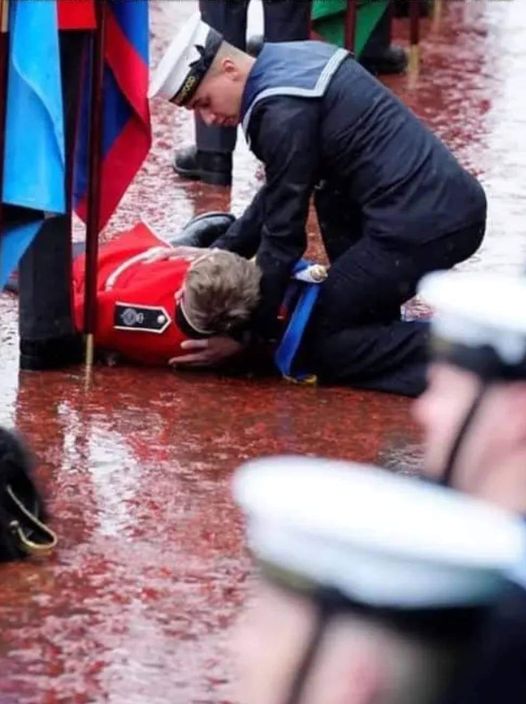
Despite the banter the military is one large team based on mutual respect and support. BZ to the Royal Navy Sailor who came to the assistance of this Guardsman.
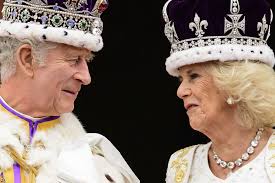
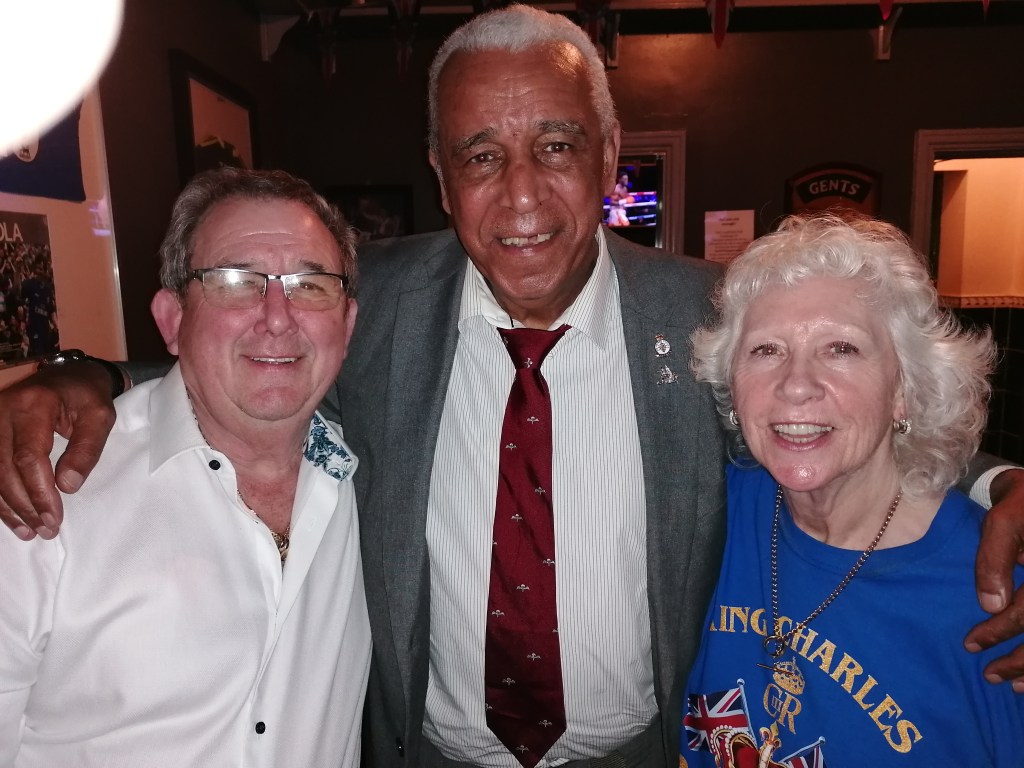
I would like to take this opportunity of thank Tony and Sue Millard of the Clarence Pub, West Kensington for their many years of charitable work supporting veterans. On Coronation Day the Millard’s and their staff did splendid work celebrating the Crowing of Charles III.
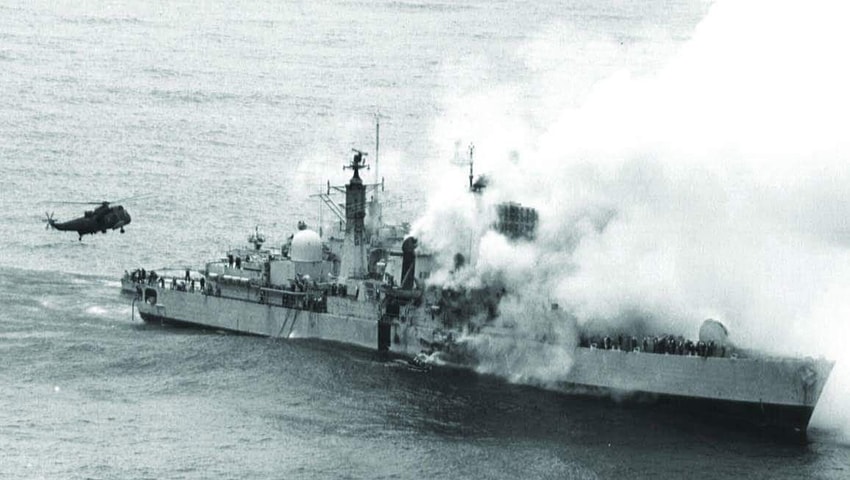
On this day 4 May 1982 HMS Sheffield was sunk during the Falklands War. The 20 men who died in alphabetical order: Lt Cdr David Balfour POMEM(M) David Briggs, who was awarded a posthumous DSM CA Darryl Cope WEA Anthony Eggington Sub Lt Richard Emly POCk Robert Fagan Ck Neil Goodall Laundryman Lai Chi Keung LMEM(M) Allan Knowles LCk Tony Marshall POWEM Anthony Norman Ck David Osborne WEA1 Kevin Sullivan Ck Andrew Swallow Act CWEM(N) Michael Till WEMN2 Barry Wallis LCk Adrian Wellstead MAA Brian Welsh Ck Kevin Williams Lt Cdr John Woodhead, who was awarded a posthumous DSC.
There was one further Royal Navy fatality on 4 May.

 Alan Malcher