Basic Analysis of Social Media: Examining the use of narrative-based drivers for remote radicalization. (First published 3 August 2016)

Basic analysis


As I am fortunate to have a large number of data analysts and those involved in the behaviour sciences among my LinkedIn contacts, I would like to point out this paper is not intended to bring anything new to the study of radicalization or extremist behaviour. I also feel sure that many of my contacts in this field will put forward various other methods which may be used to collect the same datasets mentioned in this paper.

Several years ago, as part of my research into the induction and radicalization process used by AQ affiliates via social media (SM), I spent a considerable amount of time reading academic papers on SM mapping and human behaviour.  This information allowed me to research SM, the web and dark web in order to increase my understanding of the drivers associated with violent extremism (VE) and the mindsets of vulnerable people who may be psychologically manipulated to join the extremist cause. It also allowed me to examine and test new theories put forward by various academics.

The following is a basic introduction to the subject which is based on the research of others and which I have modified for my own research needs. Furthermore, due to the limited scope of this paper I have not included data associated with demography, gender; or the analysis of text and visual images which are to be found in the ‘extremists’ virtual world of their making.

Finally, although I and other members of the Narrative Strategies Team (http://www.narrative-strategies.com/) have a comprehensive understanding of the narrative based drivers associated with VE, I have found the following allows us to examine these drivers working over time and space along with the behavioural changes experienced by some members of the target audience. 

Analysing Social Media (SM networks)

Virtual social networks, like those found in the ‘real’ world, consist of relationships and relationship building blocks. An examination of this network reveals a combination of relationships which create identifiable patterns of connected people, groups and organisations.  As explained later, this virtual social network which appears to allow users to remain anonymous provides a false sense of security where members are willing to express their concerns, frustrations and other personal information which they may not be willing to discuss in the real world. This provides an indication of an individual’s vulnerabilities which may leave them open to psychological manipulation.  When one examines the communications between like mined individuals within this network it may first appear to resemble a peer-group support network which by its very nature encourages additional personal information to be shared with ‘like-minded’ people. Accordingly, extremist groomers and recruiters can select suitable individuals who may be radicalized.  

Virtual Social Networks

It is easier to regard social networks as consisting of social entities: actors, distinct individuals, groups and organisations. We must also be prepared to follow these entities as they migrate to or simultaneously use other SM platforms.  For instance, Twitter is limited to the maximum use of 140 characters (Tweets) and due to this limitation member who are of interests to extremists are often encourage to join a similar network on another SM platform with less restrictions and/or is considered more secure.  Consequently, it is not uncommon to find the same social entities on various SM platforms.

relationship ties

Relationship ties (Contacts)

Some relationships which are tied to others across the network/s are said to be ‘informal’ because they are not widely known by others entities of the network under examination.  For example, on LinkedIn we often find third degree contacts commenting on updates posted by members from outside their network simply because the commentator is connected to one or more of the writers’ first degree contacts.  Such entities, in this example LinkedIn members, are often referred to as ‘Muktiplexity’ or ‘Multiplex’ because these individuals are actors with ties to other actors connected to you. I plan to cover this concept in greater detail at a later date during my examination of Russian trolls and the information war.

The Two Node Network consists of actors who may not have direct ties with each other but they attend similar events within a community (Mosques, sports clubs etc.) or may regularly visit similar websites. Although there are no virtual or physical connections, this provides an opportunity for prominent actors (Focal Actors) to form a false rapport with members of the Two Node Network and the opportunity to form a ‘weak’ link.  The establishment of ‘strong’ links are only attempted after an individual is thought to be of interest to the extremist cause.

Egocentric, also called personal networks, tie directly with Focal actors (those with influence, I.e., groomers, recruiters, propagandists etc.) in the network.  Hanson and Shneiderman describe this as, “Social Centric or complete network consisting of the relational ties among members of a single bounded community. (Social Network Analysis: Measuring, Mapping and Modelling Collections of Connections, D. Hanson and B Shneiderman, 2010).

The examination of networks also allows us to develop what some academics call ‘name generators’ which is simply the names of social entities, in this case people, who frequently communicate with the focal actors.  Hanson and Shneiderman call those names generated by the focal actor, ‘the actors alters’.

The use of name generators, as advocated by Hanson and Shneidrman, allows for the identification of strong ties across a dense network.  To identify weaker ties in more wide ranging networks, acquaintance name generators can be used.

Another useful tool discussed by Hanson and Shneiderman, is the Positioning Generator. This allows the researcher to identify people who fill a particular ‘valued’ role or position within the network and therefore have access to a range of resources. These resources may include professional knowledge, or work related experience beneficial to an extremist group. 

Psychological Manipulation

Apart from the same narrative based drivers being used within the real and virtual world, we also find the same methods used to encourage members of their target audience to express their concerns, frustrations, aspirations and how they see themselves.  This information is used to psychologically manipulate suitable members within the network and tie them to others with similar mindsets. The linking of suitable individuals within a network will often reinforce these concerns and produce suitable conditions for physiological manipulation. A United Nations report describes this as, psychological manipulation, “to undermine an individual’s belief in certain collective social values, or to propagate a sense of heightened anxiety, fear or panic within a population or subset of the population…” (The Use of the Internet for Terrorist Purposes: United Nations Office of Drug and Crime, NY 2012) It is also widely acknowledged that certain cognitive propensities can combine to create a mindset that presents a high risk of being radicalized (see Drivers of Violent Extremism: Hypotheses and Literature Review, RUSI, 16 October 2015) and it is these propensities which extremists seek to identify within members of the network.

Social media has made social connections and networks more visible and open to research. “The internet and its use by terrorist organisations, individual members, supporters and recruits afford new avenues for assessing information about groups and their activities…” (Lorraine Bowman-Grieve, Security Informatics, 2013, 2:9) As Bowman-Grieve says, “individual reasons why people become involved are many and varied, with no single catalyst event that explains involvement.” However, research indicates that involvement is a gradual process that occurs over time and the development of this process, which is driven by narratives and supported by inter-personal bonds that have been created for this purpose, can be examined through social network analysis.

By analysing network activities over a period of time not only do we see the use of narratives as efficient drivers towards extremism, we also see the development of identities being slowly formed. This includes perceived victimization and attempts to convince individuals they are victims and linking this to a common or shared identity and the legitimization of violence to address these perceived injustices. We also see the development of dualist thinking which supports the extremist’s’ view of the world, other cultures, religions and western society. 

PDF version for downloading


Alan Malcher

William ‘Willie’ McKnight DFC & Bar

William McKnight

22-year-old Canadian fighter pilot Flying Officer William ‘Willie’ McKnight DFC &Bar fought during the Battle of France and the Battle of Britain and served as the wingman for Douglas Bader. On 12 January 1941 he was shot down over the English Channel whilst serving with No.242 Squadron and has no known grave. (Colour from original IWM B&W image by Dan Steel)


Alan Malcher

SOE wireless operator Adolphe Rabinovitch

Anaue

Adolphe Rabinovitch was a Russian-Egyptian Jew who served with the French Foreign Legion during the Battle of France. After being captured he escaped and made his way to England where he was recruited by SOE. On his second mission to France he was captured, interrogated and sent to Gross-Rosa concentration camp where he was executed sometime in 1944 at the age of 25.

Alan Malcher

Lepa Radic Yugoslav Partisan, Order of the People’s Hero

radic

Radic was born to a Bosnian Serb family on 29 December 1925. In February 1943 she was captured during a firefight against the 7th SS Volunteer Mountain Division Prince Eugen and was tortured for several days but refused to provide the names of other partisans and was sentence to death by hanging.

After the noose was placed around her neck a German officer said he would spare her life for the names of members of her group and Radic loudly replied “I am not a traitor to my people. Those whom you are asking about will reveal themselves when they have succeeded in wiping out all the evildoers to the last man.” Lepa Radic was 17 years old when she was publicly executed on 11 February 1943.

Alan Malcher

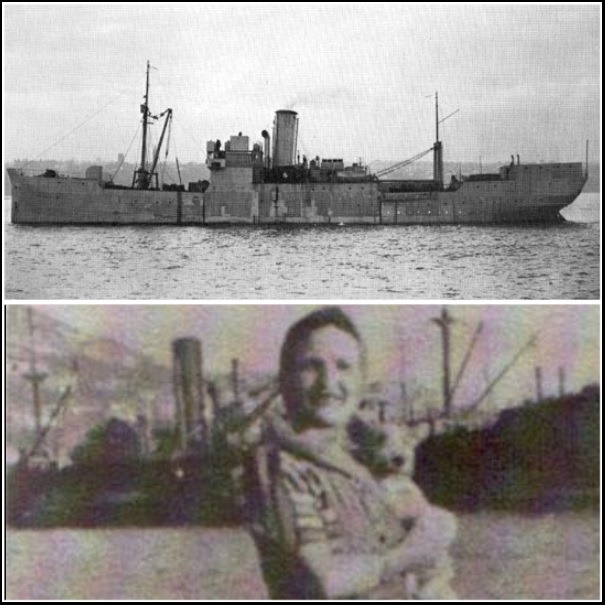
HMS Fidelity Royal Navy Special Service Vessel

Fideliy collarge JPG

HMS Fidelity (D57) was formerly the French merchant ship La Rhin.  In 1941 Fidelity was used by SOE (Special Operations Executive) to transport agents and equipment to southern France and during these clandestine missions flew the flags of neutral Spain and Portugal.

Madeline Baynard was the ship’s first officer but  to protect her identity  she served with the WRNS under the name of Madeline Barclay.

In late 1941 HMS Fidelity was refitted to serve as a commando carrier and on 30 December 1942 was sunk by a German U-boat. Although most survived the  attack the U-boat captain followed the Loconia order which forbid allied survivors being rescued and 369 died in the water: 273 members of her crew (including Baynard), 52 Marines serving with T Coy  40 Commando and 44 seamen who had been rescued after their ship had been sunk during a previous engagement.

Alan Malcher.

The German Homefront during WW2 and Albert Gôring (brother of notorious Hermann Gôring) who resisted the ideology of removing ‘unfit’ sections of society.


Few people have not heard of the convicted war criminal Herman Gôring who was among the most powerful men committed to the National Socialist Workers Party with its sick ideology of Antisemitism, promoting the existence of a so-called Aryan race, a fanatical commitment to racial purity and the so-called Final Solution to the Jewish question; but few people know about his younger brother Albert who used the family name to reject these beliefs by resisting the Third Reich.

Albert Goring

Albert Gôring

Albert Gôring’s first recorded act of open defiance was when he came across a group of Jewish women forced to scrub the street on their hands and knees and Albert decided to join them. An SS officer was furious and aggressively demanded to see his identity papers and backed down when he saw the family name and the women were released. Albert also used his name to get his former boss Oskar Pilzer, who was a Jew, released from prison and then helped Oskar and his family escape from Germany.

After becoming the Export Manager at the Skoda factory in Czechoslovakia his resistance against the Third Reich greatly increased: he encouraged minor acts of sabotage and had links with members of the resistance. It is also known on several occasions he forged his brother’s signature on transportation documents to enable Jews and political prisoners to escape.

During the Nuremburg Tribunal, because he was the brother of Hermann Gôring he was questioned but released after those he helped came forward to defend him and the same happened in Czechoslovakia where his wife was from.

After the war, because of his name and his notorious brother Albert was shunned by society, he found it difficult to find work, was forced to live in a small flat and his wife divorced him and moved to Peru with their daughter. In 1996 Albert Gôring died and few are aware of the people he saved and the name Gôring continues to be overshadowed by his infamous brother.

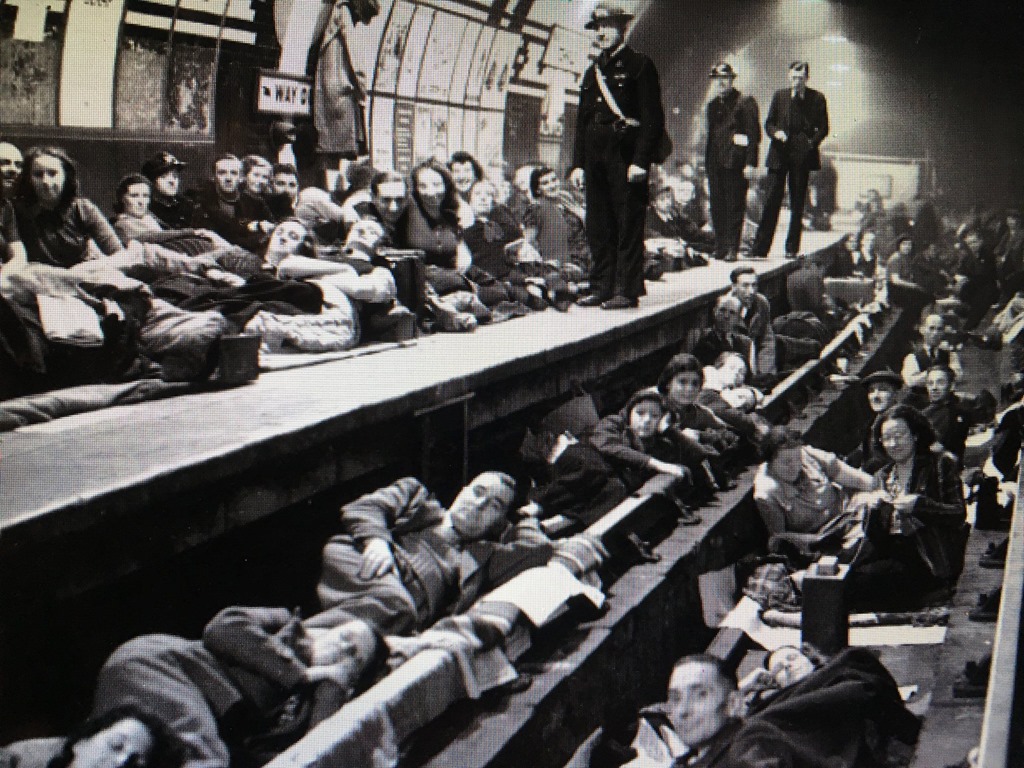
British Homefront during the Second World War: The London Underground.

Underground General

London Underground Station during the Blitz

It has been estimated around 177,000 people used London Underground stations as air raid shelters during the German aerial bombardment of London, but the London Underground did not always provide the protection many once thought.

Balham bus 2

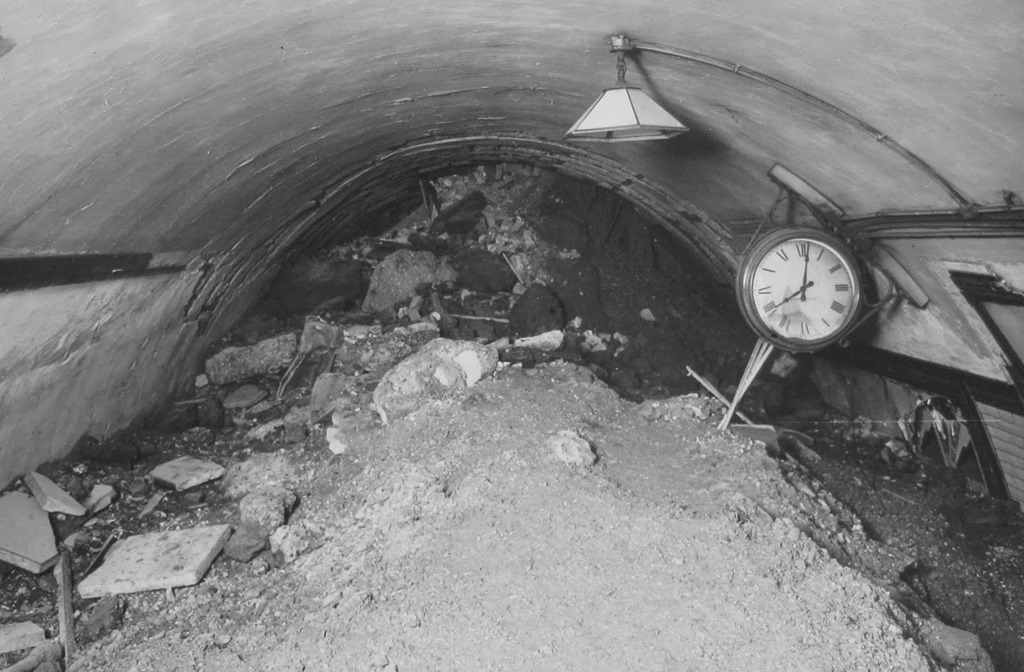
At 8.02 pm on 14 October 1940 a 1400kg bomb hit Balham High Road opposite the United Dairies and created a large bomb crater which a double decker bus fell into, fortunately the bus was empty, and the driver was only concussed. At the time of the air raid around 500 people were using Balham Underground Station as an air raid shelter and were trapped after the explosion destroyed the roof above the northbound platform and tunnel. To protect public morale, it was originally reported that 66 people were killed and all fatalities were recorded as death by drowning after the main water mains and sewage pipes were ruptured and flooded the station. It is Widely believed the death toll far exceeded the official figure and it took several months to recover the last of the bodies.

Ba;lhamstn2  damage_in_balham_1940_2

Balham Underground Stations after bodies recovered.


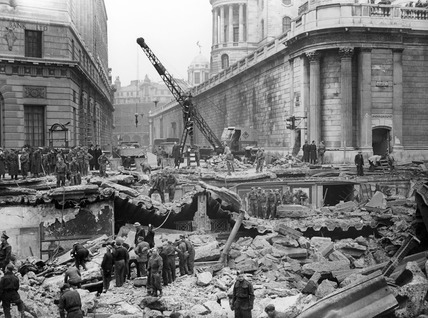
On 11 January 1941 the central ticket hall at Bank Underground Station received a direct hit from a German bomb: the blast travelled down the escalator onto the platform and parts of the road collapsed onto the concourse killing 56 people.

bank2 Bank1

Bank Underground Station

The greatest loss of life on the underground was on 3 March 1943 at 8.45 pm.

According to eyewitness accounts, after the air raid sirens were heard several hundred people made for the safety of Bethnal Green Underground Station. A young woman clutching a baby fell at the bottom of the staircase and pulled down an elderly man and bodies quickly piled up at the base of the staircase while those at the top were unaware of what was happening and continued forcing their way down the stairs. Witnesses also describe a seething mass of mainly women and children all wearing thick clothes and gasping for air quickly develop… 173 people, overwhelmingly women and children were asphyxiated. There were also allegations that the Civil Defence previously warned of the dangers a requested an anti-crush barrier be installed on the single staircase leading to the platform, but their concerns were rejected and only after the tragedy were their concerns taken seriously and a crash barrier erected after the bodies had been recovered.

Bethnak Green after

Repairs to the staircase after the bodies had been recovered.

Alan Malcher

SOE wireless operator Denise Bloch (12 January 1916- 5 February 1945)

DFenise bloch

(Image IWM)

On 2 March 1944 Denise Bloch infiltrated central France by parachute and worked as the wireless operator for both Clergyman and Detective circuits which were part of SOE’s clandestine network and began arranging for weapons, sabotage stores, finance and other agents to be sent from London and worked with several reception committees receiving incoming air drops.

It was around 8.20 am on 18 June when her wireless transmissions were located by German direction finders and her Safehouse raided by the Sicherheitsdienst des Reichsführers-SS (Security Service of the Reichsführers-SS), or SD, and Bloch along with another agent were captured.

It is known Bloch was tortured for information, but her wireless was not used by the Germans, and it appears Bloch refused to give the SD her personal wireless codes used to confirm her identity to London. It is also known she was transported to prisons in Germany during which she suffered from exposure due to the cold and malnutrition and was eventually transported to Ravensbrûck Concentration camp where she was executed on 5 February 1945 at the age of 29 and like many agents has no known grave after her body was cremated along with many others.

Alan Malcher

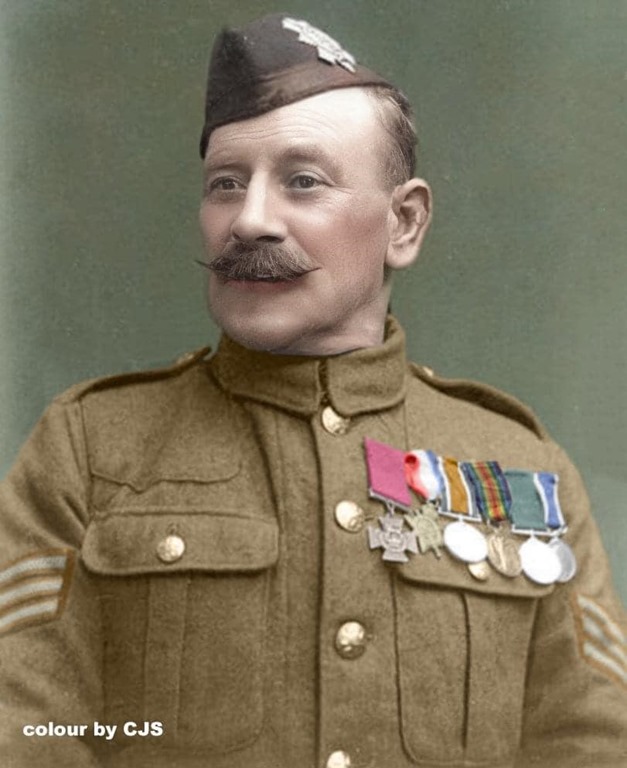
John Ripley VC, Black Watch during WW1.

Corporal Ripley was the first man to climb an enemy barricade before leading his section under fire through enemy barbed wire (entanglements) and held the position until all his men were either dead or wounded during which he was badly wounded in the head and at the age of 47 is listed as the oldest recipient of the VC during the Great War. After being classified unfit for active service Ripley became a recruiting sergeant in Edinburgh. He was discharged in 1919 and returned to his trade as a slater. In 1933 he was fixing slates when he fell from a ladder and injured his spine and later died in hospital.

John Ripley VC

Alan Malcher

Baker Street London W1 during the Second World War

SOE

This plaque will be found outside 64 Baker Street London W1. This plaque marks the former HQ of SOE (CD). Most of the office space in Baker Street accommodated SOE Country Section HQ’s which have no plaques and their wartime use has mainly been forgotten. 83 Baker Street, for example, was the HQ of the French Section.

Alan Malcher