On 24 October 1940, 16 year old Aircraftman 1st Class Harry Clack was two days into his military service with No.54 MU RAF when he was electrocuted whilst recovering a German Dornier DO 215 bomber shot down near St Neots when the crane he was operating touched overhead power cables. Harry Clack is thought to be the youngest RAF fatality during the Second World War.
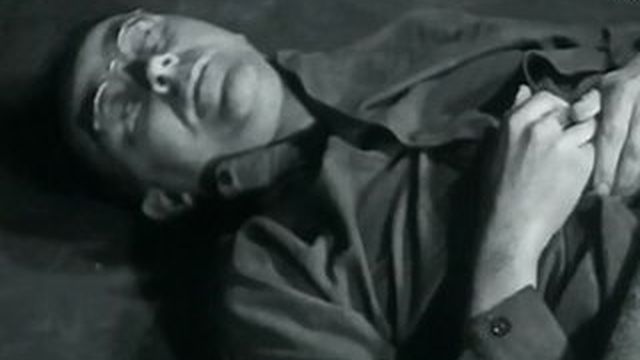
Georges Blind was a fireman from Belfort, France who was arrested for being a member of the resistance. After the Gestapo failed to make him talk he was placed in front of a mock firing squad and told if he refused to provide information he would be shot – his response was to smile at his executioners.
After this failed he was deported to a concentration camp and is thought to have been executed in late November 1944.
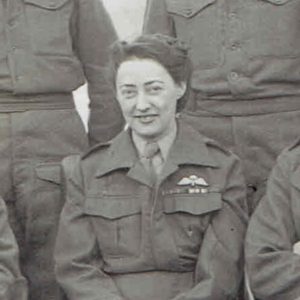
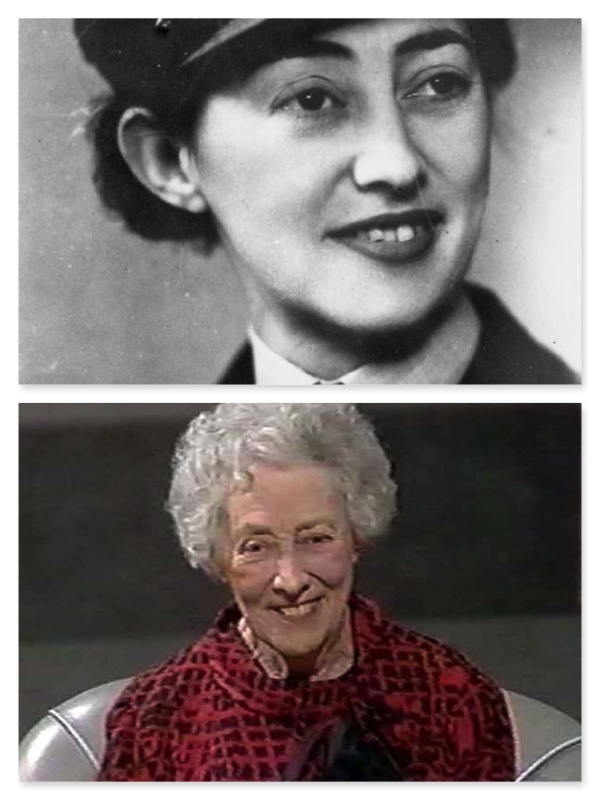
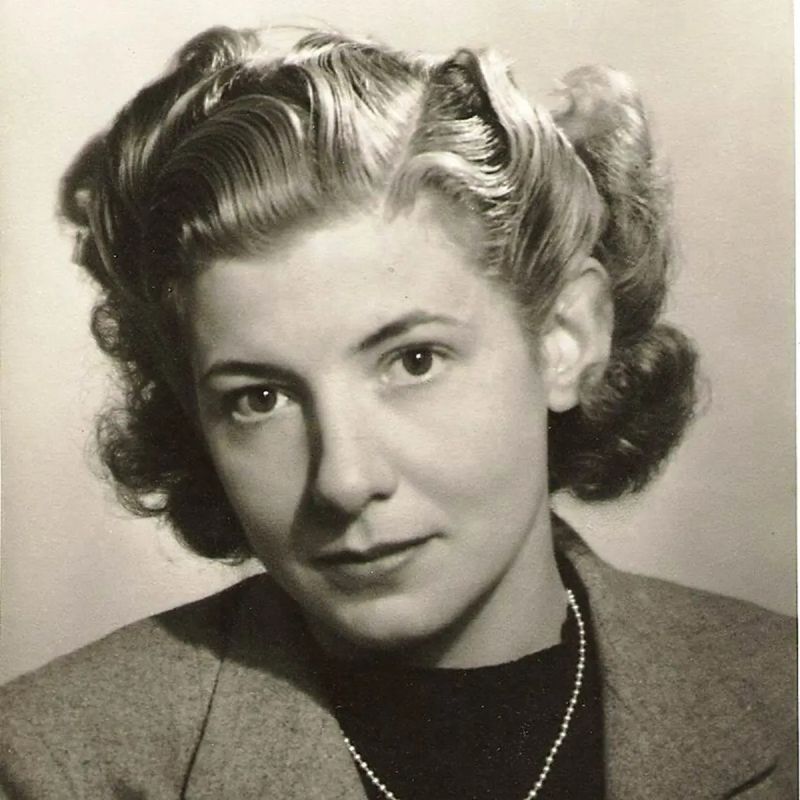
Yvonne Cormeau (nee Biesterfield). In 1937 She married Charles Cormeau who joined the Rifle Brigade at the outbreak of war and in 1940 was wounded in France and returned to England. Shortly after his return Charles was killed when their family house was destroyed during a German air raid on London and Yvonne escaped serious injury after a bath fell on top of her and protected her head but their unborn child was killed. After recovering she joined the WAAF’s and was later recruited by SOE and sent her 3-year-old daughter to live in the countryside to avoid the bombings.
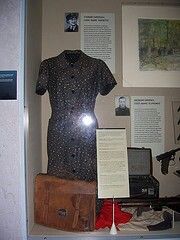
On the night of 22-23 August 1943 Cormeau arrived by parachute at Saint-Antoine-du-Queyret to join Wheelwright circuit as their wireless operator in the Gascony area. She frequently cycled 30 miles a day to avoid direction finders and passed over 400 messages to London. In June 1944 she was shot in the leg during a firefight but managed to escape with her wireless and the dress she was wearing and her blood-stained briefcase is on display at the Imperial War Museum.
IWM
Yvonne Cormeau died on 25 December 1997, aged 88 in Fleet Hampshire.
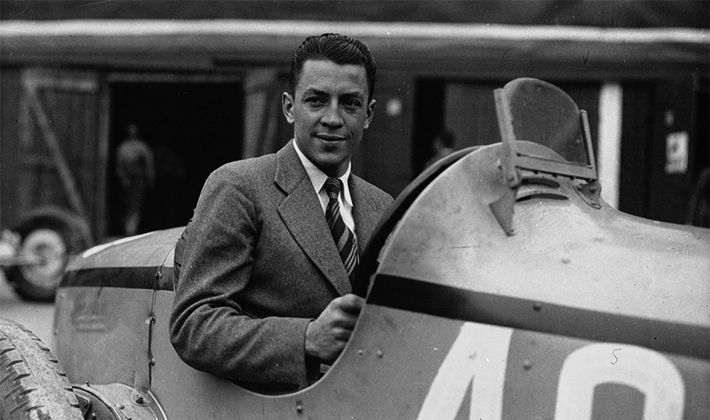
William Grover-Williams was born in Montrough Hauts-de-Seine, France on 16 January 1903 to an English father and French mother and spoke fluent French and English. By the age of 29 he was a well-known racing car driver who had won several Grand Prix’s for Bugatti including the 1929 Monaco Grand Prix and during the same year married Yvonne Aupicg who later worked for the resistance. Following the occupation he escaped to England and joined the Royal Army Service Corps and was recruited by SOE on 17 November 1941.
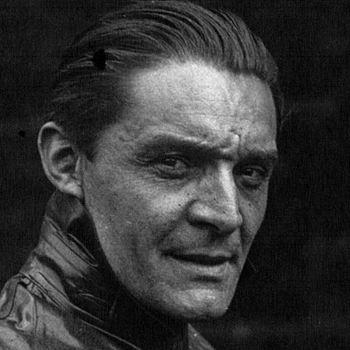
Shortly after completing training Grover-Williams returned to France and established the Chestnut circuit consisting of pre-war racing friends among them being SOE agents Jean-Pierre Wimille and Robert Benoist and both had previously raced for Bugatti. Chestnut was based on the Benoist family estate in Auffargis, a commune in the Yvelines department in north-central France, and throughout 1941 the Germans did not suspect them of being involved in resistance because they were regarded as respected sportsmen.
Jean-Pierre Wimille
Robert Benoist
In March 1942 Chestnut received a wireless operatornamed Robert Dowlen who began transmitting from a farmhouse on the road to Pontoise situated north-east of Paris and in keeping with wireless security his location was unknown by other members of the circuit and his only contact was through a courier and the wives of Wimille and Benoit worked on reception committees. Chestnut received several arms drops but little sabotage was undertaken but useful intelligence from well-placed contacts was regularly passed to London through their wireless link until 31 July when Dowlen was found by direction finders and arrested whilst still in contact with London. On 2 August Benoit’s brother, Maurice, was arrested at his Paris flat and this was followed by German soldiers searching the Benoit estate during which they found fifty-one weapon containers hidden in an old well and a further forty-seven containers hidden behind a false wall in a stable. Benoit’s father, wife and several servants working for the circuit were arrested, Grover-Williams was later found hiding in the stables and beaten for information but refused to cooperate and was taken to 84 Avenue Foch, the Paris headquarters of the Sicherheitsdient (SD) the counter-intelligence branch of the SS.
The fourth floor (top) had a guard room and cells where Grover-Williams was held along with other political prisoners and an interrogation room containing instruments of torture. It is known Grover-Williams was tortured throughout the night by Ernest Vogt, a Swiss-German civilian translator and interrogator working for the SD at Avenue Foch from 1940 and because there were no further arrests it is assumed Grover-Williams refused to identify members of his circuit. It is known he was transported to the SS Reich Security headquarters at Prinz Albrecht Strasse in Berlin for ‘advanced’ interrogation which often included torture by electricity and later transferred to Sachsenhausen concentration camp and in March 1945 Berlin ordered he be shot. There is no evidence to support the claim Grover-Williams survived the war and worked for MI6 until he was killed in a road accident in 1986.
Three days after the arrest of his family Robert Benoit was arrested on a Paris street: four Gestapo officers with weapons drawn bundled him into the back of a large car and one officer sat either side of him but they neglected to handcuff him and secure the rear door. As the car sharply turned left Benoit pushed the officer out of the moving car whilst diving headfirst from the vehicle and during the confusion escaped down a narrow passageway. After receiving assistance from friends he later joined an escape line to England.
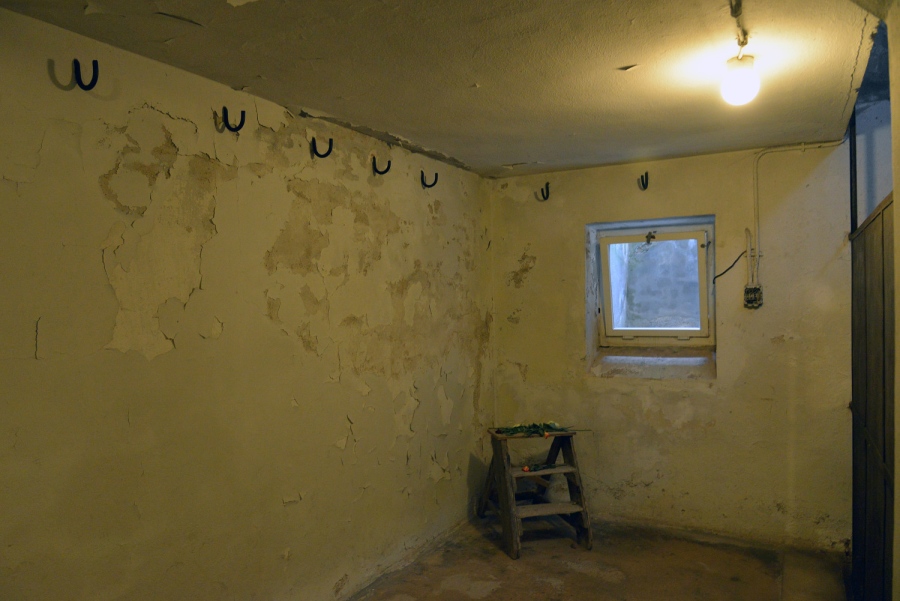
In October 1943 Benoit returned to France by parachute and later returned to England for a few weeks to attend advanced training before returning to raise resistance in the Nantes area and was arrested on 18 June 1944 and taken to Buchenwald concentration camp and on 14 September was executed by slow strangulation after being suspended from piano wire from a hook on the crematorium wall. This barbaric form of execution was intended to make death as slow and painful as possible for political prisoners. The other agent, Jean-Pierre Wimille, survived the war and died in 1949 after crashing his car during the Buenos Aires, Argentina Grand Prix.
Hooks on the crematorium wall used to strangle political prisoners.
Staff at the SOE training school in Scotland called William Fairbairn and Eric (Bill) Sykes the ‘Angelic twins’ and some students called Fairbairn the ‘Shanghai Basher’ or ‘Dangerous Dan’. The fighting system they developed was sometimes referred to as gutter fighting because there were no rules or so-called gentlemanly conduct.
I recently found this brief documentary on the internet.
After Belgium was occupied Villiers reconnoitred German airfields in Belgium and northern France and passed the intelligence to London. She also worked for an escape line rescuing allied air crews shot down over Belgium and assisted them to reach neutral Spain but after several members of the resistance were arrested Villiers was warned the Gestapo knew her identity and was high on their wanted list. She then obtained forged identity papers, dyed her hair black and escaped to England though Spain and Portugal.
Dr. Mark Felton is a well-known British historian, the author of 22 non-fiction books, including bestsellers ‘Zero Night’ and ‘Castle of the Eagles’, both currently being developed into movies in Hollywood. In addition to writing, Mark also appears regularly in television documentaries around the world, including on The History Channel, Netflix, National Geographic, Quest, American Heroes Channel and RMC Decouverte. His books have formed the background to several TV and radio documentaries.
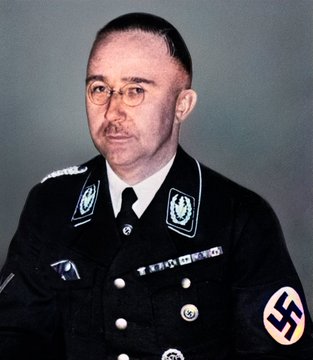
In this second episode, we follow Himmler as he goes on the run, heading south through the British occupation zone until his capture and identification by British forces.
Dr. Mark Felton is a well-known British historian, the author of 22 non-fiction books, including bestsellers ‘Zero Night’ and ‘Castle of the Eagles’, both currently being developed into movies in Hollywood. In addition to writing, Mark also appears regularly in television documentaries around the world, including on The History Channel, Netflix, National Geographic, Quest, American Heroes Channel and RMC Decouverte. His books have formed the background to several TV and radio documentaries.
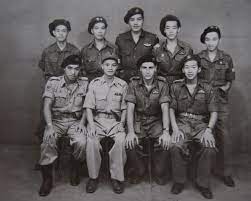
Force 136 was the Far East Region of SOE that was established in 1941 as part of the Indian Mission. The section worked under the cover name GSI and was later absorbed into SOE’s Oriental Mission.
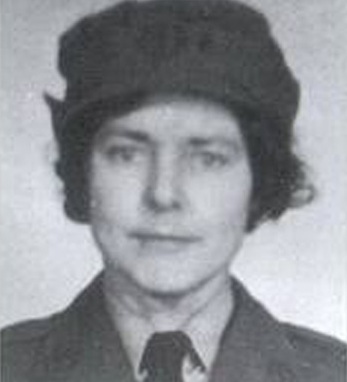
Cicely Lefort passed through the SOE training schools towards the end of 1942 and was described by the training team as “Being very lady like and very English in spite of her French background.” Lefort was born in London and married a Frenchman in 1925, they lived in Brittany and escaped to England shortly before the occupation.
Using the field name ‘Alice’ Lefort arrived near Tours by RAF Lysander of 161 Special Duty Squadron on the night of 16 June 1943 to join the Jockey circuit operating in south-east France.
On 15 September 1943 Lefort was at a safehouse being used by Raymond Daujat, the leader of the local resistance operating in the Montélimar area along with Pierre Reynaud, a sabotage instructor working for the Jockey circuit, and the two men were in the garden when the Gestapo raided the property. Daujat and Raynaud manged to escape but after finding the safehouse surrounded by German troops Lefort hid in the cellar and was eventually caught.
It was later said the only incriminating evidence found on her was a piece of paper which she could not explain.
Lefort was taken to the Gestapo prison in Lyon before being sent to Frésnes Prison and was eventually transported to Ravensbrûck Concentration camp. According to Maurice Buckmaster, the commanding officer of F Section, “Although severely interrogated and ill-treated she gave no vital information away and requested she be awarded the military OBE.”
After almost a year of hard labour Lefort become very ill and eventually could not stand during the daily role call during which the women were often forced to stand for seven hours each day and many collapsed and died from exhaustion. It was later stated that more than 100 women a day died from illness, exhaustion or were executed.
After Lefort was unable to work she was selected for execution and it was later claimed before she was executed she received a letter from her husband requesting a divorce but this is unlikely because prisoners did not receive letters and nobody would have known she was at Ravensbrûck. However, if she did receive this letter it mostly likely arrived by Lysander before she was captured because there are several accounts of agents receiving letters from home after being censored by HQ.
The date of her death is not known and it is believed Cicely Lefort was among a group of women sent to the gas chambers.
 Alan Malcher