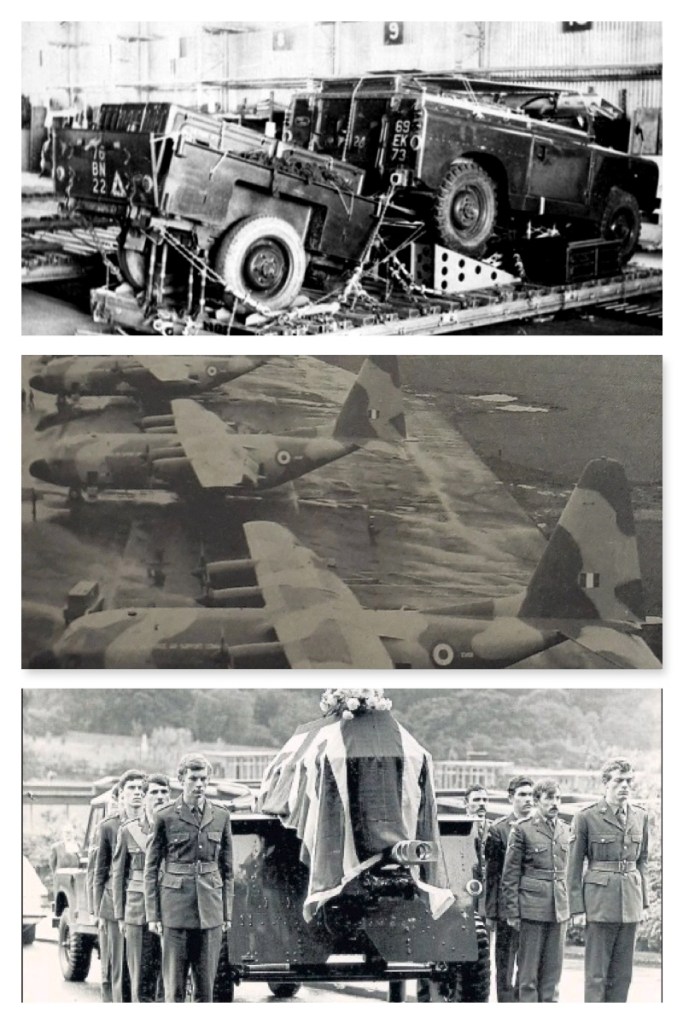
On 11 September 1974 a mass NATO exercise called Operation Bold Guard took place in Germany which included an air assault by 540 paratroopers. The British contingent consisted of five waves of six Hercules aircraft from RAF Lyneham with men from the 15th and 4th Battalions of the Parachute Regiment TAVR along with heavy drop (Land Rovers etc).
According to an RAF Board of Enquiry, during the night drop that was part of a second wave 15 parachutists landed in the Kiel Canal of whom 6 drowned. A German Army rescue launched picked up 5 men and recovered 1 dead body. Eights days later four bodies were recovered with their life jackets inflated and the total number of recorded deaths is 6 (1 from 4 para and 5 members of 15 para.
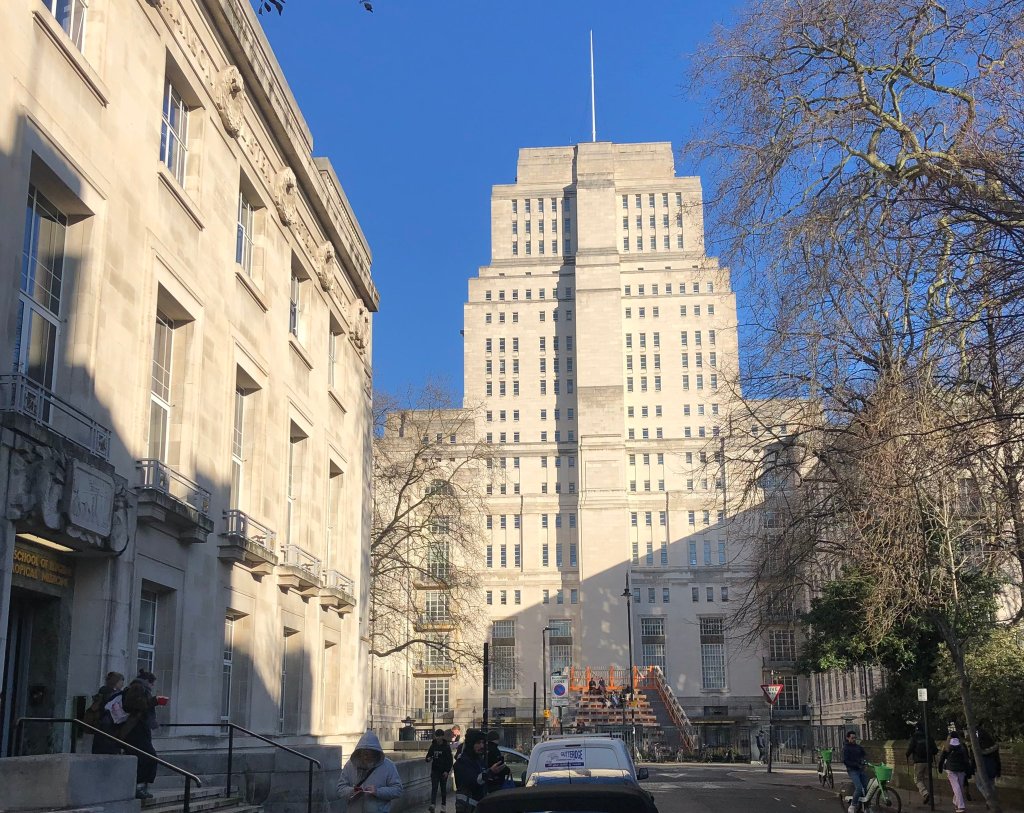
Senate House in Malet Street, London WC1 close to the British Museum is an Arc Deco building built between 1932 and 1937 and is now the library and administration centre for the University of London. Most days of the week many thousands of people walk past this building and the general public along with students at the University of London are seldom aware of its wartime history.
During Operation Sea Lion, the planned German invasion of the British Isles, Hitler was so confidence of a swift victory and occupation of the United Kingdom he intended to use Senate House for the administration of Britain and the ‘ethically pure’ elements of British society would be selected to support what he ambiguously called ‘Political Peace’.
After the Luftwaffe was unable to gain air superiority during the Battle of Britain the invasion of the British Isles was cancelled and Hitler turned his attention to the Soviet Union.
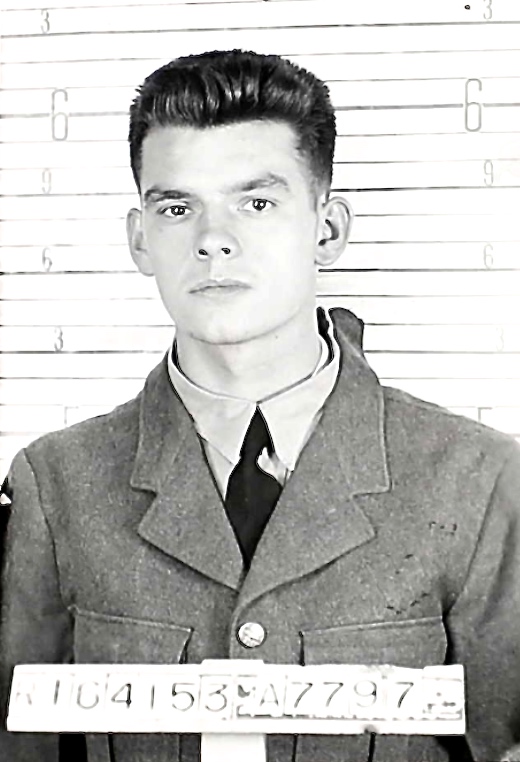
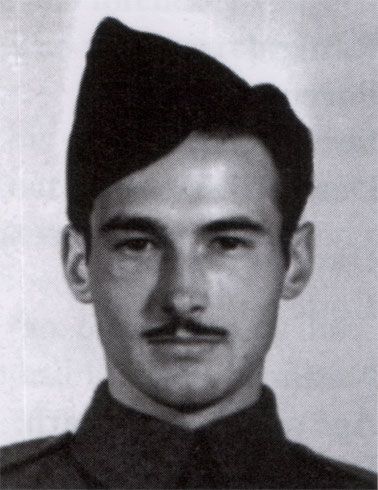
Roger Sabourin was born in Montréal, Canada on 1 January 1923 and was serving with the Canadian Intelligence Corps before joining SOE on 2 January 1944 and trained as a wireless operator.
On the night of 2/3 March 1944 Roger Sabourin on his first mission to France to start a new circuit called BARGEE and Adolphe ‘Alex’ Rabinovitch on his second mission, the first of which he was lucky not to be captured by the Gestapo before escaping to England, parachuted to a drop zone adjacent to woodland.
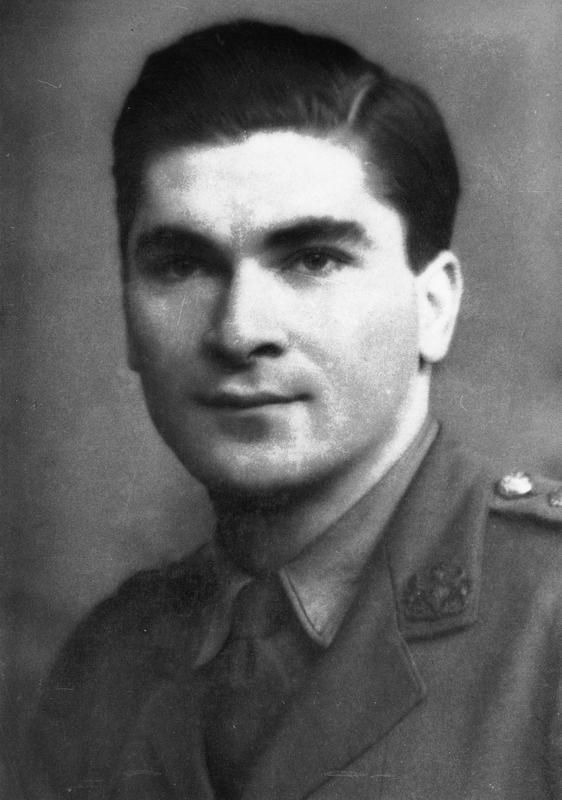
Adolphe ‘Alex’ Rabinovitch
It was originally believed the reception committee, members of the resistance at the drop zone to assist them, were from ARCHDEACON circuit that had been infiltrated but later research discovered they had been dropped to SORCERER circuit that had been infiltrated and was being run by the Abwehr (German Military Intelligence) as part of their deception to capture incoming agents.
When Sabourin and Rabinovitch were taking off their parachutes, through the moonlight they saw a German soldier and immediately ran into the woods and during a brief firefight two German soldiers were killed but Sabourin and Rabinovitch were wounded and unable to continue their escape.
After lengthy interrogation by the Gestapo Rabinovitch was transported to Cross-Rosen concentration camp in Poland where he was executed on 2 March 1944. Sabourin was executed at Buchenwald camp on 14 September 1944. Thirty-seven allied officer were also killed that day along with Canadian SOE officers Frank Pickersgill, Ken Macalister and French SOE agent Robert Benoit.
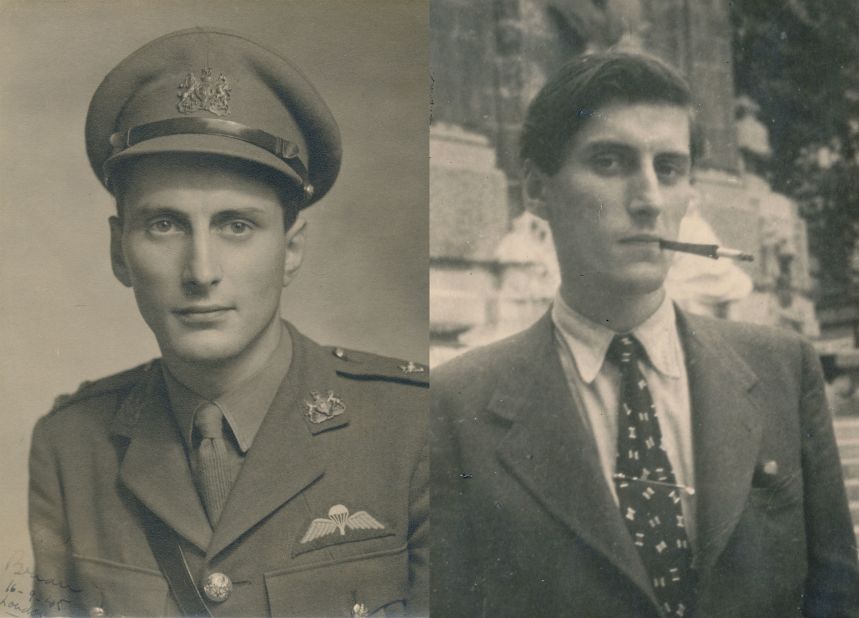
Pickersgill and Macalister
Robert Benoit
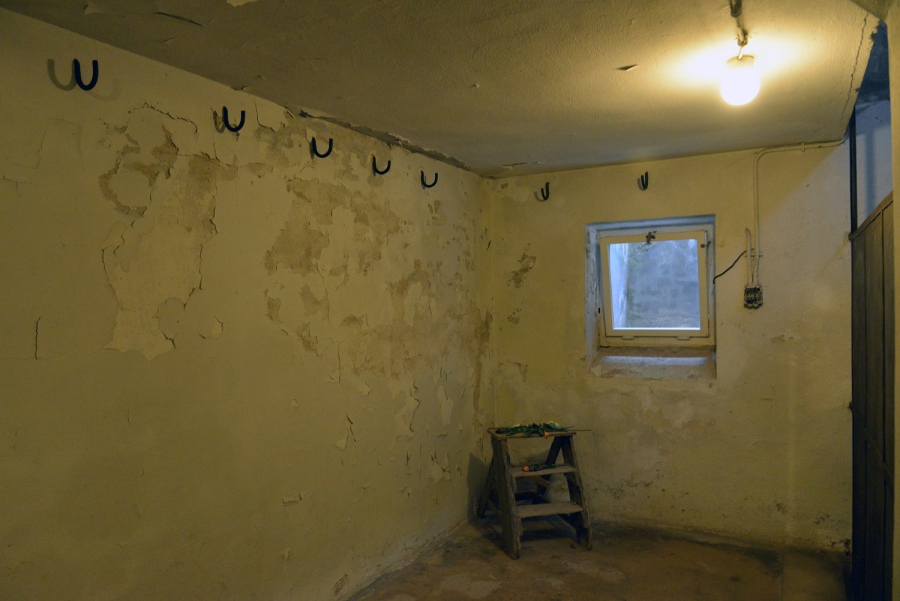
During an investigation into missing agents after the war it was discovered that Sabourin, Macalister, Pickersgill and Benoit had been executed by slow and painful strangulation by piano wire after being suspended from hooks on the walls of the Buchenwald camp crematorium.
Buchenwald camp crematorium with hooks on the walls for strangulation.
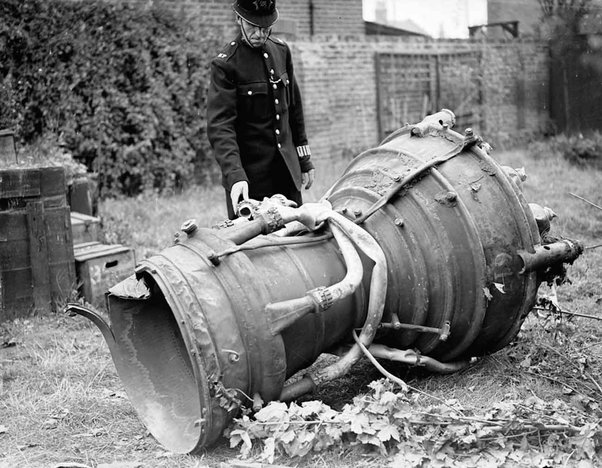
Thomas John Bingham aged 29 and William Richie Savage from East Belfast were travelling in an unmarked police car on Newry Road when they were killed by a 1000 lb bombed detonated 600 yard away.
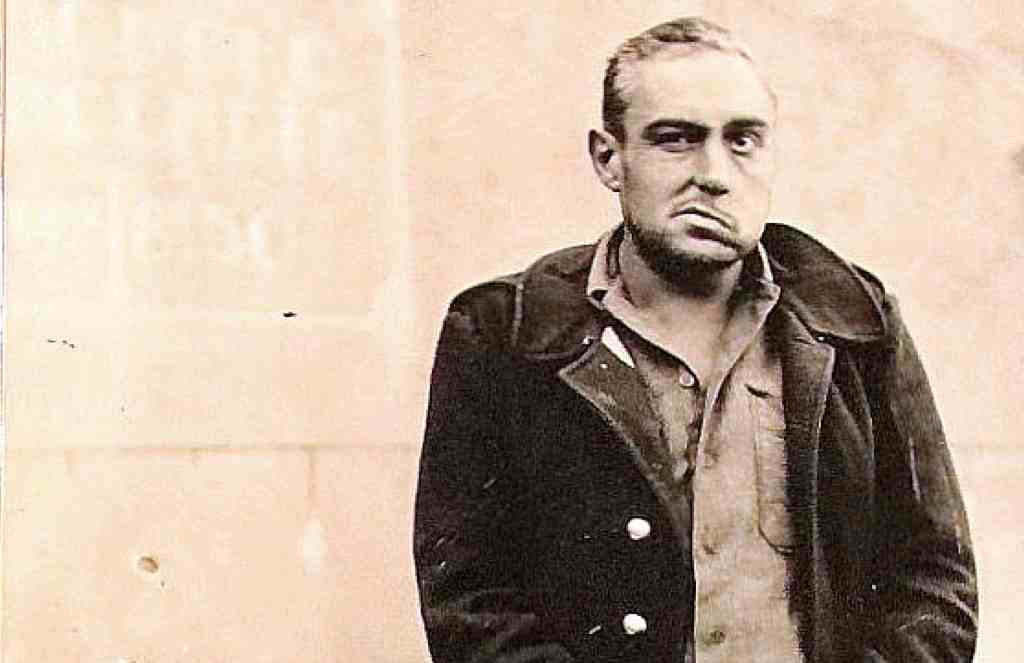
Much has been written about Hauptsturmfuhrer Klaus Barbie, the head of the Gestapo in Lyon who became known as the “Butcher of Lyon” after personally torturing men, women and children, but little as been written about Francis André.
Francis André was born in Lyon on 25 February 1909. At school he gained a reputation for intimidating other children and his face was disfigured during a car accident when he was a teenager and after leaving school became a petty criminal with a long record for robbery, swindles and assaults.
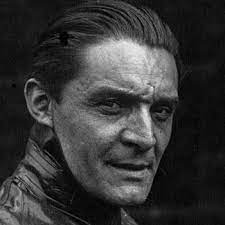
Photograph taken after the war when he was arrested for war crimes.
During the Second World War he was exempt from military service because of deafness and left facial paralysis and continued his criminal career. In June 1943, three years after France was occupied, he was approached by a senior officer of the Sicherheitsdienst des Reichsführers-SS, the intelligence arm of the SSS and Nazi Party, to lead a small movement of collaborators in Lyon called the Anti-Terrorist Movement (MNAT) to work against the resistance, Jews, freemasons, Jehovah Witnesses, and people the SD believed were ‘ethnically’ inferior.
The MNAT engaged in a campaign of assassinations, intimidation and its members also looted homes and shops following arrests. ’Crooked Mouth’ is known to have killed 20 members of the resistance and placed signs on corpses saying, “Terror against terror. This man pays with his life. MNAT assassinations are justified by the law of retaliation responding with murder to murders committed by resistance fighters. Signed MNAT.”
A police report written after the war states, summary killings were the dominant activity of the MNAT. They believed all jews were rich in the pretext of their robberies, in addition many of them had taken refuge in Lyon with their transportable goods such as jewellery, cash, gold etc and used this statement to justify their persecution and arrest of jews.
Crooked Mouth left the MNAT and became Klaus Barbie’s trusted personal assistant and like Barbie enjoyed torturing men, women and children and during his trial after the war in January 1946 at the Court of Justice in Lyon Crooked Mouth admitted to killing 120 people whilst working with Barbie and was later estimate the figure was around 160.
A French journalist who attended the trial wrote, “His stranglers hands run over his mouth with every question he was asked. A gesture that seemed to wipe away the horrors of the answers… He was the abominable murderer, Barbie’s most loyal collaborator, a blood thirsty beast, the most sinister collaborator in the Lyon Gestapo”.
After being found guilty for treason, mass murder and other war crimes, on 9 March 1946 Crooked Mouth was executed by a French firing squad.
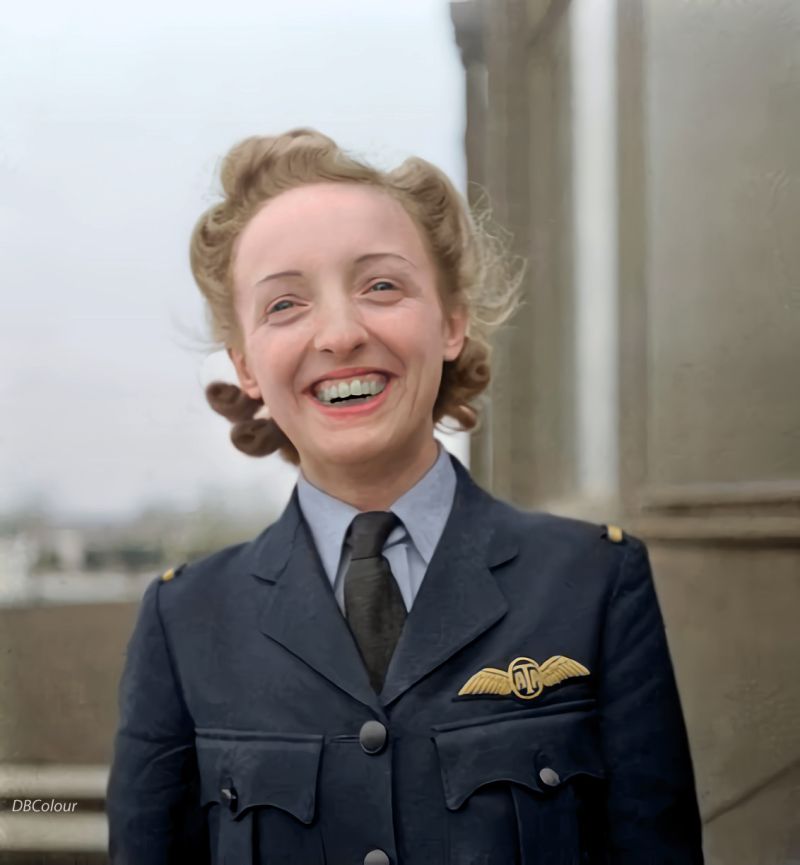
Irene Arckless was described as an ordinary working class girl determined to obtain her pilots licence who passed her flying test just before the start of the Second World War. During the war she was a pilot with the Air Transport Auxiliary delivering all types of aircraft from factories to operational RAF airfields throughout England. On Sunday 3 June 1943 she was flying a twin engine Airspeed Oxford when one of the engines malfunctioned during take off and crashed into a house on the outskirts of Oxford. Arckless was rushed to hospital but pronounced dead on arrival.
27-year-old Irene Arckles is buried at Carlisle, Stanwick Cemetery. Ward 2. Section A. Grave 31. (Commonwealth War graves Commission)
Brian Stonehouse was 24-years old when he parachuted into France on the night of 1 July 1942. This interview briefly examines his war service in France but leaves out many of the difficulties he faced and overcome as a clandestine and his experiences after being incarcerated in five concentration camps. Brian Stonehouse died in London on 2 December 1998 at the age of 80.
HMS Implacable was originally the French Navy’s Téméraire-class ship of the line Duguay-Trouin, launched in 1800 that survived the Battle of Trafalgar in 1805 and later captured by the British during the Battle of Cape Otegal. During the Anglo-Russian war (2 September 1807- 18 July 1812) HMS Implacable helped capture the Imperial Russian ship of the line Vsevolod. When Implacable was being used as a Royal Navy training ship she was the oldest ship in the RN after HMS Victory, Lord Nelson’s flagship during the Battle of Trafalgar. After her decommission this newsreel dated 1949 shows HMS Implacable being scuttled whilst flying both the Royal Navy White Ensign and the French flag as she sank.
RSM ‘Nobby’ Arnald. A legend in the Paras whose sense of humour helped install discipline. I recall a story of him putting his bicycle against the Guardhouse wall and after it fell over in the wind had his bicycle arrested and locked in a cell for not obtaining permission for falling over. Typical RSM banter.
He saw active service in Palestine, Canal Zone and Suez, Cyprus and the Radfan. Many felt that Nobby Arnold should have been decorated for bravery in the Radfan in 1964, where a ridge captured by 3 PARA’s Anti-Tank Platoon was named ‘Arnold’s Spur’ in recognition of WO2 Arnold’s outstanding battlefield leadership and valour. His CO, Anthony Farrar-Hockley, is said to have told Nobby Arnold that the award of decorations was a lottery and Arnold had simply missed out. RIP ‘Nobby’
Mary O’Connell Biaconi MM (Combined Irish Regiments Associations)
Mary was born into a prominent family in County Clare, Ireland in 1896. Known to family and friends as “Molly” she attended a convent school in Limerick followed by finishing schools in Paris and Belgium. When war came like thousands of other women she wanted to play her part and in 1915 joined the Voluntary Aid Detachment (VAD), formed to provide nursing and medical care to the military. An important role undertaken by the VAD was driving Ambulances carrying the wounded from dressing stations close to the front back to Hospitals near the coast. Such work regularly put the drivers in harm’s way being within range of enemy artillery. At the age of 21, having completed her medical training and been taught how to drive and maintain an ambulance Molly arrived in France in August 1917. The historian Lyn MacDonald described girls like Molly thus “She’s called Elsie or Gladys or Dorothy, her ankles are swollen, her feet are aching, her hands reddened and rough. She has little money, no vote, and has almost forgotten what it feels like to be really warm. She sleeps in a tent. She is twenty-three. She is the daughter of a clergyman, a lawyer, or a prosperous businessman, and has been privately educated and groomed to be a lady. She wears the unbecoming uniform of a VAD. She is on active service and as much a part of the war as Tommy”. Molly soon transferred to the First Aid Nursing Yeomanry but continued to drive ambulances. It was during the German offensives in the spring of 1918 that Molly and her fellow drivers faced the greatest danger as they continually ventured close to the advancing enemy to evacuate the wounded. On the night of 18-19May 1918 heavy German bombing raids in the St Omer area caused extensive damage and many casualties. Rather than taking shelter, Molly and her comrades busied themselves rescuing and evacuating the wounded while bombs continued to fall. For her actions that night Molly was awarded the Military Medal (MM). “She worked for long hours under fire in the brave attempt to save the lives of those who had been buried in caves, dugouts and hospitals that had been hit.” According to a document in the National Archives during the First World War the extraordinary women of the First Aid Nursing Yeomanry were awarded 135 decorations including 18 Military Medals; 32 French Croix de Guerre; one Legion d’Honneur, and 11 Mentions in Despatches. Molly survived the war and returned to Civilian life. She married in December 1919 and set up and ran a Hotel with her husband. At the start of the Second World War she once again joined the First Aid Nursing Yeomanry and later became a Junior Commander in the Auxiliary Territorial Service for the duration of the war. Molly died in Guildford, Surrey in 1968 aged 72.
Above written by The Combined Irish Regiments Association.