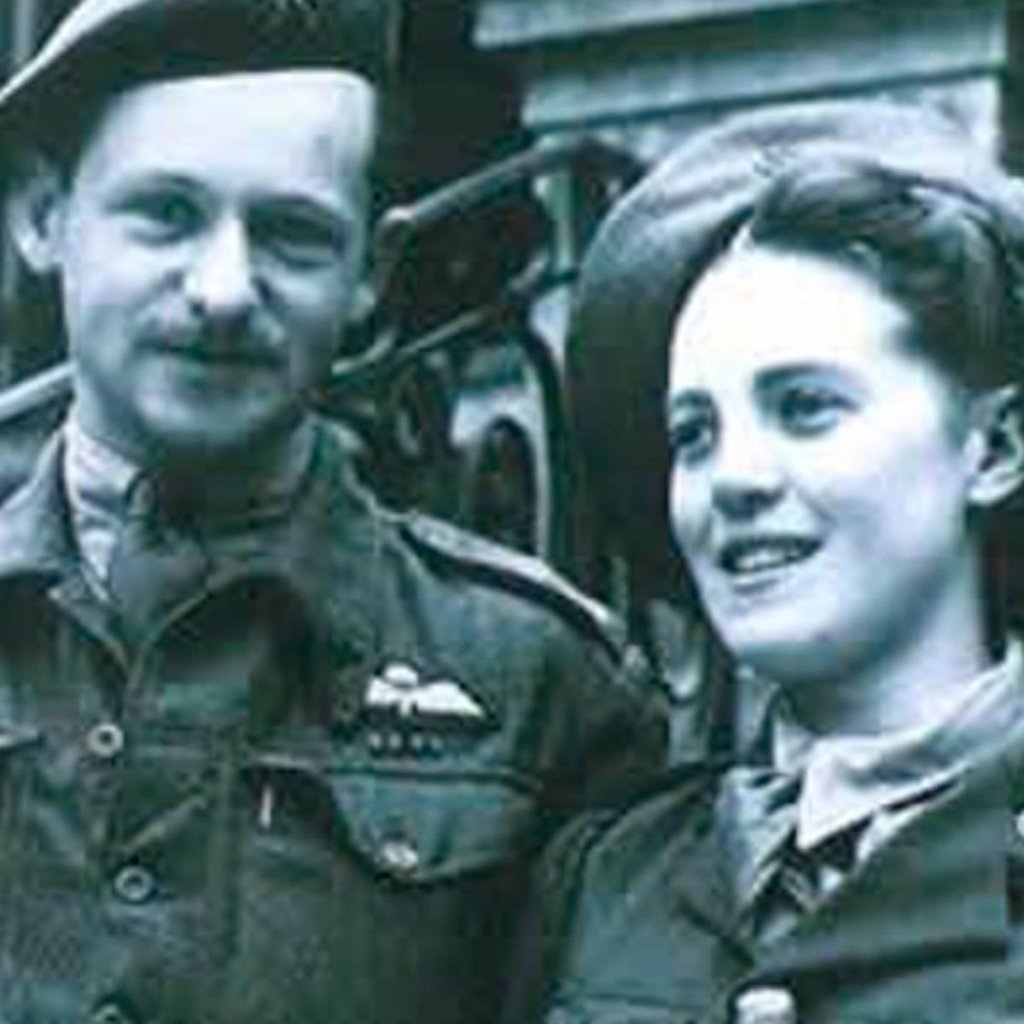
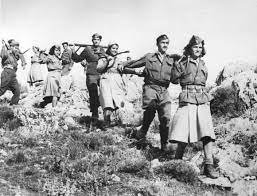
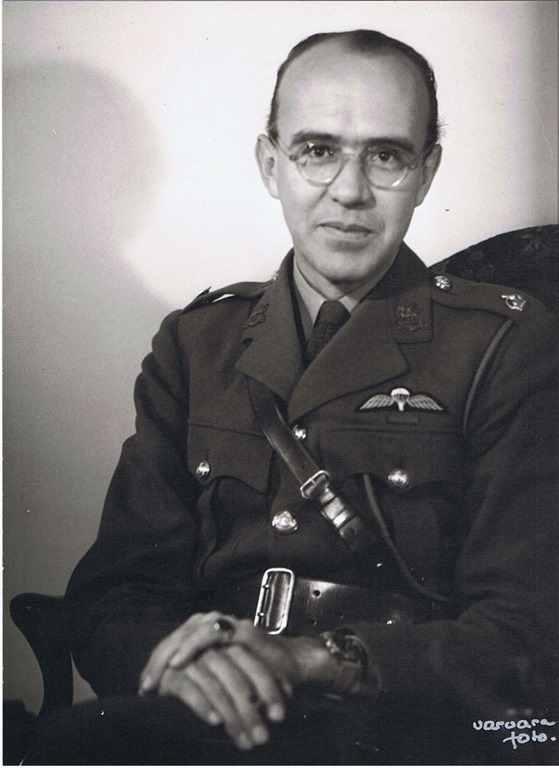
Members of the Cretan Resistance. Top photograph SOE agents Fermor and Moss dressed as German soldiers.
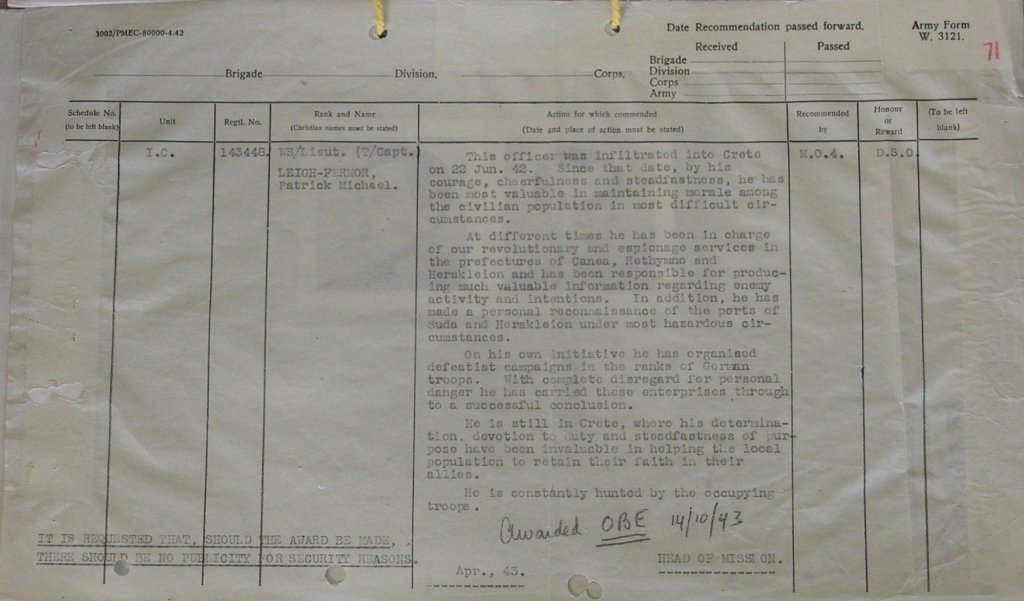
Leigh ‘Paddy’ Fermor served with the Irish Guards but due to his knowledge of modern Greek history he soon came to the attention of the Greek Section of the Special Operations Executive (SOE). He fought in Crete and mainland Greece during the German occupation and infiltrated Crete three times once by parachute to organise the Cretan Resistance whilst disguised as a shepherd and lived in the mountains for two years.
Fermor with SOE officer William Stanley ‘Bill’ Moss as his second in command and a small group of Cretan Resisters received orders to capture the German commander of Crete General Muller but before the start of the operation Muller was unexpectedly replaced by General Kreipe and after informing SOE they were instructed to capture Kreipe.
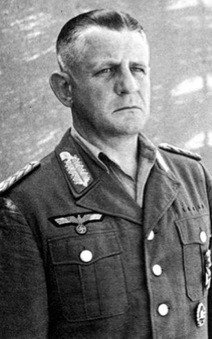
General Kreipe
General Kreipe was a career officer who served at the Battle of Verdun during the Great War and during the Second World War participated in the Battle of France, the Siege of Lenigrad and after a short period working in Germany he returned to the Eastern Front. On 1 March 1944 he was appointed Commander of 22nd Air Landing Infantry Division stationed in Crete and replaced General Muller as the senior officer on the Island.
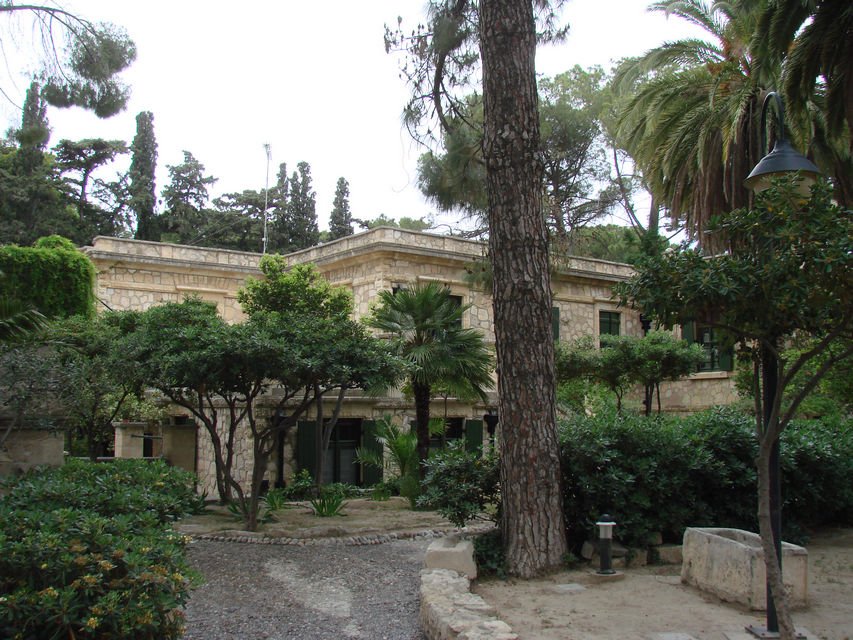
Villa Ariadni
On the night of 26 April 1944 General Kreipe was driven by staff car from his headquarters in Archanes without an escort to his well-guarded Villa ‘Ariadni’ approximatley 5 km from Heraklion. Fermor and Moss dressed as German Military Police Officers waited some distance from his residence for his car to arrive.
After being flagged down by the two SOE officers the car stopped at what appeared to be a routine security check. As Moss asked the driver for his identity papers Fermor opened Keipe’s door, jumped in and threatened him with his pistol. Moss then shot the driver, got into the driving seat and quicklt drove away.
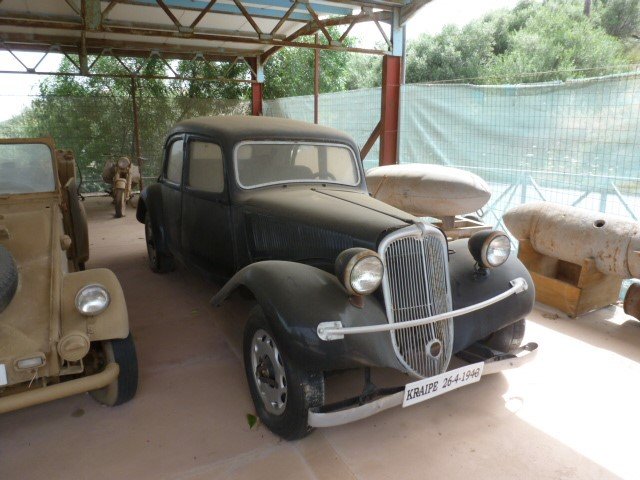
Staff car used by General Kreipe (source unknown)
They successfully drove through 23 German checkoints before abandoning the car and with assistance from members of the resistance disappeared into the mountains. It was not long before the alarm was sounded, and the small team was being pursued across Crete by large numbers of German troops supported by a spotter aircraft, but the Crete resistance was familiar with the mountains and various caves where they could hide and eventually guided them undetected to the pickup point on the south coast where they were taken by boat to Egypt.
On 2 May 1892 Manfred Von Richthofen was born in Kleinburg near Breslau which is now part of Warsaw, Poland, and his family were influential members of the Prussian aristocracy.
At the start of World War One in 1914 Von Richthofen was serving as a cavalry officer and in 1915 he decided to transfer to the German Air Force which had been founded in 1910 and already this new branch of the Imperial Germany Army was noted for upholding the honour of Prussian military tradition.
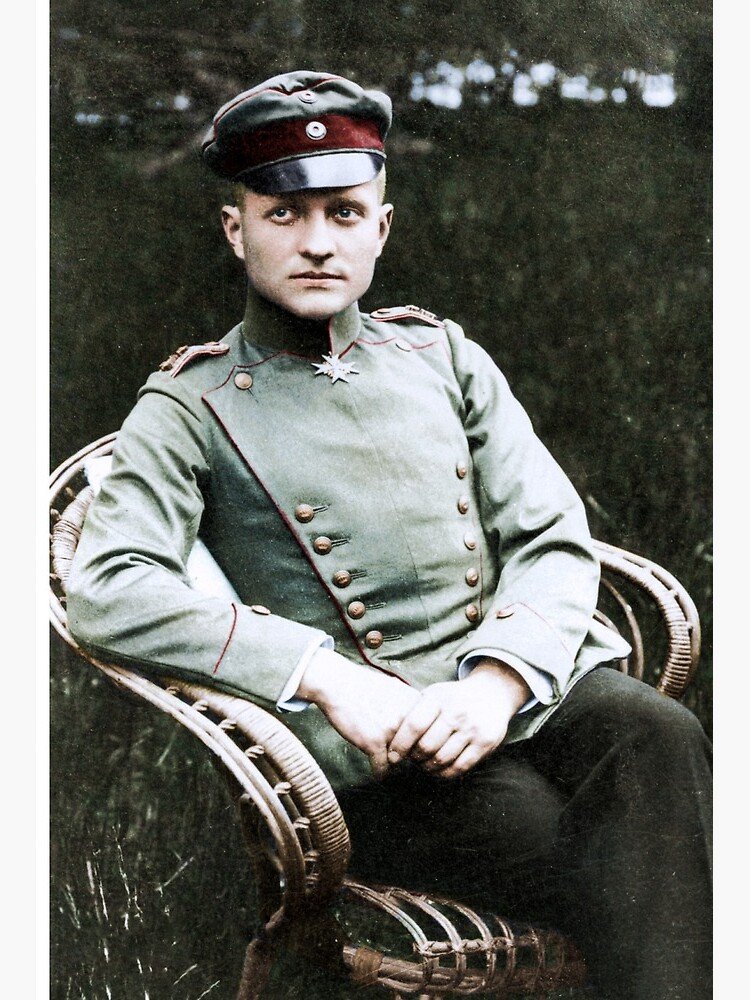
Manfred Von Richthofen wearing the Blue Max which was Prussia’s highest military order
At the age of 23 Richthofen’s mentor was German Fgher Ace Hauptmann Boelcke who was one of the most influential patrol leaders and was described as the ‘Father of Air Fighting Tactics’. Boelcke officially had 40 aerial victories but his student Manfred Von Richthofen later more than doubled this and became a legend throughout Germany and among his enemies whilst Boeleke became widely forgotten as Von Richthofen’s celebrity status as a fighter ace increasingly grew.
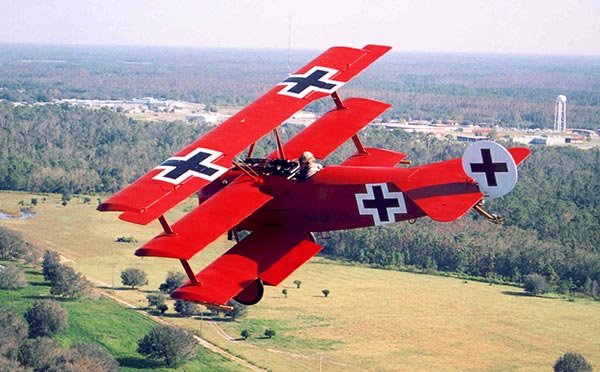
Richthofen was one of the first members of fighter squadron Jagdstaffel 2 in 1916 and in 1917 became the leader of Jasta 11, which later formed the larger fighter wing Jagdgeschwader 1 which became better known as the ‘flying circus’ because all the aircraft were brighly painted and by the way the fighter wing moved throughout allied areas like a travelling circus.
(source unknown)
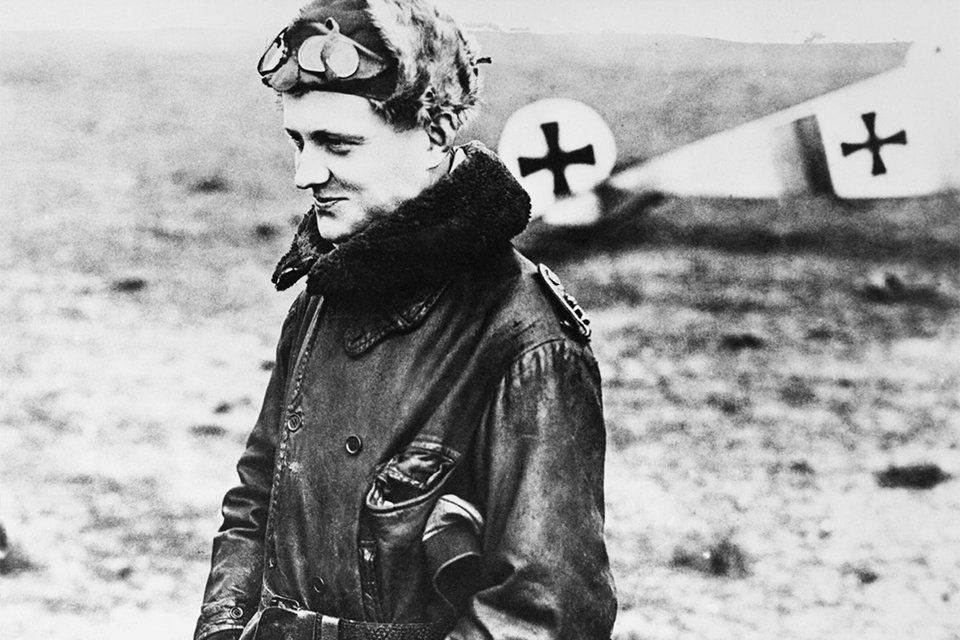
Manfred Von Richthofen’s red aircraft became famous and his 80 air combat victories earned him the nickname the ‘Red Baron’.
Photograpth taken in 1916 early during his flying duties.
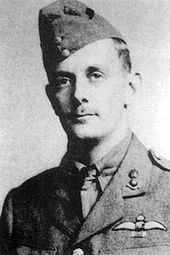
On 23 Novemeber 1916 Richthofen shot down British Fighter Ace Major Lanoe VC during a long dog fight during which Lanoe was eventually shot through the head and Richthofen immediately showed his respect by publicly describing Hawker as the ‘British Boelcke’.
Major Lanoe Hawker VC.
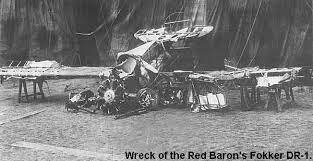
Who Shot Down and Killed The Red Baron?
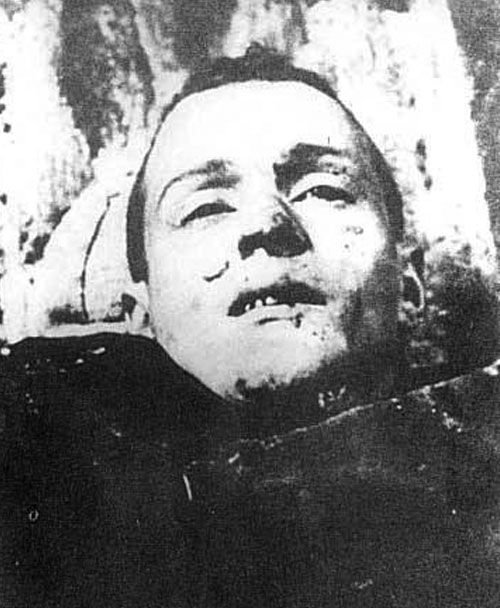
(source unknown)Body of Manfred Von Richthofen (aka The Red Baron)
The RAF credited a pilot named Arthur Roy Brown who was a Canadian serving with the Royal Navy Air Service with shooting down the Red Baron but most historians agree this was not the case and Manfred Von Richthofen was killed by machine-gun fire from the ground.
As fighters pilots were taught to attack the rear of enemy aircraft the autopsy report which states the fatal bullet penetrated Richthofen’s right arm pit and exited next to the left nipple, due to the angle supports the ground fire theory.
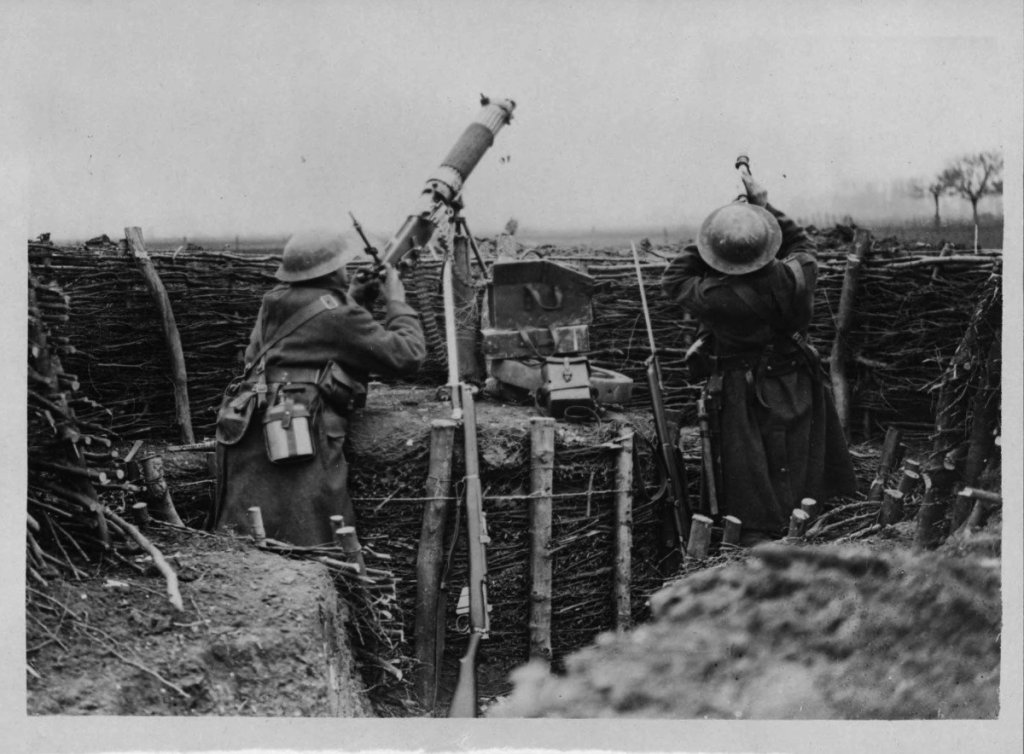
Machine gun being used to fire upon aircraft
It has also been claimed the fatal shot came from a soldier named Cedric Popkin who was an anti-aicraft gunner with the Australian 24th Machine Gun Company who fired at Richthofen on two occastions with a Vickers machine gun: first as he approached his position and then at long range to the right side of the aircraft and this second engagement supports the angle of the fatal bullet.
In 2002 it was suggested Gunner ‘Snowy’ Evans a Lewis machine gunner with the 53rd Battery, 14th Field Brigade, Royal Australian Artillery killed Richthofen, but this claim has been rejected due to the angle. Other sources suggest Gunner Robert Blue also of the 53rd Battery may have fired the fatal shot and although the Sydney council erected a plaque near his former home which states he shot down Manfred Von Richthofen the Red Baron this is also unlikely. The fact is, the person who shot down the Red Baron remains unknown.
Theories: Why did Manfred Von Richofen (Red Baron) fly dangerously close to enemy trenches?
Richthofen was a highly experinced and skilled pilot who followed the lessons from his mentor Boelcke among which was the basic rule of never flying close to enemy trenches and there is no logical explanation why he broke this rule on 21 April 1918 and was shot down.
Some historians suggest he may have been suffering from cumulative combat stress which made him fail to observe basic precautions. I find this theory quite persusasive becuase comparisons may be made with the shooting down by ground fire of British Fighter Ace ‘Mick’ Mannock VC who always warned new pilot to never fly low near German trenches but on 28 July 1918 Mannock broke his own rule and was shot down by a massive volley of ground fire from a German trench. (see further Mick Mannock the Irish Fighter Ace of WW1 an Malcher)
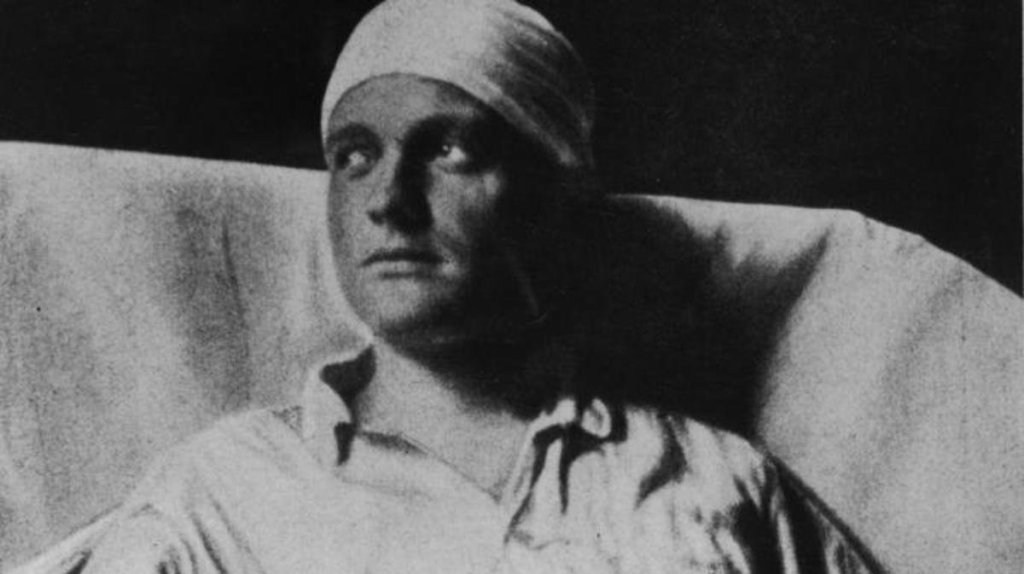
Richthofen in hospital recovering from a gun shot wound to the head. (source unknown)
Other historians suggest Manfred Von Richthofen was not fit to fly after receiving a bullet wound to his head during combat on 6 July 1917 and this theory is supported by unsubstantiated accounts of his personality having changed after being wounded. The fact remains, the person who shot down and killed Manfred Von Richthofen ‘The Red Baron’ and why he broke the basic rule of never flying in range of enemy tranches may never be known.
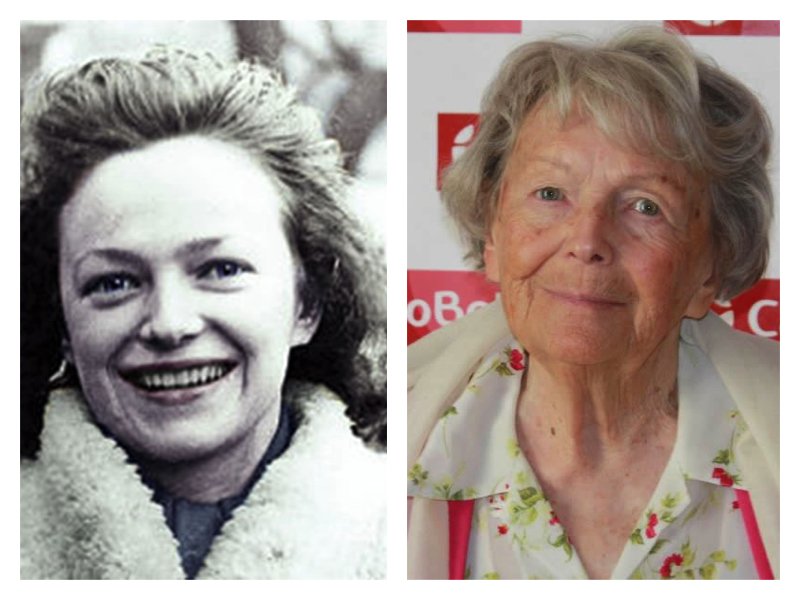
Helena Marusarowna was born in 1918 and between 1936 and 1939 she was famous in Poland as a skier after winning nine Polish championships.
After Germany invaded Poland on 1 September 1939, she joined the Polish Resistance and began taking messages to other members of the resistance network and guiding people through mountain passes.
In March 1940 she was caught by the Slovak Police and handed to the Gestapo and whilst being tortured refused to provide information about other members of the resistance. It has been said the Gestapo found in her possession a letter from Stefania Hanausknowy who was known to be a member of the resistance and this possibly sealed her fate.
On 12 September 1941 Helena Marusarzowna was condemned to death by the Gestapo and shot near Tarn. Another version states she was shot on 23 July 1943 in Krukowski Forest with five other female members of the resistance and among them were Stefania Hanausknowy and Jania Bednarka.
Operation Corona was a wireless deception strategy used by the RAF to confuse German night fighters during RAF Bomber Command raids on Germany during WW2 and was first used during the attack on the industrial centre of Kassel, Germany on the night of 22-23 October 1943.
The RAF used German Jews who fled to England from Germany to countermand orders from German Air Defence Headquarters to their pilots: they redirected fighters away from bombers or ordered them to land at various distant airfields. The Luftwaffe responded by replacing their male fighter controllers with women and the RAF countered this by using members of he Women’s Auxiliary Air Force.
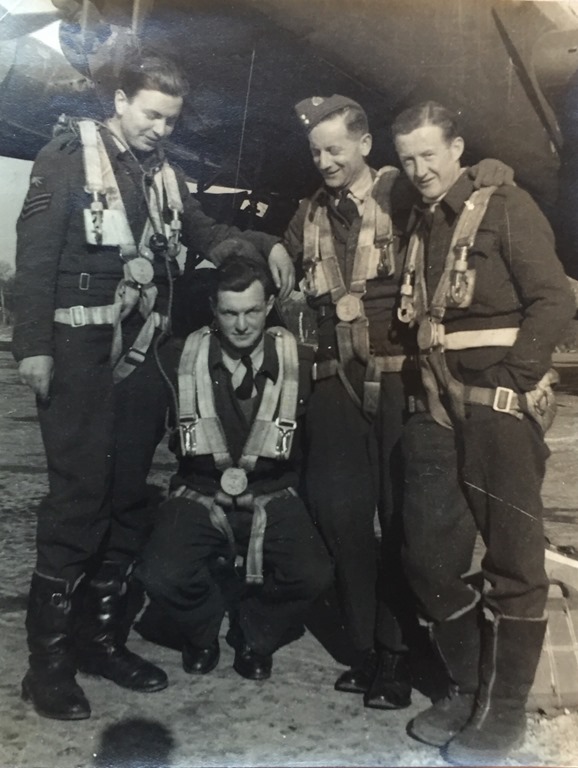
On the night of 10-11 December 1943, a Halifax II bomber (BB 378) of No.138 Special Duty Squadron took off from RAF Tempsford in Bedfordshire to commence Operation Tablejam 18 and Tablejam 19 to support the Special Operations Executive (SOE) and the Danish Resistance.
Tablejam 18 was the dropping of SOE agent Flemming B. Muss by parachute near Ringsted Gyldenløves before proceeding to another remote location (Tabletop 19) to drop nine containers of weapons near lake Tisso where members of the resistance were waiting delivery. Whilst approaching the first drop zone (Tablejam 18) the Halifax was intercepted by a night fighter said to be a JU 88 and during the attack the Halifax caught fire and at 01:54 hours crash landed on farmland near Ugerløse.
The wreck of Halifax BB 378 (Federal German Archives)
The crew were unhurt and after freeing themselves from the wreckage decided to split up to evade German forces, but another account states the SOE agent was successfully dropped and the Halifax was shot down whilst approaching the second drop zone (Tablejam 19).
With help from Dutch civilians and later by members of an escape line the pilot Peter Barter, navigator Joe Fry and wireless operator Bill Howell eventually reached the safety of Sweden.
Although flight sergeants Nick Anderson (engineer), Brian Atkins (second pilot/bomber), Sydney Smith (mid upper gunner) and Ralph Riggs (rear gunner) received assistance from members of the local community they were eventually denounced by a farmer and were fortunate to be taken into custody and questioned by the Luftwaffe not the Gestapo which had responsibility for countering resistance and special duty air crews came under their jurisdiction.
SOE agent Flemming Muss is know to have continued his resistance work and was later SOE’s senior agent in Denmark. His wife Varinka was also a member of the resistance and his mother Monica is thought to be the first Danish woman executed by the Germans for being a member of the resistance.
On 30 March 1943 a Short Sterling bomber (BK 716) of No.218 Squadron which was also known as the Gold Coast Squadron after the Governor of the Gold Coast (modern-day Ghana) and the people of the Gold Coast who adopted the squadron, was shot down by German fighter pilot Werner Rapp. The entire crew was killed and there was no trace of the aircraft which crashed somewhere over the Netherlands.
No source but said to be the crew of BK 716 during training
In 2008 the Stirling was accidently discovered after part of its undercarriage fouled the anchor of a boat on Lake Markermeer, Netherlands, and in 2019 a cigarette case bearing the initials of Flying Officer John Michael Campbell was recovered and human remains of the crew were identified through DNA. The crew are now remembered at the Bos der Onverzettelijen Memorial Gardens in the Netherlands.
Research and recovery was coordinated by Johan Grass a volunteer who investigates crash sites in the Netherlands and founded the Aircraft Recovery Group.
The Crew of Short Stirling BK 716
Sgt Charles Armstrong Bell, 23 from Langley Park, County Durham
Pilot Officer John Michael Campbell, 30 from Golders Green, London
Flying Officer Harry Gregory Farrington, 24 from Niagara Falls, Ontario, Canada
Flying Officer John Frederick Harris, 28 from Swindon, Wiltshire
On the night of 21-22 May 1943, a solitary Halifax bomber thought to be BB 229 NFZ took off from RAF Tempsford in Bedfordshire for occupied Netherlands on Operation Marrow 35 and 36. Their sortie was to drop seven parachute containers packed with weapons and ammunition and two agents from the Dutch Section of the Special Operations Executive (SOE) to members of the resistance waiting on remote farmland at Putten and then a further seven containers and two agents at a similar field in Elspeet. The navigator Warrant Officer Leslie Tomlinson later said both fields were easily identified by bicycle lamps pointing skywards which the resistance used to mark the drop zone (DZ) and after the two successful drops the Halifax headed for home.
At around 02:00 hrs the Halifax was hit by heavy flak and caught fire and Tomlinson said either by luck or great skill the pilot flew the crippled aircraft through a narrow gap between two farmhouses before crashing into a field.
Drawing by WO Tomlinson
Two members of the crew were killed, and the five others suffered serious burns which meant any attempt to evade German forces was impossible and local farmers gave first aid to the crew inside one of the farmhouses the aircraft narrowly missed. When the Luftwaffe examined the burnt-out Halifax, it was apparent the aircraft was not a standard bomber and was being used for special duties to support the resistance which meant the crew came under the jurisdictions of the Gestapo. According to an MI9 report, after the crew were in Gestapo custody they were refused medial treatment whilst being interrogated for six hours during which they were threatened with execution if they refused to tell their interrogators how many agents were dropped and the contents of the parachute containers.
Three members of the crew (source unknown)
The crew were eventually split up and sent to different prisoner of war camps. Only after the war did they became aware the four Dutch agents had been dropped to German troops after their network had been infiltrated and their wireless ‘played back’ to London by a German operator and all were quickly executed. This German wireless deception cost the lives of many agents from the Dutch Section and members of the resistance throughout the Netherlands and is sometimes called the Wireless War.
German bomber crew among those who took part in the attack (IWM)
During the war Britain had experienced several air raids on cities by Zeppelins but in 1917 Germany started strategically bombing British cities using bomber aircraft instead of their slow-moving Zeppelins.
On Wednesday 13 June 1917, 20 German bombers called Gotha GI. V’s took off from airfields in Ghent, Belgium to start the strategic bombing of London which was called Operation Tûrkenkreuz. Some aircraft dropped bombs on Margate, three bombs hit Shoeburyness and the remaining fourteen aircraft flew over east London.
After dropping bombs on Barking, East Ham and the docks in East London by 12pm 70 bombs had been dropped near Liverpool Street Station; three hit the station killing 100 people and a further 400 were injured.
Upper North Street School was a London primary school in Popular which was rebuilt after the war and is now called Mayflower Primary School (the road is still called Upper North Street).
Upper North Street school was full with children when the German bombers flew over and dropped two 110 lb (50Kg) bombs which crashed through the roof then through the top two floors before exploding in the ground floor class room killing 18 children, sixteen of whom were aged between four and six years old, 30 children were seriously injured and two older children were killed as the bombs passed through the upper floors of the building.
Upper North Street School (IWM)
15 children were buried together in an east London cemetery and the last coffin in the funeral procession contained the remains of children who could not be identified.
School caretaker Benjamin Batt whose son was killed in the explosion looking for body parts
5th October marks the anniversary of the Mazabotto Massacre (29 September to 5 October 1944) also called the massacre of Monte Sole, Italy.
Italian Partisans (Resistance fighters)
After German troops came under sustained attacks from Italian Partisans (resisters) the 16th SS Panzergrenadier Division Reichsfuhrer- SS killed 700 civilians of all ages and genders in the village of Marzabotto in the mountains south of Bologna. Major Walter Reder, the SS commander who signed the order for the executions was later tried for war crimes and was sentenced to death by an Italian court but was released in 1985 and is said to have returned unremorseful to Austria and died in 1991. Ten other SS officers were not convicted due to lack of evidence.
In July 1944 the Maquis (French Resistance) held a plateau known as the Massive du Vercors consisting of rugged mountains when they were faced by overwhelming German forces including an airborne attack by glider troops. During the battle an estimated 639 members of the Maquis were killed. Those who were wounded were executed on the spot, 201 civilians were killed, and 500 houses burned. It has been estimated German casualties were 83 killed and missing.