HMS Fidelity Royal Navy Special Service Vessel

Fideliy collarge JPG

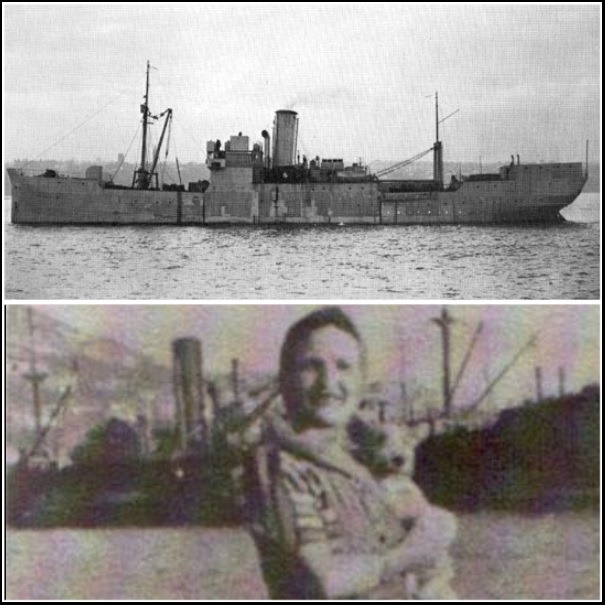
HMS Fidelity (D57) was formerly the French merchant ship La Rhin.  In 1941 Fidelity was used by SOE (Special Operations Executive) to transport agents and equipment to southern France and during these clandestine missions flew the flags of neutral Spain and Portugal.

Madeline Baynard was the ship’s first officer but  to protect her identity  she served with the WRNS under the name of Madeline Barclay.

In late 1941 HMS Fidelity was refitted to serve as a commando carrier and on 30 December 1942 was sunk by a German U-boat. Although most survived the  attack the U-boat captain followed the Loconia order which forbid allied survivors being rescued and 369 died in the water: 273 members of her crew (including Baynard), 52 Marines serving with T Coy  40 Commando and 44 seamen who had been rescued after their ship had been sunk during a previous engagement.

Alan Malcher.

The German Homefront during WW2 and Albert Gôring (brother of notorious Hermann Gôring) who resisted the ideology of removing ‘unfit’ sections of society.


Few people have not heard of the convicted war criminal Herman Gôring who was among the most powerful men committed to the National Socialist Workers Party with its sick ideology of Antisemitism, promoting the existence of a so-called Aryan race, a fanatical commitment to racial purity and the so-called Final Solution to the Jewish question; but few people know about his younger brother Albert who used the family name to reject these beliefs by resisting the Third Reich.

Albert Goring

Albert Gôring

Albert Gôring’s first recorded act of open defiance was when he came across a group of Jewish women forced to scrub the street on their hands and knees and Albert decided to join them. An SS officer was furious and aggressively demanded to see his identity papers and backed down when he saw the family name and the women were released. Albert also used his name to get his former boss Oskar Pilzer, who was a Jew, released from prison and then helped Oskar and his family escape from Germany.

After becoming the Export Manager at the Skoda factory in Czechoslovakia his resistance against the Third Reich greatly increased: he encouraged minor acts of sabotage and had links with members of the resistance. It is also known on several occasions he forged his brother’s signature on transportation documents to enable Jews and political prisoners to escape.

During the Nuremburg Tribunal, because he was the brother of Hermann Gôring he was questioned but released after those he helped came forward to defend him and the same happened in Czechoslovakia where his wife was from.

After the war, because of his name and his notorious brother Albert was shunned by society, he found it difficult to find work, was forced to live in a small flat and his wife divorced him and moved to Peru with their daughter. In 1996 Albert Gôring died and few are aware of the people he saved and the name Gôring continues to be overshadowed by his infamous brother.

British Homefront during the Second World War: The London Underground.

Underground General

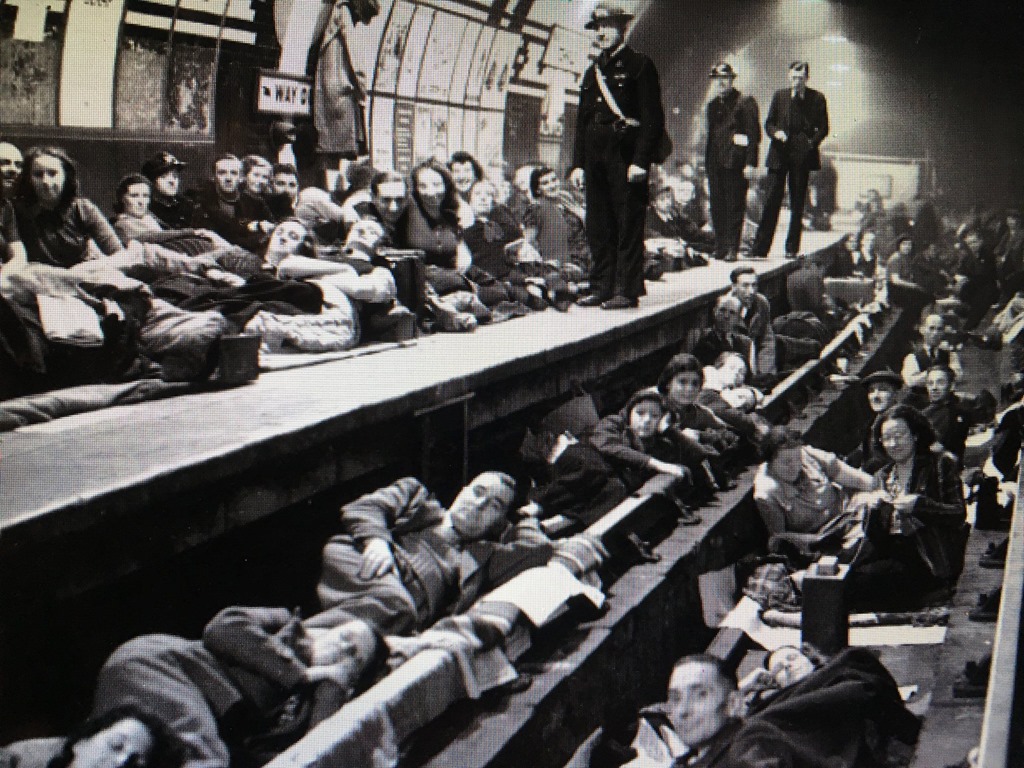
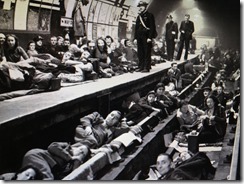
London Underground Station during the Blitz

It has been estimated around 177,000 people used London Underground stations as air raid shelters during the German aerial bombardment of London, but the London Underground did not always provide the protection many once thought.
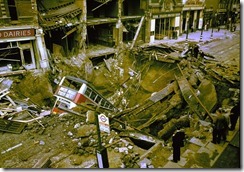
Balham bus 2

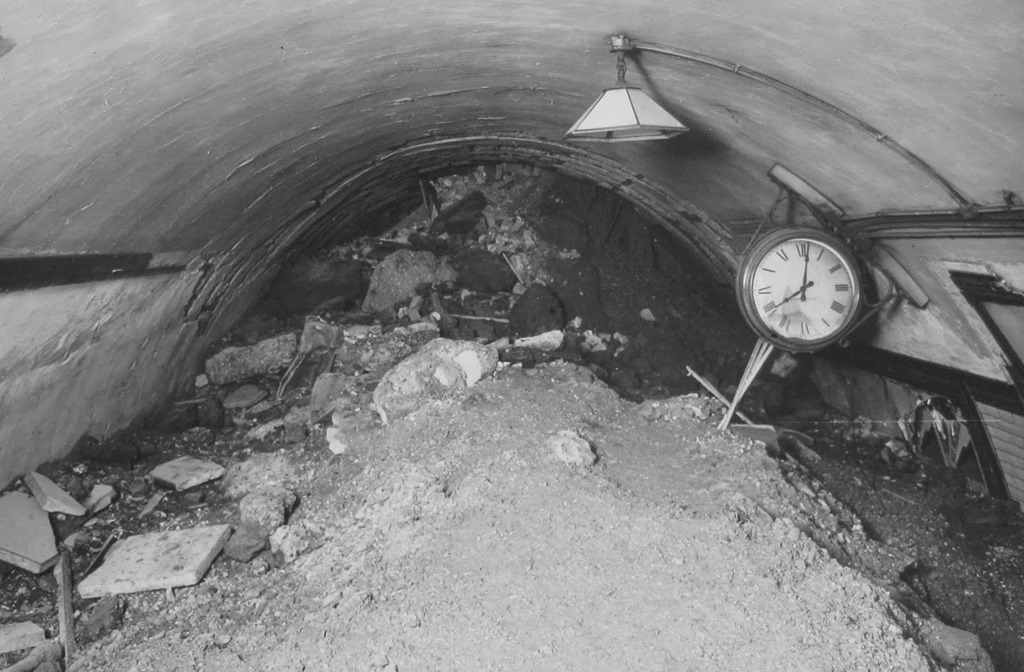
At 8.02 pm on 14 October 1940 a 1400kg bomb hit Balham High Road opposite the United Dairies and created a large bomb crater which a double decker bus fell into, fortunately the bus was empty, and the driver was only concussed. At the time of the air raid around 500 people were using Balham Underground Station as an air raid shelter and were trapped after the explosion destroyed the roof above the northbound platform and tunnel. To protect public morale, it was originally reported that 66 people were killed and all fatalities were recorded as death by drowning after the main water mains and sewage pipes were ruptured and flooded the station. It is Widely believed the death toll far exceeded the official figure and it took several months to recover the last of the bodies.

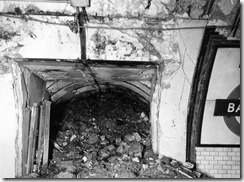
Ba;lhamstn2  damage_in_balham_1940_2

Balham Underground Stations after bodies recovered.


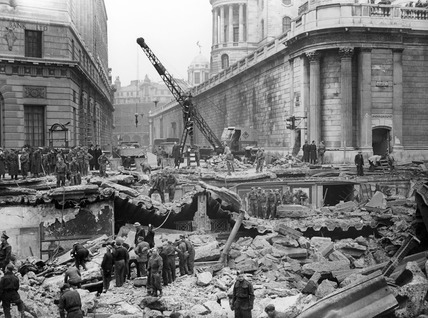
On 11 January 1941 the central ticket hall at Bank Underground Station received a direct hit from a German bomb: the blast travelled down the escalator onto the platform and parts of the road collapsed onto the concourse killing 56 people.
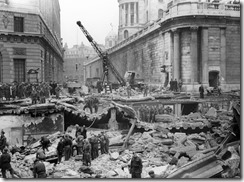
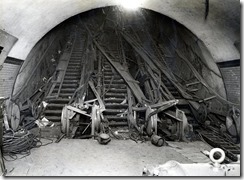
bank2 Bank1

Bank Underground Station

The greatest loss of life on the underground was on 3 March 1943 at 8.45 pm.

According to eyewitness accounts, after the air raid sirens were heard several hundred people made for the safety of Bethnal Green Underground Station. A young woman clutching a baby fell at the bottom of the staircase and pulled down an elderly man and bodies quickly piled up at the base of the staircase while those at the top were unaware of what was happening and continued forcing their way down the stairs. Witnesses also describe a seething mass of mainly women and children all wearing thick clothes and gasping for air quickly develop… 173 people, overwhelmingly women and children were asphyxiated. There were also allegations that the Civil Defence previously warned of the dangers a requested an anti-crush barrier be installed on the single staircase leading to the platform, but their concerns were rejected and only after the tragedy were their concerns taken seriously and a crash barrier erected after the bodies had been recovered.
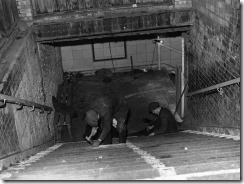
Bethnak Green after

Repairs to the staircase after the bodies had been recovered.

Alan Malcher

SOE wireless operator Denise Bloch (12 January 1916- 5 February 1945)

DFenise bloch

(Image IWM)

On 2 March 1944 Denise Bloch infiltrated central France by parachute and worked as the wireless operator for both Clergyman and Detective circuits which were part of SOE’s clandestine network and began arranging for weapons, sabotage stores, finance and other agents to be sent from London and worked with several reception committees receiving incoming air drops.

It was around 8.20 am on 18 June when her wireless transmissions were located by German direction finders and her Safehouse raided by the Sicherheitsdienst des Reichsführers-SS (Security Service of the Reichsführers-SS), or SD, and Bloch along with another agent were captured.

It is known Bloch was tortured for information, but her wireless was not used by the Germans, and it appears Bloch refused to give the SD her personal wireless codes used to confirm her identity to London. It is also known she was transported to prisons in Germany during which she suffered from exposure due to the cold and malnutrition and was eventually transported to Ravensbrûck Concentration camp where she was executed on 5 February 1945 at the age of 29 and like many agents has no known grave after her body was cremated along with many others.

Alan Malcher

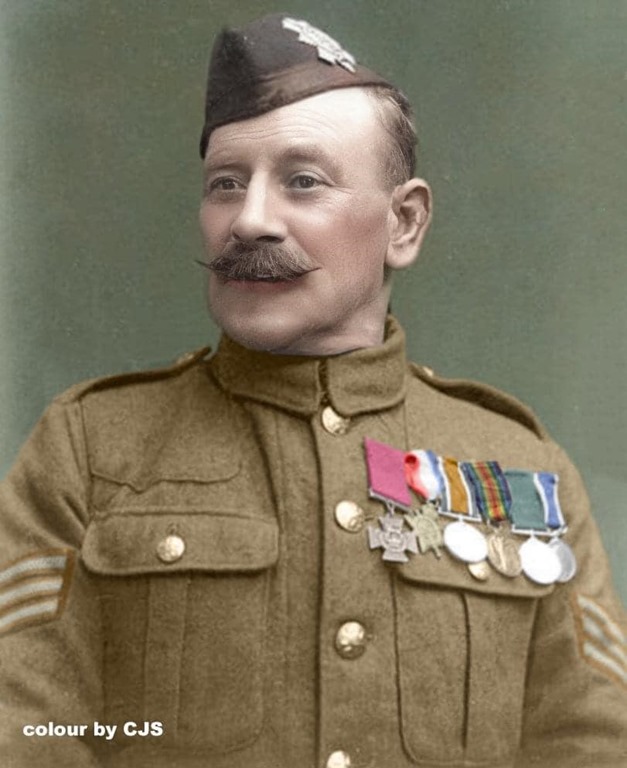
John Ripley VC, Black Watch during WW1.

Corporal Ripley was the first man to climb an enemy barricade before leading his section under fire through enemy barbed wire (entanglements) and held the position until all his men were either dead or wounded during which he was badly wounded in the head and at the age of 47 is listed as the oldest recipient of the VC during the Great War. After being classified unfit for active service Ripley became a recruiting sergeant in Edinburgh. He was discharged in 1919 and returned to his trade as a slater. In 1933 he was fixing slates when he fell from a ladder and injured his spine and later died in hospital.

John Ripley VC

Alan Malcher

Baker Street London W1 during the Second World War

SOE

This plaque will be found outside 64 Baker Street London W1. This plaque marks the former HQ of SOE (CD). Most of the office space in Baker Street accommodated SOE Country Section HQ’s which have no plaques and their wartime use has mainly been forgotten. 83 Baker Street, for example, was the HQ of the French Section.

Alan Malcher

Edgard Potier MI9 Escape Line Organiser in Belgium and France

edgard poiter

Edgard Potier was a Belgium air force officer who organised the MI9 escape line known in Belgium as Mission Martin and in France was called the Possum Line.

After a Lancaster bomber was shot down over Belgium the two surviving crew members were rescued by Edgard Potier (cover name Raymond) who took the airmen across Belgium to remote farmland close to the Belgium-French border where a night pickup by Lysander aircraft had been arranged.

The ‘pickup’ pilot was Hugh Verity of No. 161 Special Duty Squadron RAF who successfully picked up the two escapers and returned them to England.

After the war Verity said: “Raymond {Edgard Potier} did a number of operations for our evading crews… He was eventually betrayed and captured and ruthlessly tortured to get information from him… When it got to the point when he had one eye gouged out by his interrogators, he couldn’t stand any more. He jumped from a window and killed himself.

Alan Malcher

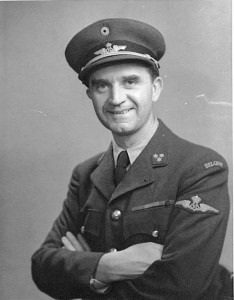
Group Captain Bill Randle (RAF) MBE, OBE, DFM, AFC. AM

GR Cpt Bill Randell MBE OBE CBE DFM AFC AM

On the night of 16 September 1942 Wellington bomber pilot, Bill Randle, took off on his 19th operation.

Whilst crossing the Dutch coast at 21,000 feet the Wellington was hit by anti-aircraft fire but despite the damage Randle continued to the target where they again came under intense ground fire.

After bombing the target in Essen Germany, the Wellington was hit by flak and the port engine failed and as the aircraft became increasingly difficult to control and was quickly losing height Randle ordered the crew to bailout.

Randle landed in a tree near the German-Belgium border and after freeing himself from the tangled parachute he headed for the coast and travelled by night and hid during the day. After coming across a patriotic farmer, he was warned the coast was heavily defended so decided to make his way south.

During a train journey to Namur, he realised without identity papers he was unlikely to escape so decided to walk towards France.

Randle was then fortunate to come across an elderly man who was also a patriot who arranged for him to be hidden by monks for ten days. It was said Randle was passed to the Belgium Resistance; in fact, he was passed to the Comet Escape line which for security reasons was separate from the Resistance.

After being interrogated to ensure he was not a German infiltrator and his story confirmed by London through their wireless link Randle was given clothes and false identity papers identifying him as a Flemish commercial traveller. Guides then took him to Brussels where he was reunited with two of his crew who were also being helped by members of Comet.

comete andree de jongh

The crew were kept in a safehouse before the escape line organiser 26-year-old Andree de Jongh (cover name Dedee) escorted them to Paris. After two days in a Paris safehouse a young girl escorted them by train to St Jean de Luz where they dressed as Basque farm labourers. Dedee     then re-joined the airmen and with a local guide they quietly walked along narrow forest paths during the night whilst avoiding German patrols. After crossing the river Bidassoa into Spain Dedee briefly left the group and returned with a taxi and took them to the British consul in San Sebastian.

Randle had been on the run for 55 days; Dedee was eventually betrayed but survived Ravensbrûck concentration camp and after the war was awarded the GM (George Medal) for her work on the escape line during which she was responsible for rescuing over 300 allied air crews.

Alan Malcher

The German wireless deception leading to the deaths of three SOE agents sent to France.

France AntelmeLionel leeMadeleineDamerment

AUTHORS NOTE- there are several conflicting accounts and inconsistencies will be found in several official documents which are explained in my forthcoming book.

On the night of 28/29 February 1944, SOE agents France Antelme on his third mission to France, wireless operator Lionel Lee and Madeleine Damerment arrived by parachute near the city of Chartres to start a clandestine circuit called Bricklayer.

It is now believed sometime in late 1943 Canadian agents Frank Pickersgill and Ken Macalister had been arrested during which their wireless and codes were found, and a German operator started playing back their set and because the correct codes were being used no suspicion was raised in London. It was the Gestapo, not the Canadian agents who requested these agents be sent and consequently were dropped to the waiting Germans.

From the post war investigation, we see Antelme was furious and began fighting the Gestapo officers before eventually being restrained and the three agents were taken to Avenue Foch, Gestapo Paris HQ where Antelme refused to talk whilst being tortured. Antelme and Lee are recorded as being executed at Gross Rosen Concentration Camp in Lower Silesia and Madeleine Damerment along with three other female SOE agents were transported to Dachau in Germany where they were forced to kneel before being shot through the base of their necks. Canadian agents Pickersgill and Macalister along with several other SOE agents were executed by slow strangulation with piano wire suspended from hooks in the crematorium at Buchenwald concentration camp sometime in February 1944.

Also see SOE Agents Frank Pickersgill and Ken Macalister    Canadian SOE Agents Frank Pickersgill and Ken Macalister – Alan Malcher

Alan Malcher

SOE Wireless Station in England

Home station SOE Alan Malcher

British Homefront during WW2. Home Station was the name given to the wireless station in England which maintained contact with SOE agents throughout occupied Europe. Over 500 people, mainly women, worked at the station and these wireless operators were often the first to suspected there was something wrong: the agent under their charge was working under stress or their wireless set was being used by a German operator. Aware enemy forces were attempting to find their agents through direction finders these wireless operators ensured their agents did not stay too long on the air and did not ask them to repeat unreadable messages. No date (IWM)

Alan Malcher military historian