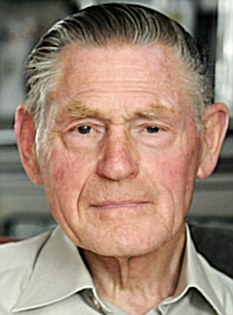
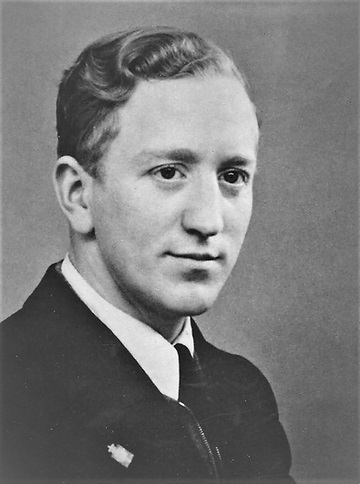
Sekonaia Takavesi: A legion in the SAS.

Original text and photograph published with permission from Art in Motion.
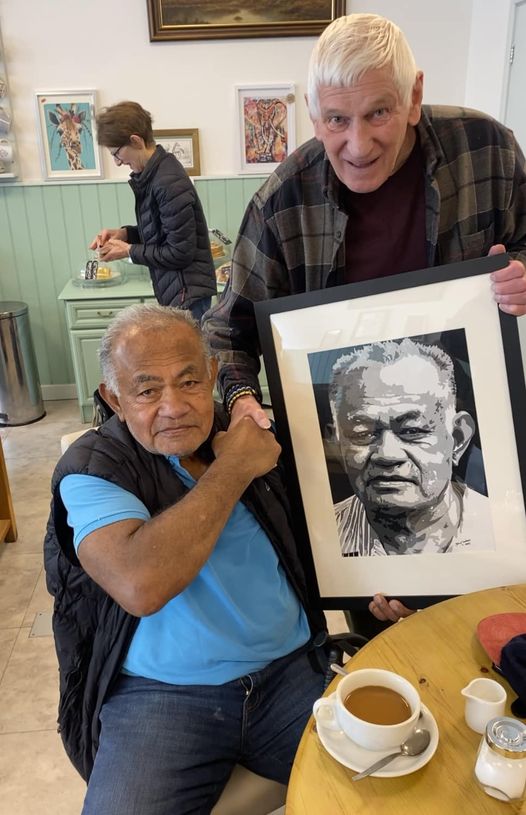
“Tak” now has the portrait that I painted for him, presented to him by “Mal”Kenneth Peers, my old work mate, and old SAS colleague of Tak.

I’ve added a small bit of info about Tak, for those wondering, which will explain what a legend he truly is.

Sekonaia Takavesi – Soldiers do not come any tougher or more fearless and loyal than Sekonaia Takavesi. Known as “Sek”, he became – in the words of his Army superiors – “a legend in his own time within the SAS”.

Takavesi was born in Fiji in 1943. Brought up on the Pacific island, he enlisted in the British Army on November 13, 1961, joining the King’s Own Border Regiment. Two years later, he successfully sought selection to the SAS.

Takavesi had undertaken dangerous undercover surveillance in Aden during the mid-1960s. At one time, he and fellow Fijian, Trooper Talaiasi Labalaba, had confronted and shot dead two terrorist gunmen. However, it was in Oman in July 1972 that the same two men were given the opportunity to display their immense courage and determination.

On the morning of July 19, 1972, the Adoo (guerrillas) launched a carefully planned attack with the aim of using 250 of their most élite fighters to capture the small town of Mirbat on the Arabian Sea, where Takavesi suffered wounds so serious that most people would have died from them. Yet he not only survived but went on to serve with distinction in the SAS for 13 more years.

Takavesi survived the battle and had some other adventures as time went on, though nothing quite like single-handedly firing a WWII anti-tank cannon at a horde of Communists from point-blank range while dudes flung hand grenades in his face. He participated in the Iranian Embassy raid in 1980, when he and 20 other SAS men stormed a terrorist-controlled structure on national television, killed 6 terrorists, and saved 18 of the 19 hostages held inside. He was also working as an advisor during the 2003 Iraq War, when the 58 year-old Fijian found himself in a blazing gunfight on a tarmac near Baghdad –outnumbered by a dozen guys who were shooting his jeep up with AK-47s, Tak put his hands up and pretended to surrender, and the second the enemy lowered their guards he pulled the MP5 off his lap, smoked them, and then leaped out the driver’s side door, tackled another guy, and clubbed him to death with the stock of his weapon. The bad guys managed to shoot Tak in the thigh, chest, and head during that particular encounter, but, as you can probably imagine, he still simply managed to dust himself off, get in the car, and drive himself to the hospital.

Original text from Art in Motion.
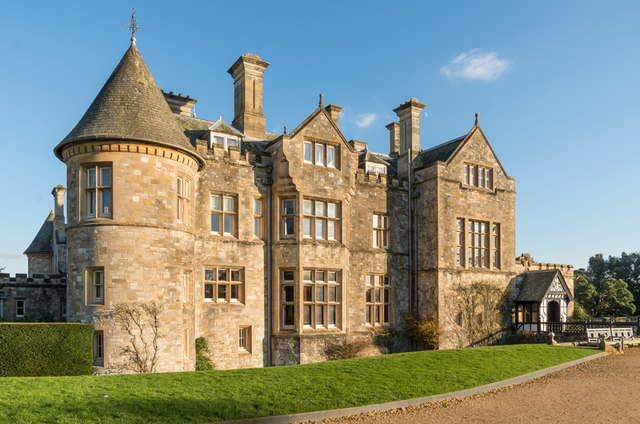
SOE Finishing School Beaulieu Palace

Beaulieu Palace in the New Forest is noted as a motor museum but in 1940 was commandeered for war service and became the ‘finishing school’ for agents being selected for service with the Special Operations Executive (SOE). Even students who passed the induction course followed by extensive training in Irregular warfare in the harsh terrain of the Scottish Highlands were rejected if they failed Beaulieu which taught tradecraft and security. Wireless operator Cyril Watney described the course as being equivalent to a modern-day university degree syllabus because it was so intense.  

Tony Brooks who served with SOE remembered two students who did not take the training seriously and said, “I regret to say neither of those chaps survived… They were both caught, and both died. Beulieu, I think was the most important part of the training and I took it very seriously. That’s why I’m here.”

There were eleven schools deep inside the New Forrest, students were accommodated at three remote buildings so members of various European country sections never saw each other and approximately 3,000 students received their security and tradecraft training on the estate.

Alan Malcher

Lysander 161 Special Duty Squadron RAF

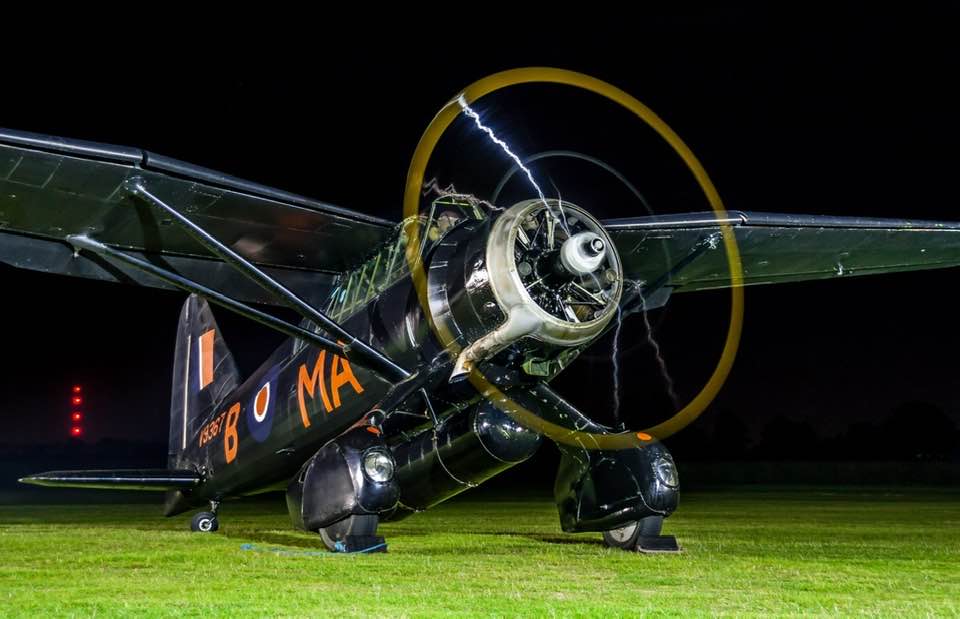
Part of the Shuttleworth Collection. The Lysander with distinctive extra fuel tank bolted between its undercarriages to allow the aircraft to fly deep into occupied France and return to RAF Tangmere during ‘pickup’ operations (delivering and extracting SOE, MI9, SIS, RF agents). Also distinguishable by the matt black fuselage and underside of wings to allow the aircraft to blend in with the moonlit sky and tops of wings camouflage to blend in with the ground when night fighters approached from above.

Alan Malcher

Albert Guerisse- WW2 Escape Line

Image IWM

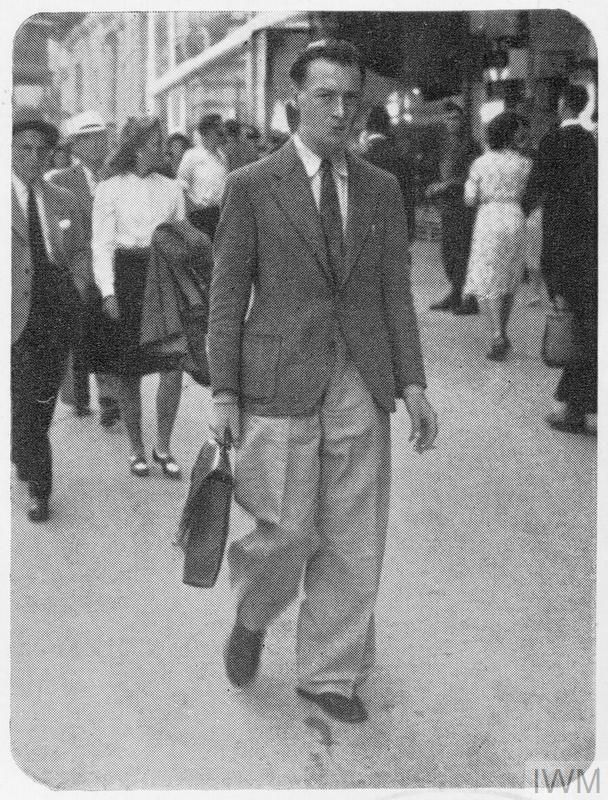
Albert Guerisse, known as Pat O’Leary, was a founding member of the Pat O’Leary escape line (also called the PAT Line) operating in Belgium and France during WW2. Over 600 allied aircrews and soldiers were rescued by the PAT line and taken to neutral Spain. Photograph taken in Marseille in 1941. Albert Guerrisse’s British military honours included the GC, KBE and DSO.

Alan Malcher

Pearl Cornioley (nee Witherington) SOE French Section

On the night of 22-23 September 1943 Witherington arrived by parachute to a reception committee on farmland near Tendu, France and became the courier of STATIONARY circuit and supported another SOE courier called Jacqueline Nearne. In November she joined a new circuit called FREELANCE and changed her identity to Marie Jeanne Verges (codename Pauline) with the cover occupation of a cosmetic consultant which gave her a pretext for travelling great distances whilst carrying messages and liaising with other agents and members of the resistance. This involved countless train journeys during which she was frequently stopped and questioned by the SD and civil police and after being unable to find a suitable safehouse she resorted to sleeping in unheated train carriages during the winter which added to the exhaustion she was already suffering. For an agent this was a dangerous medical condition because mistakes were easily made, and their judgment became increasingly clouded.

After meeting agents and helping to coordinate the preparations for D-day her circuit organiser Maurice Southgate was suffering from exhaustion when he failed to use basic security checks which he had used many hundreds of times before and walked into a mousetrap (a blown safehouse were German forces were waiting). After Southgate was arrested by the SD his large STATIONERY circuit was transformed into two circuits – an agent named Maingard became the organiser of what was called SHIPWRIGHT, Witherington organised a circuit called WRESTLER and under their leadership engaged in coordinated sabotage to support allied forces.  On the morning of 11 June 1944 her headquarters near the village of Dun-le-Poëllier was attacked by German forces which arrived in 56 lorries; 32 Maquis were killed, their weapons were destroyed, and Witherington hid in a corn field whilst under heavy fire before escaping. Witherington then cycled to Saint-Viâtre to meet another SOE agent to arrange a resupply and on 24 June three heavily laden aircraft dropped weapons and ammunition to her circuit and WRESTLER continued its attack on German forces and Witherington is noted for being the leader of 3,500 men of the Maquis. Maurice Southgate, DSO survived Buchenwald concentration camp and Pearl Witherington Cornioley died in France on 24 February 2008 at the age of 93.

Alan Malcher

Denis Barrett SOE Wireless Operator

Denis Barrett (fieldname Honore) arrived in north-eastern France by parachute in April 1943 and worked as the wireless operator for a clandestine circuit in the Troyes area. He was in regular contact with London until his cover was blown several months later and escaped to England after being extracted by Lysander aircraft from No.161 Special Duty Squadron RAF.

Barrett volunteered to undertake a second mission to France and arrived by parachute in early March 1944 and worked as the wireless operator for a new circuit called MINISTER located in Seine-et Marne, northern France. Barrett had two wireless sets; one was in Tores the other was hidden in the countryside several miles from the town. The Abwehr (German Military Intelligence) were aware of a British agent in contact with London and Barrett transmitted from several locations to avoid his safehouses being located by direction finders.

After an agent was captured whilst transmitting to London Barret stopped using his wireless located in Tores and for several months travelled by bicycle to the countryside to use his other wireless. During his journeys he avoided German patrols and, on several occasions, cycled past stationary wireless detection vans which were listening for signals.

Despite constantly changing his location to avoid detection London became aware there was a problem after his signal abruptly stopped in mid-sentence and Barrett was later reported missing presumed dead.  

After the war Barret’s name was found scratched on the wall of a cell at the SD headquarters in Avenue Foch, Paris and it is known he was later moved to Buchenwald concentration camp. It was later reported he was among the first of thirty-one agents who were hanged at Buchenwald during the first week of September 1944, but is now believed he was among the eleven agents shot at Buchenwald on 5 October that year.

Alan Malcher

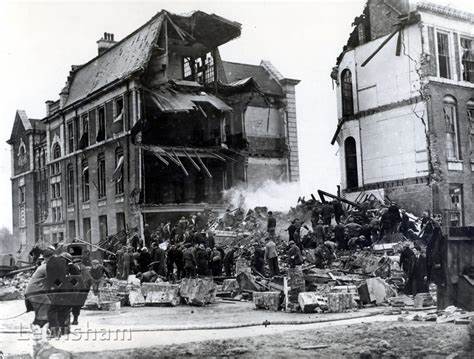
British Homefront during WW2. The day the Luftwaffe bombed Sandhurst Road School in London.

At 12:30 pm on Wednesday 20 January 1943 Sandhurst Road School, Minard Road in Catford southeast London was packed with children when a German aircraft dropped a 500 kilogram (1,100 lb) high explosive bomb killing 30 children and six members of staff, six more children later died in hospital. Sixty people (children and staff) were seriously injured, and many were buried for several hours under rubble.

31 children and 1 teacher were later buried together in a war dead plot at Hither Green Cemetery.

ARP Wardens and nurses covering the bodies of children.

The German attack was part of a raid by 28 Focke-Wulf FW 190A-4U3 fighter bombers escorted by Messerschmitt Bf.109 fighters from an airfield in occupied France and the pilot who attacked the school was Hauptmann Heinze Schumann who was killed in action on 8 November 1943. It is debated whether he deliberately targeted the school, but two children said the pilot waved to them before releasing his bomb.

According to one account a seven-year-old girl in the playground looked up and waved to the aircraft thinking it was British and was cut down by machinegun fire and in 2009 four survivors of the air raid described their experiences.

Molly Linn was 12-years old

We were chatting excitedly when someone ran in and said the air raid had sounded… I walked across the classroom. I saw children hanging out of windows and Betty, the head girl, was telling them to get into the shelter. The next thing I knew I was buried. Betty, who was standing next to me had been killed.

I was eventually rescued and taken to Lewisham Hospital, and I remember my clothes being cut away, which upset me. I thought, it’s my new coat, what were my parents going to say?

I had two broken arms and two badly mangled legs. In October 1944 my left leg was amputated and in March 1945 my other leg was amputated.

Mary Burch was five years old and John, her ten-year-old brother, was at the same school and his body was found buried under rubble three days later.   

I was sitting with friends at the table and had just been given a jam tart … When the plane flew past the window, we saw the pilot and he waved at us. We waved back but as we did, I saw the German markings on the wing.

Someone shouted for us to dive under the table. As I jumped down my jam tart fell. I picked it up and put it in my mouth and I’ve never been able to eat a jam tart since.

I saw my brother running past the table and I called his name and as he turned the bomb fell and I was buried. I couldn’t breathe or move; I remember trying to call for help. I remember the relief of the bricks being lifted from my face.

The next thing I knew I was lying on the cold hard pavement outside and someone was saying ‘She hasn’t got long’. I didn’t know what that meant.

My jaw was broken and there was wood protruding from my head and my back… I remained in hospital for nearly two years and still didn’t realise John was dead. When I returned home everything he owned was gone. It was as if he never existed.

For years afterwards, if I was ever naughty my mother would say, ‘The wrong one lived’. She never forgave me, and the night before my own son’s christening she took the baby from my arms and said, ‘You don’t deserve a son because you killed mine’.

Eric Brady was 9 years old, and his 14-year-old sister Kitty was at the same school and was killed during the attack.

Kitty, my big sister, was upstairs talking to the headmistress, Miss Clarke, when I heard the distant air raid warning. 28 German Fokker planes had flown into London and targeted six different schools… The head told Kitty to go to the dining hall and get the children to the shelters but just as she reached the dining room door the aircraft swooped. Kitty called out and ran towards me when the bomb dropped.

I remember scrambling to get under the table as the roof cascaded down. A lump of masonry pinned down my left arm. Another lump landed on my left ankle, and I was hit on the side of the head. My right side was uninjured and many years later my mother told me that Kitty had been found lying on my right side – killed by the piece of rubble which would have killed me.

Brenda Ward who was ten at the time said, I was eating my dinner when I heard a loud noise. I went to the window and saw the plane. One of the teachers screamed at us to get under the tables. I peeped out from under the table and saw the walls starting to fall in. I got up and run as fast as I could to the other end of the room.

Suddenly I was buried and could just see a tiny spot of light. The terror has stayed with me all my life and still cant go underground.  

Two men dug me out and carried me across the road to someone’s front room. I lay on the floor and asked the woman to clear my eyes because I couldn’t see. I asked, ‘Why do German’s bomb children?’ The poor woman burst into tears and said, ‘I don’t know dear’.

My blouse and blonde hair were stained red with the blood from the terrible injuries from my face. When I was taken to hospital my own mother walked past three times without recognising me.

A week later I was transferred to East Grinstead Hospital where the plastic surgeon Archibald McIndoe who did pioneering work on pilots from the Battle of Britain helped repair my face.

Alan Malcher

Hans Johansen SOE Scandinavian Section.

Johansen was born in Copenhagen on 7 July 1921 and was serving with the 8th Battalion The Buffs (Royal East Kent Regiment) before being recruited by SOE on 12 May 1943 and during training showed the required aptitude to teach members of the resistance sabotage. By the time Johansen arrived in Denmark by parachute there were 57 other agents building up resistance to support an eventual allied invasion and until the deployment of SOE there was virtually no effective resistance in Denmark.

Throughout 1943 it was mainly sabotage stores which was dropped into Denmark and as the number of resisters increased thousands of weapons were also dropped.

In 1943 there were only a few hundred resisters, in 1944 there were around 10,000 and eventually rose to 50,000 men and women (estimated as one per cent of the population). During the runup to D-day the resistance organisations were engaged in widespread sabotage which helped tie down German forces that would have been sent to northern France and SOE was also instrumental in bringing together various political groups.

Hans Johansen was captured at a safehouse by the Gestapo in Copenhagen on 25 July 1944 and because torture for information was inevitable, he swallowed his ‘L’ Pill (Cyanide) and died at the safehouse in under thirty seconds.

Alan Malcher