Pathé News
Author: Alan Malcher
Military historian and defence commentator
David Sibree: SOE Operation Scullion ll
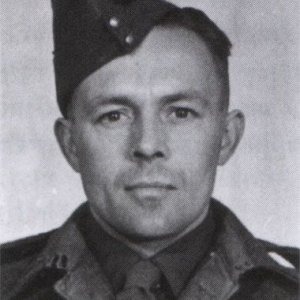
British born David Sibree returned to England on 5 December 1942 from North Africa where he was serving since 1937 with the French Foreign Legion and wanted to join a commando unit but because he spoke fluent French his details were sent to SOE.
A few days before the start of his agent training and selection (20 April 1943) Sibree was arrested by the police after a drunken fight in London which meant his temperament made him unsuitable to be an agent (long-term undercover missions) but considered useful for what SOE called coup-de-main missions. These were missions of short duration similar to commando raids after which they were extracted from the country.
Operation SCULLION ll arrived in France on the night of 16/17 August 1943 to sabotage the Les Telots oil refinery near Autun after a previous operation called SCULLION l had failed. Apart from David Sibree, the team consisted on eight other British operatives, four French, one American, one Canadian and an agent named George Demand had landed four days earlier to prepare the ground. The team damaged the refinery with explosives but there are differing views of how effective the operation was.
According to documents, after the raid only two members of the team, Captain Dormer and Sergeant Birch, escaped to England . The others were captured and known to have been in Frésnes Prison as late as November 1943 before being deported to Flossenburg Concentration Camp in Germany.
Sometime in 1944 all were executed over a period of time, it is believed two were shot and the others were hanged.
Alan Malcher
The First and Last Soldiers Killed During Operation Banner (Northern Ireland)
The number of military and police casualties during Operation Banner (14 August 1969 to 31 July 2007) vary according to sources with one source stating 1,400 soldiers and 319 Royal Ulster Constabulary Officers were killed and 6,100 members of the security forces injured.

The first soldier killed during Operation Banner was 20 year old Robert Curtis serving with the Royal Artillery who was shot in the New Lodge area of Belfast on 6 February 1971.
The last army fatality was 23 year old Stephen Restorick serving with the Royal Horse Artillery who was shot whilst manning a checkpoint at Bessbrook, South Armagh in February 1997. His killer was found guilty of multiple murders and bomb plots and sentenced to 490 years in prison, but was released after serving 16 months as part of the Good Friday Agreement! The Good Friday Agreement allowed all convicted terrorists to be released from prison and those on the run received comfort letters. Many Banner Veterans and their supporters accuse the British Government under Prime Minister Tony Blair of betrayal and persecution after several former soldiers fifty year after alleged events appeared in court.
Many veterans also resent Tony Blair for knowingly lying to Parliament and the British people when he said Iraq under Saddam Hussein had weapons of mass destruction (WMD’s) to obtain approval for an illegal war against Iraq.
HMS Barham 1941.
HMS Barham was one of five Queen Elizabeth-class Battleships built for the Royal Navy during the early 1910s. Completed in 1915, she was often used as a flagship and participated in the Battle of Jutland during the First World War as part of the Grand Fleet and saw action during the Second World War.
On 25 November 1941 Barham was sunk by U Boat U331 with the loss of 859 men. Turn up the volume to listen to the commentator.
3 year old Ruby Crane who helped blind soldiers during the Great War
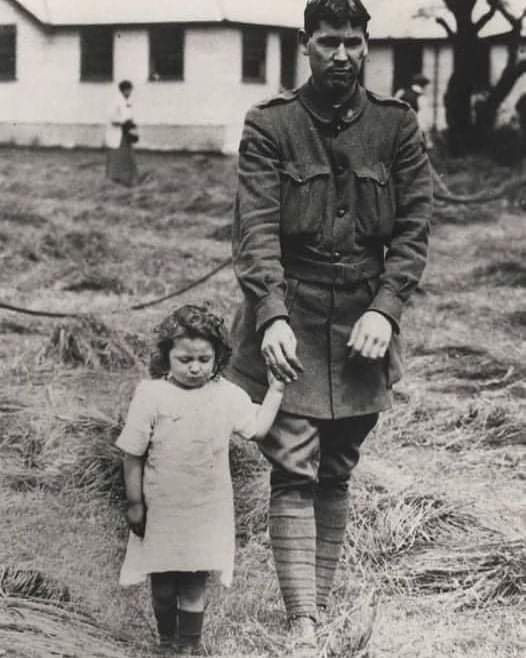
The father of Ruby Crane was the head gardener working for a rehabilitation centre for blind soldiers called St Dunstan’s in Brighton, Sussex during the Great War and St Dunstan’s still helps blind veterans.
Ruby Crane saw a blind soldier stumbling and decided to take his hand and guide him where he wanted to go. After this act of kindness Ruby spent every day guiding blind soldiers and was popular among veterans and their families.
Ruby was in her late 90’s when she died in 2011.
Alan Malcher
William Reid VC, RAF Bomber Command. His brief account of winning the Victoria Cross
From the 1973 Thames Television documentary ‘World at War’ Episode 12 ‘Whirlwind’
David Finlayson French Section SOE Wireless Operator
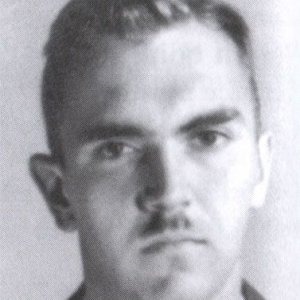
David Finlayson
David Finlayson was born to English parents living in France where he was educated until the age of thirteen and after his family returned to England, he studied engineering at Wolverhampton Technical College.
Finlayson entered the SOE training schools on 25 July 1943 and after successfully completing the three compulsory courses his final assessment said he would be suitable as a member of a coup-de- main party (member of a clandestine circuit) but was only 19 years old and considered too young to be placed in charge of a circuit but was ideal as a wireless operator and after volunteering for wireless training attended the Wireless and Security School at Thame Park, Oxfordshire.
David Finlayson, Maurice Lapage (aka Colin) and an agent named as Lesout arrived in France on the night of 2/3 March 1944 to organise a circuit called LIONTAMER but after parachuting into France nothing was heard from them. London received several messages sent from Finlayson’s wireless, but his personal code was not used, and no security checks were sent. London suspected a German operator was attempting to ‘play back’ his wireless but the channel remained open in case Finlayson, whilst working under pressure, had forgot to use the codes. The channel was eventually closed after London received word that MUSICIAN circuit whose members were tasked with receiving the agents had been destroyed and was under German control. Consequently, the three agents were dropped to German soldiers.
Until late January 1946 there was no information about the fate of the three agents and is now thought David Finlayson was executed at Gross-Rosen camp in Poland.

Alan Malcher
Paul Tessier SOE French Section
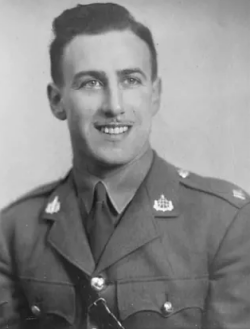
Paul Tessier
Paul Tessier was born in Clichy-sous-Bois, France on 15 October 1916 to French parents but was a British national at the time of his service with the British army and was married with two young children.
In 1940 he enlisted into the Royal Fusiliers and sometime in 1942 transferred to the Royal Armoured Corps where he served in a reconnaissance unit. During his SOE training and selection he was described as ‘tough and enthusiastic. Anxious to finish training so he could get down to the real thing.
His first mission to France was in August 1943 as part of the Dressmaker sabotage team that arrived north of Escoussens by parachute to attack a tannery said to be used by the Germans, but the intelligence was wrong and they found the target deserted. The team then became ill after drinking contaminated water and returned to England.
In January 1944 Tessier returned to France to become the second in command of a circuit called Musician commanded by Gustave Biéler, but after being dropped over the pinpoint (drop zone) nothing was heard from him. Shortly after his disappearance London was warned the circuit that arranged the reception committee (helpers on the ground) had been infiltrated by the Abwehr (German Military Intelligence) and Tessier had been dropped to waiting Germans.
On 27 June 1944 SOE HQ in London received a message from a wireless operator working for the Spiritualist circuit informing them Tessier was now working for their circuit. It is now known that after being dropped to German soldiers he escaped from custody after breaking through an outside wall with an iron bar and tied bedding together to make a rope to climb out of the building and did this shortly after German interrogators broke his hand. The Germans and Gestapo now had his photograph and he should have left France through an escape line or air extraction by No.161 Special Duty Squadron RAF that specialised in air landings but he decided to remain in France.
It is known he sheltered with an English born woman whilst working for Spiritualist during which he helped arrange twelve air drops of weapons and involved in sabotage attacks against the railway running from Paris to Strasbourg and Metz. Dates vary according to several sources when Tessier was with three members of Spiritualist circuit attempting to cross the German lines at Clichy-sous-Bois to recover weapons and explosives when the lorry they were traveling in was engaged by Germany soldiers. During a brief firefight Tessier was wounded, capture, then shot and allowed to die in the road.
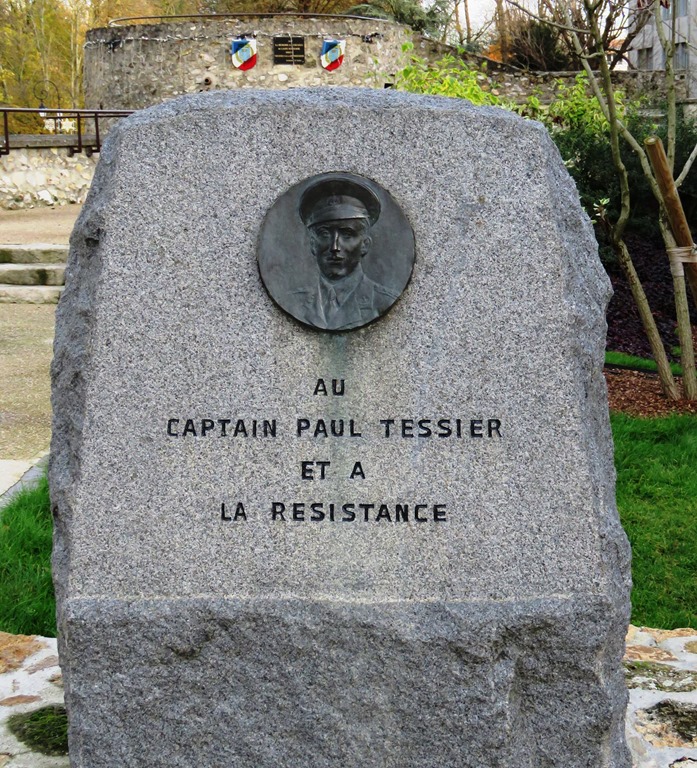
Paul Tessier was buried at Langny-sur-Marne around 18 miles east of Paris and a town square was later dedicated to his memory.
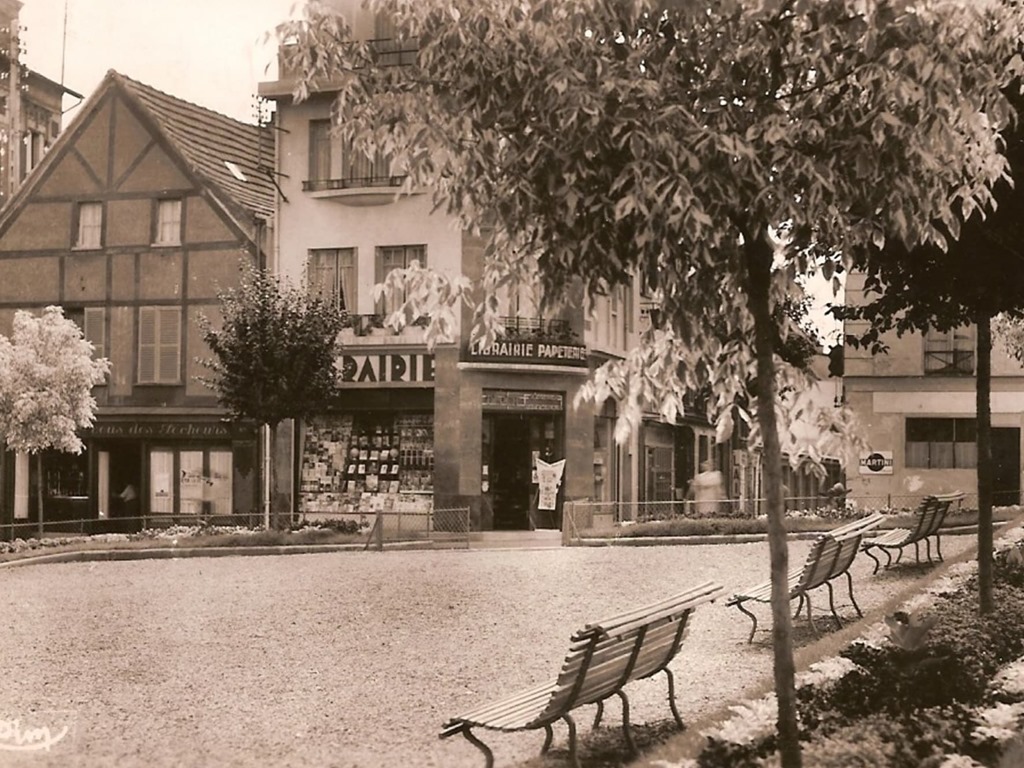
The square named after Paul Tessier.
Alan Malcher.
Hanna Szenes: SOE (Special Operations Executive) Wireless Operator M26 (Hungarian Section)
Hanna `Anna’ Szenes was born to a Jewish family in Budapest, Hungary and during the war was living in a Kibbutz in British Mandate of Palestine when she decided to join the British military and is listed as serving as an Aircraft Woman 2nd Class with the Women’s Auxiliary Air Force (WAAF’s) and her service number was 2992382. The date she completed SOE training at STS 102, Mount Carmel, Haifa is not documented.
On 19 March 1944 Hanna Szenes, Yoel Palgi and Peretz Goldstein parachuted into Yugoslavia to undertake operations in Hungary, but their arrival coincided with the German invasion of Hungary and after hearing the news Palgi and Goldstein decided it was too dangerous and aborted their mission and Hanna continued without them. She stayed briefly with partisans in the Balkans and used her wireless link to SOE Massingham in Algeria to arrange weapons to be dropped by parachute before making her way to Hungary to start her mission.
Hanna was captured with her wireless after crossing the border and because wireless operators where considered a rich source of intelligence was taken to the Hungarian Intelligence Headquarters in Budapest where she was stripped naked, tied to a chair, whipped, clubbed, and beaten by her interrogators. She was tortured over several months but refused to talk and according to a male prisoner her treatment was appalling even judged by the standards usually accorded to spies, but she managed to always keep absolutely silent. The source also said she had been shot, he had seen her body lying in the courtyard of Margit Korut, a road not far from the river Danube in the centre of Budapest and believed she had been executed because she refused to talk.
In 1971, her mother said that after being taken to see her daughter at the Hungarian Intelligence HQ in Budapest the door opened and she went rigid: four men led my Hannah, her face was bruised and swollen, her hair was in a filthy tangle, eyes blackened. I was shattered, all my hope for her collapsed like a house of cards. The Nazis watched us like hawks, Hannah tore herself away from them and threw herself into my arms sobbing. She asked me to forgive her. What for? One of the Nazis ordered me to talk to her, to persuade her to tell everything otherwise this would be the last time I saw her, but Hanna remained silent.
On 28 October 1944 Hanna Szenes was tried for treason and twice the trial was delayed, and whilst in prison she wrote in her diary “I played the number game. The dice I have rolled twice. I have lost” and before the Hungarian judges reached a verdict Hanna was taken from her cell and executed by a German firing squad.
Although the date of her death is listed by the Commonwealth War graves Commission as being sometime in May 1944 her execution took place on 7 November 1944 and after being placed in front of a firing squad witnesses said 23-year-old Hanna refused to wear a blindfold because she wanted to look her killers in their eyes.
Charlotte Wood the famous Canadian War mother of World War One.
Charlotte Wood was born on 27 September 1861 in Chatham Kent and later emigrated to Canada. In 1914 eleven of her sons and stepsons served during the Great War (1914-1918) and five of them were killed. It is known her son Peter was killed near Vimy Ridge with the Saskatchewan Regiment and is among the 11,000 Canadians listed as having no known grave and her son Frederick was killed during the Battle of Mons in 1914.
In 1936 Charlotte Wood was the first to place a wreath on the Tomb of the Unknown Soldier in Westminster Abbey in London on behalf of all Canadian mothers who lost sons during the Great War. In 1939, a few weeks after the start of the Second World War, she died and was buried in an unmarked grave in Winnipeg Brookside Cemetery and a gravestone was erected 60 years later.
Alan Malcher.
 Alan Malcher