Alan Malcher
Alan Malcher
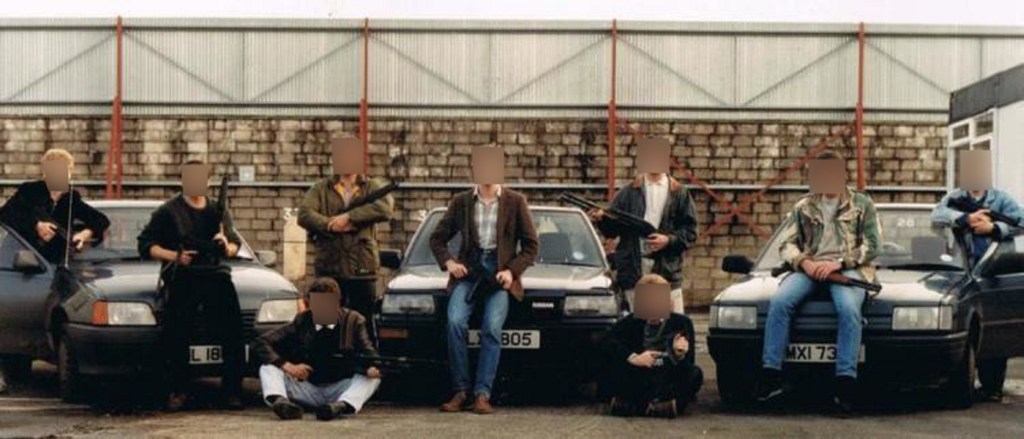
(Text and photograph from Facebook account: British & Commonwealth Forces Past, Present and Future – I have no connection with this account.)
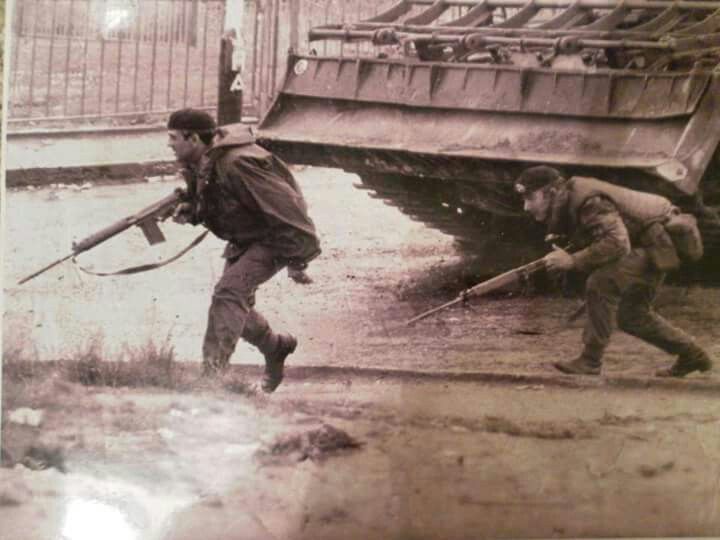
Operation Banner (Northern Ireland) 1969- 2007
Force Research Unit operators pose for photograph.
“The Force Research Unit (FRU) was a covert military intelligence unit of the British Army’s Intelligence Corps. It was established in 1980 during the Troubles (Operation Banner) to obtain intelligence from terrorist organisations in Northern Ireland by recruiting and running agents and informants.
From 1987 to 1991 the FRU was commanded by Major {name deleted} of the Intelligence Corps and was renamed the Joint Support Group in the early 2000’s.
FRU worked alongside existing intelligence agencies including the Special Branch of the Royal Ulster Constabulary and MI5 (Security Service) and in 1988 the All Source Intelligence Cell was formed to improve the sharing of intelligence between the FRU, Special Branch and MI5.
The author claims FRU was granted special privileges in the course of their work, such as the power to overrule senior officers in ordering an area to be cleared of regular security force patrols or by requesting immediate helicopter cover.
The FRU also had the power to designate specific properties as “off limits” to RUC searches in order to protect agents or the intelligence documents the agents were in control of.”
CAVEAT – the above is from an unknown Facebook and Youtube contributor.
This news clip is dated 1972 but there is no source.
When you don’t acknowledge the contribution made by your allies, you criticise our war dead, those injured and the life changing trauma of their families- are you fit to be a world leader?
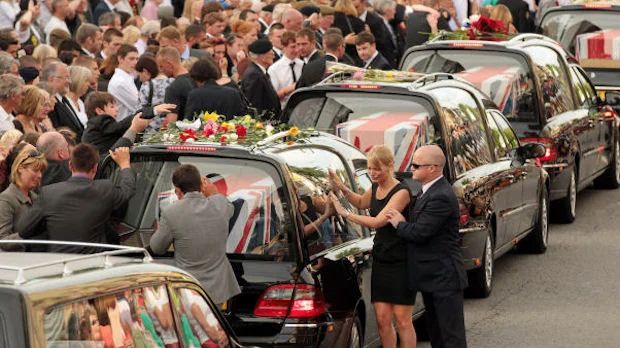
British soldiers home from Afghanistan after doing nothing to help the USA!
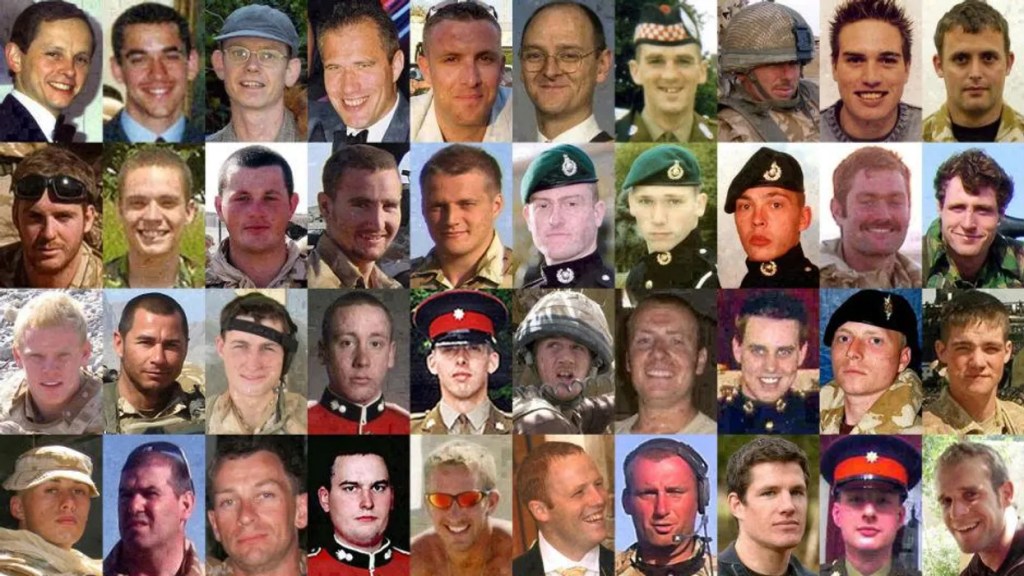
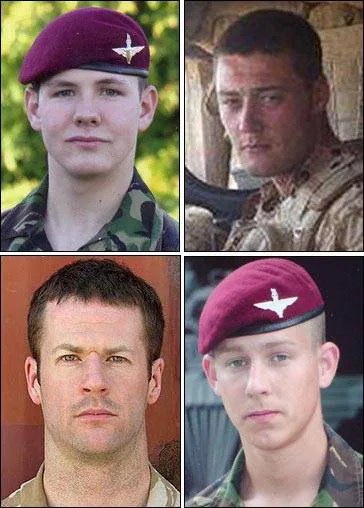
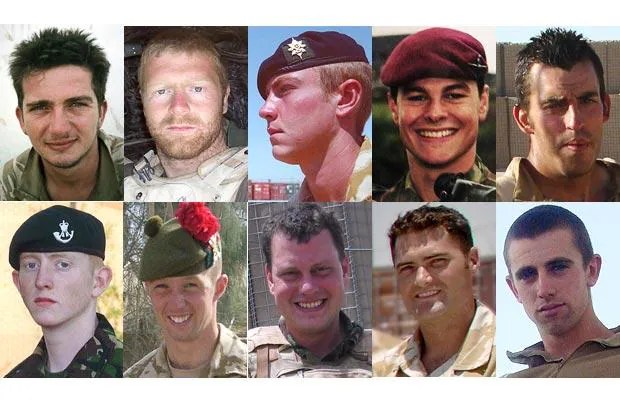
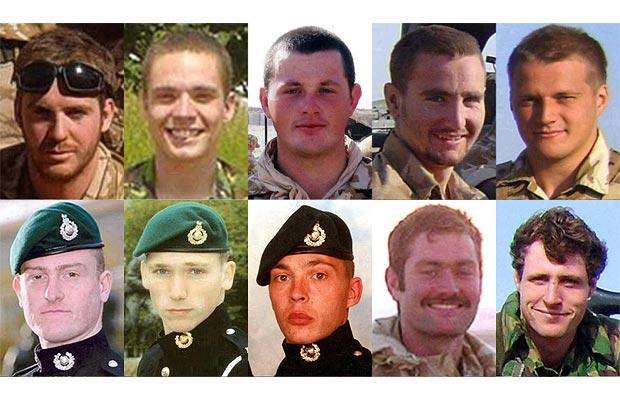
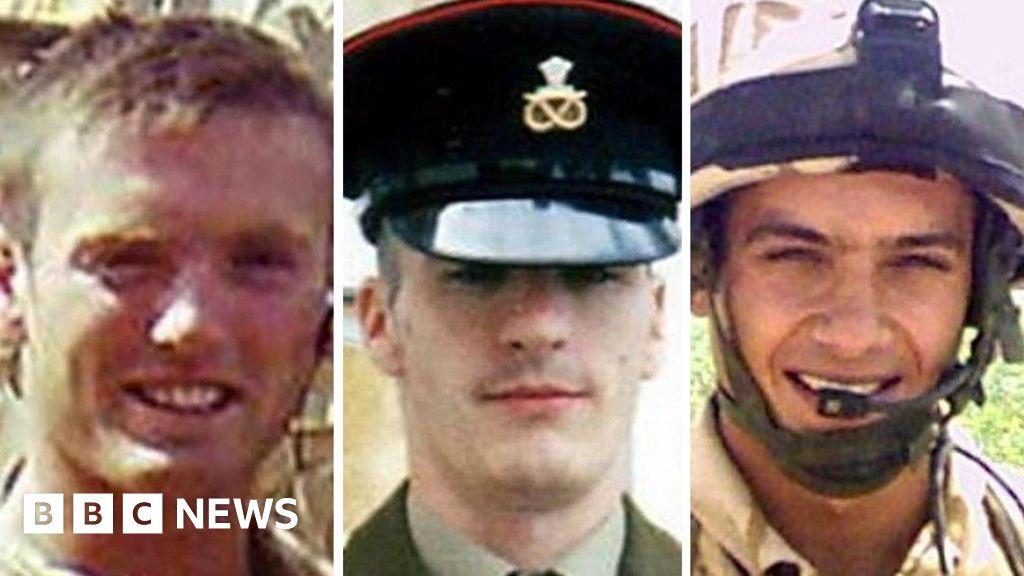
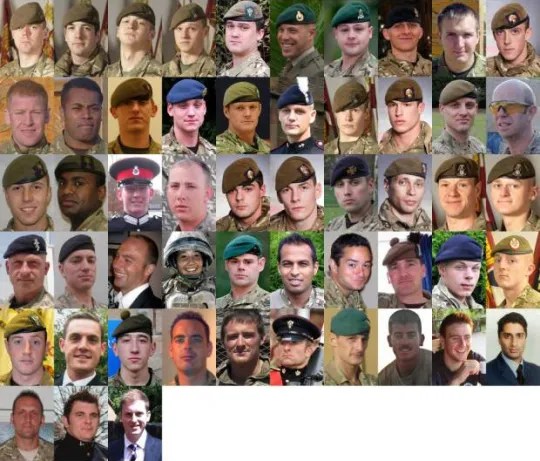
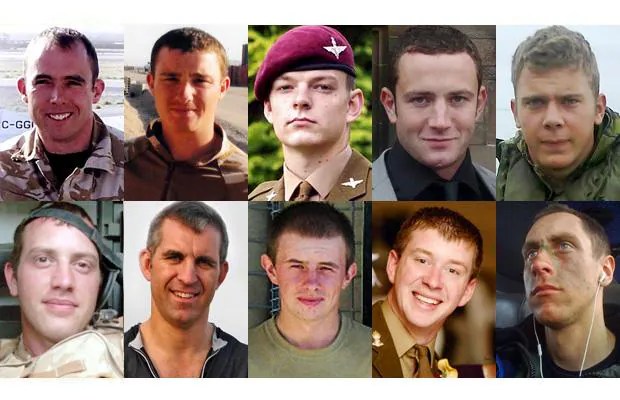
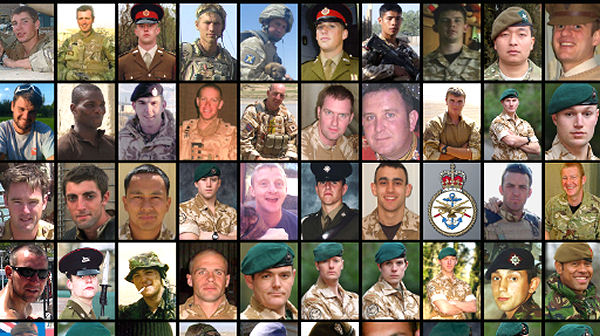
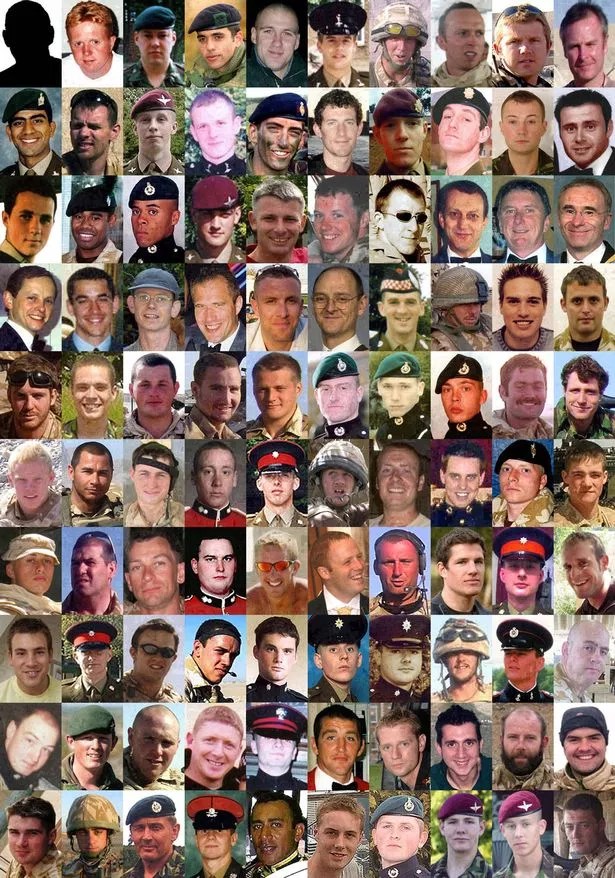
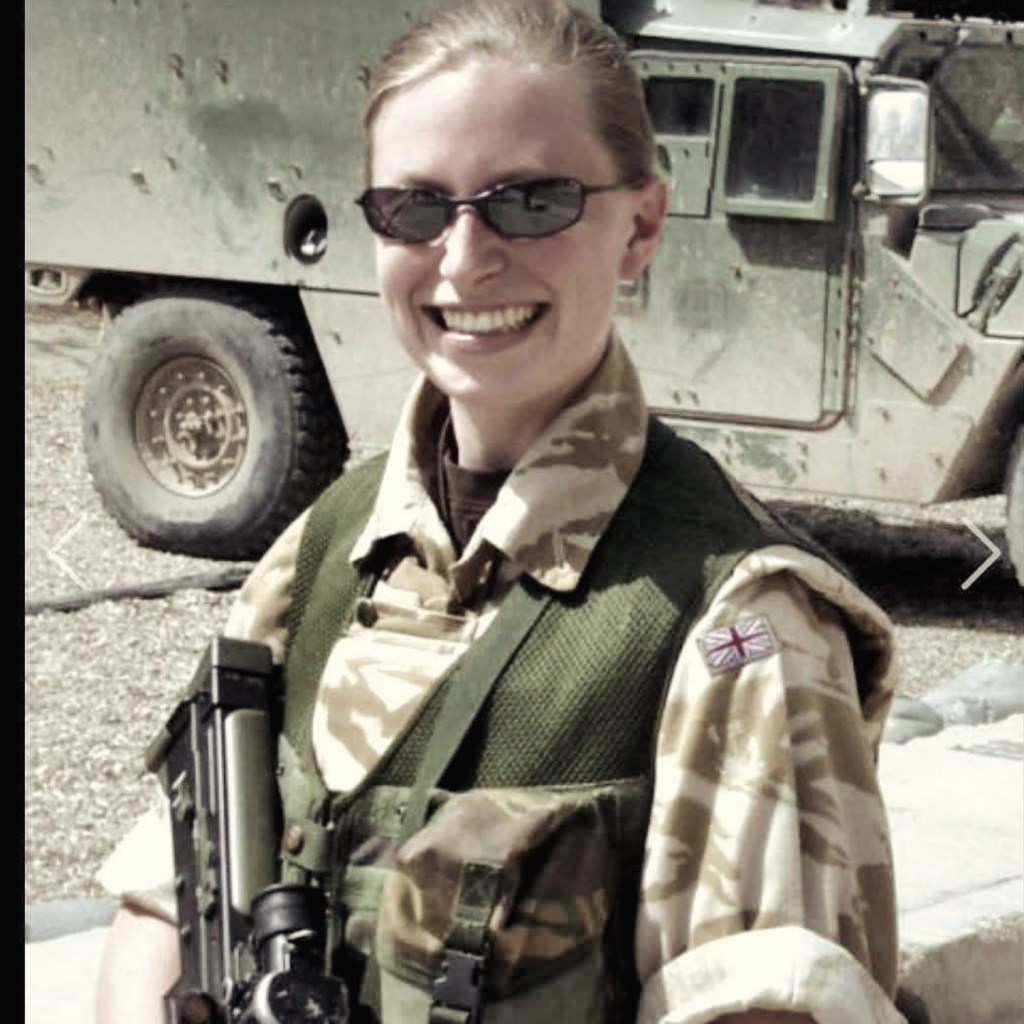
Among the British dead:


On 16 December 1943 the crew of a Lancaster bomber from No.97 Squadron was hit by heavy flak over Berlin. Despite the aircraft being extensively damaged they managed to cross the North Sea but after arriving over England encounter heavy fog and the crew was unable to find their airfield in Lincolnshire.

FIDO (Fog Investigation and Dispersal Operation)
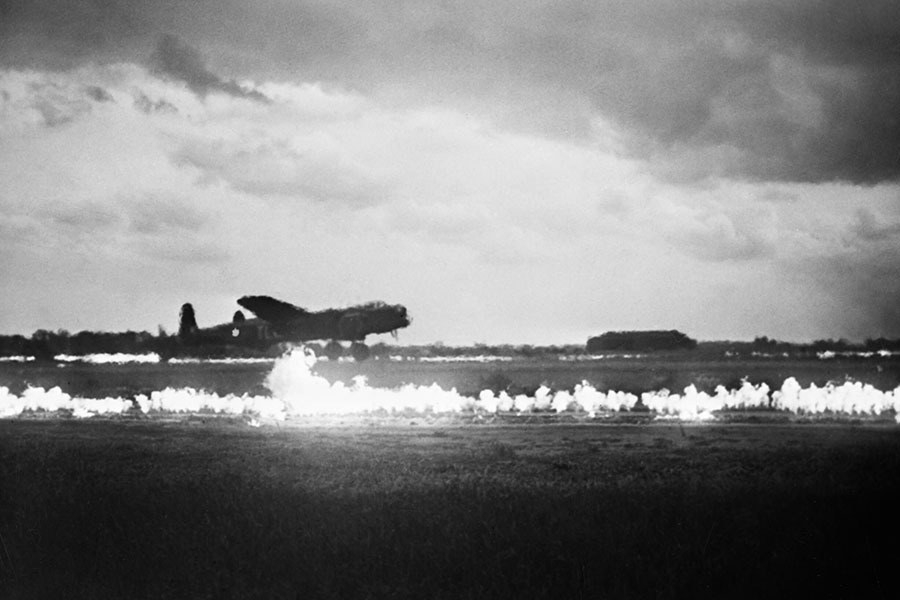
FIDO
Due to zero visibility and running dangerously low on fuel their pilot, Flight Sergeant Ian MacDonald Scott RAAF (Royal Australian Air Force), decided to divert to RAF Gravely because the airfield was equipped with FIDO (Fog Investigation and Dispersal Operation) which used intense heat to remove fog from the runway but the aircraft crashed just under two miles from Gravely and the crew were killed.
The raid on Berlin during the night of 16/17 December 1943 became known as ‘Black Thursday’ after Bomber Command lost 300 aircrew during a single operation. Two out of three airmen in the briefing room before the raid did not return; some were shot down over Germany, others crashed into the sea during their return to England.
The Lancaster crew who diverted to RAF Gravely during the night of 16 December 1943 who were killed:
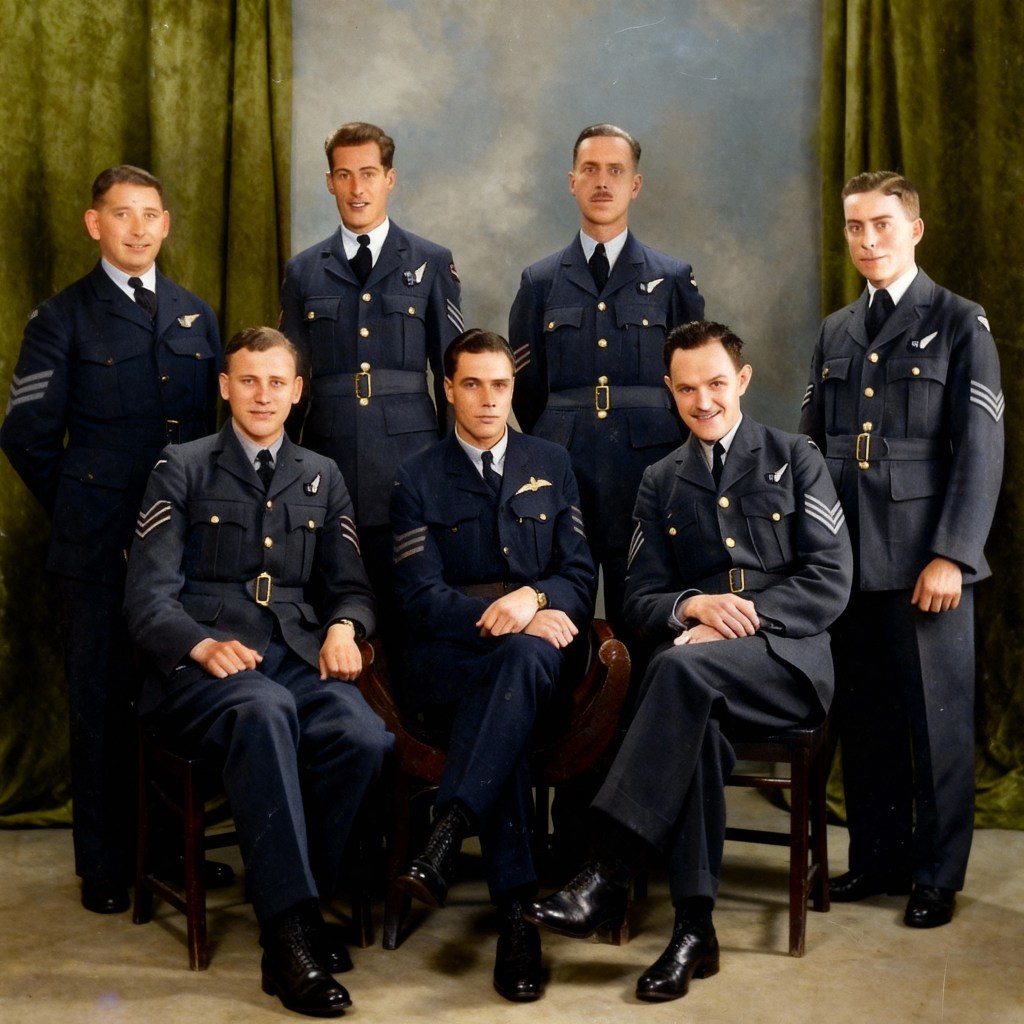
Flt Sgt Ian MacDonald Scott, RAAF, aged 20. Pilot. From South Australia.
Flt Sgt Kenneth Edgar Foxcroft, RAAF, aged 20. Mid-upper gunner. Married.
Flt Sgt Douglas Raymond Irvine, RCAF, aged 31. Bomb Aimer. From Toronto.
Sgt Clifford Lionel Hope, RCAF, aged 27. Rear gunner. Also, from Canada.
Sgt Charles William Collishaw, RAFVR, aged 20. Flight engineer.
Sgt Sidney George Parrott, RAFVR, aged 20. Wireless operator and air gunner.
Flt Sgt Samuel Joseph Peek, RAFVR. Navigator.
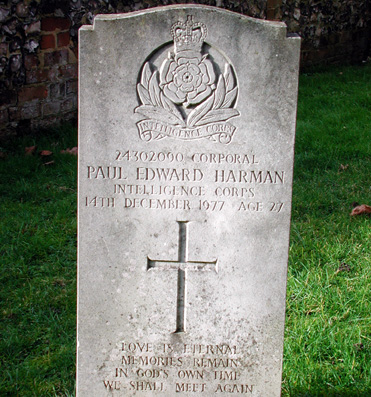
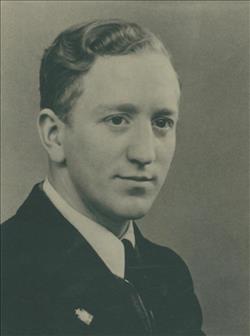
Corporal Paul Edward Harman was killed during operation Banner (Northern Ireland) on 14 December 1977.
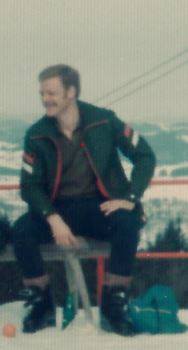
Paul was alone whilst driving an unmarked civilian vehicle along the Monagh Road in the Turf Lodge area, when he was stopped by members of the Provisional Irish Republican Army. As he attempted to escape, he was shot dead by the terrorists.
Paul, the son of a diplomat, was born in Ankara, Turkey on 15 April 1950. He originally joined the 16th/5th Lancers (regimental number: 24302090) and served in Cyprus during the Turkish invasion of the island. He transferred to the Intelligence Corps on 15 May 1975 (photograph of Squad 57 attached), and having been selected for special duties he was posted to Northern Ireland and was 27 years old on the day he died.
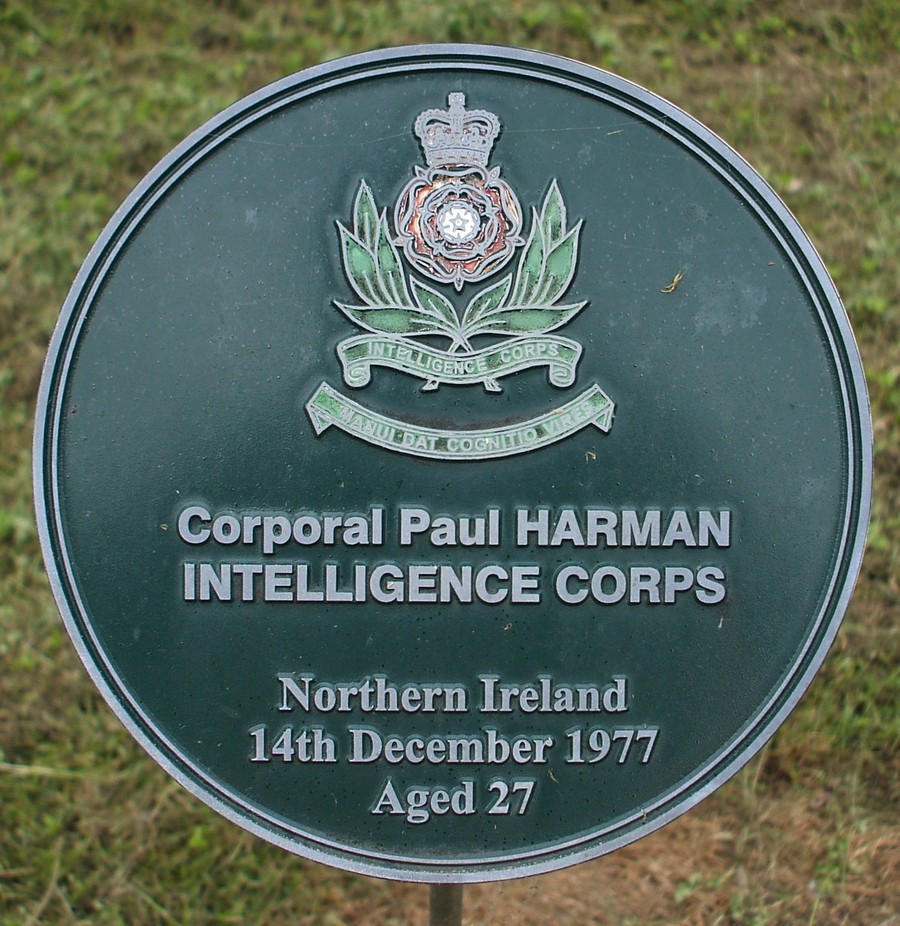
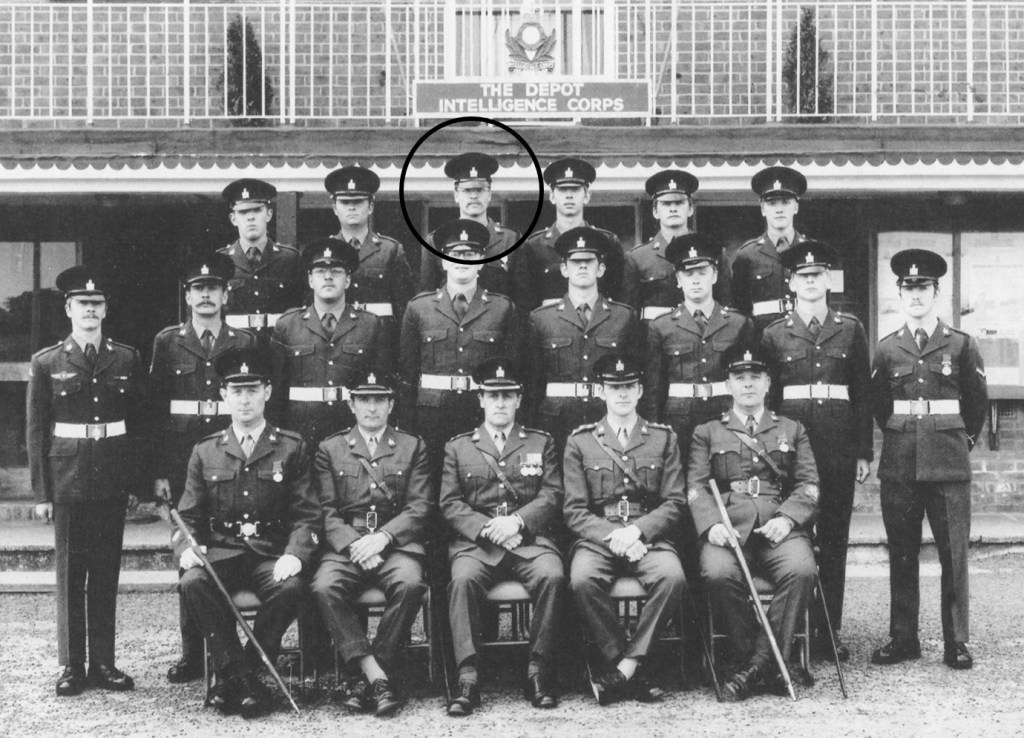
He was the only member the Corps to be killed in action during operations in Northern Ireland (Operation BANNER). In his memory, the trophy awarded to the winning team at the Corps’ annual football tournament was renamed the Harman Trophy.
Our thoughts are with his family and friends.
(Image: Paul on Exercise SNOW QUEEN 1975.)
Above text and images from the Intelligence Corps.
On the morning of 9 April 1940 Germany attacked Denmark and after sporadic fighting during which cities and towns were bombed by the Luftwaffe the Danish government decided the German military was too powerful and after surrendering began cooperating with their occupying forces.
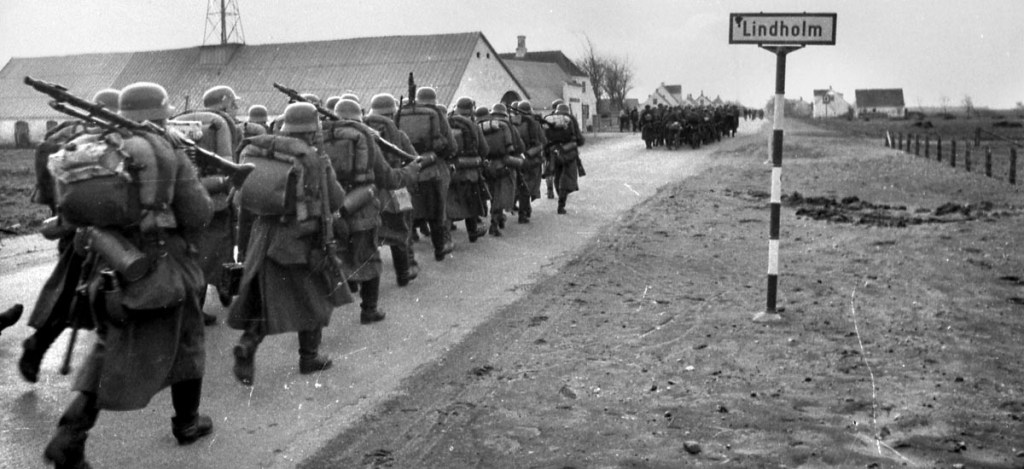
According to the Nationalmuseet the Danish government decided to cooperate with the German occupiers to preserve as much self-determination as possible for Denmark whilst still accommodating the wishes of the Germans and also sought to protect Danish society from the harsh measures which might be introduced by the Germans and the Danish Nazis (National Socialist Workers’ Party of Denmark).
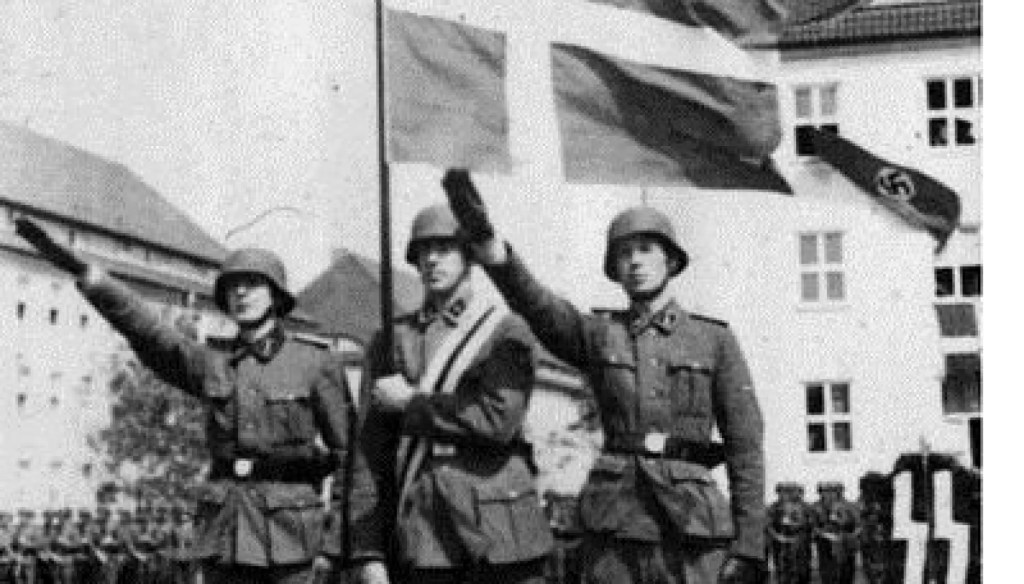
Danish volunteers – National Socialist Workers’ Party of Denmark.
Most Danes supported the strategy of their political leaders and according to SOE historians there was little effective resistance until SOE began sending agents to recruit volunteers before proving training, supplying weapons and organising resistance forces and among the 51 agents sent from London was Filip Johansen.
Prior to joining SOE Danish Section 23-year-old Johansen had served six months with the 8th Battalion the ‘Buff’s’ (East Kent Regiment). Johansen is thought to have completed agent training and selection on or shortly before 12 May 1943 because he was commissioned into SOE as a lieutenant on this date.
The precise date Filip Johansen arrived in Denmark by parachute as a sabotage expert continues to be debated but is known he arrived when SOE was still building circuits and had no effective resistance in Denmark and Johansen later trained a number of saboteurs who later successfully attacked several strategic targets. Throughout 1943 resistance movements in Denmark were mainly supplied with sabotage stores by air and sea but as resistance increased throughout 1944 thousands of weapons were sent to hundreds of resisters and by late 1944 there is said to have been around 50,000 men and women engaged in all forms of resistance and this equated to 1% of the population. London regarded Denmark as being important for D-day because coordinated resistance would help tie-down German forces that otherwise might be deployed to northern France. Apart from recruiting, training, support and guidance Filip Johansen and the 56 other agents sent from Britain needed to bring together various political groups with conflicting post-war political agendas.
How Johansen’s cover was eventually blown was never discovered and several accounts failed to pass close scrutiny. It is believed that on 25 July 1944 his safehouse which was an apartment in Copenhagen was surround by German troops under the command of the local Gestapo. There was no means of escape and to avoid capture and inevitable torture for information he swallowed his SOE issued ‘L’ pill (lethal) containing cyanide and died in less than thirty-seconds.
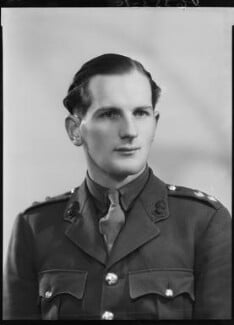
The fate of Anthony Palmer and the twenty-three Jewish volunteers from Palestine under his command is not known and many rumours resulted in conflicting documents. It was later claimed SOE HQ in London did not do a full investigation in case the Germans learned of their interest as this might have placed them in greater danger!
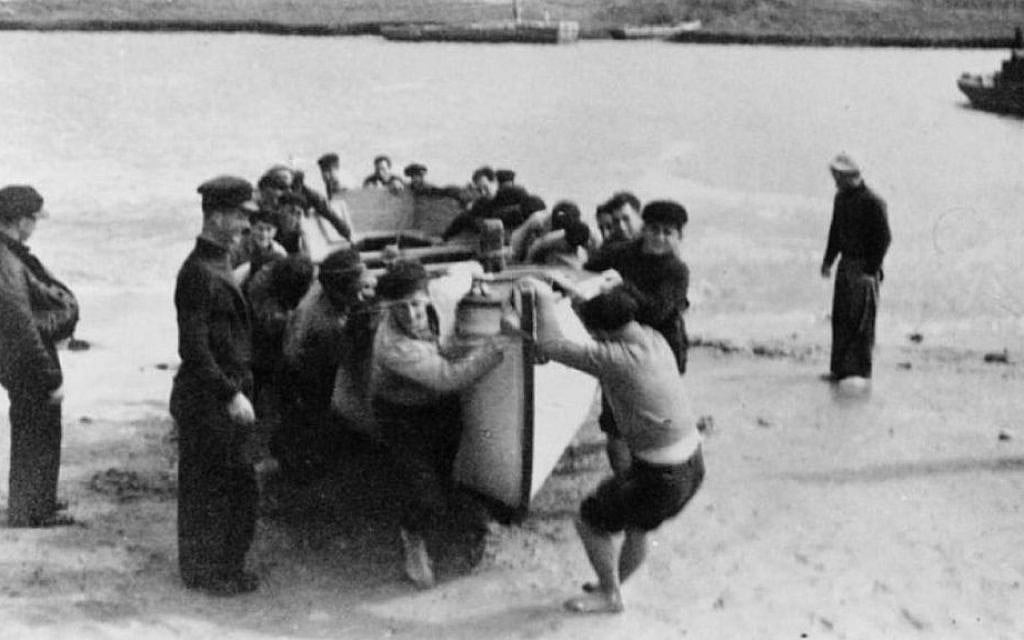
Jewish volunteer’s preparing for Operation (Jewish Times)
Operation Boatswain was a ‘coup-de-main’ operation (a single mission to attack a particular target). On Friday 18 May 1941 Palmer and twenty-three Jewish volunteers’ left the port of Haifa aboard Sea Lion (Ari Hayam) to destroy oil refineries near Tripoli but after leaving Haifa nothing was heard from them even though Sea Lion and the team had a wireless link to SOE Massingham in Algeria.
It was rumoured that Sea Lion was hit or was attacked by a British submarine but there is no evidence to support this claim. It was then said a Jewish agent in Lebanon reported that a number of bodies had been washed ashore, one appeared to be Palmer and the bodies were dressed in the same clothing worn by the raiding party.
On 6 June British wireless intelligence intercepted a German signal stating a British officer and a number of men in a motor boat had been picked up off the coast of Bardia, Libya. This was followed by rumours of a raiding party being executed; another rumour claimed Palmer and some men were alive and being held in a prison off the coast of Syria. There was then a report of Palmer and his men being taken to either Alexandretta or Antioch before being transported to Germany. There was also another report stating they were in a French prison.
Major Anthony Palmer and the men under his command are officially listed as “Place of death uncertain. Possibly lost in Aegean Sea.” The above is typical of the difficulties facing SOE historians when attempting to research operations, the fate of many agents and ‘coup-de-main’ operatives.
Alan Malcher
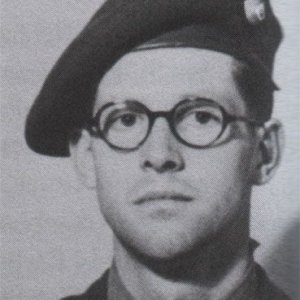
Major John Wallace served with the Royal Rifle Corps before joining SOE as a ‘coupe-de-main’ operative on 7 May 1943 and served at SOE Cairo where he also went through training and selection.
When he parachuted into Greece on the night of 17/18 July 1944 various Greek Resistance groups were attacking German forces but like resistance movements in several other occupied countries these groups were also fighting each other to further their post-war political ambitions.
One of the main groups receiving considerable support from SOE Massingham Mission based in Algeria was the right-wing Ethnikos Dimokraciko Ellinikos Syndesmos (EDES: National Republican Greek League) led by Napolean Zervas; Wallace had been sent to Greece as an observer and visited the operational area of the EDES.
On 17 August 1944 the EDES under Zervas was involved in a major engagement against German positions and Massingham was later informed that during the battle the EDES came under heavy machine-gun fire during which a bullet hit Major Wallace in the top of his left shoulder and the bullet came out about half-way down his spine and he only lived for a few minutes after being hit. The following day he was buried by members of the 10th Greek Division at a cemetery at Paramythia.
A plaque was later erected by his grave saying, “Here rests among his guerrilla comrades an Englishman, Major David Wallace killed on 17 August 1944 during the battle of Menina. The soil of Greece is honoured to give shelter to this hero.”
Alan Malcher

L/R Hugh Dormer, Harry Graham, Victor Soskice, Phillip Amphlett, George Demand, David Sibtree.
Unlike most SOE operations where agents remained in country for many months Scullion 2 was a ‘coup-de-main operation which was a single mission to attack a target before making their way to an extraction point to return to Britian by air or sea. Sometimes coup-de-main operators escaped to a neutral country with the assistance of an escape line and SOE had its own escape section called DF.
Scullion 2 consisting of team leader Hugh Dormer, wireless operator George Deman and two demolition experts – Harry Graham and Victor Soskice who was serving with the American OSS (Office of Strategic Services). On the night of 16 August 1943 they arrived by parachute to destroy the Les Telots oil refinery near Autun in the region of Bourgogne-Franche-Comté, France.
It is known George Demand informed London by wireless that Graham and Soskice had placed several demolition charges at the refinery; they were about to split-up into three groups before making their way separately to the extraction point , but only Hugh Dormer eventually arrived.
It is now believed David Sibtree, Philippe Amphlett, George Demand, Harry Graham and Victor Soskice were arrested by the Gestapo and hanged at Flossenburg camp in Germany on 29 March 1945.
Hugh Dormer, the only survivor, appears to have returned to his unit because he is listed by the CWGC as being killed in action on 31 July 1944 at Saint Martin- des- Besaces, Normandy whilst serving with 2nd Tank Squadron 2nd Battalion Irish Guards.
Alan Malcher.
 Alan Malcher