Month: Nov 2023
Towards the end of WW2, in desperation Nazi Germany conscripted children to fight the allies.
Child soldiers defending the so-called ‘fatherland’ had little chance of escaping from the armed forces and those who attempting to escape or refused to fight were executed. Children as young as 8 were captured by advancing allied forces and children as young as 12 and under were found serving with artillery units. There is no date for this image showing a ‘child’ POW captured by American forces.
Lancaster Bomber: Target Germany (War History Documentary)
Colour archive film reveals the role of the Lancaster bomber during World War Two but its devastating impact on Germany came with a price : nearly half of all crews were killed in action.
Jack Sinclair: saboteur SOE French Section

22-year-old Jack Sinclair after completing SOE selection and training.
Jack Sinclair was born in France to an English father and French mother and they lived in Rouen until Jack was six. The family then moved to Marseille and eventually settled in Bordeaux until France was occupied in 1940.
After escaping to England Jack became a trainee draughtsman before enlisting into the Intelligence Corps and was recruited by SOE in October 1943.
His training assessment states Jack Sinclair did not display the leadership skills required to organise a clandestine circuit but was an excellent saboteur and capable of organising a small group of saboteurs working for the MONK circuit in southern France.
After arriving at SOE Massingham in Algeria he parachuted into France on the night of 6/7 March 1944 to join the MONK circuit and was later discovered Sinclair had been captured during a German wireless deception that MRD Foot described as “a horrible staff muddle with an OSS radio game”. The Germans had captured an OSS (American Office of Strategic Services) wireless and codes and because SOE and OSS ran independent operations it is not known how the Germans used their codes to deceive SOE especially when there should have been no communications between the two organisations and OSS should not have been aware of SOE operations. Instead of being dropped to members of SOE Jack Sinclair was dropped to an OSS group controlled by the Germans and arrested as soon as he landed.
A post-war investigation discovered that after his capture Sinclair was sent to a prison in Marseille but after this there is no trace of him. It is known that after being denounced by a French collaborator several members of MONK were arrested; others went into hiding, the circuit was destroyed and after the war the collaborator was tracked down and executed for treason.
After France was liberated the French War Crimes Liaison Group was asked to investigate what happened to Jack Sinclair and on 19 March 1946 SOE received a report stating “Jack Sinclair was at Baumettes Prison as late as April 1944… I am quite unable to give any further information on what became of him, from the day that the cell door closed behind him… It is presumed Sinclair never left Baumette alive. At the time of his death Jack Sinclair was 22, his name is listed on the Brookwood memorial in the UK and on the F Section Memorial Valéncay in France and like many SOE agents is recorded as having no known grave.
Alan Malcher
British Army entering Belgium 1944 (Pathé News)
Alan Malcher
The Red Devils during the Battle of Arnhem (Pathé News)
RAF conducts bombing raids on German industrial areas (1944)
British Path
Octave Simon: SOE circuit organiser French Section.

Octave Simon had been a notable sculptor before the war and was involved in resistance after France was occupied. In 1942 he began working as a sub-agent with SOE after being recruited by Philippe de Vomécourt the leader of VENTRILQUIST circuit. After De Vomécourt was arrested Simon was contacted by another agent and asked to form a circuit in the Sarthe region.
Simon received several arms drops through a circuit called SATIRIST and after Francis Suttill, the leader of PROSPER circuit was arrested in June 1942 all sub-circuits of PROSPER including SATIRIST were infiltrated and within weeks the entire network was blown. Simon escaped to Angers after almost being captured by the Gestapo on four occasions and was eventually picked up by an aircraft from 161 Squadron, RAF Special Duty Squadron on the night of 19/20 August and taken to London.
After completing agent training Simon returned to France on the night of 7/8 March 1943 with a wireless operator named Marcel Defence to restart SATIRIST circuit. They were parachuted to a reception committee (helpers on the ground) from BUTLER circuit but SOE HQ in London was unaware the circuit had been destroyed and was in German hands, consequently, Simon and Defence were dropped to waiting German soldiers.
Marcel Rousset, the wireless operator for BUTLER, was forced to use his wireless to contact London and allegedly London overlooked his ‘Bluff’ code indicating he was in German hands and sending under duress. The Germans continued to use his wireless for nine months and received several arms drops and captured a number of agents who were dropped to German reception committees. It is recorded that Octave Simon and Marcel Defence died at Gross-Rosen Concentration Camp, Marcel Rousett survived the war and died on 13 February 1983.
Alan Malcher
RAF performs low-level attacks in Netherlands (1942)
Pathé News
David Sibree: SOE Operation Scullion ll
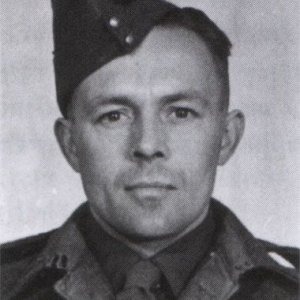
British born David Sibree returned to England on 5 December 1942 from North Africa where he was serving since 1937 with the French Foreign Legion and wanted to join a commando unit but because he spoke fluent French his details were sent to SOE.
A few days before the start of his agent training and selection (20 April 1943) Sibree was arrested by the police after a drunken fight in London which meant his temperament made him unsuitable to be an agent (long-term undercover missions) but considered useful for what SOE called coup-de-main missions. These were missions of short duration similar to commando raids after which they were extracted from the country.
Operation SCULLION ll arrived in France on the night of 16/17 August 1943 to sabotage the Les Telots oil refinery near Autun after a previous operation called SCULLION l had failed. Apart from David Sibree, the team consisted on eight other British operatives, four French, one American, one Canadian and an agent named George Demand had landed four days earlier to prepare the ground. The team damaged the refinery with explosives but there are differing views of how effective the operation was.
According to documents, after the raid only two members of the team, Captain Dormer and Sergeant Birch, escaped to England . The others were captured and known to have been in Frésnes Prison as late as November 1943 before being deported to Flossenburg Concentration Camp in Germany.
Sometime in 1944 all were executed over a period of time, it is believed two were shot and the others were hanged.
Alan Malcher
 Alan Malcher