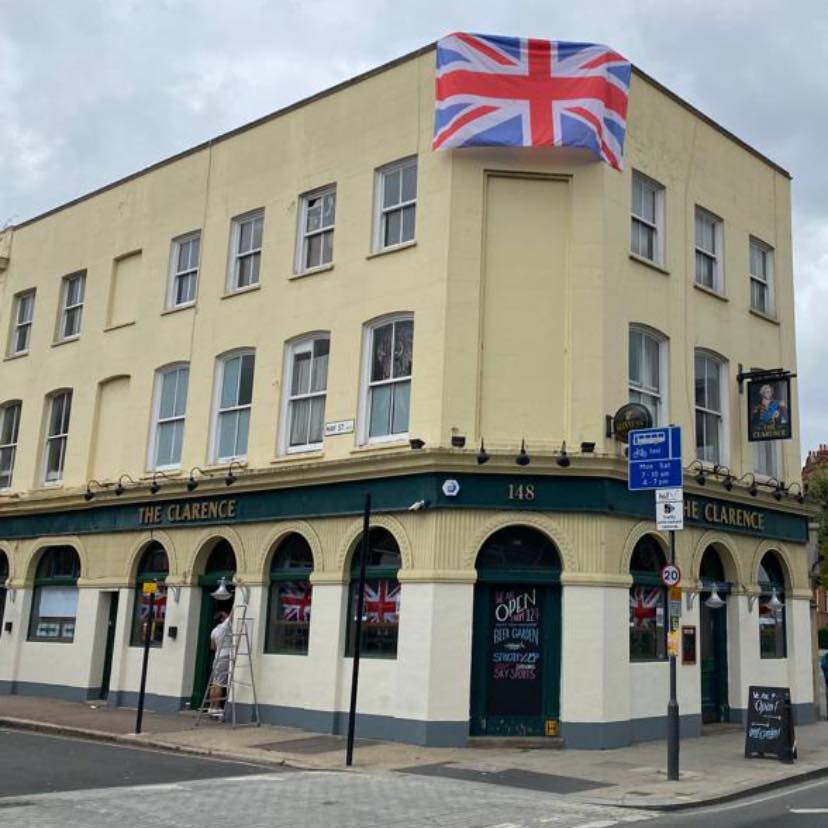
The Clarence Pub Fulham: Supporting British Veterans.

The Clarence 148 North End Road, West Kensington London.

There are many well-known charities supporting British veterans that would not exist without the selfless acts of people who raise money for these charities whilst not seeking recognition for their patriotic devotion and support for veterans.
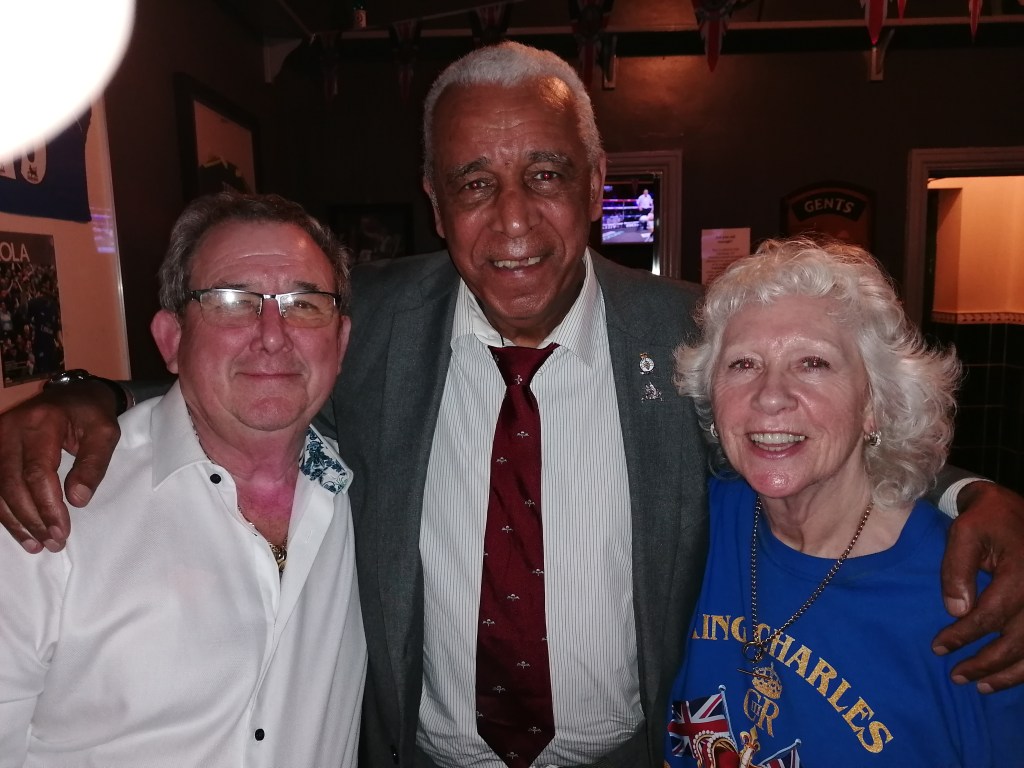
Tony and Sue Millard.

Tony and Sue Millard of the Clarence Pub at 148 North End Road, London W14 have spent many years supporting British veterans and continue to do so. Apart from raising money it is a pub that always welcomes veterans and the respect shown by the Millard’s is reciprocated by their regulars.
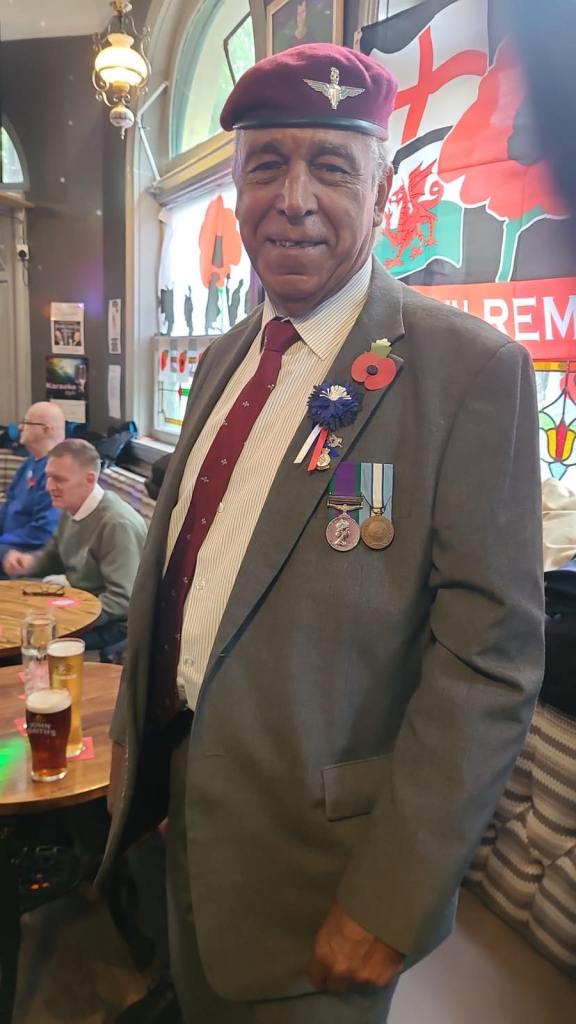
Me at the Clarence on Armistice Day 2023.
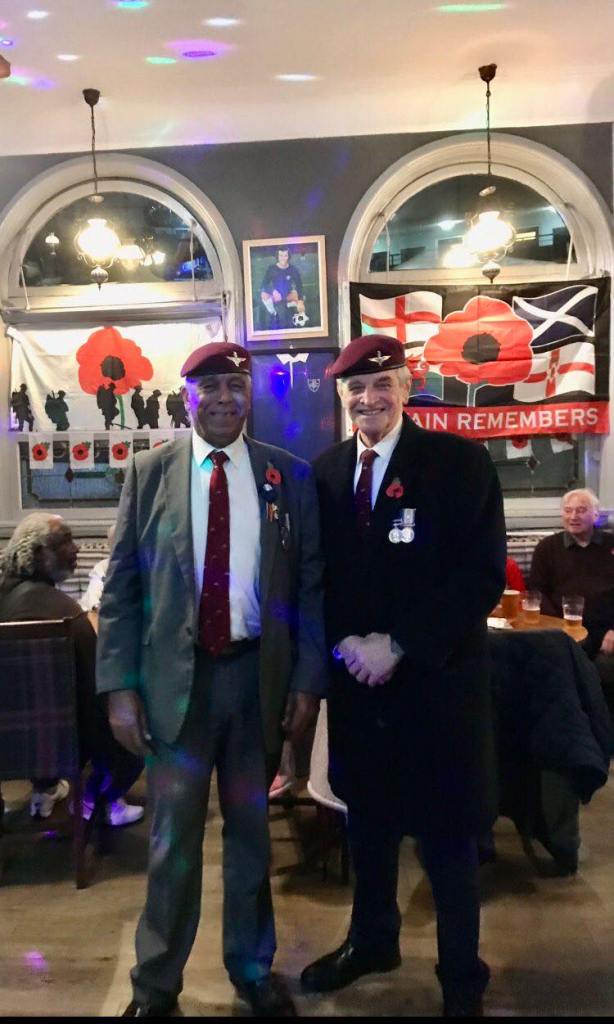
Me with Ken Lukowiak former 2 Para who fought during the Falklands War and the author of ‘A soldiers Song’ that includes his experience during the Battle of Goose Green. Both pissed and paid for by the regulars!

On behalf of all veterans I would like to thanks the Millard’s, the great bar staff and regulars at the Clarence.
Another lesser known British Campaign during the Cold War Period: Aden 1963-1967

The Aden Emergency was against communist insurgents, the National Liberation Front For the Liberation of Occupied South Yemen (FLOSY) and the National Liberation Front who were supported by the Soviet Union and the United Arab Republic.

During the campaign 92 British military personnel were killed and 510 wounded. The conflict then developed in the mountainous Radfan region where dissident local tribesmen raided roads connecting Aden with the town of Dhala near the Yemen border.
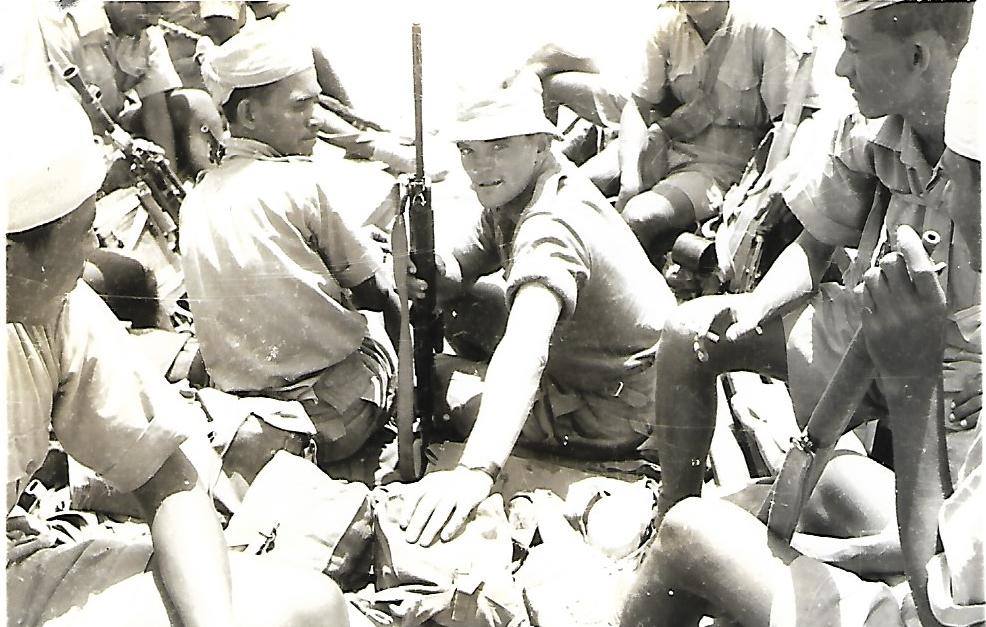
Photograph of Private Wally Fraser (centre) of B Company East Anglian Regiment who was killed clearing mines on 31 December 1964. His name appears on the Regimental Memorial.

The ‘Shetland Bus’.

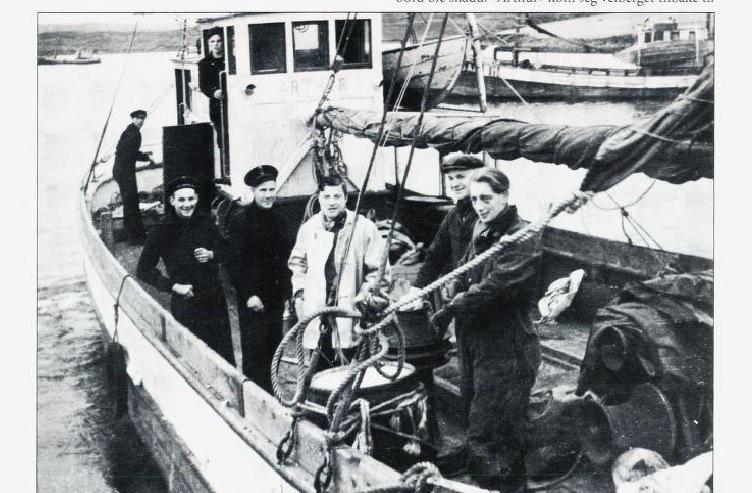
Members of the ‘Shetland Bus’ during WW2.
The nickname of a Norwegian clandestine special operations group that linked the Shetland’s in Scotland to German-occupied Norway from 1941. From mid-1941 the group’s official name was the Norwegian Naval Independent Unit (NNIU). Initially they used covert fishing vessels to support resistance and in October 1943 it became part of the Royal Norwegian Naval Special Unit (RNNASU).

Image IWM

Alan Malcher

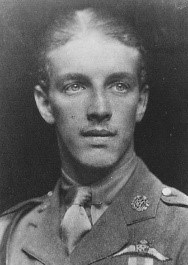
Cecil Lewis MC was a fighter pilot who flew with N0.56 Squadron Royal Flying Corps during the Great War.

Lewis started his combat tour on the Western Front with only 20 hours in his log book and the following BBC interview was recorded before his death on 27 January 1997 in London.

BBC Interview. Cecil Lewis

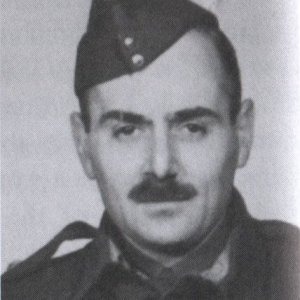
Eugene Bec: SOE weapons instructor French Section Special Operations Executive (SOE)

Eugene Bec

Eugene Bec (field names Hughes, Borer, Raymond Perrin, Francis Eugene Labrousse) was born in England and had duel British and French nationality. He received his secondary education in Boulogne and served with the French Air Force between 1925 and 1927. When was was declared in 1939 he joined the French Army and was attached to the French liaison staff with the British Royal Armoured Corps in France and after failing to be evacuated during Operation Dynamo (Dunkirk) he eventually escaped to England in 1942 and began his SOE training the same year.

On 28 May 1944 he arrived in France by parachute to join HEADMASTER 2 circuit as their weapons instructor which was operating in the Sarthe department and according to reports this was an agricultural area that had not suffered from the German occupation and this not only made recruitment difficult there were also limited areas where weapons could be dropped and hidden. Despite these setbacks HEADMASTER 2 formed two large resistance groups in the Forêt de Charnie and Forêt de Berc and from these areas the circuit conducted sabotage operations in and around Le Mans.

On 15 June 1944 members of HEADMASTER 2 were captured by German forces and handed to the Gestapo and after being tortured a member of the circuit called Philippe was forced to provide the location of the resistance base in the forest and the following day over 100 German soldiers attacked Bec’s encampment and after killing the German commander  and fourteen of his men during a firefight Bec and his men were forced to withdraw. During their escape Bec and three members of the resistance were ambushed and killed and their bodies were later recovered by the resistance and buried in a graveyard in Le Mans. The ceremony was photographed by surviving members of HEADMASTER 2 and a copy was sent Bec’s father who was living in Ruislip, Middlesex. The photograph showed three coffins, two draped with the Tricolour the other with a Union Flag. The graves were covered with flowers to show, as Buckmaster (Head of F Section) later wrote “how grateful the French appreciated the gallantry  of the British officers who had volunteered to work with them”.