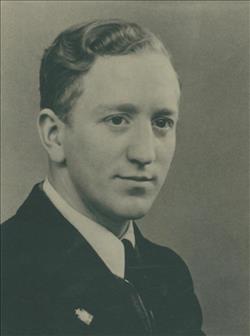
Filip Johansen: SOE Denmark Section (Code name Artichoke)

On the morning of 9 April 1940 Germany attacked Denmark and after sporadic fighting    during which cities and towns were bombed by the Luftwaffe the Danish government decided the German military was too powerful and after surrendering began cooperating with their occupying forces.
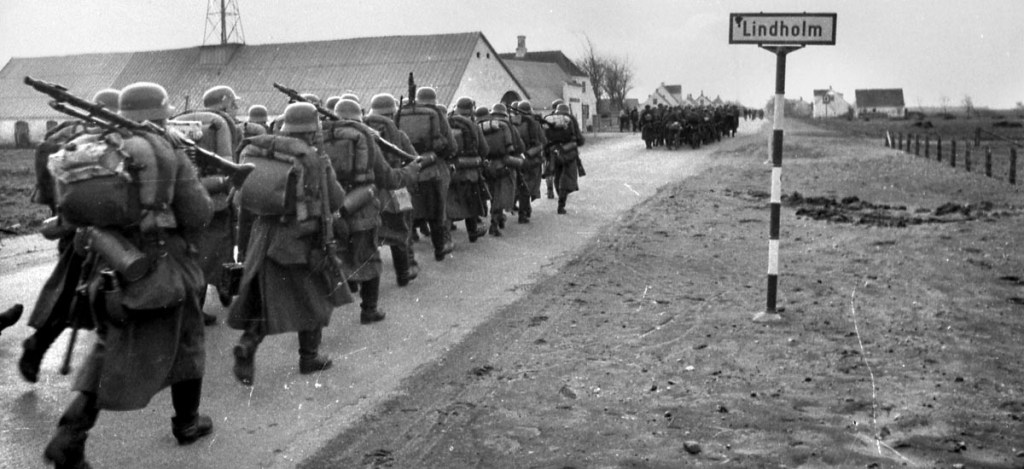
According to the Nationalmuseet the Danish government decided to cooperate with the German occupiers to preserve as much self-determination as possible for Denmark whilst still accommodating the wishes of the Germans and also sought to protect Danish society from the harsh measures which might be introduced by the Germans and the Danish Nazis (National Socialist Workers’ Party of Denmark).
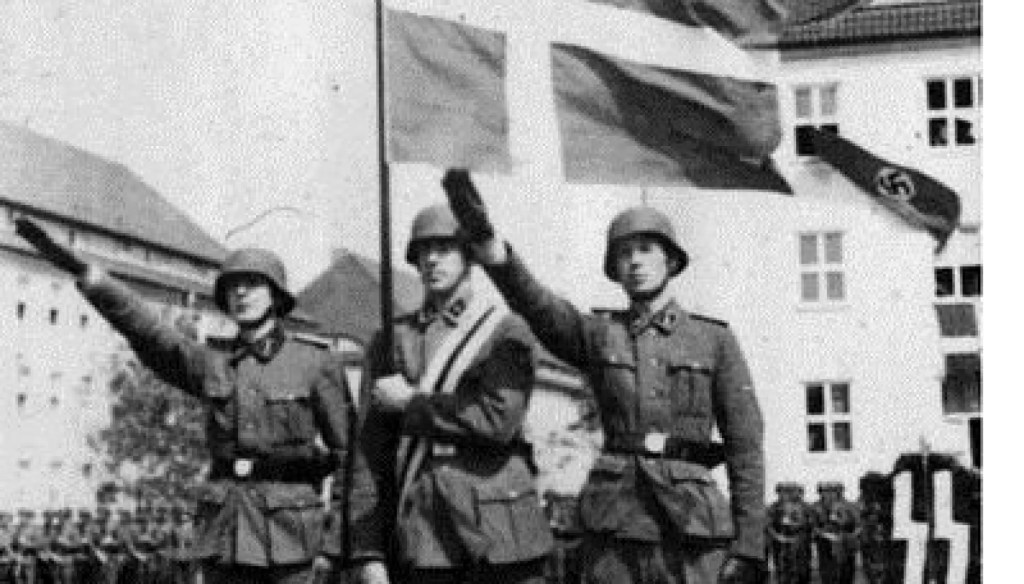
Danish volunteers – National Socialist Workers’ Party of Denmark.

Most Danes supported the strategy of their political leaders and according to SOE historians there was little effective resistance until SOE began sending agents to recruit volunteers before proving training, supplying weapons and organising resistance forces and among the 51 agents sent from London was Filip Johansen.

Prior to joining SOE Danish Section 23-year-old Johansen had served six months with the 8th Battalion the ‘Buff’s’ (East Kent Regiment). Johansen is thought to have completed agent training and selection on or shortly before 12 May 1943 because he was commissioned into SOE as a lieutenant on this date.

 The precise date Filip Johansen arrived in Denmark by parachute as a sabotage expert continues to be debated but is known he arrived when SOE was still building circuits and had no effective resistance in Denmark and Johansen later trained a number of saboteurs who later successfully attacked several strategic targets. Throughout 1943 resistance movements in Denmark were mainly supplied with sabotage stores by air and sea but as resistance increased throughout 1944 thousands of weapons were sent to hundreds of resisters and by late 1944 there is said to have been around 50,000 men and women engaged in all forms of resistance and this equated to 1% of the population. London regarded Denmark as being important for D-day because coordinated resistance would help tie-down German forces that otherwise might be deployed to northern France. Apart from recruiting, training, support and guidance Filip Johansen and the 56 other agents sent from Britain needed to bring together various political groups with conflicting post-war political agendas.

How Johansen’s cover was eventually blown was never discovered and several accounts failed to pass close scrutiny. It is believed that on 25 July 1944 his safehouse which was an apartment in Copenhagen was surround by German troops under the command of the local Gestapo. There was no means of escape and to avoid capture and inevitable torture for information he swallowed his SOE issued ‘L’ pill (lethal) containing cyanide and died in less than thirty-seconds.  
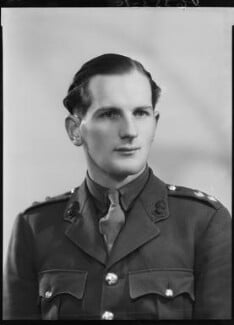
Sir Anthony Palmer SOE Cairo (MEO)

The fate of Anthony Palmer and the twenty-three Jewish volunteers from Palestine under his command is not known and many rumours resulted in conflicting documents. It was later claimed SOE HQ in London did not do a full investigation in case the Germans learned of their interest as this might have placed them in greater danger!

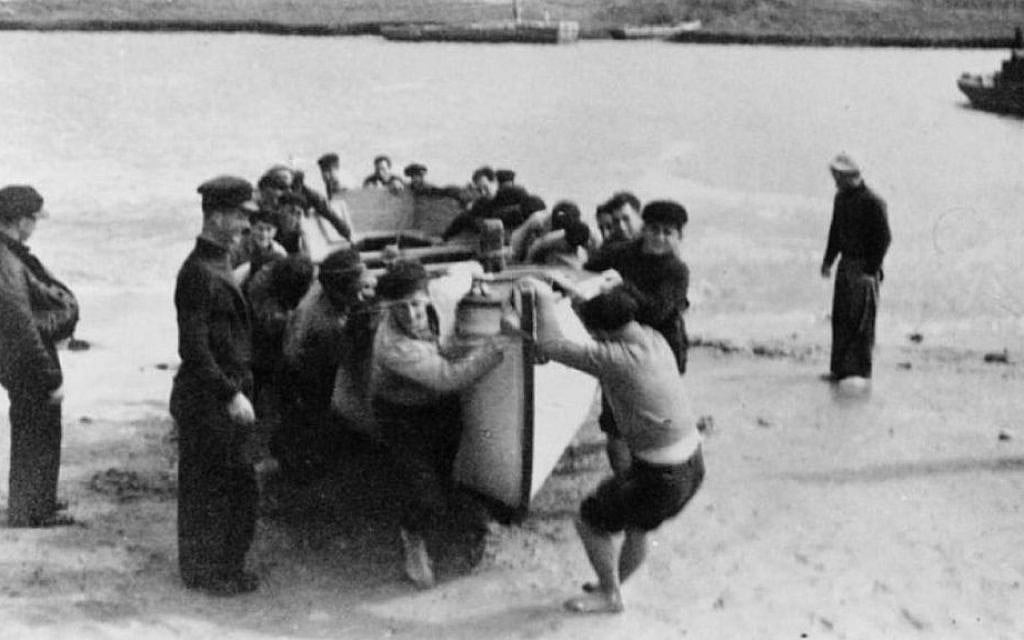
Jewish volunteer’s preparing for Operation (Jewish Times)

Operation Boatswain was a ‘coup-de-main’ operation (a single mission to attack a particular target). On Friday 18 May 1941 Palmer and twenty-three Jewish volunteers’ left the port of Haifa aboard Sea Lion (Ari Hayam) to destroy oil refineries near Tripoli but after leaving Haifa nothing was heard from them even though Sea Lion and the team had a wireless link to SOE Massingham in Algeria.

It was rumoured that Sea Lion was hit or was attacked by a British submarine but there is no evidence to support this claim. It was then said a Jewish agent in Lebanon reported that a number of bodies had been washed ashore, one appeared to be Palmer and the bodies were dressed in the same clothing worn by the raiding party.

On 6 June British wireless intelligence intercepted a German signal stating a British officer and a number of men in a motor boat had been picked up off the coast of Bardia, Libya. This was followed by rumours of a raiding party being executed; another rumour claimed Palmer and some men were alive and being held in a prison off the coast of Syria. There was then a report of Palmer and his men being taken to either Alexandretta or Antioch before being transported to Germany. There was also another report stating they were in a French prison.

Major Anthony Palmer and the men under his command are officially listed as “Place of death uncertain. Possibly lost in Aegean Sea.” The above is typical of the difficulties facing SOE historians when attempting to research operations, the fate of many agents and ‘coup-de-main’ operatives.  

Alan Malcher

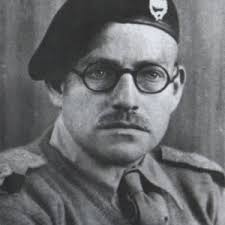
Major John Sehmer: SOE Serbia and Hungary.

Major John Sehmer whose home unit was the Royal Tank Regiment had already completed an SOE mission in Serbia when he volunteered for a second mission to Hungary accompanied by Private Willis and Wilson as part of Operation Windproof in Slovakia and Hungary to encourage and support a Slovak uprising by partisans; establish communications with London and assist the Hungarian Government to negotiate an armistice with the allies.  

Sehmer and his team worked at the maximum range of the RAF Special Duties Halifax bombers based in Bari Italy, which meant they had a limited time over drop zones before having to return to base.  Frequent bad weather also made navigation difficult and supply drops were sometimes cancelled. Added to the problems with air operations were political arguments between the Foreign Office in London, Moscow and several governments in exile.

Shortly after Sehmer and his men parachuted into Slovakia on 18 September 1944 he sent a report saying they had been dropped around fifteen miles from the drop zone and almost on top of German troops and ran the risk of being shot by Slovak sentries.

After arriving the ‘Sehmer Team’ joined forces with an American OSS team informally called ‘Dawes Mission’ located in the Hron Valley in the Lower Tatras where they stayed in a farmhouse in a village called Polomka in the Brenzo district located in the Banska region of Central Slovakia.

The date is unknown when the farmhouse was surrounded by 250 men, and some were locals led by the Germans. It was later said a partisan sentry had fallen asleep and axis forces were able to circle the farmhouse undetected before they came under heavy machine gun fire.  The partisans with the support of SOE (Sehmer, Wilson and Wills) along with an unknown number of OSS agents held out for three-hours and after being bombarded by German artillery were forced to escape but all were captured.

Sehmer, Willis and Wilson were imprisoned at Banska Bystrica in central Slovakia and on 6 January 1945 were transported to Mauthausen concentration camp and interrogated the same day.

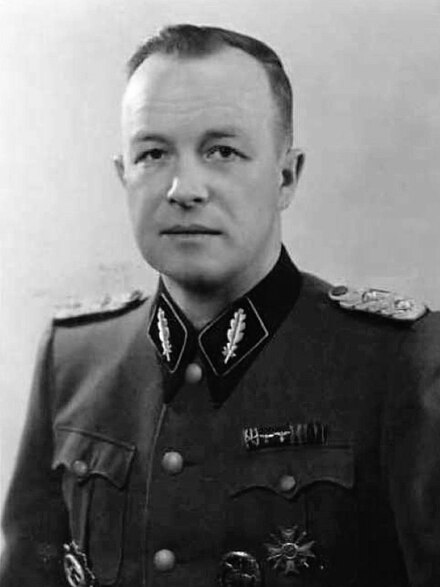
SS-Standartenfuhrer Franz Zieries

On 7 January Sehmer was badly beaten by SS-Standartenfuhrer Franz Zieries who was the Mauthausen camp commander. It is known Sehmer was suspended by his arms from the ceiling of the interrogation room and tortured for four days.

On or around 23 January 1945 Major Sehmer was shot through the head by camp commander Zieries. It is not known what happened to his body but was most likely thrown into a mass grave along with several American OSS operatives who had also been killed; among the victims was Lieutenant James Holt Green serving with OSS who had arrived by parachute a day before Sehmer and his men.  In total, eleven Americans were also shot or beheaded by the Germans. On 24 January 1945 the German overseas news agency made the following radio announcement, ‘Eighteen members of the Anglo-American group of agents headed by an American named Green and an Englishman named Sehmer who posed as a major were caught on Slovakia soil in the hinterland of the German fighting sector. Investigations revealed they had the task to carry out acts of sabotage in Anglo-American interests. The agents who wore mufti when arrested were sentenced to death by court martial.

In January 2004 the commander of the unit that captured the SOE and OSS teams along with partisans was arrested at his home in Munich. The German authorities stated that eighty-six-year-old Ludislav Niznansky was being investigated for the murder of civilians; there was no mention of the men serving with SOE and OSS and Niznansky was acquitted when the case came to trial.

According to the Commonwealth War Graves Commission Major John Sehmer was awarded an MBE!

Alan Malcher