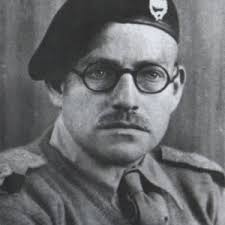
Major John Sehmer: SOE Serbia and Hungary.

Major John Sehmer whose home unit was the Royal Tank Regiment had already completed an SOE mission in Serbia when he volunteered for a second mission to Hungary accompanied by Private Willis and Wilson as part of Operation Windproof in Slovakia and Hungary to encourage and support a Slovak uprising by partisans; establish communications with London and assist the Hungarian Government to negotiate an armistice with the allies.  

Sehmer and his team worked at the maximum range of the RAF Special Duties Halifax bombers based in Bari Italy, which meant they had a limited time over drop zones before having to return to base.  Frequent bad weather also made navigation difficult and supply drops were sometimes cancelled. Added to the problems with air operations were political arguments between the Foreign Office in London, Moscow and several governments in exile.

Shortly after Sehmer and his men parachuted into Slovakia on 18 September 1944 he sent a report saying they had been dropped around fifteen miles from the drop zone and almost on top of German troops and ran the risk of being shot by Slovak sentries.

After arriving the ‘Sehmer Team’ joined forces with an American OSS team informally called ‘Dawes Mission’ located in the Hron Valley in the Lower Tatras where they stayed in a farmhouse in a village called Polomka in the Brenzo district located in the Banska region of Central Slovakia.

The date is unknown when the farmhouse was surrounded by 250 men, and some were locals led by the Germans. It was later said a partisan sentry had fallen asleep and axis forces were able to circle the farmhouse undetected before they came under heavy machine gun fire.  The partisans with the support of SOE (Sehmer, Wilson and Wills) along with an unknown number of OSS agents held out for three-hours and after being bombarded by German artillery were forced to escape but all were captured.

Sehmer, Willis and Wilson were imprisoned at Banska Bystrica in central Slovakia and on 6 January 1945 were transported to Mauthausen concentration camp and interrogated the same day.
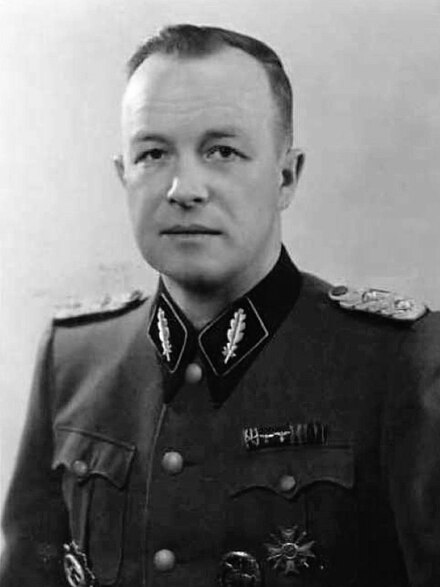
SS-Standartenfuhrer Franz Zieries

On 7 January Sehmer was badly beaten by SS-Standartenfuhrer Franz Zieries who was the Mauthausen camp commander. It is known Sehmer was suspended by his arms from the ceiling of the interrogation room and tortured for four days.

On or around 23 January 1945 Major Sehmer was shot through the head by camp commander Zieries. It is not known what happened to his body but was most likely thrown into a mass grave along with several American OSS operatives who had also been killed; among the victims was Lieutenant James Holt Green serving with OSS who had arrived by parachute a day before Sehmer and his men.  In total, eleven Americans were also shot or beheaded by the Germans. On 24 January 1945 the German overseas news agency made the following radio announcement, ‘Eighteen members of the Anglo-American group of agents headed by an American named Green and an Englishman named Sehmer who posed as a major were caught on Slovakia soil in the hinterland of the German fighting sector. Investigations revealed they had the task to carry out acts of sabotage in Anglo-American interests. The agents who wore mufti when arrested were sentenced to death by court martial.

In January 2004 the commander of the unit that captured the SOE and OSS teams along with partisans was arrested at his home in Munich. The German authorities stated that eighty-six-year-old Ludislav Niznansky was being investigated for the murder of civilians; there was no mention of the men serving with SOE and OSS and Niznansky was acquitted when the case came to trial.

According to the Commonwealth War Graves Commission Major John Sehmer was awarded an MBE!

Alan Malcher  
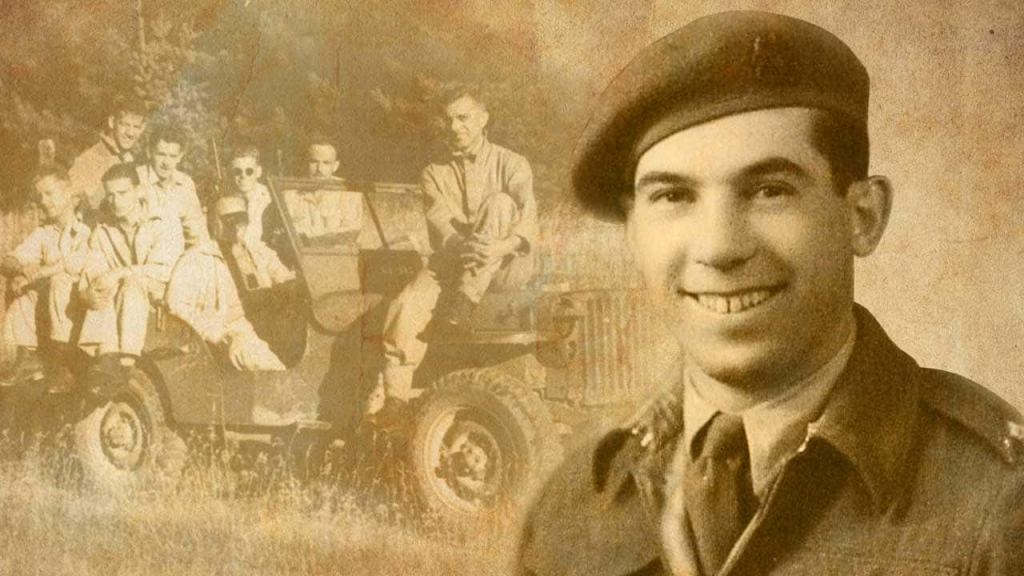
Hanna Szenes: SOE (Special Operations Executive) Wireless Operator M26 (Hungarian Section)

Hanna `Anna’ Szenes was born to a Jewish family in Budapest, Hungary and during the war was living in a Kibbutz in British Mandate of Palestine when she decided to join the British military and is listed as serving as an Aircraft Woman 2nd Class with the Women’s Auxiliary Air Force (WAAF’s) and her service number was 2992382. The date she completed SOE training at STS 102, Mount Carmel, Haifa is not documented.

On 19 March 1944 Hanna Szenes, Yoel Palgi and Peretz Goldstein parachuted into Yugoslavia to undertake operations in Hungary, but their arrival coincided with the German invasion of Hungary and after hearing the news Palgi and Goldstein decided it was too dangerous and aborted their mission and Hanna continued without them. She stayed briefly with partisans in the Balkans and used her wireless link to SOE Massingham in Algeria to arrange weapons to be dropped by parachute before making her way to Hungary to start her mission.

Hanna was captured with her wireless after crossing the border and because wireless operators where considered a rich source of intelligence was taken to the Hungarian Intelligence Headquarters in Budapest where she was stripped naked, tied to a chair, whipped, clubbed, and beaten by her interrogators. She was tortured over several months but refused to talk and according to a male prisoner her treatment was appalling even judged by the standards usually accorded to spies, but she managed to always keep absolutely silent. The source also said she had been shot, he had seen her body lying in the courtyard of Margit Korut, a road not far from the river Danube in the centre of Budapest and believed she had been executed because she refused to talk.

In 1971, her mother said that after being taken to see her daughter at the Hungarian Intelligence HQ in Budapest the door opened and she went rigid: four men led my Hannah, her face was bruised and swollen, her hair was in a filthy tangle, eyes blackened. I was shattered, all my hope for her collapsed like a house of cards. The Nazis watched us like hawks, Hannah tore herself away from them and threw herself into my arms sobbing. She asked me to forgive her. What for? One of the Nazis ordered me to talk to her, to persuade her to tell everything otherwise this would be the last time I saw her, but Hanna remained silent.
On 28 October 1944 Hanna Szenes was tried for treason and twice the trial was delayed, and whilst in prison she wrote in her diary “I played the number game. The dice I have rolled twice. I have lost” and before the Hungarian judges reached a verdict Hanna was taken from her cell and executed by a German firing squad.
Although the date of her death is listed by the Commonwealth War graves Commission as being sometime in May 1944 her execution took place on 7 November 1944 and after being placed in front of a firing squad witnesses said 23-year-old Hanna refused to wear a blindfold because she wanted to look her killers in their eyes.

Alexander Vass: SOE Hungarian Section wireless operator

Alexander Vass was born in Limburg, Germany, he spoke fluent Hungarian and was a child when his family moved to Canada and became naturalised Canadians.

 In early 1943 Vass enlisted into the Royal Canadian Medical Corp and several months later he came to the attention of SOE’s Hungarian Section who were looking for agents who could speak fluent Hungarian and after passing selection and training in England he went on to pass the wireless and security course at Thames House in Oxfordshire.

Vass and three other agents boarded a converted Halifax bomber of 148 Special Duty Squadron RAF to be dropped by parachute north of Lake Balaton in western Hungary and after the aircraft failed to return it was assumed all had been killed.

Several months after the war it was discovered the Halifax had been intercepted by German night fighters and Luftwaffe documents stated the aircraft exploded after hitting the ground and all the crew were killed.  After three SOE agents were liberated from a German prisoner of war camp Alexander Vass was not among them and the three surviving agents later described what happened.

They were not aware the aircraft had been lost because the agents had been dropped before its interception. One agent named Broughay said they had been dropped at the wrong location and landed in a forest and he found himself about 30 feet up a tree and there was no way of concealing their presence. After splitting up into two groups he and Vass avoided enemy forces for over 24 hours but were eventually captured, stripped searched and interrogated. They were then taken down a hill where the other two agents were in custody and were told they would be shot. The three agents were then taken to a Secret Police Headquarters were the interrogation continued and the following morning were put into the back of a lorry and were greatly relieved after finding themselves at a German Prisoner of War Camp controlled by the Luftwaffe.

During an allied air raid sometime in December 1944 a bomb hit the camp and Alexander Vass was killed.

Alan Malcher