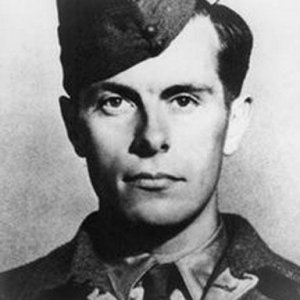
Alexandre Schwatschko, field name Alexander Shaw: Air Landing Officer SOE French Section.

24 year old Alexandre Schwatschko aka Alexander Shaw

Alexandre Schwatschko was born in Russia on 19 July 1919 to a wealthy family with property in the Ukraine and during the Bolshevik Revolution (8 March 1917 to 6 June 1923) the family moved to France. When war was declared in 1939 he enlisted into the French Air Force and served as a pilot until the fall of France in 1940.

After being demobilised under the terms of the armistice he eventually escaped to England through Spain. During his SOE training he was known as Alexander Shaw and because of his flying experience was selected for training as an air landing officer to assist pickup pilots to deliver and extract agents from remote farmland during the moon period.

Air landing officers were trained by the RAF in the technical specifications required for the type of aircraft they would be assisting and after arriving in France were responsible recruiting and training reception committees who were members of the resistance known as ‘torch men’ although many women were also used. These committees were essential because they were responsible for displaying lights in a recognised pattern indicating wind direction, glide path and other information to allow the pilot to approach and land during the moon period without landing lights.

In February 1944 Shaw arrived in France to work for Maurice Southgate’s STATIONER circuit to organise pickup operations by Lysander aircraft. After training his reception committee he identified ten fields fitting the technical and security requirements for Lysander operations and the coordinates were sent to London by wireless. He was responsible for a large number of air landings under difficult conditions and was mentioned in despatches.

Agents were accustomed to being routinely questioned at checkpoints and were trained how to react during their training at the Beulieu finishing school. It is known Shaw was stopped at a checkpoint by German soldiers near the hydro-electric dam in Barrage d’Éguzon, approximately 30 kilometres north of Limoges on 7 June 1944, but there is no explanation why he was arrested and taken to a local police station. After being arrested agents were taught to remain clam, keep to their cover story and there are many recording accounts of agents being released using this procedure.

Why Shaw attacked and killed a German officer during which he was shot dead is not known and according to the Commonwealth War Graves Commission he was buried the following day at a Cemetery in Éguzon.
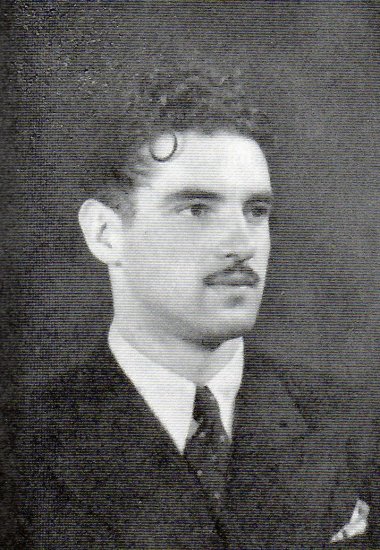
The mysterious death of SOE agent Christopher Lord.

Christopher Lord.

Christopher James Lord was born in Birmingham, England on 27 October 1900. He was recruited by SOE in 1942 whilst working for the Guaranty Trust Company of New York after previously working for American Express in Paris and his wife was serving as a lieutenant with the Free French based in London.

It is known Lord arrived in France on 15 April 1943 with instructions to organise the courier network between Belgium, France and Britain and three days after his arrival Lord recruited two sub-agents named Albert Lefevre and Jean Chudeau. Lord is though to have met his two new recruits on 14 May 1943 at the Café de la Gare in Carmaux after which he was not heard of again.

After the war his wife published his photograph in a Carmaux newspaper and asked for information about his disappearance but there were no replies. In March 1946 she was informed that in 1943 an unidentified body had been found in a well in a small village near Carmaux that had been buried locally. The police were aware the unidentified man had been shot four times with a Colt revolver that was dumped with the body in the well, they were convinced he was not killed by the Germans and at the request of his wife the body was exhumed and later identified as Christopher Lord.

Based on the testimony of the local mayor which was circumstantial, the police worked on the theory that Christopher Lord was murdered by his two recruits, Albert Lefevre and Jean Chudeau, who were never found. Lord is also known to have been carrying a substantial amount of money but when his body was recovered he only had a 100 Franc bank note in his pocket and police suspected the motive for his murder was money, but who murdered Christopher Lord and why has not been proved.

Christopher Lord was eventually buried at Laissac Cemetery, Aveyron, France (CWGC).

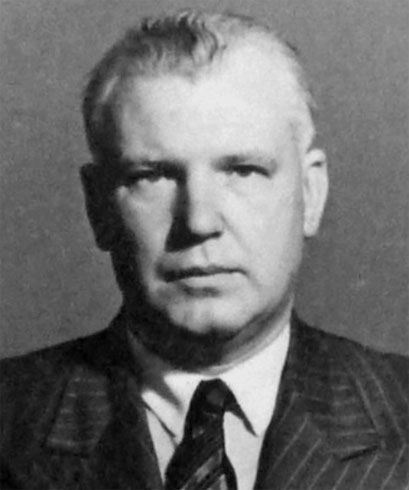
Jack Sinclair: saboteur SOE French Section

Jack Sinclair

22-year-old Jack Sinclair after completing SOE selection and training.

Jack Sinclair was born in France to an English father and French mother and they lived in Rouen until Jack was six. The family then moved to Marseille and eventually settled in Bordeaux until France was occupied in 1940.

After escaping to England Jack became a trainee draughtsman before enlisting into the Intelligence Corps and was recruited by SOE in October 1943. 

His training assessment states Jack Sinclair did not display the leadership skills required to organise a clandestine circuit but was an excellent saboteur and capable of organising a small group of saboteurs working for the MONK circuit in southern France.

After arriving at SOE Massingham in Algeria he parachuted into France on the night of 6/7 March 1944 to join the MONK circuit and was later discovered Sinclair had been captured during a German wireless deception that MRD Foot described as “a horrible staff muddle with an OSS radio game”.  The Germans had captured an OSS (American Office of Strategic Services) wireless and codes and because SOE and OSS ran independent operations it is not known how the Germans used their codes to deceive SOE especially when there should have been no communications between the two organisations and OSS should not have been aware of SOE operations.  Instead of being dropped to members of SOE Jack Sinclair was dropped to an OSS group controlled by the Germans and arrested as soon as he landed.

A post-war investigation discovered that after his capture Sinclair was sent to a prison in Marseille but after this there is no trace of him.  It is known that after being denounced by a French collaborator several members of MONK were arrested; others went into hiding, the circuit was destroyed and after the war the collaborator was tracked down and executed for treason.

After France was liberated the French War Crimes Liaison Group was asked to investigate what happened to Jack Sinclair and on 19 March 1946 SOE received a report stating  “Jack Sinclair was at Baumettes Prison as late as April 1944… I am quite unable to give any further information on what became of him, from the day that the cell door closed behind him… It is presumed Sinclair never left Baumette alive. At the time of his death Jack Sinclair was 22, his name is listed on the Brookwood memorial in the UK and on the F Section Memorial Valéncay in France and like many SOE agents  is recorded as having no known grave.

Alan Malcher

Octave Simon: SOE circuit organiser French Section.

Octave Simon

Octave Simon had been a notable sculptor before the war and was involved in resistance after France was occupied. In 1942 he began working as a sub-agent with SOE after being recruited by Philippe de Vomécourt the leader of VENTRILQUIST circuit. After De Vomécourt was arrested Simon was contacted by another agent and asked to form a circuit in the Sarthe region.

Simon received several arms drops through a circuit called SATIRIST and after Francis Suttill, the leader of PROSPER circuit was arrested in June 1942 all sub-circuits of PROSPER including SATIRIST  were infiltrated and within weeks the entire network was blown. Simon escaped to Angers after almost being captured by the Gestapo on four occasions and was eventually picked up by an aircraft from 161 Squadron, RAF Special Duty Squadron on the night of 19/20 August and taken to London.

After completing agent training Simon returned to France on the night of 7/8 March 1943 with a wireless operator named Marcel Defence to restart SATIRIST circuit. They were parachuted to a reception committee (helpers on the ground) from BUTLER circuit but SOE HQ in London was unaware the circuit had been destroyed and was in German hands, consequently, Simon and Defence were dropped to waiting German soldiers.

Marcel Rousset, the wireless operator for BUTLER, was forced to use his wireless to contact London and allegedly London overlooked his ‘Bluff’ code indicating he was in German hands and sending under duress.  The Germans continued to use his wireless for nine months and received several arms drops and captured a number of agents who were dropped  to German reception committees.  It is recorded that Octave Simon and Marcel Defence died at Gross-Rosen Concentration Camp, Marcel Rousett survived the war and died on 13 February 1983.

Alan Malcher

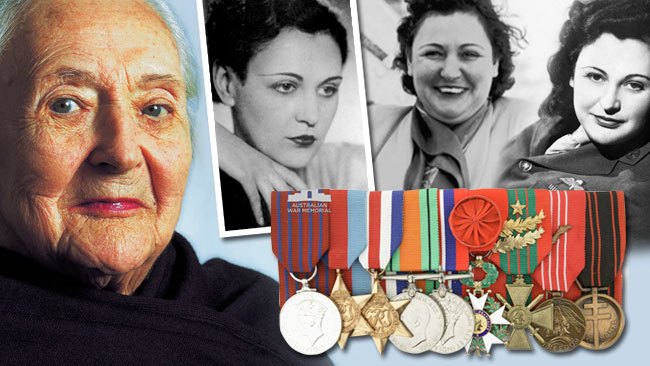
Pearl Cornioley (nee Witherington) SOE French Section

On the night of 22-23 September 1943 Witherington arrived by parachute to a reception committee on farmland near Tendu, France and became the courier of STATIONARY circuit and supported another SOE courier called Jacqueline Nearne. In November she joined a new circuit called FREELANCE and changed her identity to Marie Jeanne Verges (codename Pauline) with the cover occupation of a cosmetic consultant which gave her a pretext for travelling great distances whilst carrying messages and liaising with other agents and members of the resistance. This involved countless train journeys during which she was frequently stopped and questioned by the SD and civil police and after being unable to find a suitable safehouse she resorted to sleeping in unheated train carriages during the winter which added to the exhaustion she was already suffering. For an agent this was a dangerous medical condition because mistakes were easily made, and their judgment became increasingly clouded.

After meeting agents and helping to coordinate the preparations for D-day her circuit organiser Maurice Southgate was suffering from exhaustion when he failed to use basic security checks which he had used many hundreds of times before and walked into a mousetrap (a blown safehouse were German forces were waiting). After Southgate was arrested by the SD his large STATIONERY circuit was transformed into two circuits – an agent named Maingard became the organiser of what was called SHIPWRIGHT, Witherington organised a circuit called WRESTLER and under their leadership engaged in coordinated sabotage to support allied forces.  On the morning of 11 June 1944 her headquarters near the village of Dun-le-Poëllier was attacked by German forces which arrived in 56 lorries; 32 Maquis were killed, their weapons were destroyed, and Witherington hid in a corn field whilst under heavy fire before escaping. Witherington then cycled to Saint-Viâtre to meet another SOE agent to arrange a resupply and on 24 June three heavily laden aircraft dropped weapons and ammunition to her circuit and WRESTLER continued its attack on German forces and Witherington is noted for being the leader of 3,500 men of the Maquis. Maurice Southgate, DSO survived Buchenwald concentration camp and Pearl Witherington Cornioley died in France on 24 February 2008 at the age of 93.

Alan Malcher

Denis Barrett SOE Wireless Operator

Denis Barrett (fieldname Honore) arrived in north-eastern France by parachute in April 1943 and worked as the wireless operator for a clandestine circuit in the Troyes area. He was in regular contact with London until his cover was blown several months later and escaped to England after being extracted by Lysander aircraft from No.161 Special Duty Squadron RAF.

Barrett volunteered to undertake a second mission to France and arrived by parachute in early March 1944 and worked as the wireless operator for a new circuit called MINISTER located in Seine-et Marne, northern France. Barrett had two wireless sets; one was in Tores the other was hidden in the countryside several miles from the town. The Abwehr (German Military Intelligence) were aware of a British agent in contact with London and Barrett transmitted from several locations to avoid his safehouses being located by direction finders.

After an agent was captured whilst transmitting to London Barret stopped using his wireless located in Tores and for several months travelled by bicycle to the countryside to use his other wireless. During his journeys he avoided German patrols and, on several occasions, cycled past stationary wireless detection vans which were listening for signals.

Despite constantly changing his location to avoid detection London became aware there was a problem after his signal abruptly stopped in mid-sentence and Barrett was later reported missing presumed dead.  

After the war Barret’s name was found scratched on the wall of a cell at the SD headquarters in Avenue Foch, Paris and it is known he was later moved to Buchenwald concentration camp. It was later reported he was among the first of thirty-one agents who were hanged at Buchenwald during the first week of September 1944, but is now believed he was among the eleven agents shot at Buchenwald on 5 October that year.

Alan Malcher

Benjamin ‘Ben’ Cowburn French Section SOE

SOE agent Benjamin ‘Ben’ Cowburn.

Ben Cowburn was born in Lancashire on 3 March 1909 and at the age of 8 moved with his British parents to Paris and was educated at a British school in Boulogne-sure-Sein. Shortly after marrying a French woman Cowburn studied electrical engineering and after graduating worked for the American company Foster Wheeler which was building oil refineries throughout France. Apart from his language and cultural skills SOE was interested in his extensive knowledge of the French oil industry and Cowburn became one of the first students to train at Wanborough Manor in 1941 before completing four missions to France and after the war was awarded the Military Cross and Bar and the Chevalier of the Legion of Honour by France but like many agents, he tended to downplay his war service and bravery whilst talking about the bravery of others.

Benjamin Hodkinson Cowburn died on 17 December 1994 aged 85 in Boulogne-Billancourt, France.

SOE wireless operator Adolphe Rabinovitch

Anaue

Adolphe Rabinovitch was a Russian-Egyptian Jew who served with the French Foreign Legion during the Battle of France. After being captured he escaped and made his way to England where he was recruited by SOE. On his second mission to France he was captured, interrogated and sent to Gross-Rosa concentration camp where he was executed sometime in 1944 at the age of 25.

Alan Malcher

SOE wireless operator Denise Bloch (12 January 1916- 5 February 1945)

DFenise bloch

(Image IWM)

On 2 March 1944 Denise Bloch infiltrated central France by parachute and worked as the wireless operator for both Clergyman and Detective circuits which were part of SOE’s clandestine network and began arranging for weapons, sabotage stores, finance and other agents to be sent from London and worked with several reception committees receiving incoming air drops.

It was around 8.20 am on 18 June when her wireless transmissions were located by German direction finders and her Safehouse raided by the Sicherheitsdienst des Reichsführers-SS (Security Service of the Reichsführers-SS), or SD, and Bloch along with another agent were captured.

It is known Bloch was tortured for information, but her wireless was not used by the Germans, and it appears Bloch refused to give the SD her personal wireless codes used to confirm her identity to London. It is also known she was transported to prisons in Germany during which she suffered from exposure due to the cold and malnutrition and was eventually transported to Ravensbrûck Concentration camp where she was executed on 5 February 1945 at the age of 29 and like many agents has no known grave after her body was cremated along with many others.

Alan Malcher