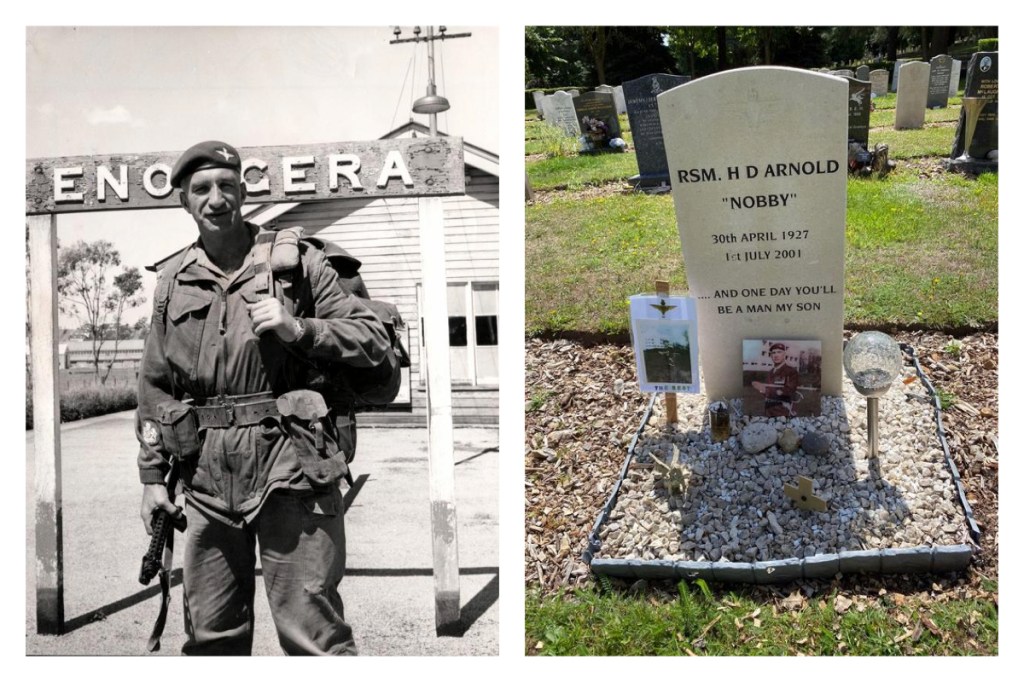
RSM ‘NOBBY’ Arnold Parachute Regiment.

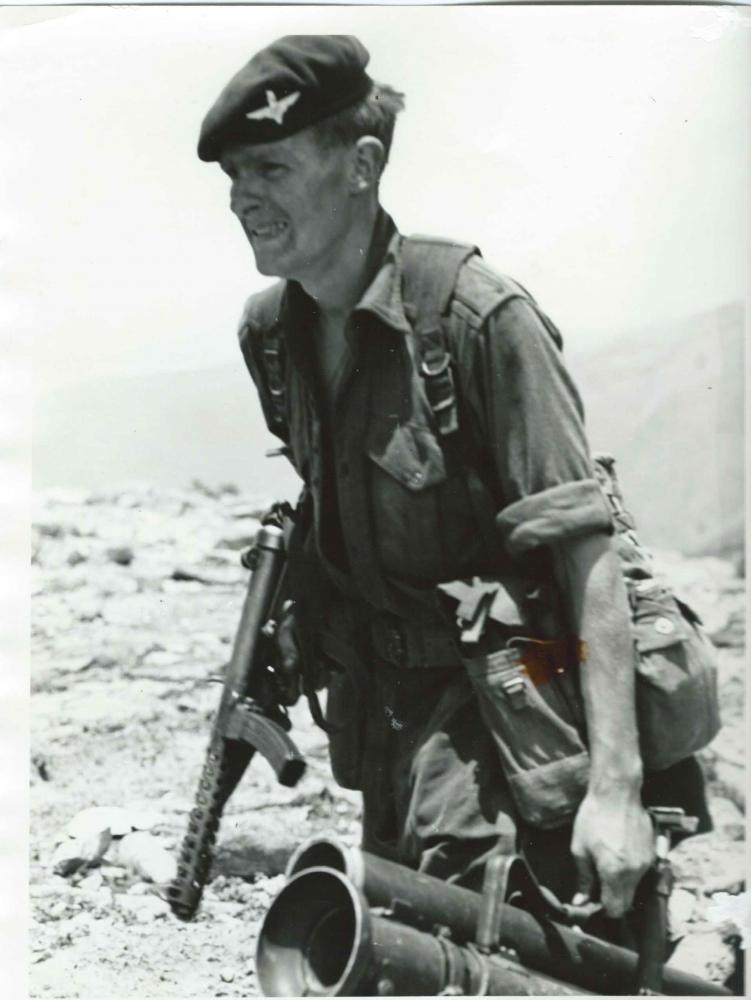
RSM ‘Nobby’ Arnald. A legend in the Paras whose sense of humour helped install discipline. I recall a story of him putting his bicycle against the Guardhouse wall and after it fell over in the wind had his bicycle arrested and locked in a cell for not obtaining permission for falling over. Typical RSM banter.

He saw active service in Palestine, Canal Zone and Suez, Cyprus and the Radfan. Many felt that Nobby Arnold should have been decorated for bravery in the Radfan in 1964, where a ridge captured by 3 PARA’s Anti-Tank Platoon was named ‘Arnold’s Spur’ in recognition of WO2 Arnold’s outstanding battlefield leadership and valour. His CO, Anthony Farrar-Hockley, is said to have told Nobby Arnold that the award of decorations was a lottery and Arnold had simply missed out. RIP ‘Nobby’

Alan Malcher.
Another lesser known British Campaign during the Cold War Period: Aden 1963-1967

The Aden Emergency was against communist insurgents, the National Liberation Front For the Liberation of Occupied South Yemen (FLOSY) and the National Liberation Front who were supported by the Soviet Union and the United Arab Republic.

During the campaign 92 British military personnel were killed and 510 wounded. The conflict then developed in the mountainous Radfan region where dissident local tribesmen raided roads connecting Aden with the town of Dhala near the Yemen border.
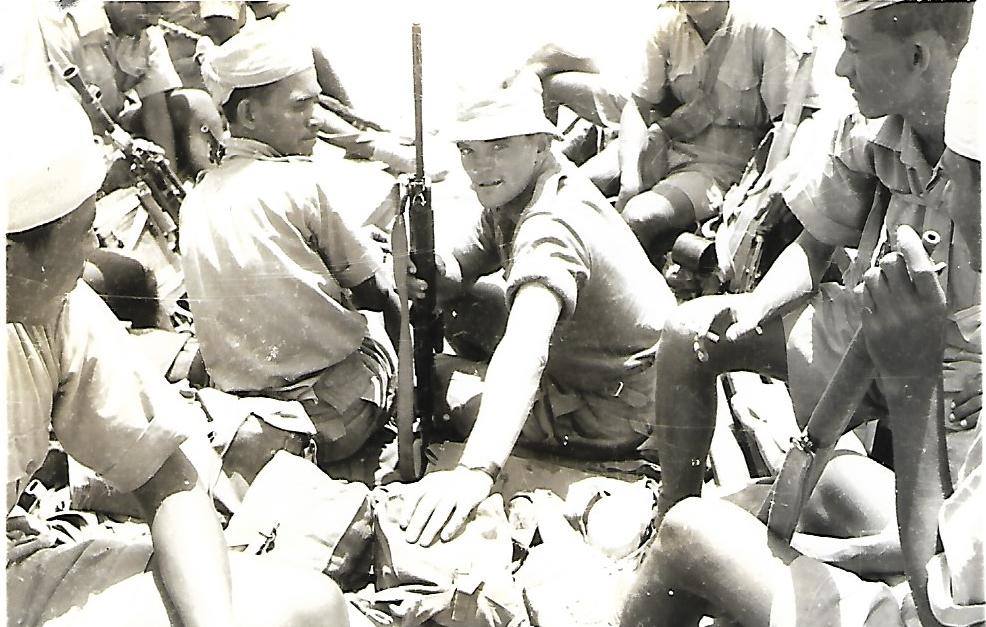
Photograph of Private Wally Fraser (centre) of B Company East Anglian Regiment who was killed clearing mines on 31 December 1964. His name appears on the Regimental Memorial.

British Forces in the Radfan 1 April 1964 to 30 June 1964: One of several forgotten conflicts.

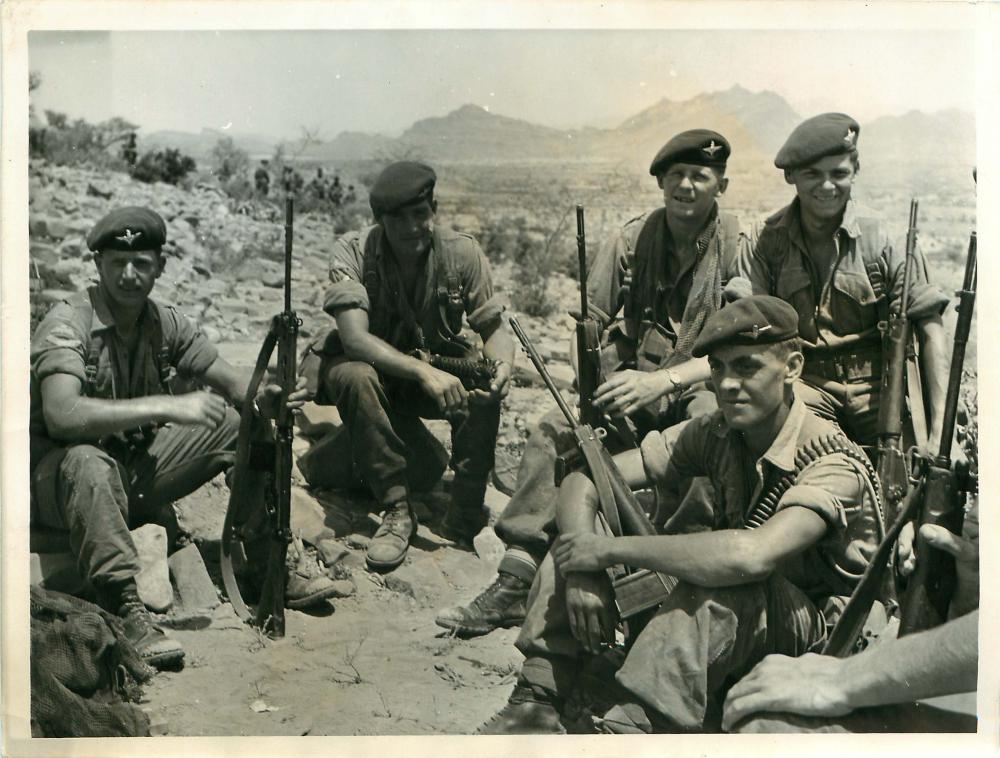
British Paratrooper on the Radfan Moutains. (Paradata)

One of many forgotten conflicts since WW2: the Aden Emergency was an armed insurgency by the NLF and FLOSY against the Federation of South Arabia, a protectorate of Britain which is now part of Yemen. 

The 5000-foot Bakari Ridge which dominated the Wadi Dhubson was regarded as impregnable by the insurgents and accommodated their leadership. To capture the Wadi Dhubson members of 3 Para (3rd Battallion Parachute Regiment) scaled the mountain carrying 90lb loads and covered 11 miles during two-night marches and after a number of skirmishes and a large firefight they occupied the ridge on 24 May.

Radfan (Pradata)

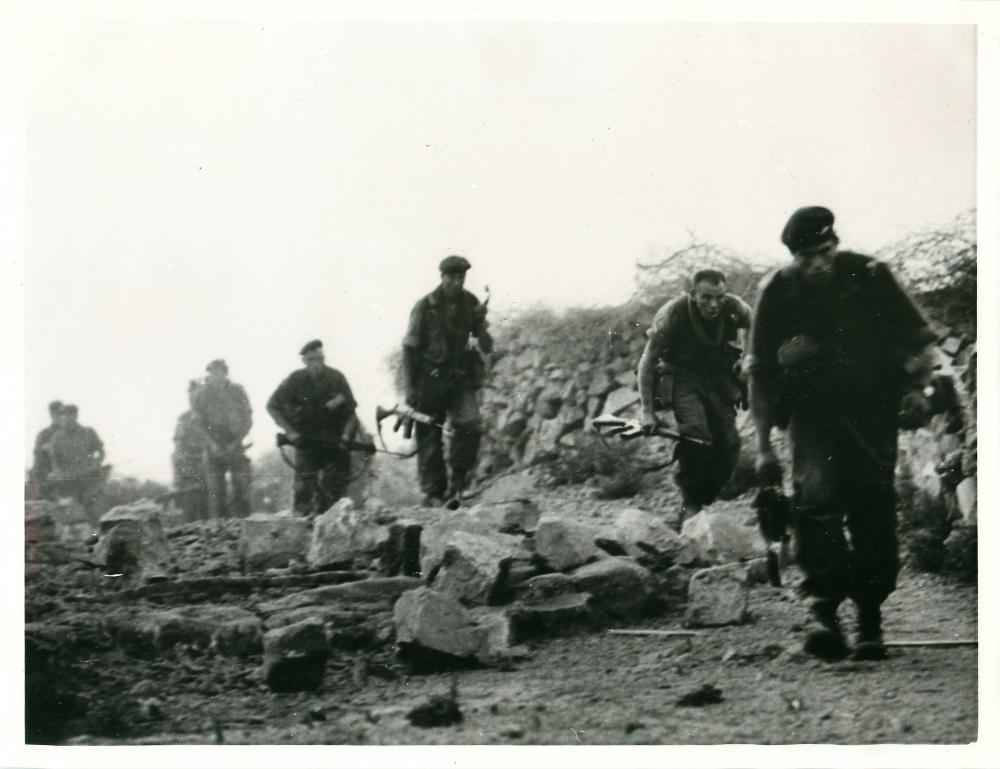
Soldiers descended from the ridge on 30-foot ropes and surprised the insurgents and this was followed by a violent fire-fight and air attacks from RAF fighters and concentrated fire from the battalion broke all resistance and the insurgents withdrew leaving their dead and all their weapons behind. Villages were searched, and arms dumps destroyed. Within nine days 200 square miles of territory which had been an insurgent stronghold and had never been entered by Europeans was secured and place under government control and many insurgents had been killed.

(Paradata)

3 PARA withdrew back to Aden on 28th May having won a DSO, an MC and four additional medals, three MIDs and six CinC commendations. D Coy, 3 PARA were deployed on 6 June and remained behind for a further four weeks.


The Peacekeepers – South Arabia, Radfan – Parachute Regiment Documentary (1967)

The Radfan Campaign was a series of British military actions during the Aden Emergency. It took place in the mountainous Radfan region near the border with Yemen. Local tribesmen connected with the NLF began raiding the road connecting with Aden with the town of Dhala.

This documentary was filmed over 50 years ago, therefore, some of the language and context used may be seen as offensive or insensitive in today’s context.