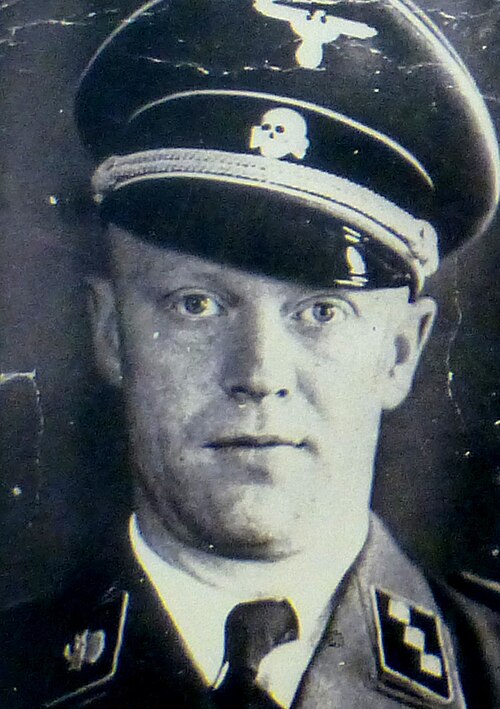
During 1928 Fritz Suhren joined the Nationalists Socialist German Workers Party (NSDAP) commonly referred to as the NAZI party and was also a member of the Sturmabteilung (SA) noted for its extreme violence against German Jews, communists and anyone opposed to the rise of Hitler.
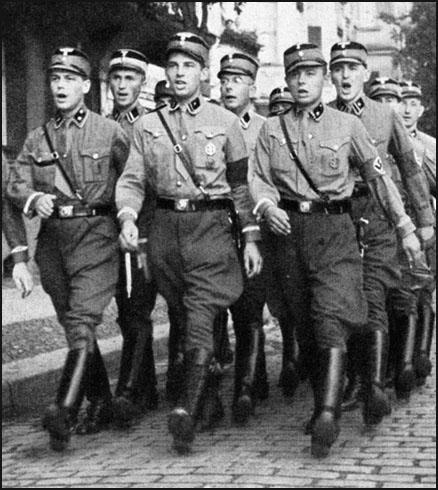
Sturmabteilung (SA) (Image public domain)
Whilst serving as the Deputy Commandant at Sachsenhausen concentration camp he ordered a prisoner named Harry Naujok who was a German Communist and anti-fascist to hang another prisoner, but Naujok refused. The gallows were fitted with a winch to ensure death was long and painful; surprisingly Naujok was not shot and was ordered to stand on the gallows next to the condemned prisoner and watch the man’s agonising death before another prisoner was forced to operate the winch.
From July 1942 to April 1945 Suhren was the Commandant of Ravensbrûck concentration camp which was the largest camp for female political prisoners. The camp had over 150 female SS guards known as Aufseherin (overseer) who carried whips and used dogs to enforce discipline and were just as brutal as the male guards. Ravensbrûck was also a training camp for over 4,000 Aufseherin’s before they were assigned to other camps
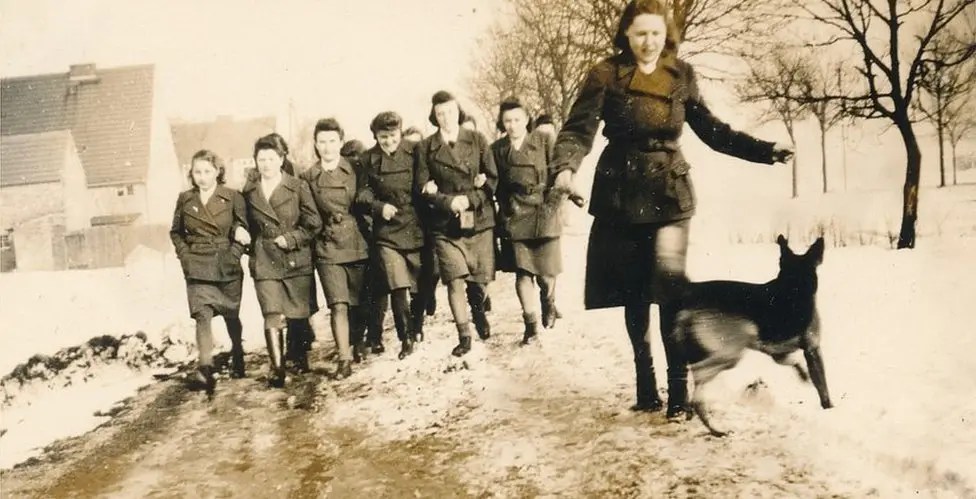
c1940 Aufseherin’s
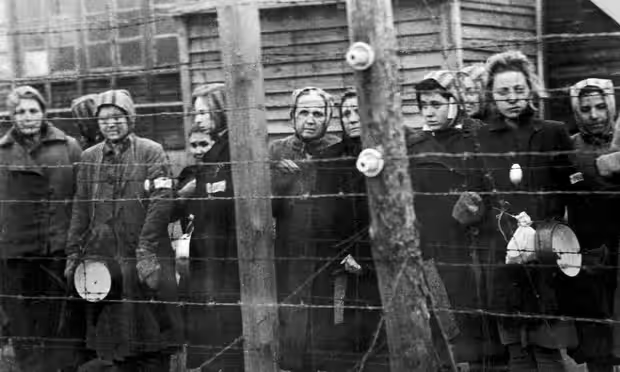
Photograph taken during the Liberation of Ravensbrûck (public domain)
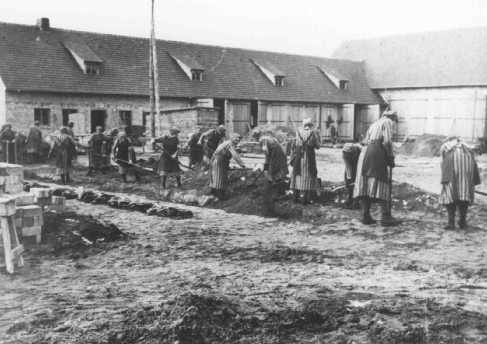
Hard labour at Ravensbrûck
Elsie Maréchal worked for the Belgium end of the COMET escape line rescuing allied airmen and others before being arrested and transported to Ravensbrûck; during a war crimes tribunal she said “We were to die of misery, hunger and exhaustion… The first thing I saw when I arrived was a cart with all dead bodies piled on it… Their arms and legs hanging out and mouths and eyes wide open. We did not feel like we had the value of cattle. You worked or you died.”
SOE agent Odette Sansom mentioned a young girl 18 or 19 years old being shot through the head by an SS guard, “She was Fresh. Still warm when the women attacked her body. They were crazy, demented and needed to consume whatever they could to survive.”
Under Suhren’s command SS doctors, without anaesthetic or pain relief, carried out medical experiments on prisoners. Among the recorded experiments during which prisoners were awake include bone transplants, infecting bones and muscles with bacteria and experiments on female reproductive system. The camp also supplied women for brothels at several camps and most died from sexual violence and the rampant spread of sexually transmitted disease.
When SOE agent Odette Sansom had been arrested and tortured over several days and spent over a month in solitary confinement in a cell with no light or heating she convinced the Gestapo she was married to Peter Churchill, the agent who had been arrested with her and he was a close relative to British Prime minister Winston Churchill and the news of her powerful family connection through marriage rapidly spread and by the time she arrived at Ravensbrûck Suhren and Berlin were not sure how to treat her.
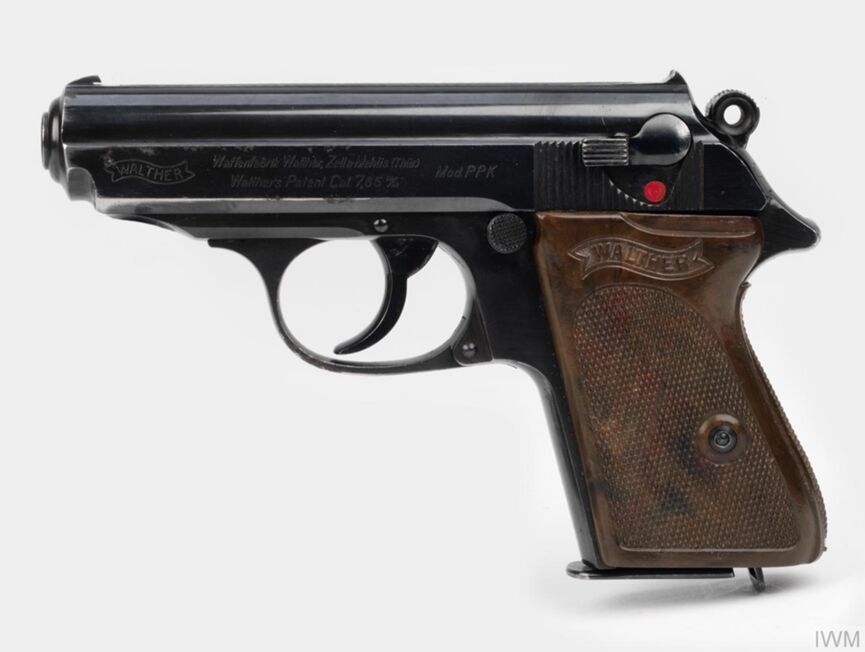
The Walther PPK belonging to Fritz Suhren now part of the Imperial War Museum collection.
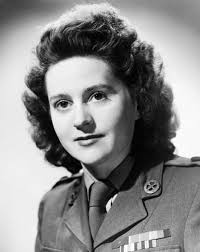
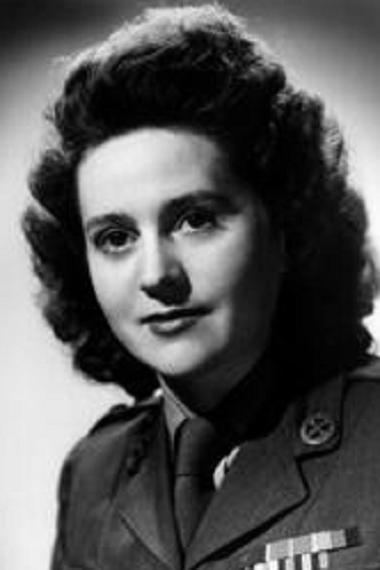
Odette Sansom GC.
After the defeat of Germany was seen as inevitable and the Soviet Army would liberate the camp Suhren was fearful of being captured by the Russians. Suhren had been taken in by the lie of Odette’s family connection and believed Winston Churchill would be lenient for saving the life of a member of his family and would not be convicted of war crimes despite the overwhelming evidence against him. Fritz Suhren gave Odette Sansom his Walther PPK pistol, now on display at the Imperial War Museum in London, before they drove to the American lines and Sansom gave her notorious prisoner to a group of surprised American soldiers.
Fritz Suhren later escaped and during the Hamburg Ravensbrûck trial Suhren was found guilty of war crimes, crimes against humanity and sentence to death in absentia. Suhren had fled to Bavaria where he was caught by American forces in 1949 and sent to the French Occupied Zone and was executed by firing squad on 12 June 1950 along with SS guard Hans Pflaum.
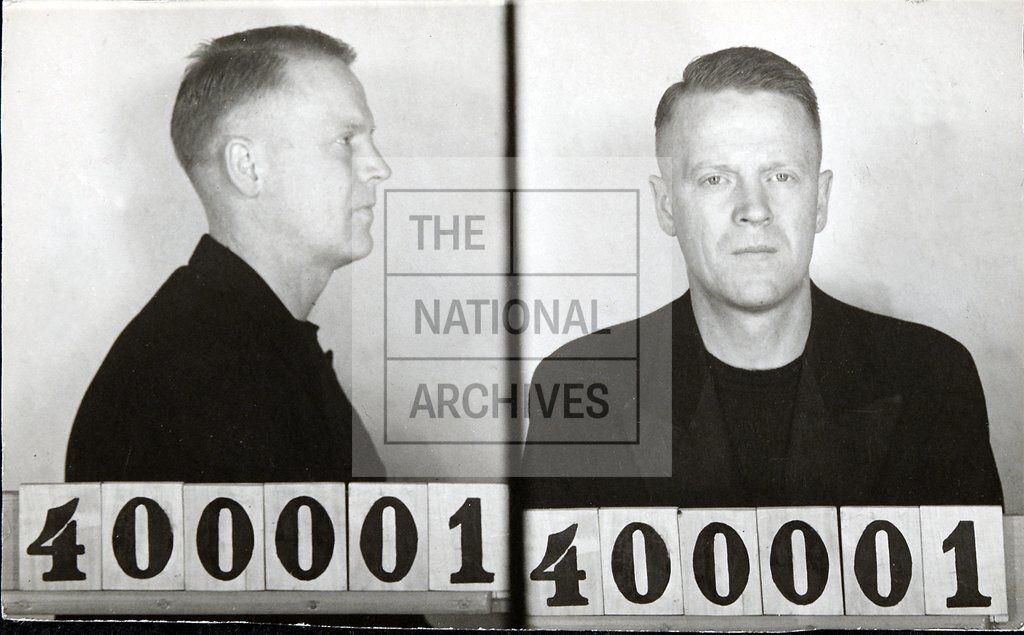
 Alan Malcher