The effects of Shell Sock during the First World War (1914 to 1918)

Shell Shock has been described as a reaction to to the intensity of bombardment and fighting that caused a feeling of helplessness that could result in panic, fear, flight or an inability to reason, sleep, walk or talk. It was also referred to as bullet air, soldier’s heart, battle fatigue, war neuroses and operational exhaustion.

As seen in this short clip by Pathé News Shell Shock sometimes caused serious damage to the nervous system.
Irish Soldiers: the Battle of Mons during the Great War of 1914 to 1918.

The Battle of Mons was the first major action of the British Expeditionary Force of the First World War. It was a subsidiary action of the Battle of the Frontiers, during which the allies fought the Germans on the French border.

I don’t know the source of this short film documentary and consequently I am unable to credit the film maker.

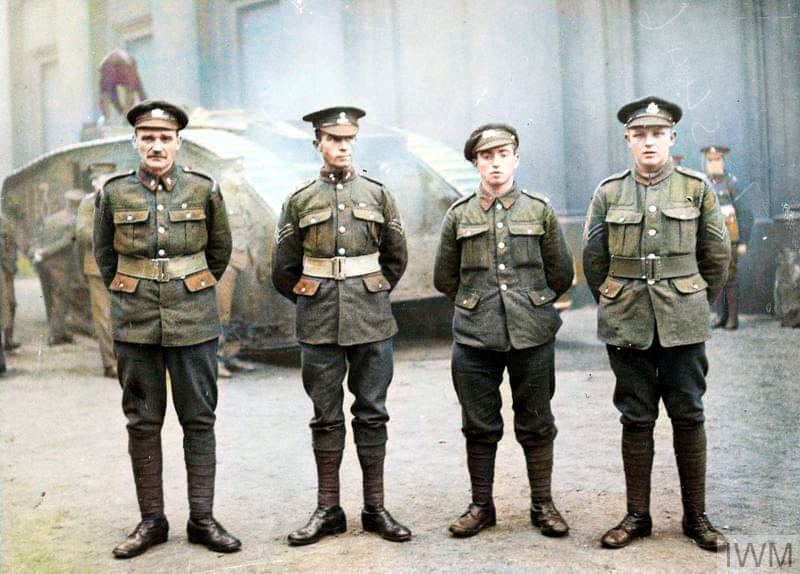
Four recipients of the Victoria Cross during the Great War. IWM image dated 1917.

From left to right:

Private Michael O’Rourke VC, MM 7th (1st British Columbia) Battalion Canadian Expeditionary Force, awarded the VC in France on 15/17 April 1917.

Sergeant James Ockendon VC,MM of the 1st Battalion Royal Dublin Fusiliers, awarded the VC in Belgium on 4 October 1917.

Private William Boynton Butler VC, 17th Battalion West Yorkshire Regiment, awarded the VC in France on 6 August 1917.

Corporal Ernest Alfred Egerton VC, 16th Battalion Sherwood Foresters, Awarded the VC in Belgium on 20 September 1917.

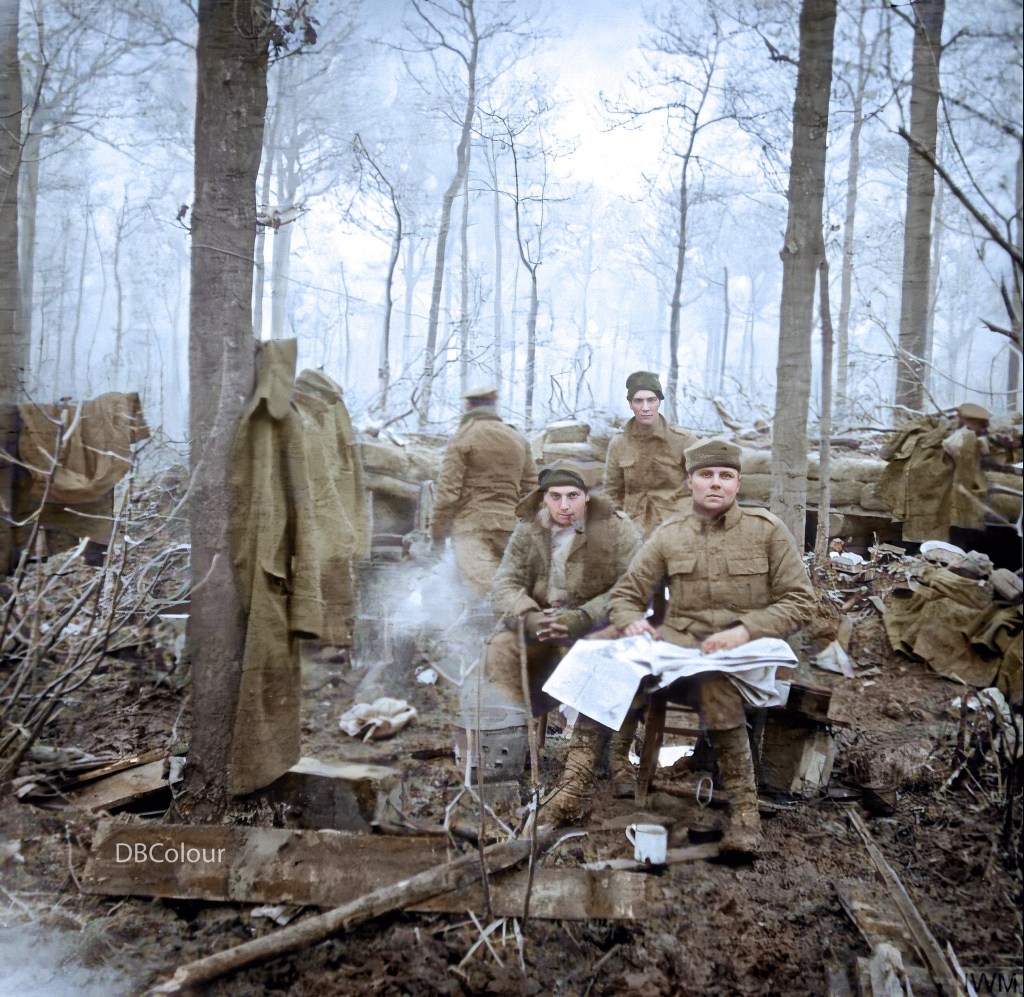
London Rifle Brigades during the Great War, December 1914.

Colourised image by DBCoour. Original B&W source not listed)

Members of the London Rifle Brigades in Ploegstreet Wood, Armentieres Belgium. According to the London Rifles Association during the Great War 10,016 were killed during enemy action, 2,644 wounded and 303 captured. Part of the wood is now used by the Commonwealth War Greaves Commission.

Alan Malcher

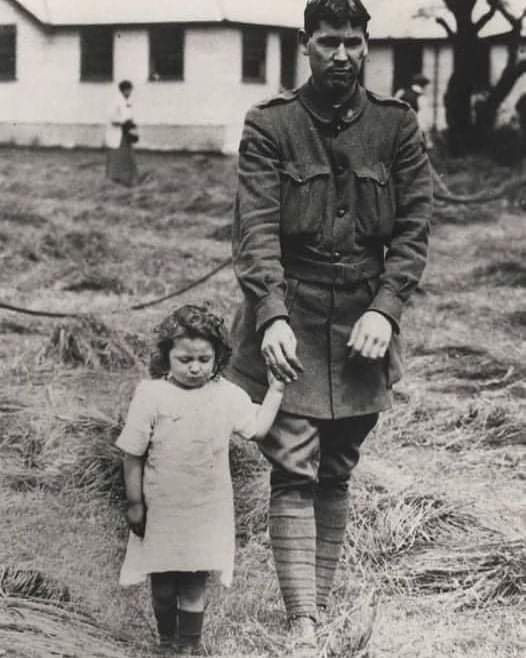
3 year old Ruby Crane who helped blind soldiers during the Great War

Ruby Crane

The father of Ruby Crane was the head gardener working for a rehabilitation centre for blind soldiers called St Dunstan’s in Brighton, Sussex during the Great War and St Dunstan’s still helps blind veterans.

Ruby Crane saw a blind soldier stumbling and decided to take his hand  and guide him where he wanted to go. After this act of kindness Ruby spent every day guiding blind soldiers and was popular among veterans and their families.

Ruby was in her late 90’s when she died in 2011.

Alan Malcher

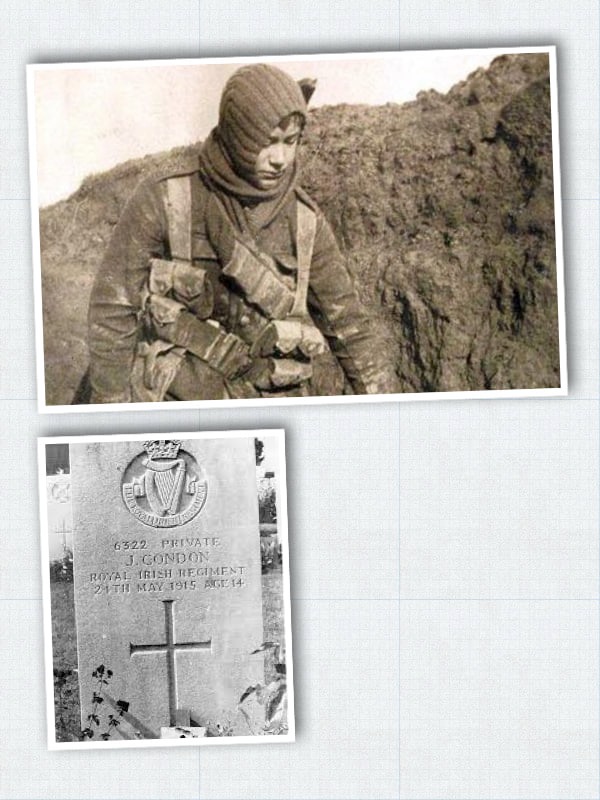
Private John Condon 2nd Battalion Royal Irish Regiment during WW1

6322 Private John Condon of the 2nd Battalion Royal Irish Regiment was killed in action at the age of 14 on 24 May 1915 and is believed to be the youngest battle casualty of the Great War. He is buried at the British war grave at Poelcapelle, Belgium

Alan Malcher