From the BBC Archives.
Thomas John Bingham aged 29 and William Richie Savage from East Belfast were travelling in an unmarked police car on Newry Road when they were killed by a 1000 lb bombed detonated 600 yard away.
From the BBC Archives.
Thomas John Bingham aged 29 and William Richie Savage from East Belfast were travelling in an unmarked police car on Newry Road when they were killed by a 1000 lb bombed detonated 600 yard away.

Francis André (Musée de la Résistance Nationale)
Much has been written about Hauptsturmfuhrer Klaus Barbie, the head of the Gestapo in Lyon who became known as the “Butcher of Lyon” after personally torturing men, women and children, but little as been written about Francis André.
Francis André was born in Lyon on 25 February 1909. At school he gained a reputation for intimidating other children and his face was disfigured during a car accident when he was a teenager and after leaving school became a petty criminal with a long record for robbery, swindles and assaults.
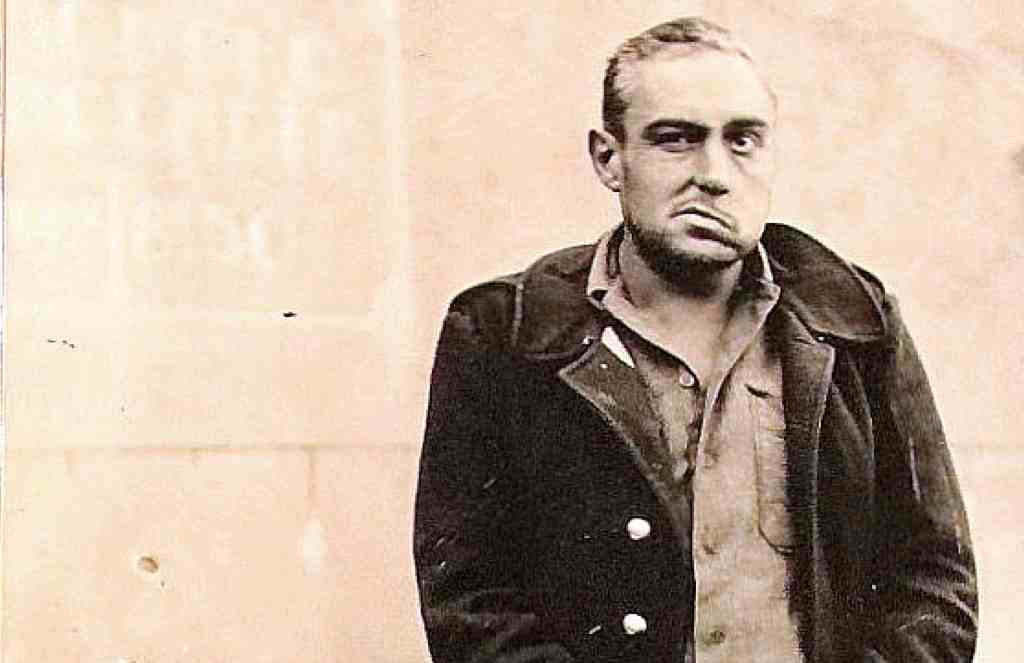
Photograph taken after the war when he was arrested for war crimes.
During the Second World War he was exempt from military service because of deafness and left facial paralysis and continued his criminal career. In June 1943, three years after France was occupied, he was approached by a senior officer of the Sicherheitsdienst des Reichsführers-SS, the intelligence arm of the SSS and Nazi Party, to lead a small movement of collaborators in Lyon called the Anti-Terrorist Movement (MNAT) to work against the resistance, Jews, freemasons, Jehovah Witnesses, and people the SD believed were ‘ethnically’ inferior.
The MNAT engaged in a campaign of assassinations, intimidation and its members also looted homes and shops following arrests. ’Crooked Mouth’ is known to have killed 20 members of the resistance and placed signs on corpses saying, “Terror against terror. This man pays with his life. MNAT assassinations are justified by the law of retaliation responding with murder to murders committed by resistance fighters. Signed MNAT.”
A police report written after the war states, summary killings were the dominant activity of the MNAT. They believed all jews were rich in the pretext of their robberies, in addition many of them had taken refuge in Lyon with their transportable goods such as jewellery, cash, gold etc and used this statement to justify their persecution and arrest of jews.
Crooked Mouth left the MNAT and became Klaus Barbie’s trusted personal assistant and like Barbie enjoyed torturing men, women and children and during his trial after the war in January 1946 at the Court of Justice in Lyon Crooked Mouth admitted to killing 120 people whilst working with Barbie and was later estimate the figure was around 160.
A French journalist who attended the trial wrote, “His stranglers hands run over his mouth with every question he was asked. A gesture that seemed to wipe away the horrors of the answers… He was the abominable murderer, Barbie’s most loyal collaborator, a blood thirsty beast, the most sinister collaborator in the Lyon Gestapo”.
After being found guilty for treason, mass murder and other war crimes, on 9 March 1946 Crooked Mouth was executed by a French firing squad.
Alan Malcher.
HMS Implacable was originally the French Navy’s Téméraire-class ship of the line Duguay-Trouin, launched in 1800 that survived the Battle of Trafalgar in 1805 and later captured by the British during the Battle of Cape Otegal.
During the Anglo-Russian war (2 September 1807- 18 July 1812) HMS Implacable helped capture the Imperial Russian ship of the line Vsevolod. When Implacable was being used as a Royal Navy training ship she was the oldest ship in the RN after HMS Victory, Lord Nelson’s flagship during the Battle of Trafalgar. After her decommission this newsreel dated 1949 shows HMS Implacable being scuttled whilst flying both the Royal Navy White Ensign and the French flag as she sank.
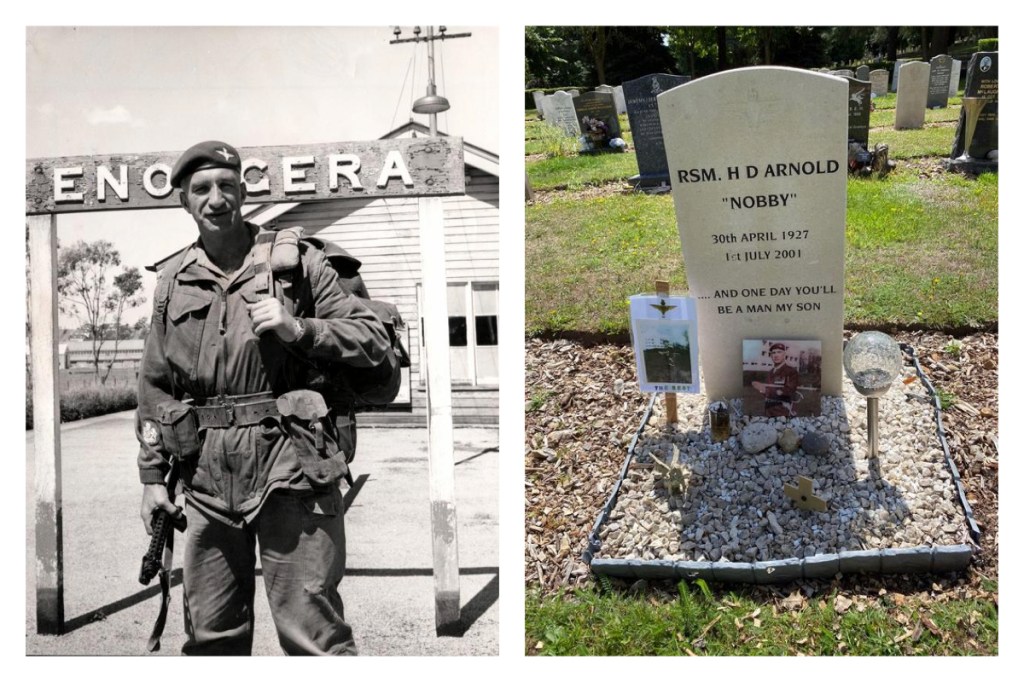
RSM ‘Nobby’ Arnald. A legend in the Paras whose sense of humour helped install discipline. I recall a story of him putting his bicycle against the Guardhouse wall and after it fell over in the wind had his bicycle arrested and locked in a cell for not obtaining permission for falling over. Typical RSM banter.
He saw active service in Palestine, Canal Zone and Suez, Cyprus and the Radfan. Many felt that Nobby Arnold should have been decorated for bravery in the Radfan in 1964, where a ridge captured by 3 PARA’s Anti-Tank Platoon was named ‘Arnold’s Spur’ in recognition of WO2 Arnold’s outstanding battlefield leadership and valour. His CO, Anthony Farrar-Hockley, is said to have told Nobby Arnold that the award of decorations was a lottery and Arnold had simply missed out. RIP ‘Nobby’
Alan Malcher.
The Battle of Mons was the first major action of the British Expeditionary Force of the First World War. It was a subsidiary action of the Battle of the Frontiers, during which the allies fought the Germans on the French border.
I don’t know the source of this short film documentary and consequently I am unable to credit the film maker.
Whilst looking for German shipping hiding in Norwegian fjords, Coastal Command aircraft were forced to dive steeply between precipitous, snow-capped mountains. On December 5th, 34 Mosquitoes of Coastal Command, Banff Wing, armed with cannon and rocket projectiles, attacked enemy shipping lying in the eastern end of Nordgulen Fjord Norway. The aircraft dived from a height of 5,000 ft to mast height at an angle of 45 degrees at a speed of over 300 miles an hour. They also had to run the gauntlet of flak from merchant vessels averaging 3,000 tons each and two escort vessels were attacked – all the ships were left burning. (Film includes good aerial shots of a Mosquito of No. 248 Sqn RAF and attacks on ships in fjord.)
Another clip of the same attack.
The Aden Emergency was against communist insurgents, the National Liberation Front For the Liberation of Occupied South Yemen (FLOSY) and the National Liberation Front who were supported by the Soviet Union and the United Arab Republic.
During the campaign 92 British military personnel were killed and 510 wounded. The conflict then developed in the mountainous Radfan region where dissident local tribesmen raided roads connecting Aden with the town of Dhala near the Yemen border.
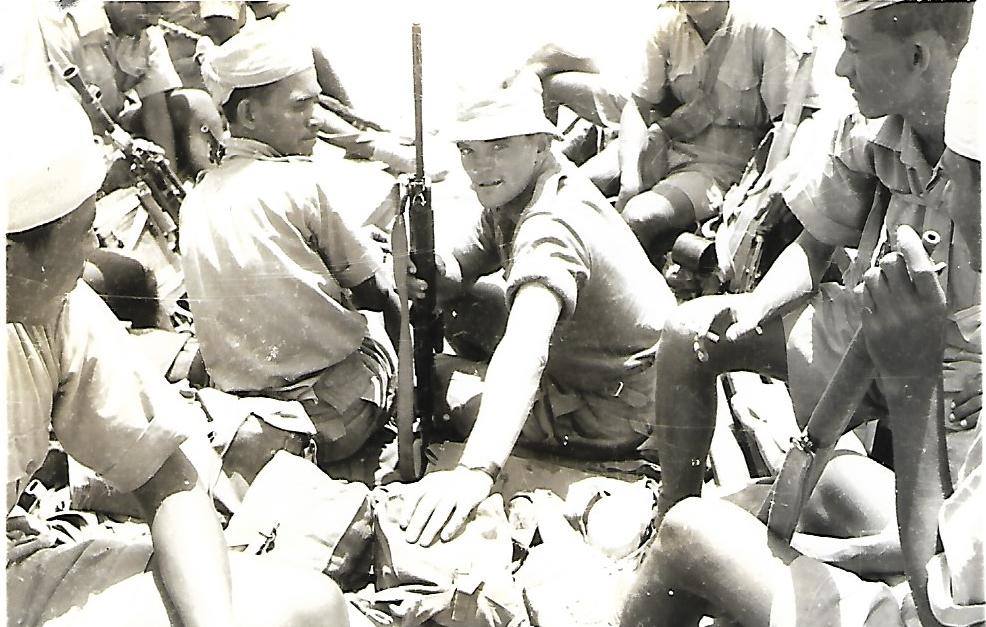
Photograph of Private Wally Fraser (centre) of B Company East Anglian Regiment who was killed clearing mines on 31 December 1964. His name appears on the Regimental Memorial.
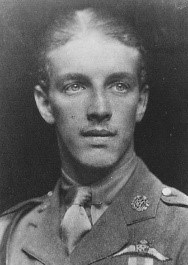
Lewis started his combat tour on the Western Front with only 20 hours in his log book and the following BBC interview was recorded before his death on 27 January 1997 in London.
 Alan Malcher