Malayan Emergency 1948-1960 News Reels
Malayan Jungle Patrol Aka Malaya Report (1953)
Jungle Raid In Malaya (1952)
27th RASC Company in Malaya 1953 (no sound)
Malaya – the Undeclared War (Malayan Emergency)
The Communists termed it the Anti-British National Liberation War. Despite the communists’ defeat in 1960, communist leader Chin Peng renewed the insurgency in 1967; it lasted until 1989, and became known as the Communist Insurgency War. Although Australian and British armed forces had fully withdrawn from Malaysia years earlier, the insurgency still failed.
The Strange History of American-British Intelligence Relations
Christopher Andrew gave a series of three lectures in November on “The Lost History of Global Intelligence—and Why It Matters” for the Henry L. Stimson Lectures on World Affairs at the Whitney and Betty MacMillan Center for International and Area Studies at Yale. The lectures focused on three themes: “How the Lead Role in Strategic Intelligence Passed from Asia to the West” on November 5; “The Strange History of American-British Intelligence Relations: from George Washington to Donald J. Trump” on November 6; and “Russian Intelligence Operations and the West: from Tsar Nicholas II to Vladimir Putin” on November 8.
The Peacekeepers – South Arabia, Radfan – Parachute Regiment Documentary (1967)
The Radfan Campaign was a series of British military actions during the Aden Emergency. It took place in the mountainous Radfan region near the border with Yemen. Local tribesmen connected with the NLF began raiding the road connecting with Aden with the town of Dhala.
This documentary was filmed over 50 years ago, therefore, some of the language and context used may be seen as offensive or insensitive in today’s context.
Mad Mitch and his Tribal Law, The Aden Emergency (Crater City Aden 1967)
The Legendary ‘Mad Mitch’. This BBC documentary is very biased against the army and especially against the Argyles and Lt Col Mitchel.
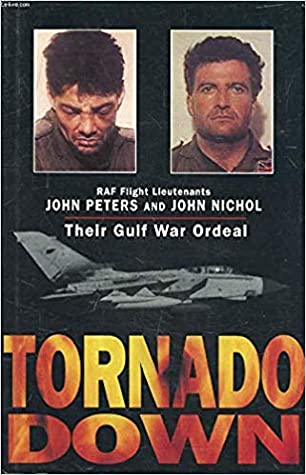
First Gulf War: RAF Tornado Down (Military History Documentary – Timeline)
Their book ‘Tornado Down’
RAF Flight lieutenants John Peters and John Nichol were shot down over enemy territory on their first airbourne mission of the Gulf War. Their capture in the desert, half a mile from their blazing Tornado bomber, began a nightmare seven-week ordeal of torture and interrogation which brought both men close to death.
In Tornado Down, John Peters and John Nichol tell the incredible story of their part in the war against Saddam Hussien’s regime. It is a brave and shocking and totally honest story: a story about war and its effects on the hearts and minds of men.
Free French During WW2: November 1940 to May 1943)
In French with English subtitles.
Authors description, “In central, eastern and northern Africa, during the Battle of Britain, on the Atlantic, many from metropolitan France and French colonies rallied to General de Gaulle’s call to carry on the fight alongside the Allies. The main objective was first to bring the French Empire on the side of the allies in order to prevent the Germans from using it. After Africa and the Pacific islands, Free France participated in the recapture of French islands in the Indian Ocean, of the French protectorate of Syria-Lebanon and French possessions in the Americas. With the rallying of French North Africa in November 1942 and the reconquest of French Tunisia by May 1943, Free France became strong enough to play its full part alongside the Allies for the reconquest of Europe.” (Nettempereur 2017)
Other videos with English subtitles about France during WW2 can be found on the Nettempereur youtube channel.
Belgian Resistance during WW2 (Panel discussion filmed in April 1989)
Guest talks about his parents working for the resistance
 Alan Malcher