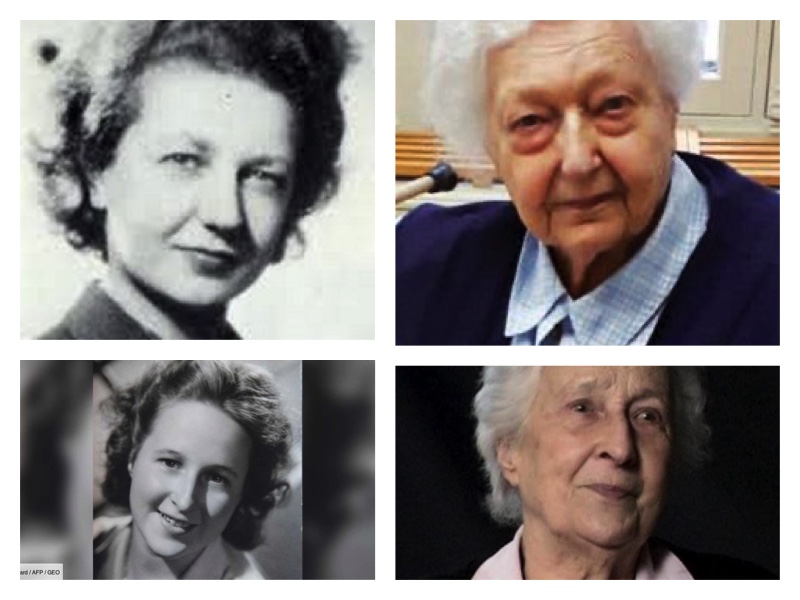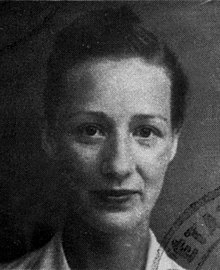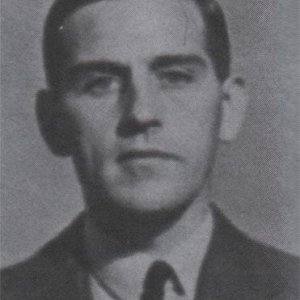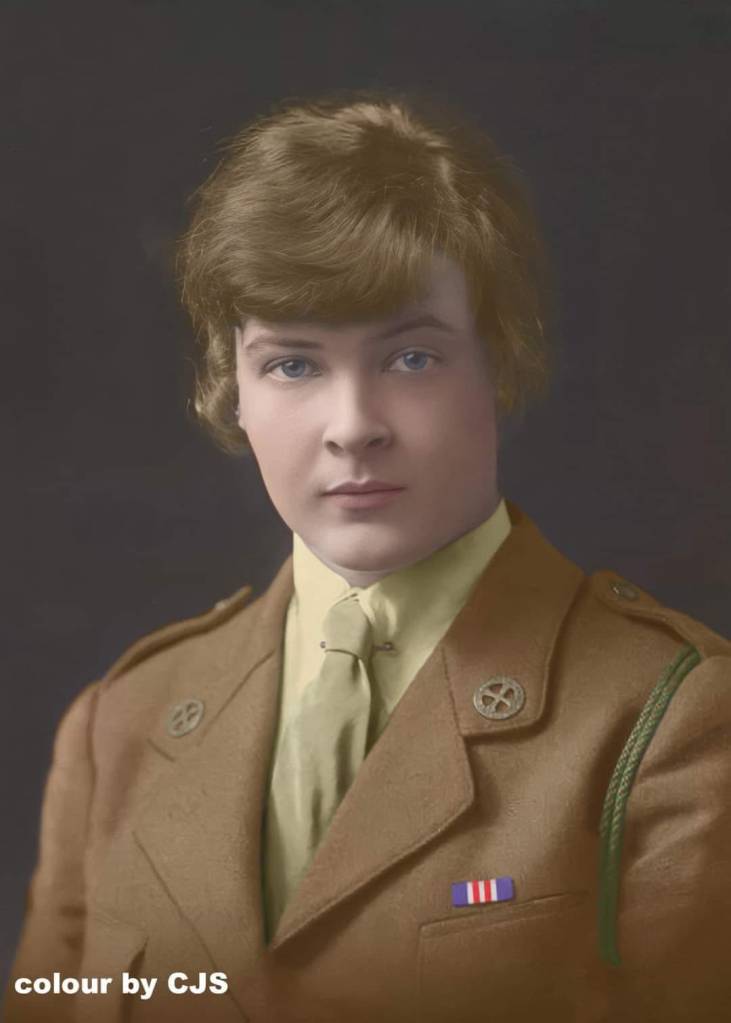
Adolphe Deniset: Weapons instructor SOE F (French Section)

Adolphe François was a French Canadian whose parent unit was the Royal Canadian Artillery who began his SOE selection and training in October 1943.

His training assessment describes him as very intelligent, mature minded, serious and of good motivation and stated he could do good work in the field. A later report added, whilst he has certain powers of leadership and has a pleasant and unaggressive manner his personality lacked the forcefulness to be fully effective and would be best used as an instructor or a subordinate organiser.

Though his French was excellent it was said his accent could sometimes be identified as French-Canadian, he also had no knowledge of France and was even surprised to learn the French drunk coffee out of a glass in cafés and was therefore decided he did not have the knowledge to run a circuit but would make a good lieutenant. Consequently, Deniset was sent to join the PHONO circuit in the Chârtres area as its second in command and arms instructor.

During his operational briefing Deniset was given a list of targets to sabotage which included locomotive sheds, railways and roads and was told to pass the list onto Emile Garry the leader of PHONO. On the night of 28 February 1944 (but like many SOE documents, dates vary according to sources at several archives) he boarded a Halifax bomber of 161 Special Duty Squadron RAF at Tempford with three other agents sent to establish a circuit in Brittany. It had been arranged for the agents to be dropped to a reception committee from PHONO circuit, but London was not aware the circuit had been destroyed and was under German control. The area where they were going to be dropped had been cordoned off by SS troops under the command of SS Sturmbannfurther Joseff Kiefer, head of the Paris SD and the three agents were arrested as soon as they landed.

It is known Deniset was interned at Frésnes prison and according to some accounts was taken to an underground solitary confinement cell with no lighting, no bed and no water and the only person he saw was a guard once a day who brought him weak soup.

On 2 June 1944 Deniset was seen by other captured agents at 3 bis Place des États Unis, a street located in the Chaillot district of Paris.

A post-war investigation found it extremely difficult to discover what happened to Deniset after leaving Frésnes Prison. Some witnesses said he was transported to Ravitsch concentration camp in northern Germany around 56 miles from Berlin but was later recorded by the Commonwealth War Graves Commission that Deniset was executed at Gross-Rousen concentration camp but there is no accurate date of his execution.

Alan Malcher

Northern Burma, troops of 2nd Battalion The Buffs cross the Shweli River before the assault on Myitson, with machine gun, mortar and artillery fire in support, as the divisional commander watches.

The full clip and other film archives can be found at: https://www.iwm.org.uk/

2nd Battalion the Buffs

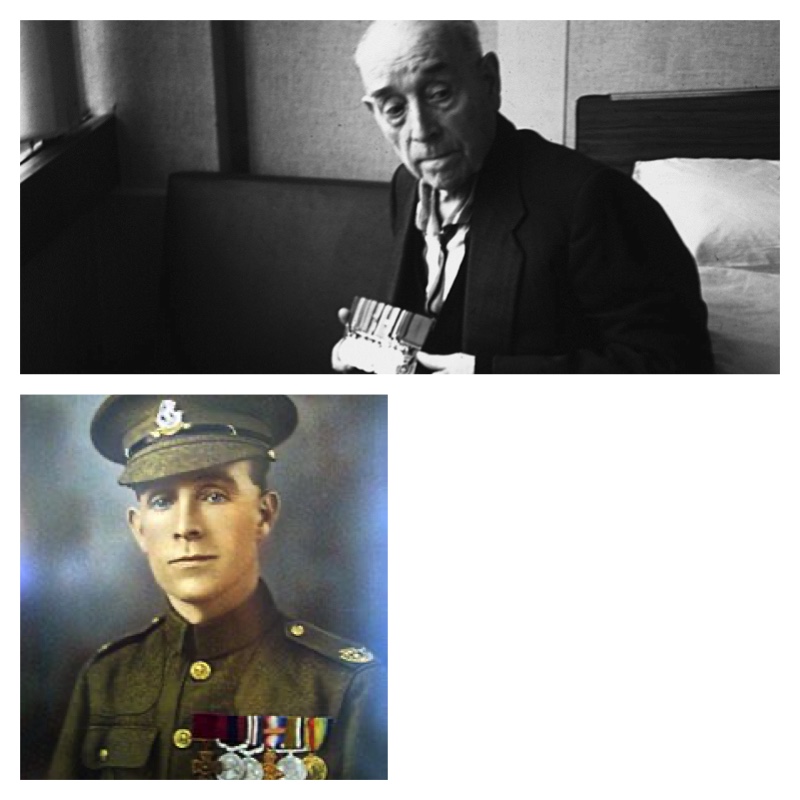
Private Henry Tandey VC, DCM, MM awarded during the Great War.

Private Henry Tandey was among the most decorated soldiers who survived the First World War and the question remains whether he could have changed history if he had not shown compassion towards a wounded German soldier.

It is widely believed the wounded German soldier was Adolf Hitler but some historians claim it was not Hitler and the myth was promoted by Hitler himself to impress his political followers and the German military. Debate as to the identity of the wounded German soldier continues.

Jan Baalsrud MBE (1917-1988) SOE Norwegian Section

(Image source Unknown)

In early 1943 Baalsrud was part of Operation Martin consisting of three other Norwegian agents who were taken to Norway by a clandestine fishing boat with a Norwegian crew of eight. Their mission was to destroy a control tower at a German airfield at Bardufoss and then recruit and establish a resistance movement.

They had been given the name of a resistance contact who ran a small shop but after making contact were unaware the shop had been bought by a man with the same name. Fearing for his life and believing it was a German trick the shopkeeper reported the agents to the police who passed the information to the Germans and the Gestapo started an investigation.

The following morning their fishing boat that contained over 100 kilograms of explosives for the attack was intercepted by a German gunboat and under fire the agents placed timing pencils into the explosives to destroy the vessel and cause confusion whilst escaping in small boats that were quickly sunk by the gunboat and the survivors begun swimming ashore in the icy Artic waters. Baalsrud was the only one not killed or captured and by the time he reached the shore he was freezing cold, missing one boot and then ran into a snow gully where he was confronted by a Gestapo officer who he shot dead with his pistol before continuing his escape.

Whilst evading German troops Baalsrud wandered through a snowstorm for three days, his feet froze and used a knife to amputate nine of his frost-bitten toes to stop the spread of gangrene, an avalanche then buried him almost to his neck and was entombed in snow for four days. After being found by Norwegian villagers he was tied to a stretcher and for seven weeks was close to death as they dragged him across mountains in the snow.

 A villager contacted the resistance and was told to leave him on a high plateau on his stretcher and people would be sent to rescue him but because of bad weather and many German troops in the area he was there for 27 days suffering from snow blindness, he had not eaten and was close to death. After being found by the resistance he was carried to the border with Finland where villagers put him on a reindeer sledge and eventually reached neutral Sweeden.

Baalsrud then spent several months in a Swedish hospital before returning to England aboard an RAF aircraft. After being passed fit to be an instructor he helped train and select recruits for the Norwegian Section at the SOE phase two training school on the remote Scottish Highlands and after learning how to walk with only one toe with a walking stick, he volunteered to return to Norway as an agent and continued his clandestine work until Norway was liberated in May 1945.

Jan Baalsrud died on 30 December 1988 at the age of 71 in Kongsvinger, Norway.

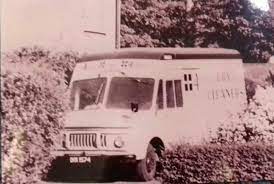
Four Square Laundry: Northern Ireland (Operation Banner) surveillance and intelligence during the 1970s.

Intelligence operations during Banner remain a closely guarded secret, true accounts have often been replaced by Sinn Féin/IRA propaganda and the Four Square Laundry is a good example of the propaganda found in pro- Sinn Féin/IRA publications.

To combat terrorism by the Provisional Irish Republican Army (PIRA) in 1972 the British Army created the Mobile Reaction Force (MRF). This clandestine unit was based at Palace Barracks, Hollywood Northern Ireland and consisted of around forty men and women from the army who were specially trained and selected for intelligence and surveillance operations which journalist at the time called plain clothes soldiers.

Four Square Laundry (Intelligence Museum)

Four Square Laundry collected washing from parts of Belfast where terrorists were known to live and before being cleaned and returned to customers were forensically examined for traces of explosives and gunshot residue.

Double agents Seamus Wright and Kevin McKee.

Two MRF double agents, Seamus Wright and Kevin McKee, were discovered by PIRA and whilst being tortured for information provided details about the army operation, both were later shot in the back of the head and their bodies were thought to have been buried somewhere in the border region of South Armagh.

Sapper Edward Stuart (Royal Engineers whilst serving with MRF)

On 2 October 1972 the laundry van was being driven by Edward Stuart whose home unit was the Royal Engineers and was accompanied by Lance Corporal Sarah-Jane Walker. Walker was returning laundry to a customer and standing at their front door when a car drew close to their van, three gunmen got out whilst the driver remained in the car ready for a quick getaway and Sapper Edward Stuart was killed instantly by automatic weapons thought to be Kalashnikovs recently supplied by Colonel Gaddafi of Libya.

According to Sinn Féin/IRA propaganda Sarah-Jane Walker ran into the house hysterically screaming Protestant paramilitaries were trying to kill them and was given refuge, but this is not true.  During the first sound of gunshots Walker turned round, faced the terrorists and engaged them with her 9mm Browning HP automatic pistol and the gunmen fled. Plain clothes officers from the Royal Ulster Constabulary in an unmarked car quickly arrived and secured the area. It is also not true undercover soldiers were hiding in the roof of the vehicle and were killed or wounded, Stuart and Walker were alone when they were ambushed. The following year, Sarah-Jane Walker, which for security reasons is not thought to be her real name, was awarded the Military Medal by the Queen and the first awarded to a WRAC serving in Northern Ireland.

According to the Guardian dated 8 September 2015: “DNA tests have confirmed the remains of two bodies found in an Irish bog are those of Séamus Wright and Kevin McKee, two of the IRA’s “disappeared.

The men, who were members of the Provisional IRA in west Belfast, vanished in 1972. They were believed to have been kidnapped, interrogated, then shot dead by the PIRA. Their bodies were buried in secret across the border in the Irish Republic.

The organisation in charge of locating the remains of 17 people whom the IRA killed and then disappeared during the Northern Ireland Troubles said DNA examination of samples taken from the bog in County Meath proved they were Wright and McKee.”

Alan Malcher

The effects of Shell Sock during the First World War (1914 to 1918)

Shell Shock has been described as a reaction to to the intensity of bombardment and fighting that caused a feeling of helplessness that could result in panic, fear, flight or an inability to reason, sleep, walk or talk. It was also referred to as bullet air, soldier’s heart, battle fatigue, war neuroses and operational exhaustion.

As seen in this short clip by Pathé News Shell Shock sometimes caused serious damage to the nervous system.

Irish Soldiers: the Battle of Mons during the Great War of 1914 to 1918.

The Battle of Mons was the first major action of the British Expeditionary Force of the First World War. It was a subsidiary action of the Battle of the Frontiers, during which the allies fought the Germans on the French border.

I don’t know the source of this short film documentary and consequently I am unable to credit the film maker.

French Resistance: 27 members of the resistance. The men were executed shortly after this photograph was taken.

I would like to thank Dr Christine Quintlé for the following information.

Twenty seven members of the French Resistance being taken away for execution after a trial before a German military tribunal in Paris on 14 April 1942.

The trial has been called “Procès de la Maison de la Chimie” (trial of the House of Chemistry) as it took place there. Twenty-three of the accused were executed on 17 April at Mont Valérien. André Kirschen, the son of a Romanian Jews was only fifteen at the time of the trial and could not be sentenced to death under German military law. Simone Schloss, who was Jewish, was beheaded in Cologne on 2 July 1942. The image is as still from a German propaganda film.


The young man sticking his out tongue out in defiance after the trial is Jean Quarré who had been with the students and school teenagers who demonstrated against Germany at the Quartier Latin, Paris on 14 July 1940 and on the on the Grands Boulevards, Paris on 13 August 1940. He joined the Résistance in 1941. The other man is Karl (Carlo) Schoenhaar.