A short video interview of Odette shown on British television in 1980.
Odette speaks about being a prisoner in concentration camps , and how she coped with torture and weeks in solitary confinement under horrific conditions.
(First shown:14/11/1980. If you would like to license a clip from this interview, please e mail: archive@fremantle.com Quote: VT23965)
DISCLAIMER: Copyright Disclaimer Under Section 107 of the Copyright Act 1976, allowance is made for “fair use” for purposes such as criticism, comment, news reporting, teaching, scholarship, and research. Fair use is a use permitted by copyright statute that might otherwise be infringing. Non-profit, educational or personal.
As this is an American documentary most of the archive footage is American
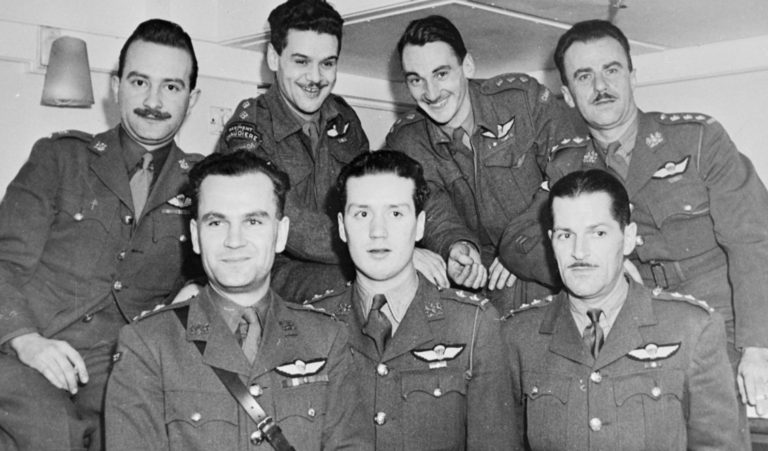
SOE agents arrive home in December 1944: (front, from left) Lieut. J.E. Fournier, Lieut. P.E. Thibeault, Capt. H.A. Benoit; (rear) Major P.E. Labelle, Capt. L.J. Taschereau, Capt. Guy Artois, Capt. J.P. Archambault.
Documentary about Canadian agents working for SOE in occupied France.
Apart from Canadian’s being trained in England SOE also had a training and selection establishment in Canada and the newly formed American OSS received their initial training at this SOE training camp in Ontario.
A short film by CBC where former agents describe their time
at Camp X
The following short documentary by ABC Australia provides an overview of the life of Nancy Wake who was dropped by parachute into wartime France to organise resistance and subversive warfare.
Clare Mulley tells the extraordinary story of Krystyna Skarbek (aka Christine Granville) – the first, and the longest serving, female special agent working for Britain in the Second World War. Part of the Lunchtime Lectures series – a programme of free talks that takes place at the National Army Museum in London.
In 2015 to commemorate the 70th anniversary of the liberation of Denmark from German occupation (1940-45), Museum Vestsjaelland hosted an international seminar on 2nd May 2015 attended by historians, WWII veterans, descendants of allied airmen, descendants of Danish resistance fighters, and members of the public. The four key lectures are available here on the Museum Vestsjaelland’s Youtube channel. Historian and SOE specialist Mark Seaman describes the establishment and organisation of the British Special Operations Executive (SOE) and the Danish resistance movement.
On 20 February 1944 a B-17 bomber (Flying Fortress) which the
crew called ‘Mi Amigo’ was part of the 305th Bombardment Group, US 8th
Army Airforce based at Chelveston Airfield in Northamptonshire and ‘Mi Amigo’
was one of 700 American B-17 bombers involved in Operation Argument.
Operation Argument was an intensive one-week joint operation
with RAF bomber command to destroy high value and heavily defended aircraft factories and Luftwaffe
airfields in Alaborg Denmark and Leipzig Germany and the bombers had to run the
gauntlet of extensive anti-aircraft artillery and German fighters.
On 22 February there was heavy fog over the Luftwaffe base
in Alaborg and the target could not be
seen from the air as the B-17’s were being attacked by swarms of German
fighters during which three American aircraft were shot down and most of their crews
were killed or captured. Due to the fog
and continuous waves of German fighters the mission was aborted; the surviving
aircraft began their return to England and once they reached the North Sea, they
started jettisoning their bombs.
Mi Amigo had been extensively damaged and there were concerns one or more of its engines would seize up before reaching England, but the crew managed to dump their 4,000 lb bomb load over the sea.
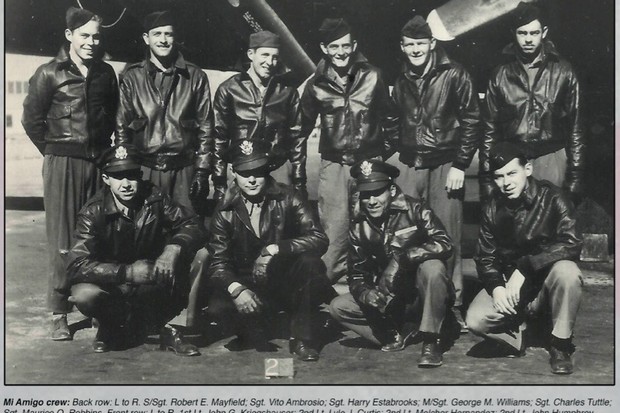
The crew of Mi Amigo
According to historian Paul Allonby, Mi Amigo was several
miles from its base in England and its engines which had all been damaged were
fading quickly as its pilot Lt Kriegshauser steered his crippled B-17 out of thick
clouds and found they were over a major city in Sheffield. As he looked for a suitable field for a crash landing,
he could only see houses, roads and trees and then in the distance he saw a large
field called Encliffee Park which was a public play area with thick woods
behind it.
Lt Kriegshauser prepared his crew for a crash landing and
started his final approach when he suddenly saw a large group of children playing in the field
and immediately aborted the landing in the full knowledge his aircraft would crash
into the woods.
After crashing the wreckage of the B-17 was scattered across
the hillside, the aircraft was split into two and the front section was on fire
and the crew were dead.
Several eyewitnesses say the aircraft circled the park for
some time and it is believed the pilot sacrificed the lives of himself and his
crew to avoid a group of children in the field.
Lt Kriegshauser was posthumously awarded the US Distinguished
Flying Cross.
During the crash a large number of trees had been destroyed
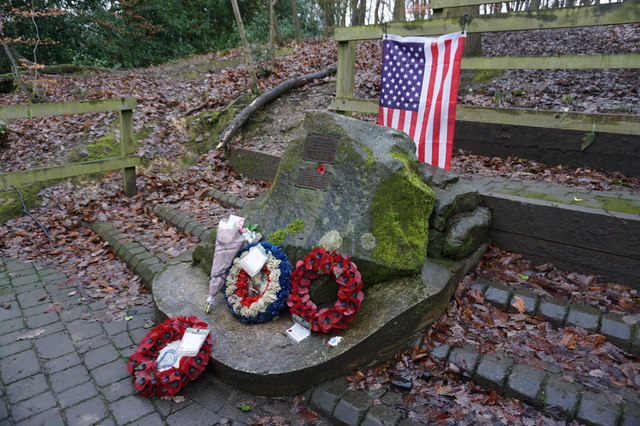
and in 1969 a grove of American Oakes was planted to honour the crew of Mi
Amigo. There is also a memorial to the crew in the park and Tony Foulds who was
one of the children in the park at the time of the crash continues to personally
tend the memorial.
On 22 February 2019 after a long campaign by Tony Foulds, who is now 82 years old, British and American military aircraft took part in a flypast over Endcliffee Park in Sheffield to mark the 75th anniversary of the American crew of the bomber Mi Amigo.
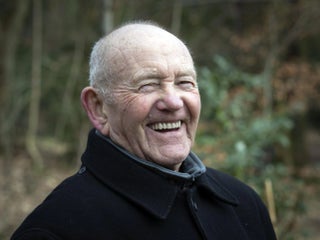
Tony Foulds ar 82, who was one of the children playing in the field
After war was declared in 1914
Albert Ball enlisted into the army and served with several units including the
Sherwood Foresters and was soon promoted to sergeant and gained his commission
as second lieutenant on 20 October. Ball was eager to see action but was assigned
to training recruits in England so in
the hope of being sent to France he
transferred to the North Midlands
Cyclist Company, but the company remained in England and he expressed his
frustration in a letter to his parents dated 25 February, he wrote, “I have just
sent six boys to France and I hear they will be in the firing line on Monday.
It is just my luck to be unable to go”.
In March 1915 Ball started taking private flying lessons at Hendon Aerodrome and after qualifying for the Royal Aero Club Certificate, on 15 March 1915 he transferred to the Royal Flying Corp (RFC) and trained at Mousehold Heath Aerodrome near Norwich. He completed his training at the Central Flying School Upavon and was awarded his wings on 22 January 1916 and a week later was officially transferred from the North Midland Cycle Company to the RFC as a pilot.
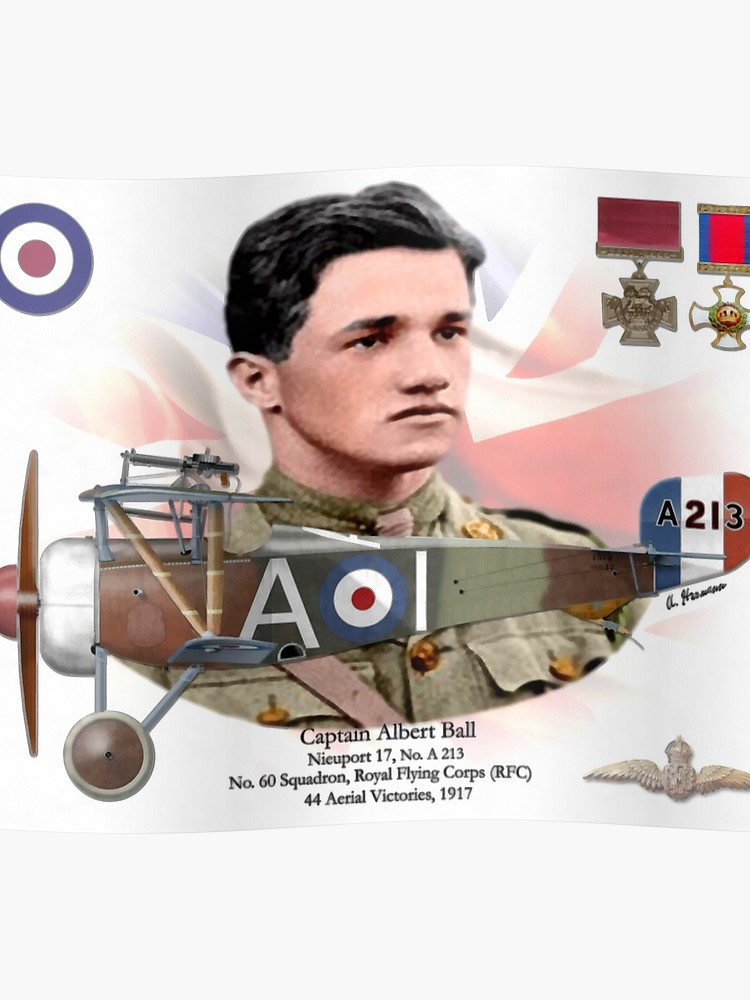
At the age of 20 Captain Albert Ball became the first
celebrity fighter pilot after shooting down 44
enemy aircraft in just one year. He was also the first man during the
war to be awarded three DSO’s.
After his first dog fight Ball wrote in one of his letters
to his parents:
“I like this job, but nerves do not last long and you
soon want a rest…” and in a later letter to his father he discouraged the
idea of his youngest brother following him into the RFC.
Albert Ball was described as a ‘lone wolf’ because he mostly flew solo missions and stalked enemy aircraft from below and used an adapted Lewis machine gun to fire upwards into the enemy’s fuselage.
Gun adapted to fire upwards
Although he quickly became a fighter ace and enjoyed aerial combat Ball had no hatred
for the enemy and in a letter to his parents he explained, “I only scrap
because it is my duty … nothing makes me feel more rotten than to see them go
down, but you see it is either them or me, so I must do my duty….”
On his 20th birthday Ball was promoted to
temporary Captain.
In another letter to his father Ball wrote, “I get tired of always living to kill and beginning to feel like a murderer… I shall be so glad when I have finished.”
The last fight of Captain Ball, VC, DSO and 2 bars, MC, 7May 1917 by Norman Arnold 1919
On the evening of 7 May 1917 near Douai, 11 aircraft of No. 56 Squadron RFC led by Albert Ball encountered German fighters from Jasta 11 (Red Baron’s flight). A violent dogfight in deteriorating visibility resulted in all the aircraft being scattered. Cecil Arthur Lewis who took part in the battle described the mass dog fight in his memoir ‘Sagittarius Rising.’
Lewis recalled Ball pursuing a red Albatros D.111 belonging
to the ‘Red Barons’ younger brother Lothar von Richthofen who eventually landed
near Annoeullin with a punctured fuel tank and Lewis said he last saw Ball flying
into a dark thundercloud before disappearing.
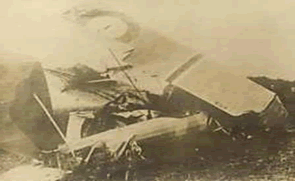
In keeping with the propaganda of the period British newspapers claimed after being shot down 20-year-old Albert Ball died in the arms of a French girl who had pulled him from the wreckage of his machine and only after the war did several eyewitnesses described what really happened when Ball crashed behind the German lines.
The wreck of Ball’s aircraft photograph taken by German soldier
A German pilot on the
ground, Lieutenant Hailer saw Ball’s plane falling upside down with a dead
propeller from the bottom of a dark cloud at an altitude of 2000 feet.
Brothers Franz and Carl Hailer and two other men in their
party were from a German reconnaissance unit and Franz later noted, “it was
leaving a cloud of black smoke… caused by oil leaking into the cylinders… The engine had to be inverted for this to happen…
The Hispano engine was known to flood its inlet manifold with fuel when upside
down and then stop running…”
Franz Hailer and his three companions ran to the crash site
and Ball was already dead when they arrived. The three German soldiers said the
crashed aircraft had suffered no battle damage and no bullet wounds were found
on Ball’s body and a German doctor at a field hospital later said Albert Ball died
from a broken neck and a crushed chest. His limbs were also fractured, and his
injuries suggest he was killed due to impact with the ground.
Based on these eyewitness accounts It is now considered probable
Ball was not shot down but had become disorientated and lost control. This has been described as temporary vertigo
which had claimed other pilots. A month
after Ball crashed the Germans dropped a message over the British lines
announcing he was dead and had been buried in Annoeullin with full military
honours.
In 1918 Walter Briscioe and H Russell Stannard published a seminal biography, Captain Ball VC and reprinted many of his letters. They quote Ball’s most notable opponent Manfred von Richthofen (the Red Baron) saying “he considered Ball by far the best English flying man.” The authors also quote an unidentified RFC pilot who fought with Ball during his last battle as saying, “I see they have given him a VC . Of course, he won it a dozen times over; the whole squadron know that.
After the war
After the war British authorities discovered Ball’s grave which had been behind the German lines and the Imperial War Graves Commission (now called the Commonwealth War Graves Commission) moved 23 British bodies from graves in the location where Ball was buried to Cabaret Rough British Cemetery, but at his father’s request Ball’s grave was allowed to remain and Ball is the only British grave from WW1 the rest are German soldiers. Ball’s father also bought the French field where his son died and erected a memorial on the crash site.
Award citation Victoria Cross
Lt (temp Captain)
Albert Ball, DSO, MC, late Notts and Derby. R. and RFC
For most
conspicuous and consistent bravery from 25 of April to the 6th May
1917, during which period Capt. Ball took part in twenty-six combats in the air
and destroyed eleven hostile aeroplanes, drove down two out of control and
forced seven others to land.
In these combats
Capt. Ball, flying alone, on one occasion fought six hostile machines, twice he
fought five and once four. When leading two other British aeroplanes he
attacked an enemy formation of eight. On each of these occasions he brought
down at least one enemy.
Several times his
aeroplane was badly damaged, once so seriously that but for the most delicate
handling his machine would have collapsed, as nearly all the control wires had
been shot away. On returning with a damaged machine he had always to be
restrained from immediately going out on another.
In all Capt. Ball
has destroyed forty-three German aeroplanes and one balloon and has always
displayed most excellent courage, determination and skill.
Distinguished
Service Order (DSO)
For conspicuous
gallantry and skill. Observing seven enemy machines flying in formation, he
immediately attacked one of them and shot it down at 15 yards range. The
remaining machines retired. Immediately afterwards, seeing five more hostile
machines, he attacked one at about ten yards range and shot it down, flames
coming out of the fuselage. He then attacked another of the machines which had
been firing at him and shot it down into a village, where it landed on the top
of a house. He then went to the nearest aerodrome for more ammunition and
returned to attack three more machines, causing them to dive under control.
Being then short of petrol he came home. His own machine was badly shot about
in these fights.
Distinguished
Service Order (DSO)Bar
For conspicuous
skill and gallantry. When on escort duty to a bombing raid he saw four enemy
machines in formation. He dived on them and broke up their formation and then
shot down the nearest one, which fell on its nose. He came down to about 500
feet to make certain it was wrecked. On another occasion, observing twelve
enemy machines in formation, he dived in among them, and fired a drum into the
nearest machine which went down out of control. Several more hostile machines
then approached, and he fired three more drums at them, driving down another
out of control. He then returned, crossing the lines at a low altitude, with
his machine very much damaged.
Distinguished
Service Order (DSO) Bar
For conspicuous
gallantry in action. He attacked three hostile machines and brought one down,
displaying great courage and skill. He has brought down eight hostile machines
in a short period and has forced many others to land.
Military Cross
(MC)
For conspicuous skill and gallantry on many occasions, notably when, after failing to destroy an enemy kite balloon with bombs, he returned for a fresh supply, went back and brought it down in flames. He also completed great execution among enemy aeroplanes. On one occasion he attacked six in one flight, forced down two and drove the others off. This occurred several miles over the enemy’s lines.




 Alan Malcher