On 16 December 1943 the crew of a Lancaster bomber from No.97 Squadron was hit by heavy flak over Berlin. Despite the aircraft being extensively damaged they managed to cross the North Sea but after arriving over England encounter heavy fog and the crew was unable to find their airfield in Lincolnshire.

FIDO (Fog Investigation and Dispersal Operation)
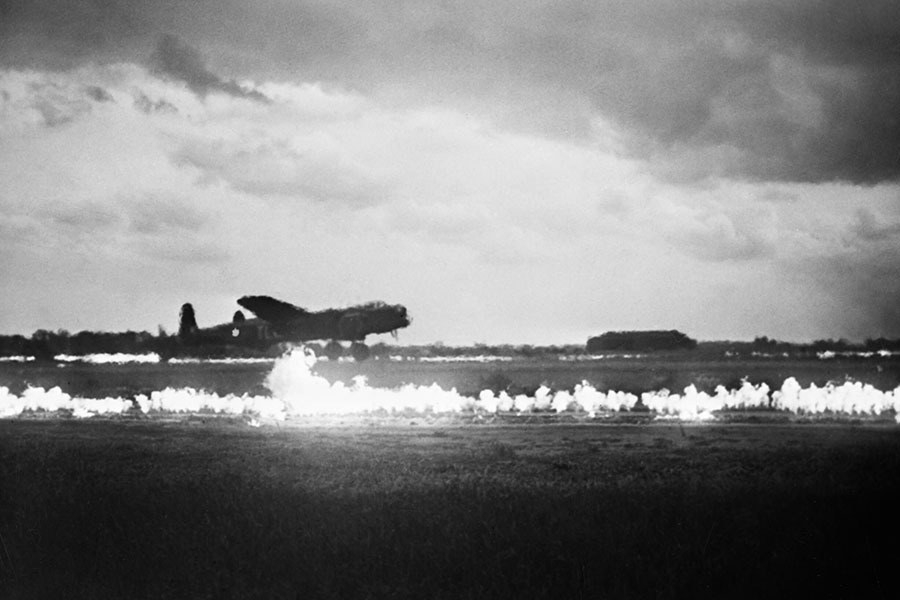
FIDO
Due to zero visibility and running dangerously low on fuel their pilot, Flight Sergeant Ian MacDonald Scott RAAF (Royal Australian Air Force), decided to divert to RAF Gravely because the airfield was equipped with FIDO (Fog Investigation and Dispersal Operation) which used intense heat to remove fog from the runway but the aircraft crashed just under two miles from Gravely and the crew were killed.
The raid on Berlin during the night of 16/17 December 1943 became known as ‘Black Thursday’ after Bomber Command lost 300 aircrew during a single operation. Two out of three airmen in the briefing room before the raid did not return; some were shot down over Germany, others crashed into the sea during their return to England.
The Lancaster crew who diverted to RAF Gravely during the night of 16 December 1943 who were killed:
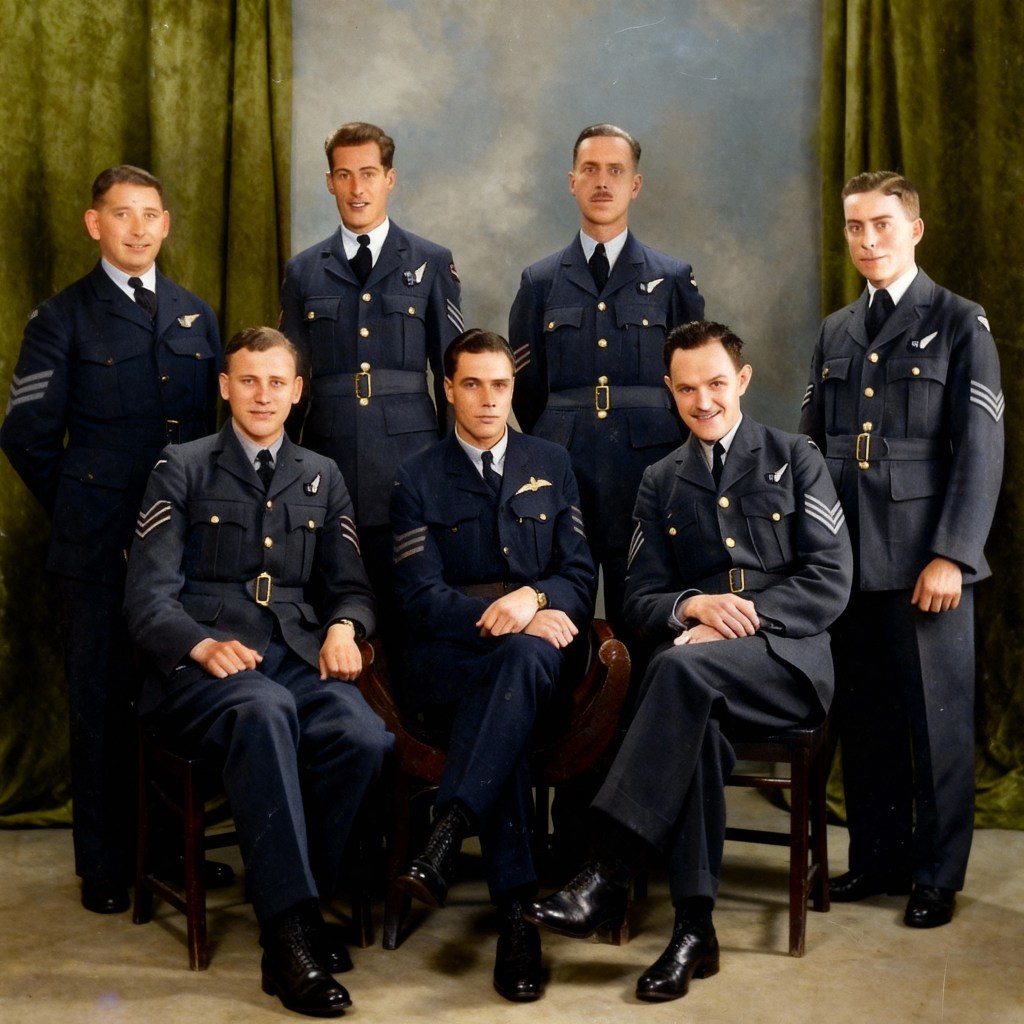
Flt Sgt Ian MacDonald Scott, RAAF, aged 20. Pilot. From South Australia.
Flt Sgt Kenneth Edgar Foxcroft, RAAF, aged 20. Mid-upper gunner. Married.
Flt Sgt Douglas Raymond Irvine, RCAF, aged 31. Bomb Aimer. From Toronto.
Sgt Clifford Lionel Hope, RCAF, aged 27. Rear gunner. Also, from Canada.
Sgt Charles William Collishaw, RAFVR, aged 20. Flight engineer.
Sgt Sidney George Parrott, RAFVR, aged 20. Wireless operator and air gunner.
Flt Sgt Samuel Joseph Peek, RAFVR. Navigator.

 Alan Malcher